

When Sarah Raven – legendary gardener, nursery owner, podcaster and author of 14 books – speaks, we listen.
So when she appeared on The Backyard Bouquet podcast, an American show in which great gardeners are interviewed about their techniques and tips, our ears pricked up. Raven generously shared experiences gleaned from her own organically managed East Sussex garden, as well as the scientific approach she took to honing her growing and harvesting techniques, informed by her early training as a doctor.
When it comes to annuals, she said: ‘What I found, in fact, was that the garden looked better for me harvesting because I was liveheading, not deadheading.’
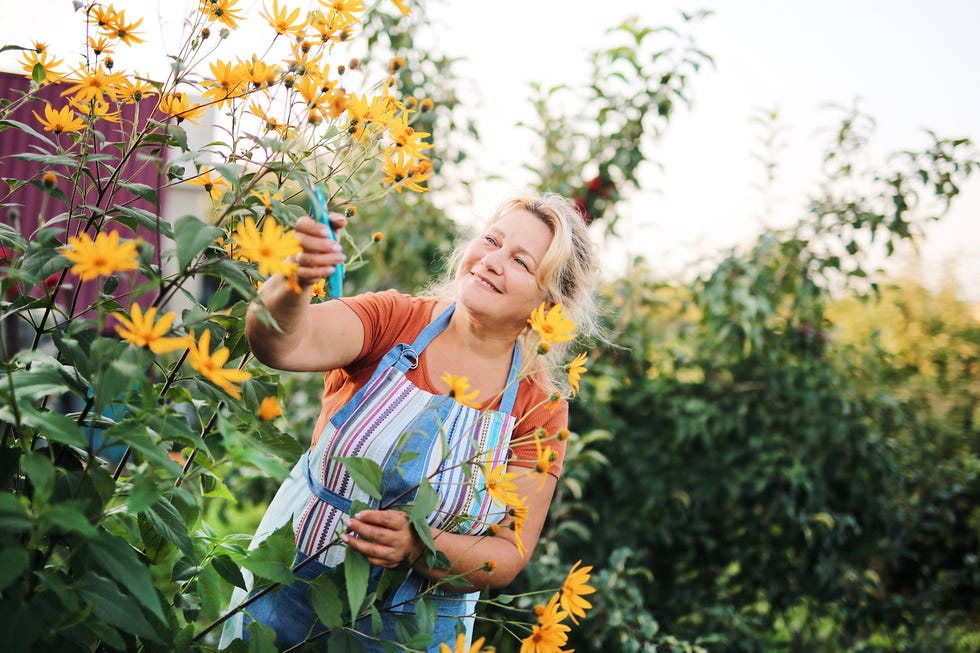
Mariia Zotova//Getty Images
Come again? Most of us, even the least green-fingered like me, are familiar with deadheading, ‘the term used for the removal of fading or dead flowers from plants,’ explains the Royal Horticultural Society. ‘It is done to keep plants looking attractive and encourage more blooms.’
Deadheading, the RHS explains, directs energy into stronger growth and more flowers instead of (often unwanted) seed pods. The simplest method, they advise, is to ‘pinch or snap off faded blooms with finger and thumb, aiming to remove the flower with its stalk to keep the plant looking tidy’, or use a pair of secateurs to ‘trim away the spent flower, cutting back to just above the next bud or leaf on the stem’.
But liveheading? It’s basically the same thing, Raven explained, but done when the plant is in bud and showing some colour. The benefits are twofold. First: you don’t have to throw the top section of stem into the compost. Cut lower down the plant (above a pair of leaves) and you can bring them inside to spill out across the house. Second, she said: ‘I found that the garden looked better for me harvesting because I was liveheading, not deadheading. I was replenishing the garden by taking from it if I picked in the right way… like an ever-filling cup.’
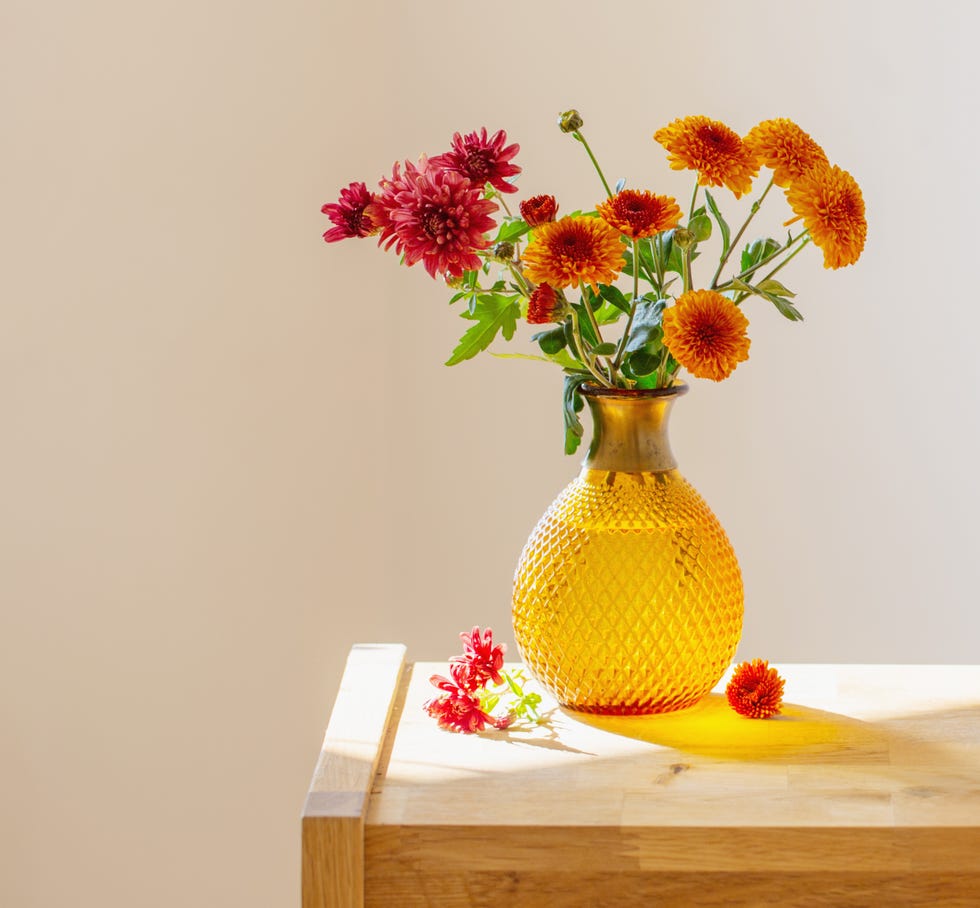
Maya23K//Getty Images
There are some provisos. Only cut the length you need for the vase you have in mind. The shorter the stem you leave, the longer you’ll wait for your next bloom.
Broadly, she told host Jennifer Gulizia, growing and cutting your own flowers: ‘doesn’t need to be expensive and it doesn’t need to be time-consuming. It just is the thing that makes everyday life between the middle of spring and the end of autumn so much richer and lovelier and more wonderful.’
One last tip. In her latest book, A Year Of Cut Flowers: A Life Of Growing And Arranging For All Seasons, Raven recommends doing this harvesting either in the morning or last thing at night. Take two buckets: one filled with water. When you cut your stems (at an angle, of course), strip the leaves from the bottom two-thirds and toss them in the empty bucket, then place the cut flowers immediately into the water-filled one. You’ll thank yourself when they keep in the vase that much longer.
Related Stories
Comments are closed.