

The beauty of roses is undeniable, which is just one of the reasons roses grace gardens all over the world. Choosing the appropriate companion plants for your roses can make a big difference in the overall aesthetic of your garden as well as providing other benefits for your roses, such as pest reduction. We asked experts for recommendations for the best plants to grow with roses; read on to see their picks.
Meet Our Expert
Eva Monheim, author, speaker, horticultural and environmental consultant, garden coach, and award-winning educator.
Kathy Jentz, author of Groundcover Revolution and host of the GardenDC Podcast
Related: 4 Genius Ways to Use Banana Peels for Healthier, More Abundant Roses
01 of 11
Chive
Credit: Svetlana Monyakova / GETTY IMAGES
Members of the allium family have a distinct onion-like fragrance, which tends to discourage aphids because they dislike strong odors. You probably don’t have a reason to plant onions or garlic near your rose bushes, but chives make a nice companion for roses. They produce fantastic purple globe-shaped blossoms, and they’re so hardy and prolific that you’ll hardly need to do any work once they’re established. The chive blossoms will add a fun dash of color alongside your rose bushes, and if you keep trimming them, they’ll keep blooming—giving you a delicious harvest while keeping aphids away from your roses.
Advertisement
Advertisement
Mature size: 12 to 18 inches tall x 12 to 18 inches wide
Care requirements: Rich, well-drained soil and full sun
02 of 11
Allium (Ornamental Onion)
Credit: kongxinzhu / GETTY IMAGES
In addition to chives, you can plant alliums (ornamental onions), which offer a different type of bloom. These alliums aren’t used in cooking, but they sport big showy blossoms and attract pollinators very well. Eva Monheim, author, speaker, and garden coach, recommends planting ornamental onions at the base of roses—they can add visual diversity and help protect the bare lower branches of some rose bushes.
Mature size: 12 to 36 inches tall, 12 inches wide
Care requirements: Rich, well-drained soil and full sun
03 of 11
Marigold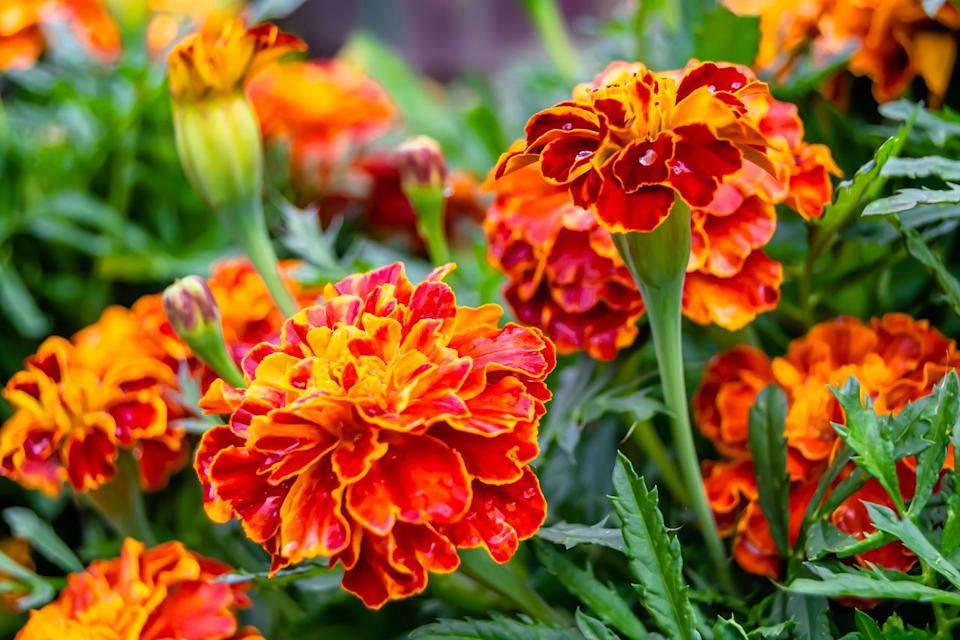
Credit: Getty Images
Animals that are “browsers”—that is, they enjoy eating bark, twigs, or rigid stalks—can pose a real threat to your rose canes. The most common animal pests in garden settings are rabbits and deer. Marigolds make a nice companion plant for this reason—they tend to repel deer and rabbits, plus they boast charming blossoms that are easy to grow.
Advertisement
Advertisement
Marigolds can also discourage insects. “Marigolds are used around the base of roses to repel insects and nematodes,” says Monheim. “Their strong scent is a deterrent that helps to reduce the use of sprays, especially if you are trying to use a natural approach to gardening.” There’s no shortage of marigold varieties, so pick something that nicely complements the color of your roses.
Mature size: 6 to 12 inches tall x 6 to 12 inches wide
Care requirements: Full sun; moderate watering
04 of 11
Nasturtium
Credit: Amit KUMAR / GETTY IMAGES
Advertisement
Advertisement
Nasturtiums spread easily with attractive foliage (the leaves look a little like cucumber leaves) and lovely flowers. But they offer other benefits to your roses. “A good trap crop for roses would be nasturtiums as they attract aphids,” says Kathy Jentz, author of Groundcover Revolution and host of the GardenDC Podcast. “You can plant a row of nasturtium near your roses in a hot, sunny spot.”
Mature size: 18 inches tall x 24 inches wide.
Care requirements: Full sun; well-drained (even sandy) soil
05 of 11
Bee Balm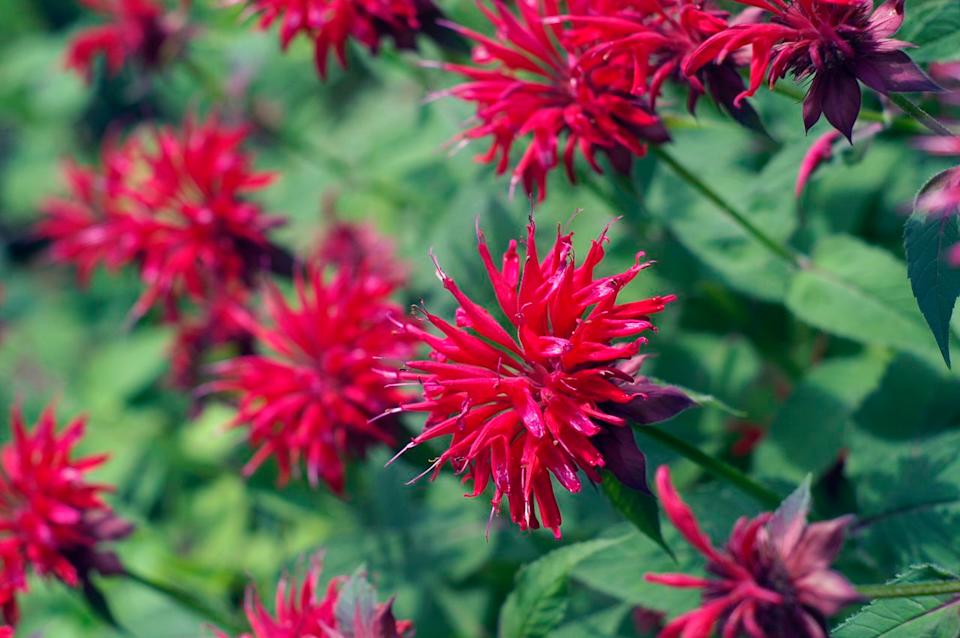
Credit: bg walker/ Getty Images
Are you looking for a splash of color at the same height as your roses? You almost can’t go wrong with something like bee balm—the colors of the blossoms are intense, the straight stalks of the plant pair well with the shape of rose bushes, and bee balm is a prime pollinator attractor and attracts pests, as well.
Mature size: 36 inches tall x 8 inches wide
Care requirements: Full sun; plenty of water; well-drained soil
06 of 11
Sweet Woodruff
It takes a tough plant to grow under a tree. Sweet woodruff has the right stuff.
Credit: Raimund Linke/Getty Images
“There are numerous plants that I would recommend for planting at the base of roses to create a more diverse visual for a rose garden,” says Monheim. “Many herbs are good plants for roses.” One of the herbs she recommends is sweet woodruff—a dainty groundcover with tiny flowers. It can handle the shade of your roses while filling in the ground around them nicely. Sweet woodruff spreads quickly, so be careful not to let it get away from you.
Advertisement
Advertisement
Mature size: 6 to 12 inches tall x 12 to 24 inches wide, though it can spread much wider
Care requirements: Shade to partial shade; moist to dry ground
07 of 11
Calamintha
Credit: Alpamayo Photo / Getty Images
“Catmint is often used at the base of roses, but another top choice for planting at the base of roses is Calamintha (Calamintha nepeta),” says Jentz. “It resembles catmint and is also in the mint family.” Calamintha is attractive and bushy, with many small blossoms, and is a great selection for filling in foliage at ground level. It can also be used to help repel deer, which your roses will appreciate.
Mature size: 24 inches tall x 24 inches wide
Care requirements: Full sun; well-drained soil
08 of 11
Lavender
Credit: Adam Smigielski / GETTY IMAGES
Advertisement
Advertisement
It can be fun to find flowers that provide a pleasing visual mix with your roses, and lavender is a popular choice for this very purpose. It repels insect pests, and the purple spiky blossoms are a sight to enjoy.
Mature size: 12 to 30 inches tall x 24 to 36 inches wide
Care requirements: Well-drained soil; full sun
09 of 11
Coreopsis
Credit: Josh Byerly / Getty Images
Let’s be honest—some rose varieties require a bit of care and attention, so it would be nice if some of your complementary flowers could take care of themselves. Coreopsis certainly fits the bill, and they bloom for a long period, adding color to the area when your roses aren’t in bloom. Better yet, coreopsis and roses don’t compete for sunlight, soil nutrients, or space.
Mature size: 24 inches tall by 24 inches wide
Care requirements: full sun; can handle many soil and moisture types
10 of 11
‘Golden Fleece’ Goldenrod
Credit: apugach / GETTY IMAGES
This is an absolutely beautiful autumn flower with long yellow rods of truly golden blossoms. ‘Golden Fleece’ has a more domesticated and refined look than wild goldenrod and is a great choice for garden borders. Goldenrod is famous for attracting all sorts of desirable bugs to your garden, like butterflies, bees, beneficial wasps and flies, and soldier beetles.
Advertisement
Advertisement
Mature size: 18 to 24 inches tall x 18 to 24 inches wide
Care requirements: Full sun; moist soil
11 of 11
Dill
Dill
Credit: Photo courtesy of liz west
Dill is an interesting and attractive herb that grows tall and produces massive blossoms that look a little like fireworks. Besides its aesthetic appearance and usefulness as an herb, dill also helps deter aphids from the garden—always a threat to roses.
Zones: Perennial in zones 8 to 10; annual in zones 3 to 7
Mature size: 2 to 5 feet tall
Care requirements: Full sun; well-drained soil
Read the original article on Martha Stewart
Comments are closed.