
“Hearst Magazines and Yahoo may earn commission or revenue on some items through these links.”
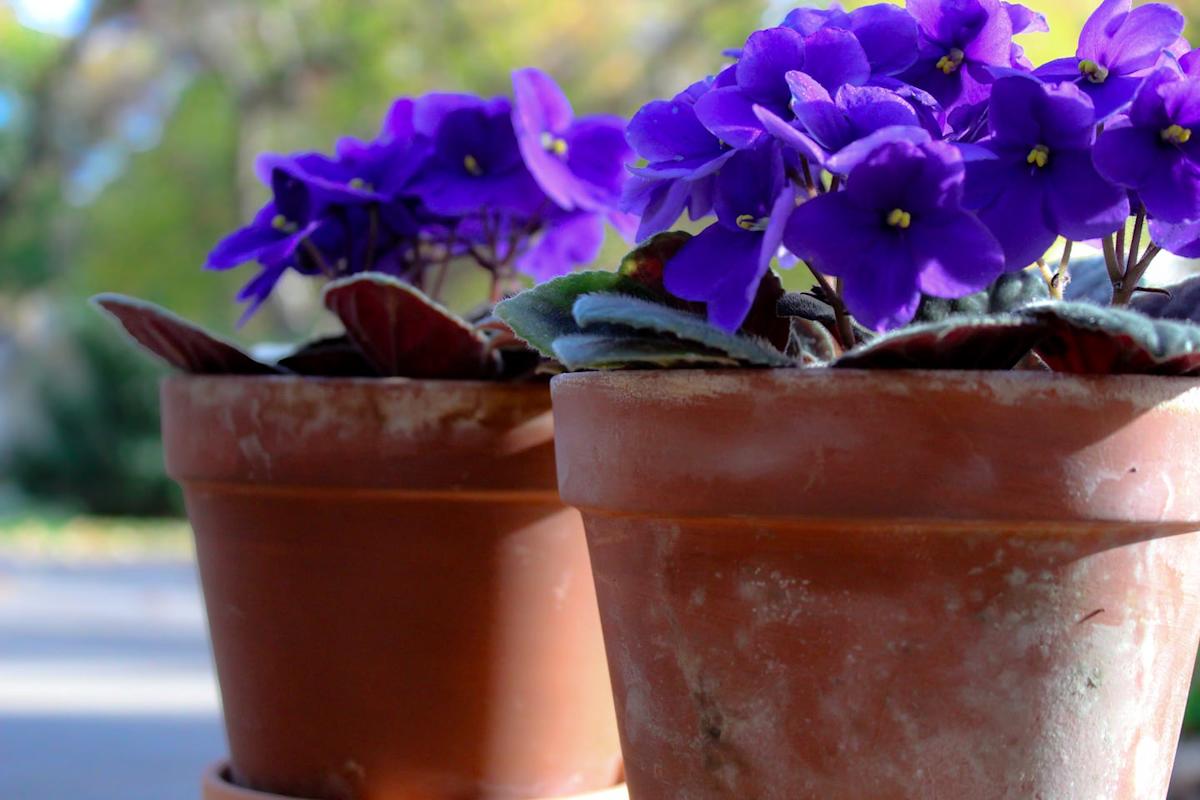
African violets have remained a favorite houseplant for generations, and it’s easy to see why. With their soft, velvety leaves and vibrant blooms, they add an instant pop of color to windowsills, desks, and tabletops without requiring a lot of space. Better still, they’re easy enough to grow and nurture that they’re totally beginner-friendly.
“With the right light and care, African violets can bloom year-round indoors,” says Karen Musgrave, horticulturalist at Hicks Nurseries. Their appeal, however, goes beyond longevity alone. “Their flowers are prized for their color rather than fragrance,” she explains, as most varieties have little to no noticeable scent, making them a great choice for people who are sensitive to smells yet still want to adorn their homes with their natural beauty.
Advertisement
Advertisement
We turned to gardening and landscaping experts to find out exactly how to care for African violets, from watering and soil choice to sunlight needs and repotting techniques, to help them thrive in your space from one season to the next.
What Is an African Violet?
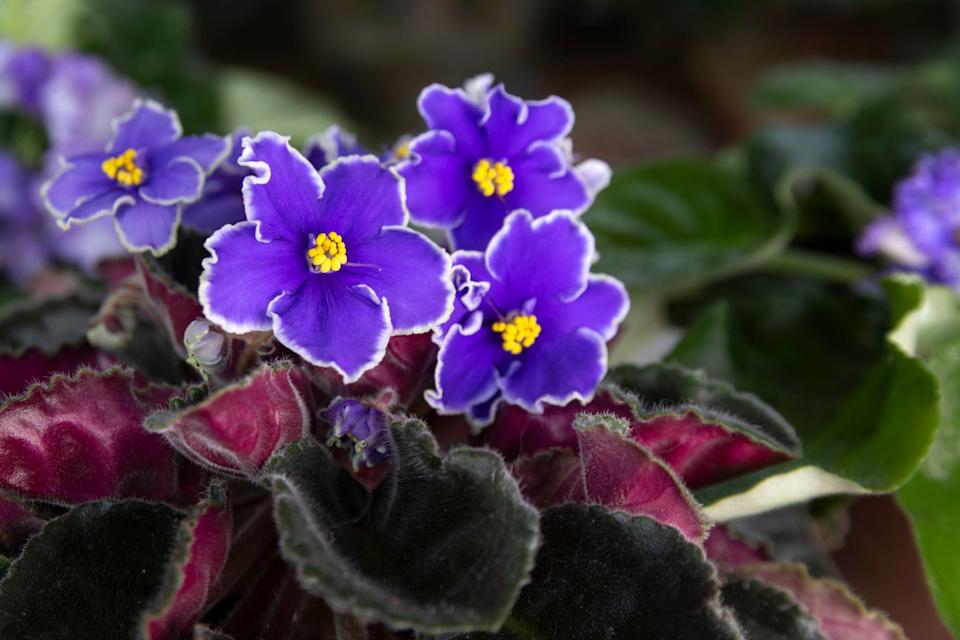
Known to be easy to care for with fuzzy leaves and vibrant blooms, African violets are a popular choice among those with a penchant for foliage. “The African violet is a compact flowering houseplant valued for its soft, velvety leaves and its ability to produce continuous blooms in controlled conditions,” says Zachary Westall, landscape designer and founder of Zachary J. Westall Studios.
Native to tropical regions of East Africa, particularly Tanzania and Kenya, they’ve become popular indoor plants thanks to their relatively low-maintenance nature and ability to flower consistently throughout the year. Available in shades ranging from deep violet and blue to white, pink, and bicolor combinations, African violets come in a wide variety of forms, including both single and double blooms.

Anna_Hirna – Getty Images
How to Grow African Violets
African violets thrive indoors in bright, indirect light and stable temperatures between 65 and 75 degrees Fahrenheit. East- or north-facing windows typically provide the best conditions, while direct sunlight should be avoided, as it can scorch the leaves. Drafts and sudden temperature fluctuations can stress the plant and reduce flowering.
Advertisement
Advertisement
A lightweight, well-draining soil mix is also essential. Both Musgrave and Westall recommend using a potting mix formulated specifically for African violets to promote drainage and airflow while still retaining enough moisture for healthy growth. Westall suggests using two parts peat moss, one part perlite, and one part vermiculite for the best results. “The structure should feel loose and airy, never dense or compacted. Standard potting soil is generally too heavy and can lead to root rot,” he says.
Because African violets prefer to be slightly root-bound, they’re almost always grown in containers and generally only need repotting once they begin to outgrow their pot.
How to Plant African Violets
To plant an African violet, follow these simple steps:
Choose a small pot with drainage holes. African violets prefer snug conditions around their roots, so avoid using oversized containers.
Fill the pot with African violet soil mix. Use a lightweight, airy potting mix that will deliver plenty of drainage and airflow.
Position the plant correctly. Place the African violet so the crown sits slightly above the soil line to help prevent rot.
Add soil gently around the roots. Firm the soil lightly without packing it too tightly, which can limit airflow.
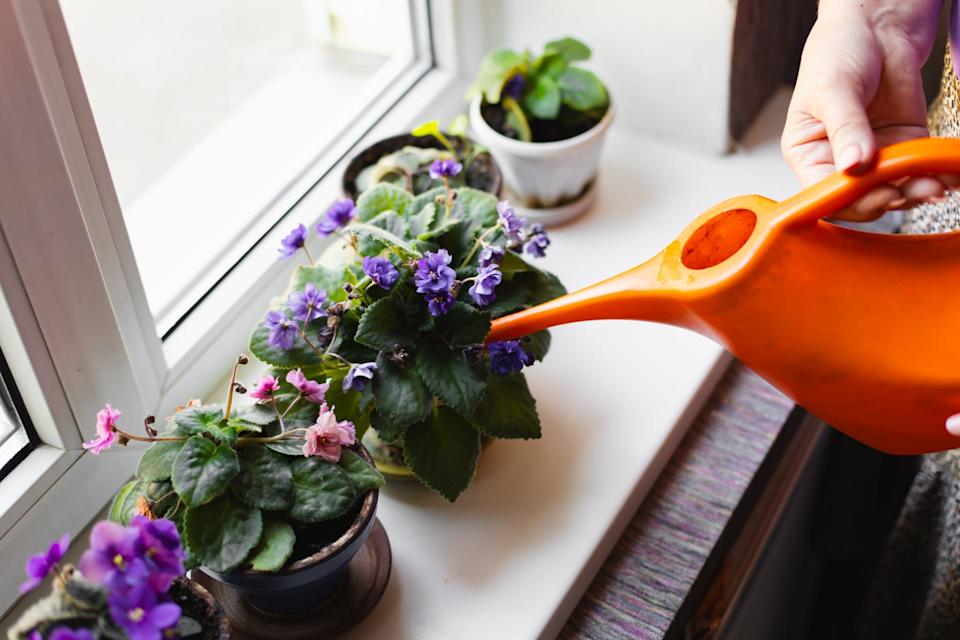
Water from the bottom. Allow the plant to absorb water through the drainage holes to help settle the soil while keeping moisture off the leaves.
Alexandr Kolesnikov – Getty Images
How to Care for African VioletsWater
African violets prefer consistent moisture, but overly wet soil can quickly lead to root rot. “Always water from the bottom to keep the leaves dry, as moisture on foliage can cause discoloration or rot,” says Musgrave. Allow the soil to dry slightly between waterings, and avoid letting water collect on the leaves or crown.
Light
Bright, indirect light is ideal for encouraging healthy growth and repeat blooming. Too much direct sun can scorch the leaves, while insufficient light may reduce flowering. To promote balanced growth, it’s always best to rotate the plant occasionally.
Fertilizer
Because African violets bloom so frequently, regular feeding can help support healthy flowers and foliage. “Fertilize every 2 to 4 weeks with a balanced, diluted fertilizer formulated for flowering plants,” says Westall. “I recommend Jack’s All Purpose 20-20-20.”
Pruning
Remove spent blooms and dry or damaged leaves regularly to encourage continued flowering and keep the plant looking tidy.
Humidity
African violets prefer moderate humidity, though misting should be avoided since excess moisture on the leaves can cause spotting. In drier homes, a pebble tray or nearby humidifier can help maintain more stable conditions.
Marina Kositsyna – Getty Images
How Long Do African Violets Live?
“African violets are relatively quick to establish,” says Westall. With proper care, African violets can live and bloom indoors for many years. Young plants typically begin flowering within six to nine months and, once established, can continue producing blooms consistently under stable conditions.
Advertisement
Advertisement
“Rather than fitting neatly into annual or perennial categories, African violets are best thought of as long-lived houseplants,” says Musgrave.
Where to Buy African VioletsWonderland Flora 4-Pack of 4” Pots African VioletsLowe’s African Violet House Plant in 13-Ounce PotWonderland Flora African Violets Live Plant in 4-Inch Pot (2 Count)
You Might Also Like
Comments are closed.