
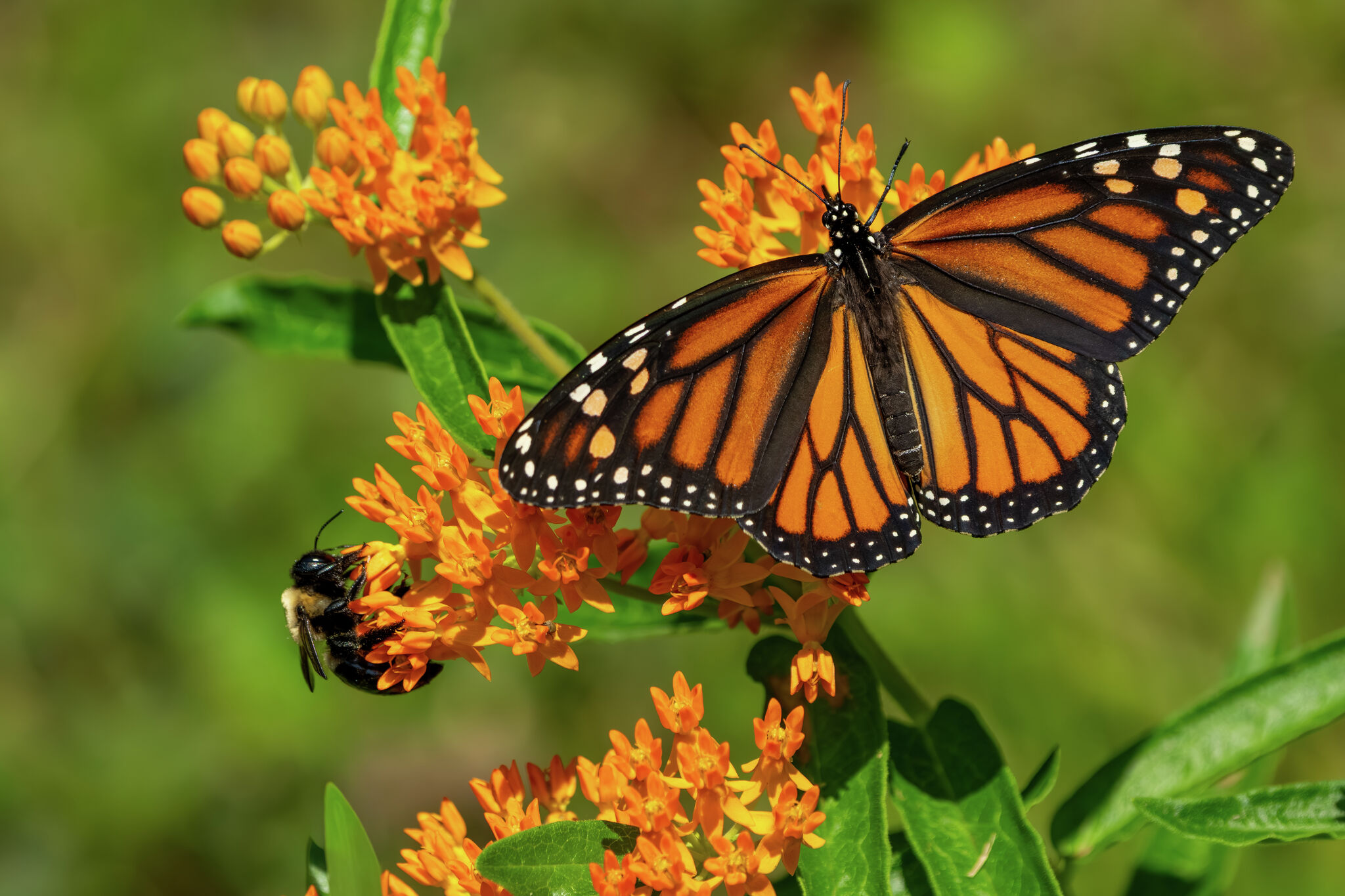
Butterfly milkweed is a popular native flower for pollinator and rain gardens.
Gordon Magee/Getty ImagesSubmitted photo/Benzie Conservation District
Every piece of land — no matter how urban or rural, big or small — is part of a wild ecosystem. Even the most manicured yards are subject to forces of nature beyond our control.

I’m sure that’s been on everyone’s minds, considering the severe weather Michigan has experienced this spring. Locally, the heavy rains washed out roads, flooded yards and triggered significant erosion. As I watched the rapid changes take place around me, my thoughts often drifted to the ways plant life interacts with stormwater.
Article continues below this ad
I want to stress that no garden can stop the effects of a 500-year — or even 100-year — flood event. However, native plants can help limit those effects. Your garden isn’t a magical solution, but it is a very important teammate when it comes to land management.
Native flowers, grasses and shrubs are natural problem solvers. These species have evolved to thrive in their local habitat. They’re used to the rain, wind and frost in our hardiness zone, making them significantly more resilient compared to non-native plants.
As a bonus, since native plants are found in the wild, they don’t need someone to metaphorically hold their hand year after year, and are famously self-sufficient.
Article continues below this ad
You don’t have to turn your yard into a wildflower field to reap the rewards of natural gardening. While there are benefits to keeping part of your property wild, you can also take the opposite approach and simply select native species as the focal points, filler and accents of your flowerbeds.
You may be surprised to learn that many of Michigan’s native plants are the same, trendy species you already know and love. Purple coneflower, black-eyed Susan and little bluestem come to mind.
So, how can your flower garden help with land management? Most native plants have relatively deep root systems, which act as soil stabilizers and sponges. Native plants work with nature, not against it, using their roots to hold shifting soil in place and drink up heavy rains.
Article continues below this ad
For this reason, they also play a vital role in protecting lakes and rivers. As rainfall rushes downhill toward nearby lakes, it picks up other substances along the way that can harm the lake.
For example, when rainfall carries road salt into the water, the water chemistry changes. Similarly, fertilizer nutrients that get washed into a lake can trigger algal blooms. Deep-rooted plants filter extra nutrients and chemicals before they can even hit the water.
Increasingly, people are working to prevent stormwater damage and erosion by planting rain gardens. Balancing aesthetic beauty with biology, rain gardens are intentionally designed to absorb the impacts that can come with heavy rains.
Tip of the Mitt Watershed Council describes them as “bioretention basins” because they use natural processes to store water and help it soak into the ground.
Article continues below this ad
Rain gardens are most effective as shallow basins located on otherwise flat land, as opposed to on slopes. Their location should also have decent drainage. This placement allows plants to interact with stormwater, filter pollutants it may be carrying, drain the water into the soil, and recharge the groundwater.
You may recall that last year, the village of Beulah underwent a major construction project to upgrade its stormwater system. As part of this project, the road end of Second Street is getting its very own rain garden.
Thanks to a grant from the Wildflower Association of Michigan, the road end of Second Street will soon feature a lush garden of butterfly milkweed, blue flag iris and other beautiful native plants working hard to protect Crystal Lake.
Benzie Conservation District is excited to lead this portion of the project in conjunction with the village of Beulah, Crystal Lake Watershed Association and generous volunteers. Benzie Conservation District will share more details about the rain garden soon.
Article continues below this ad
I’ve heard it said that trying to design the perfect feature in your garden is like fighting nature, but I’m not convinced that’s the case. Careful planning can make your garden not only a beautiful sight but also a proactive part of your land and water management efforts.
By getting creative and planting with purpose, your garden can work with nature, and for you.
Jessica Barnard is the communications and development coordinator for Benzie Conservation District. Connect with her at jessica@benziecd.org.
Comments are closed.