
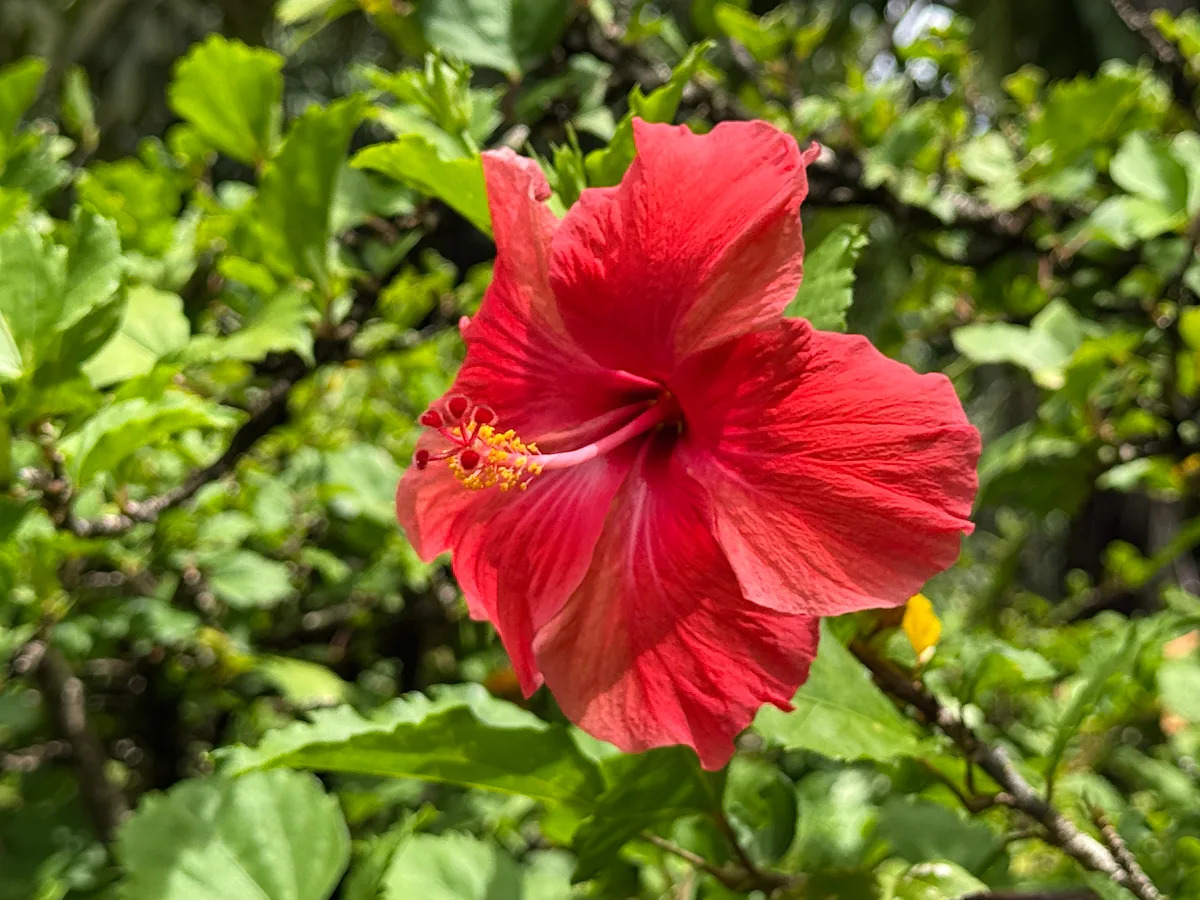
Adding red flowers to your garden introduces vibrant pops of color, creating a warm and lively atmosphere. With a variety of plants available in rich red hues for every season, your garden will be sure to turn heads and catch onlookers’ attention. From the deep tones of red chrysanthemums to the bright beauty of roses, these flowers are widely available and simple to grow.
Here’s a list of 20 varieties to brighten your garden, bringing in the perfect touch of spring and summer cheer.
Hibiscus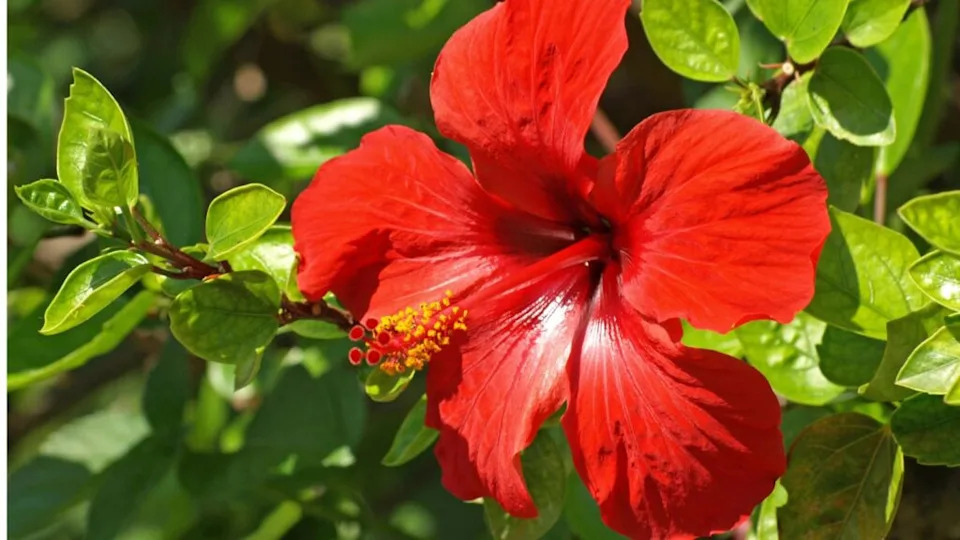
Image Credit: Deposit Photos
With its large, showy flowers, the hibiscus is a summer staple with a tropical feel in gardens. It enjoys full sun to part shade and reaches heights of 4-6 feet in zones 9-12.
These trumpet-shaped flowers have high vitamin C and antioxidant content, and are often used in teas and natural remedies. It attracts pollinators like butterflies and hummingbirds, adding both color and life to outdoor spaces.
Lantana (Lantana camara)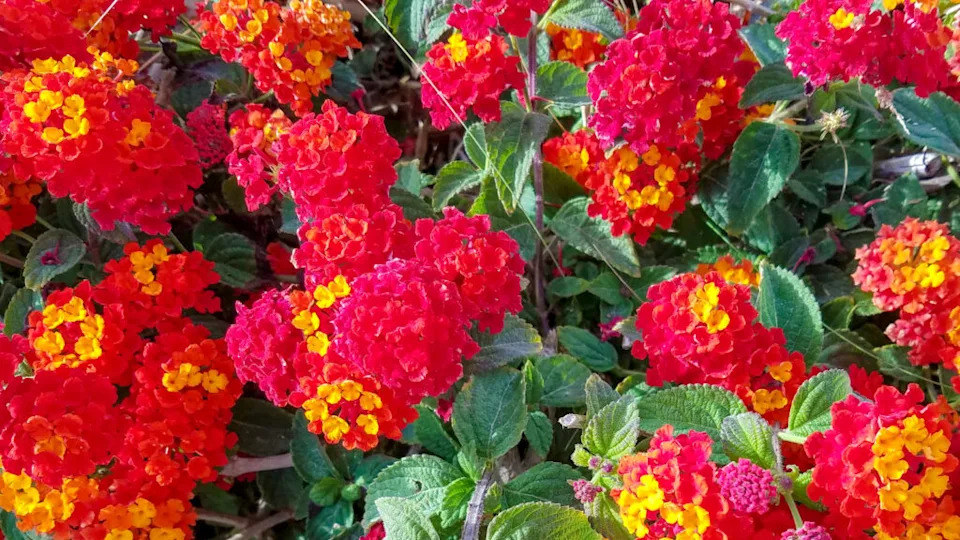
Image Credit: Deposit Photos
Lantanas are sun-loving perennials that are treated as annual plants in cooler climates but are hardy in zones 9 to 11. Its clusters of small, brightly colored flowers can attract butterflies and hummingbirds during the growing season, making it a perfect addition to any garden.
Coreopsis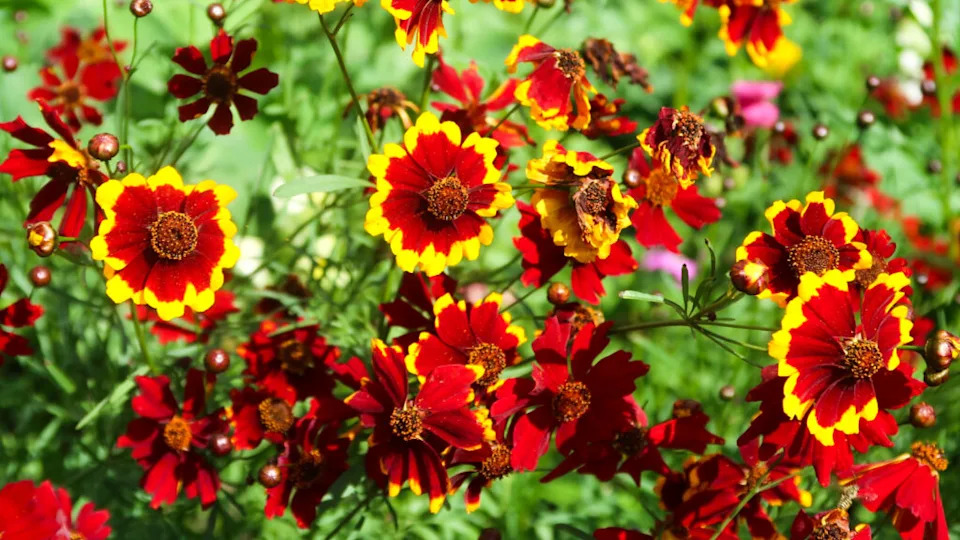
Image Credit: Deposit Photos
Coreopsis, also known as Tickseed, is known for its bright, daisy-like, cheerful flowers in shades of yellow, gold, orange, red, and pink. This hardy, drought-tolerant plant blooms from early summer to early fall, adding lasting color to the garden.
It thrives in full sun and well-drained soil, making it an easy-care option for various settings. Coreopsis thrives in zones 4 to 9.
Daylilies (Hemerocallis)
Image Credit: Deposit Photos
Daylilies are a favorite in many gardens. They come in a spectrum of yellow to shades of red. These plants are easy to care for and do well in full sun and partial shade.
Although each flower blooms for only one day, the abundance of buds ensures a long blooming season that spans several weeks. As perennials, Daylilies return yearly, growing more robust and producing more flowers as they age.
Shrub Rose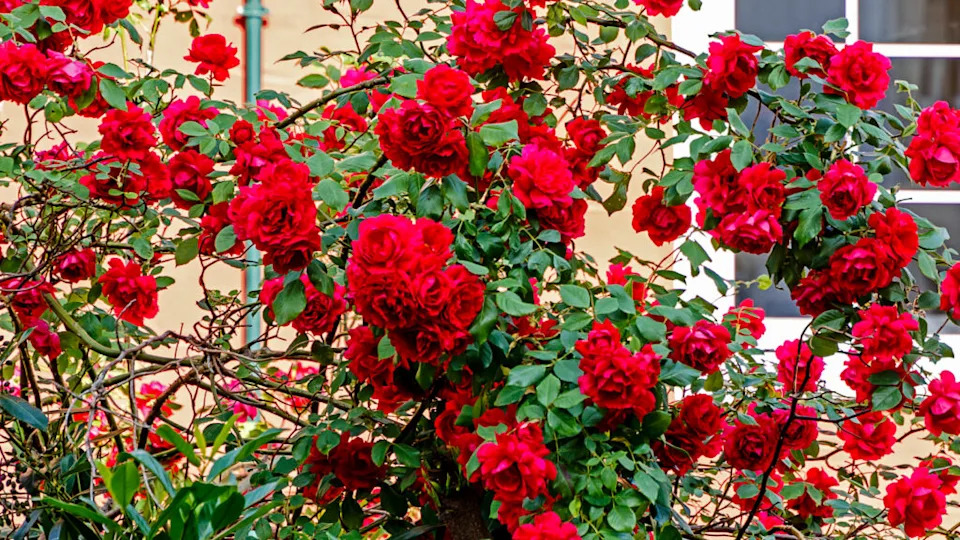
Image Credit: Deposit Photos
Shrub roses bloom from late spring until the first hard freeze. They are hardy and disease-resistant. They offer a variety of colors and fragrances, thriving in full sun across zones 5-8. This plant can vine around a trellis, pergola, or fence. They’re perfect for adding long-lasting color to any garden spot and make great cut flowers.
Chrysanthemum (Mums)
Image Credit: Deposit Photos
Chrysanthemums are daisy-like flowers that are grown as perennials in zones 5 to 9, but are often grown as annuals in other zones. They require full sun and well-drained soil, blooming in late summer to fall – some up until the first frost. They are great for use in late-season floral arrangements.
Flowering Quince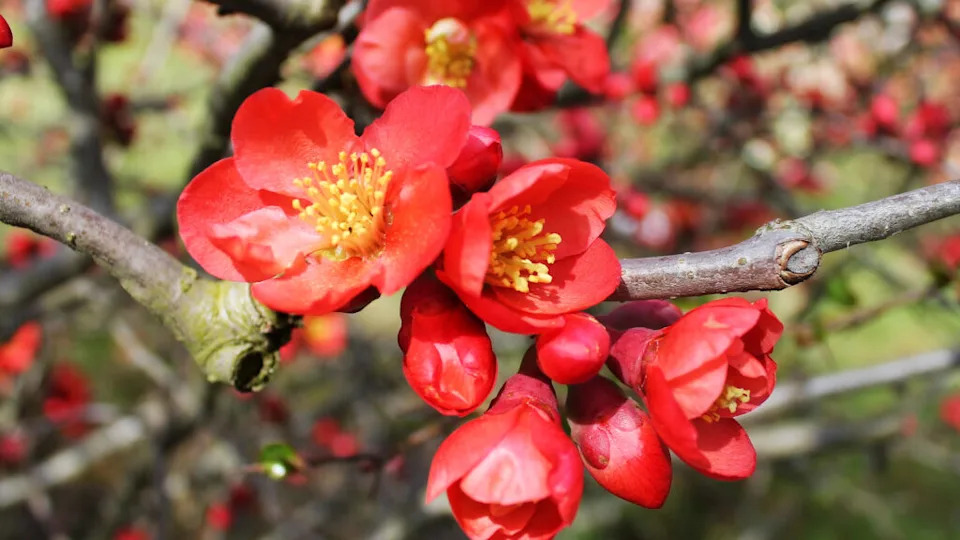
Image Credit: Deposit Photos
Early bloomers and flowering quinces celebrate the spring with their vibrant flowers. They’re resilient, thrive in zones 5-9, and can handle heat, drought, and various soil types.
Geranium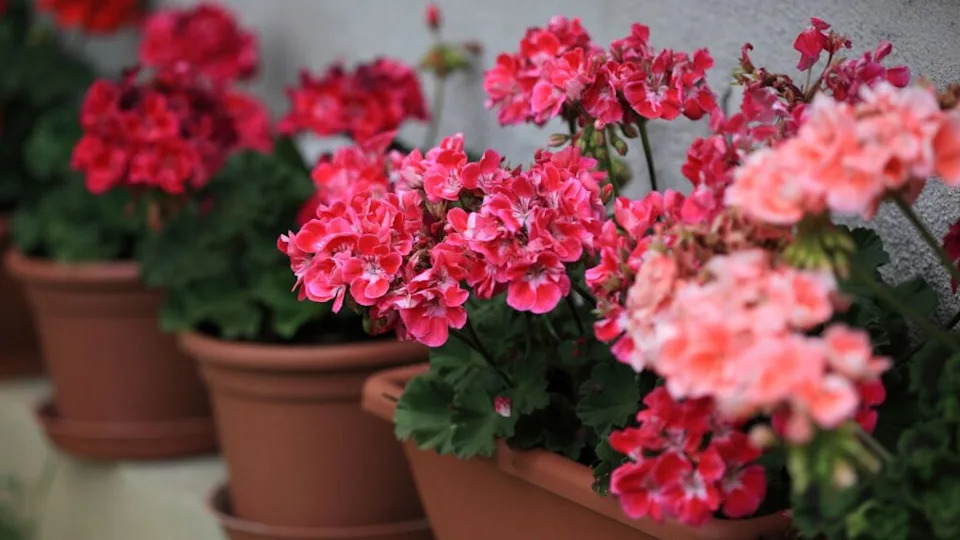
Image Credit: Deposit Photos
Perennial Geraniums are hardy perennials that bloom in various colors and prefer full sun to light shade. Growing and flourishing in simple, well-drained, fertile soil is easy. It is pest-free and disease-free and blooms from early summer to fall. Zones 4-7.
Penstemon (Penstemon spp.)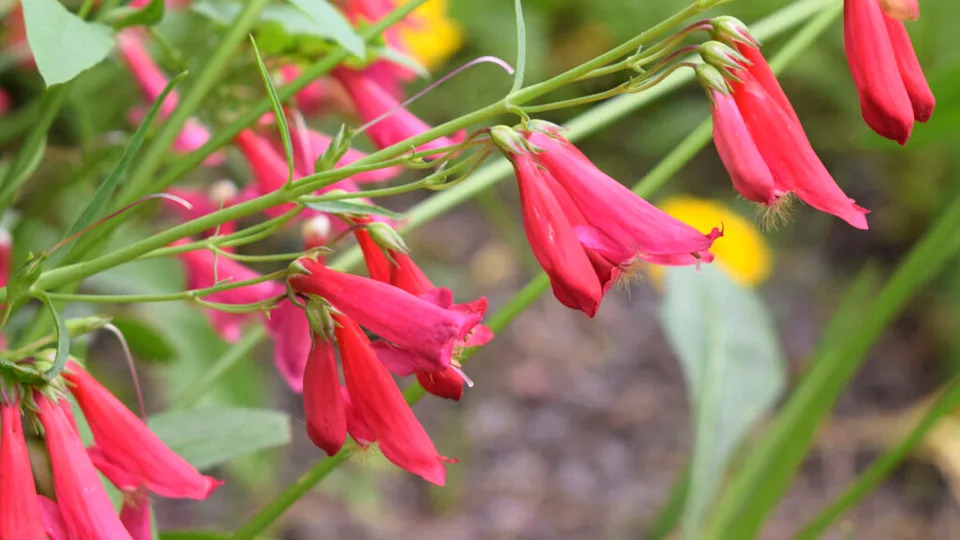
Image Credit: Deposit Photos
With tubular flowers perfect for hummingbird feeding, Penstemon, especially the red-flowering varieties, is a must-have for a hummingbird garden.
Bottlebrush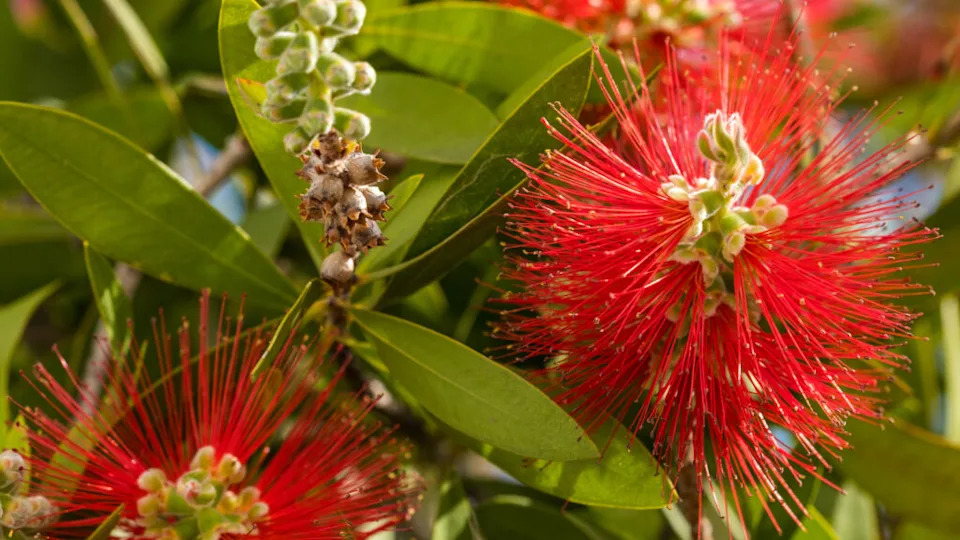
Image Credit: Deposit Photos
Unique for their red, brush-like flowers, bottlebrush shrubs attract hummingbirds and thrive in full sun to part shade, reaching up to 10 feet in warmer zones.
Azalea (Rhododendron spp.)
Image Credit: Deposit Photos
Azaleas dazzle with spring blooms in vivid shades, some varieties offering foliage that lasts all year. They enjoy slightly acidic, well-drained soil and can brighten both sunny and partially shaded spots.
Some varieties also offer evergreen foliage, adding year-round interest. Use azaleas to anchor flower gardens or as foundation plantings in zones 5–9.
Fuchsia (Fuchsia spp.)
Though not all Fuchsias are red, those that are tend to be hummingbird magnets. They thrive in cooler, shaded conditions, making them ideal for adding a splash of color to darker parts of the garden.
Petunia
Petunias are annuals in most zones but perennials in zones 9 to 11. They bloom profusely in full sun and offer a variety of colors and patterns.
Columbine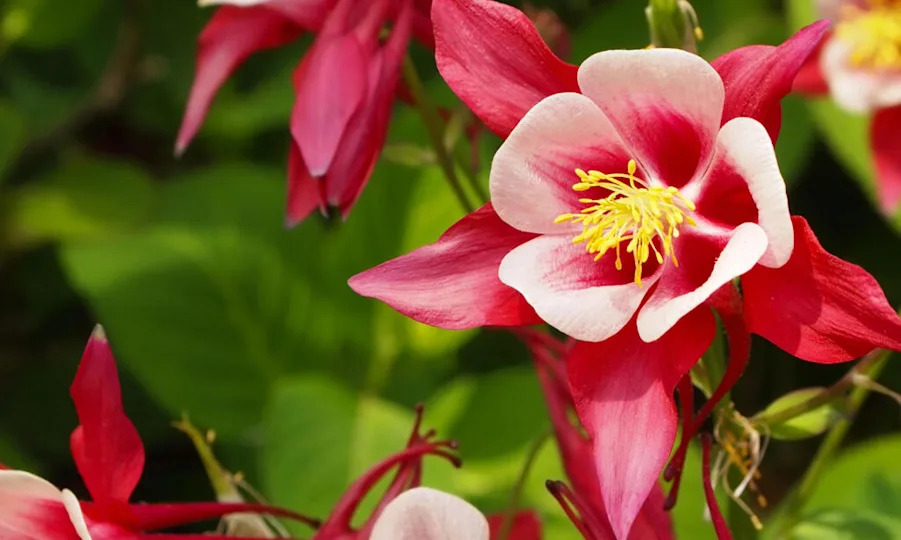
Image Credit: Deposit Photos
Columbine plants are flowering plants with bright flowers contrasting against dark, clover-shaped leaves. The red and yellow flowers of the native columbine are not only beautiful but also a magnet for hummingbirds.
It blooms in spring to early summer. This sun-loving perennial is Ideal for slopes, ledges, or open garden spaces. Columbine adds beauty, attracts wildlife, and deters deer. Zones 3-9
Zinnias
These colorful flowers are easy to grow and bloom all summer, providing bees and other pollinators with a continuous feast of nectar. Zinnias are a must-have in any bee-friendly garden.
Carnations (Dianthus caryophyllus)
There are several species of dianthus, and most of them are native to Europe and Asia. Dianthus thrives in USDA zones 3-9 with 6-8 hours of full sunlight daily. They are drought-tolerant and can handle almost any type of soil. Additionally, they are resistant to pests such as aphids and slugs.
They’re often pink, red, or white, and are popular in flower beds and borders. They bloom best when deadheaded regularly.
Red Poppies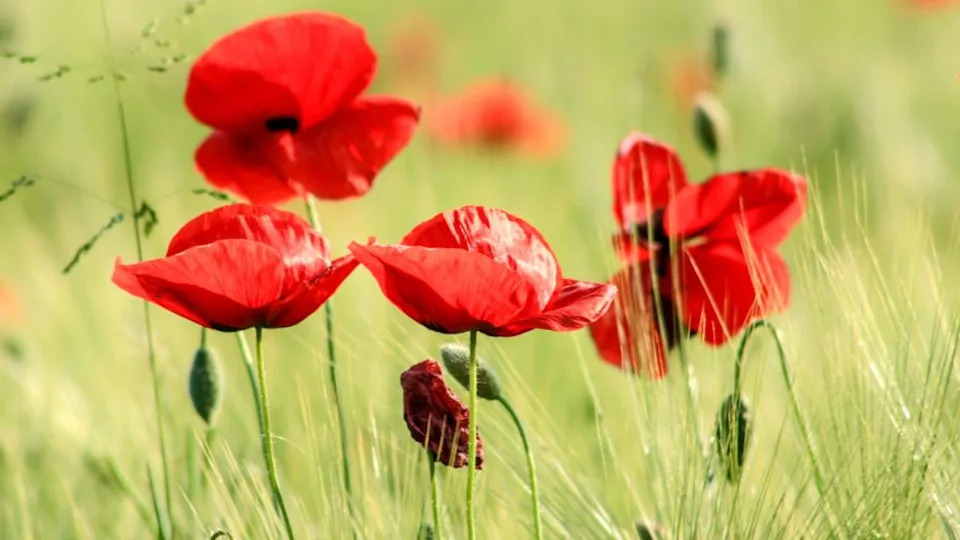
Image Credit: Deposit Photos
Poppies are known for their vivid, soft, papery petals, available in a range of colors, including red, orange, white, and pink. They add a dramatic pop of color to gardens and thrive in conditions that balance sun, shade, and nutrient-rich soil. These wildflowers are worth adding to your garden.
Tulips
Tulips come in a variety of colors, including red. Tulips open during the day and close tightly at night or in cold, cloudy weather. Their petal movement helps regulate internal temperature and protect their reproductive parts.
Tulips grow best in USDA zones 3–7 in full sun and well-drained soil. Their flowers need a cold period to bloom, which is why they’re typically planted in the fall. After blooming, let the leaves yellow naturally before cutting back, and this feeds the bulb for next year’s growth.
Amaryllis (Hippeastrum spp.)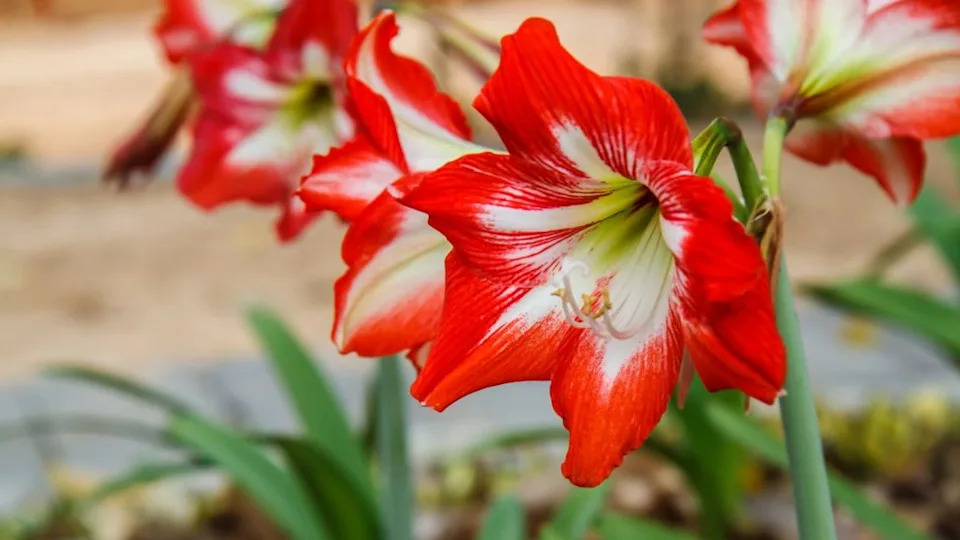
Image Credit: Deposit Photos
Known for their dramatic trumpet-shaped blooms, amaryllis brings bold color to indoor displays or warm-zone gardens. While often grown indoors during the colder months, these plants in tropical and subtropical regions (zones 9–11) can thrive outdoors, offering vivid red blooms.
They prefer part sun and good drainage, making them a unique addition to container gardens or bright spots with indirect light.
Cardinal Flower (Lobelia cardinalis)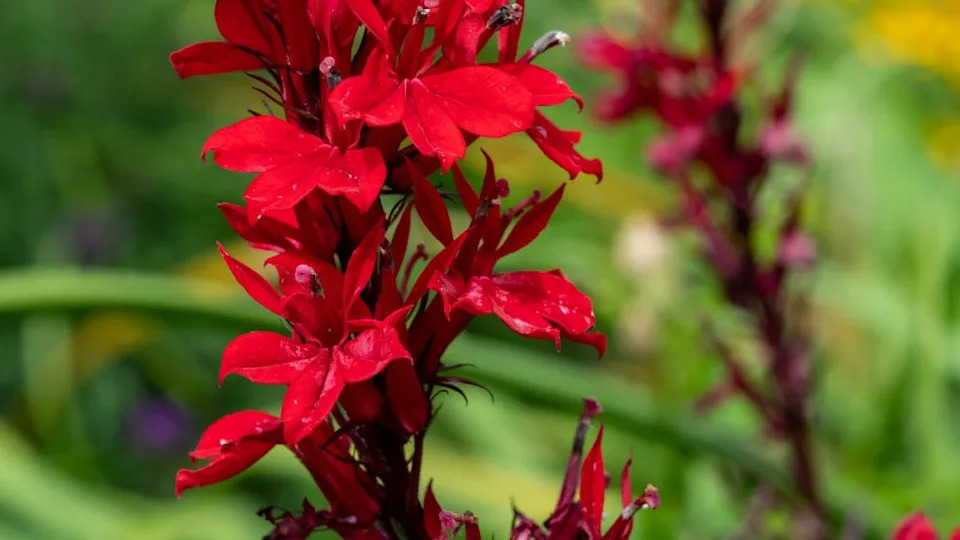
Image Credit: Deposit Photos
With its brilliant red spikes, the cardinal flower is a striking choice for shaded gardens. This moisture-loving perennial grows up to four feet tall and remains disease-resistant throughout the season. Zones 3-9.
Comments are closed.