
By Pam Rosendal, Colorado Master Gardener
By all reports, the number of people engaged in birdwatching has doubled in recent years. Research finds that birdwatchers feel less stress, anxiety and depression and report a greater sense of well-being. That’s no surprise to those of us who enjoy observing our feathered friends. It’s hard to imagine anything better than enjoying a bird-friendly, shade-grown coffee on the patio while listening to chickadees, finches and robins or, in my backyard, crows raising their young. Their calls are by no means melodious, but they are absolutely fascinating to watch.
Sadly, birds are experiencing the devastating effects of climate change and habitat loss. According to a study by the Cornell Lab of Ornithology, North America has lost nearly 3 billion birds since 1970. Closer to home, grassland bird populations have decreased by 43% or 720 million birds. These losses will only continue to grow in the future. Fortunately, we can take simple steps to make our outdoor spaces bird-friendly and support bird populations well into the future.
Shelter and nesting sites
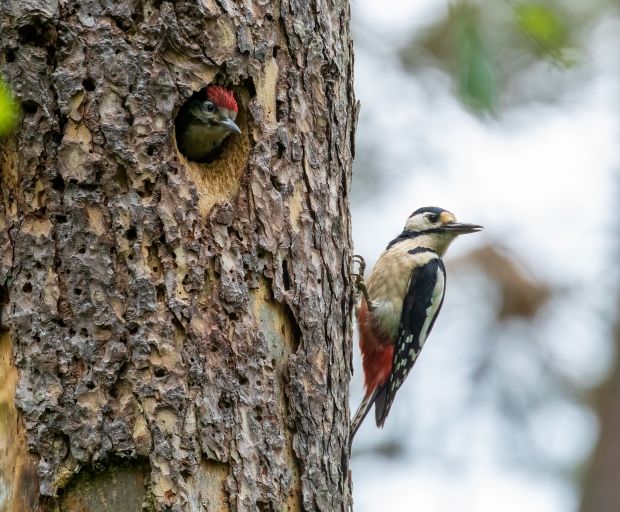 Several species of birds, like this downy woodpecker, nest in tree cavities. (Getty Images)
When gardening for the birds, it is important to provide suitable shelter and nesting sites. Creating layers in your landscape – from ground covers to canopy trees – accommodates the diverse preferences of different bird species. Trees, shrubs and dense vegetation can offer protection from predators, extreme weather conditions, and serve as roosting areas. Choose plant species that give a variety of heights, canopy shapes, and foliage density to cater to different birds’ preferences.
Native species are preferable. Native flora provides birds with natural sources of food, such as berries, fruits and nectar, while also supporting the insect population that serves as a vital protein source for many bird species. When choosing plants, opt for a variety of species that bloom and bear fruit at different times throughout the year, ensuring a consistent food supply. Additionally, native plants are adapted to the local climate, requiring minimal maintenance and reducing the need for pesticides and fertilizers that can harm birds. That said, there are thoughtful non-native additions to the landscape that also meet birds’ needs.
For Colorado gardeners, several species stand out as exceptional choices for supporting bird populations. For larger properties, these native trees provide the vertical structure many bird species require. Oaks (Quercus spp.) are a preferred nesting spot for nuthatches, providing the cavities in which to build their nests and food for many bird species in the form of insects and acorns. Ponderosa pines (Pinus ponderosa) offer year-round shelter, and their seeds feed crossbills, nuthatches and chickadees throughout winter. At higher elevations, quaking aspens (Populus tremuloides) fill a similar role for cavity-nesting birds like woodpeckers and chickadees. Their soft wood is ideal for excavating nest holes, and their catkins provide early spring food.
For those with smaller yards, large shrubs and small trees support birds equally well. Crabapples (Malus spp.), the beacon of spring, are particularly valuable as their flowers attract insects. Their small fruits persist through winter, providing a readily available meal when other food sources are depleted. Waxwings, robins and thrushes eagerly consume these fruits. Rocky Mountain juniper (Juniperus scopulorum) provides year-round shelter with its dense evergreen foliage and its blue-gray berries feed cedar waxwings and various sparrows through winter months. Similarly, chokecherry (Prunus virginiana) and serviceberry (Amelanchier alnifolia) deserve a place in every Colorado bird garden. Both offer summer fruits that attract bluebirds and robins while their white spring blossoms draw insects (food for young birds) and hummingbirds. Their multi-stemmed branching structure offers nesting sites for smaller songbirds.
Low-growing shrubs like kinnikinnick (Arctostaphylos uva-ursi) and Woods’ rose (Rosa woodsii) provide ground cover for towhees and juncos, while taller shrubs like mountain mahogany (Cercocarpus montanus) offer mid-level nesting sites. This layered approach mimics natural ecosystems and supports a greater diversity of bird life.
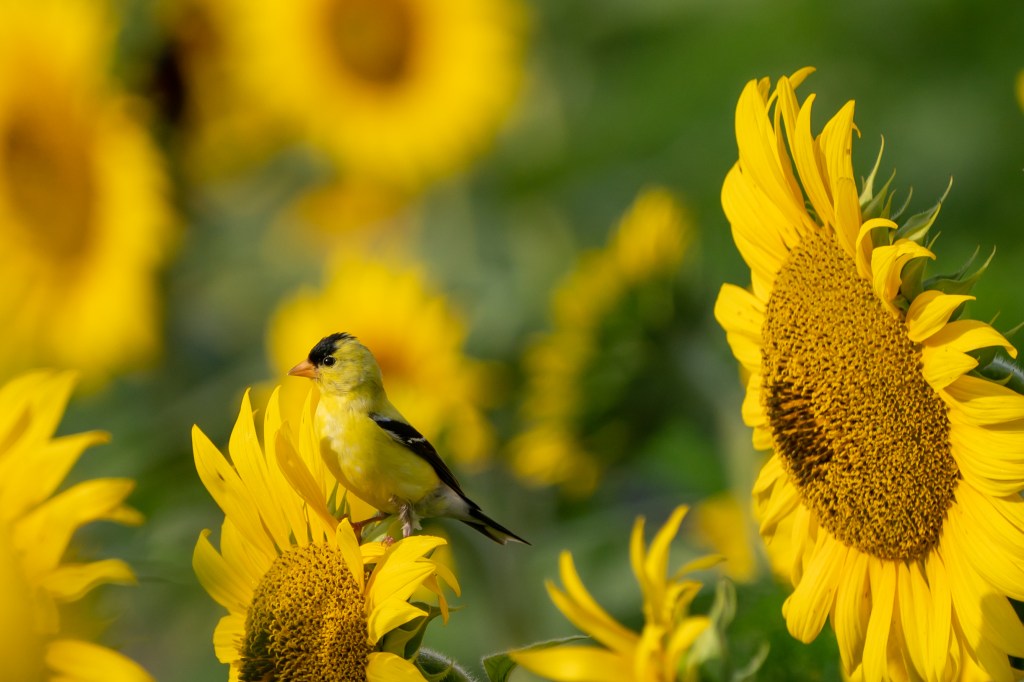
Native and some non-native flowers play an equally important role. Golden banner (Thermopsis montana) and scarlet gilia (Ipomopsis aggregata) are hummingbird magnets, with the latter’s tubular red flowers perfectly adapted for the birds’ feeding habits. For seed-eating birds like goldfinches, chickadees and pine siskins, narrowleaf purple coneflower (Echinacea angustifolia), black-eyed Susan (Rudbeckia hirta) and sunflowers (Helianthus annuus) provide nutritious seeds that persist into fall and winter. These plants also support the caterpillar populations that form the protein-rich diet essential for raising nestlings. For winter interest and bird food, leave the seed heads standing rather than cutting them back. Woods’ rose, if not deadheaded after blooming, also produces rose hips that feed birds well into winter.
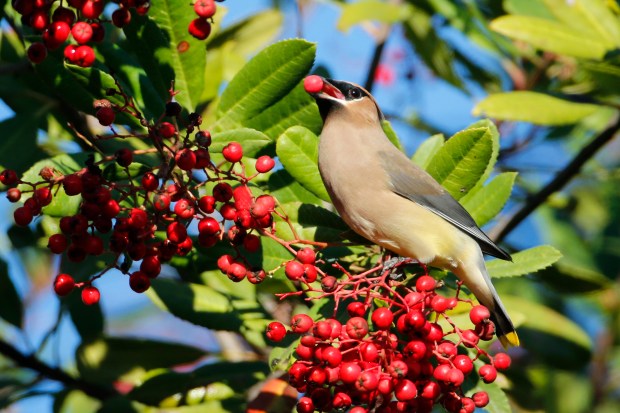 Several trees and shrubs provide necessary food during winter, like berries for this cedar waxwing. (Getty Images)
Dead trees or snags are also valuable spaces for cavity-nesting birds like woodpeckers and chickadees. If you have a dead tree that poses no safety hazard, consider leaving it standing. These snags host insects that attract woodpeckers, whose excavated cavities later serve as nesting sites for chickadees, nuthatches, wrens, and even small owls. One dead tree can support multiple generations of diverse bird species over many years.
Consider including birdhouses or nest boxes designed for specific bird species found in your area. They can compensate for natural habitat loss and provide safe spaces for breeding and raising young. Mountain bluebirds and house wrens readily accept appropriately sized nest boxes. Properly positioned and maintained nest boxes can significantly boost local populations of these beneficial insect-eaters.
Don’t have a yard? You can still help birds with a container garden on your balcony or patio. No oasis is too small to support birds. Container gardens can feature coneflowers, sunflowers and even dwarf serviceberry cultivars that provide food and some shelter.
Water: the essential element
A clean water source is essential to attract birds. Installing birdbaths, shallow pools or even a small pond can offer birds a place to drink, bathe and cool off. The water feature should be designed with safety in mind, incorporating shallow areas for easy access and smooth rocks or branches for perching. Regular maintenance is crucial to avoid stagnant water and to keep the water source clean. Audubon offers tips for cleaning birdbaths, which should be done at minimum every few days during warm weather to prevent disease transmission.
Consider adding a drip or misting system near the water feature, or even in a tree, to mimic rainfall, which can attract insect activity and further entice birds to visit. Hummingbirds especially enjoy a mister, often flying through the spray repeatedly on hot afternoons. In Colorado’s arid climate, the sound of moving water can attract birds from surprising distances, making even a simple solar-powered fountain a valuable addition to the garden.
During winter, heated birdbaths become critical resources when natural water sources freeze. Many bird species remain in Colorado year-round, and access to unfrozen water can mean the difference between survival and perishing during harsh cold snaps.
The pesticide problem
Reducing or eliminating the use of pesticides in the landscape is crucial for bird conservation. Pesticides not only directly harm birds but also impact their food sources by reducing insect populations. To put this in perspective, it takes 6,000 to 9,000 caterpillars to raise one clutch of chickadees. Adult hummingbirds eat nearly 2,000 insects daily, supplementing their nectar diet with essential protein.
These statistics underscore why seemingly harmless applications of insecticides can devastate bird populations. When we eliminate caterpillars from our gardens, we remove the primary food source for nestlings. Even birds we consider primarily seed-eaters, like finches, feed their young almost exclusively on insects and spiders during the critical early weeks of life.
Explore alternative methods for pest control, such as integrated pest management techniques, which emphasize biological control and the use of organic products. Implementing companion planting strategies and encouraging beneficial insects can help naturally manage pests, creating a healthier environment for birds and other wildlife. Attracting birds themselves serves as natural pest control – a single chickadee family can consume thousands of aphids, beetles, and caterpillars during the breeding season.
Year-round planning
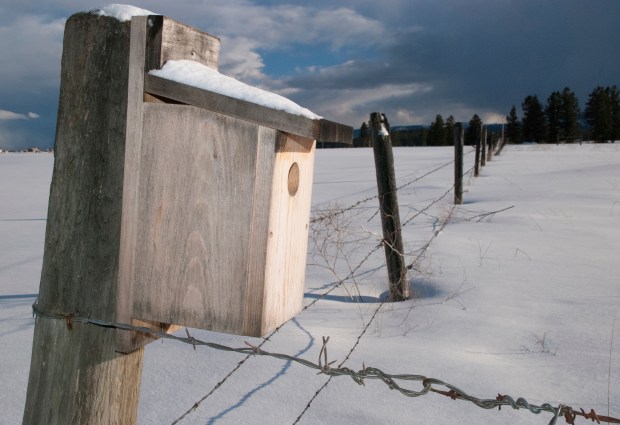 Mountain bluebirds and house wrens readily accept appropriately sized nest boxes. (Getty Images)
Colorado’s dramatic seasonal changes require thoughtful planning for year-round bird support. Spring migrants need nectar sources and insects, making early-blooming natives like pasqueflower (Pulsatilla patens) and golden banner essential. Summer residents benefit from the insect abundance supported by diverse plantings and need fresh water to cope with heat.
Fall migration brings different needs. Seed-producing plants like native grasses, sunflowers and coneflowers should be left standing to provide fuel for southbound journeys. Berry-producing shrubs like chokecherry and serviceberry offer high-energy food for birds preparing for migration or winter survival.
Winter requires special attention in Colorado. Evergreen natives like juniper and pine provide crucial shelter during storms. Persistent berries and seed heads offer much needed food during harsh weather. Residents like chickadees, nuthatches and woodpeckers depend on these resources to survive until spring.
By transforming our gardens into bird-friendly habitats, Colorado residents can play a vital role in reversing the alarming decline in bird populations. Each plant we add, each pesticide application we skip, and each water source we maintain creates ripples of positive impact. Our collective efforts, multiplied across countless yards and neighborhoods, can provide the connected network of habitat that birds desperately need. The reward is a landscape alive with song, color, and movement – a daily reminder of the wild beauty that persists when we make space for nature.
Resources for success
To learn more about creating a bird haven in your landscape, Extension’s Attracting Birds (Plant Talk #1702) is a good place to start. (PlantTalk.colostate.edu)
Audubon Rockies (audubon.org) offers plentiful support through its Habitat Hero program, including instructional videos and garden design ideas.
The Colorado Native Plant Society (CONPS.org) has a wealth of information about native plants. Be sure to check its events calendar for workshops, webinars, field trips and more.
Cornell Lab of Ornithology’s All About Birds (allaboutbirds.org) will help identify the birds visiting your yard. Their Merlin app is a must-have for birders of all skill levels, using sound recognition and photo identification to help you name your feathered visitors.
Xerces Society (xerces.org), an authority on insects, hosts webinars and opportunities to join community science projects. Its list of native plants for pollinators and beneficial insects is available for download and provides excellent guidance for supporting the insect populations that birds depend upon.
Pam Rosendal is a freelance writer and Colorado master gardener.
Comments are closed.