
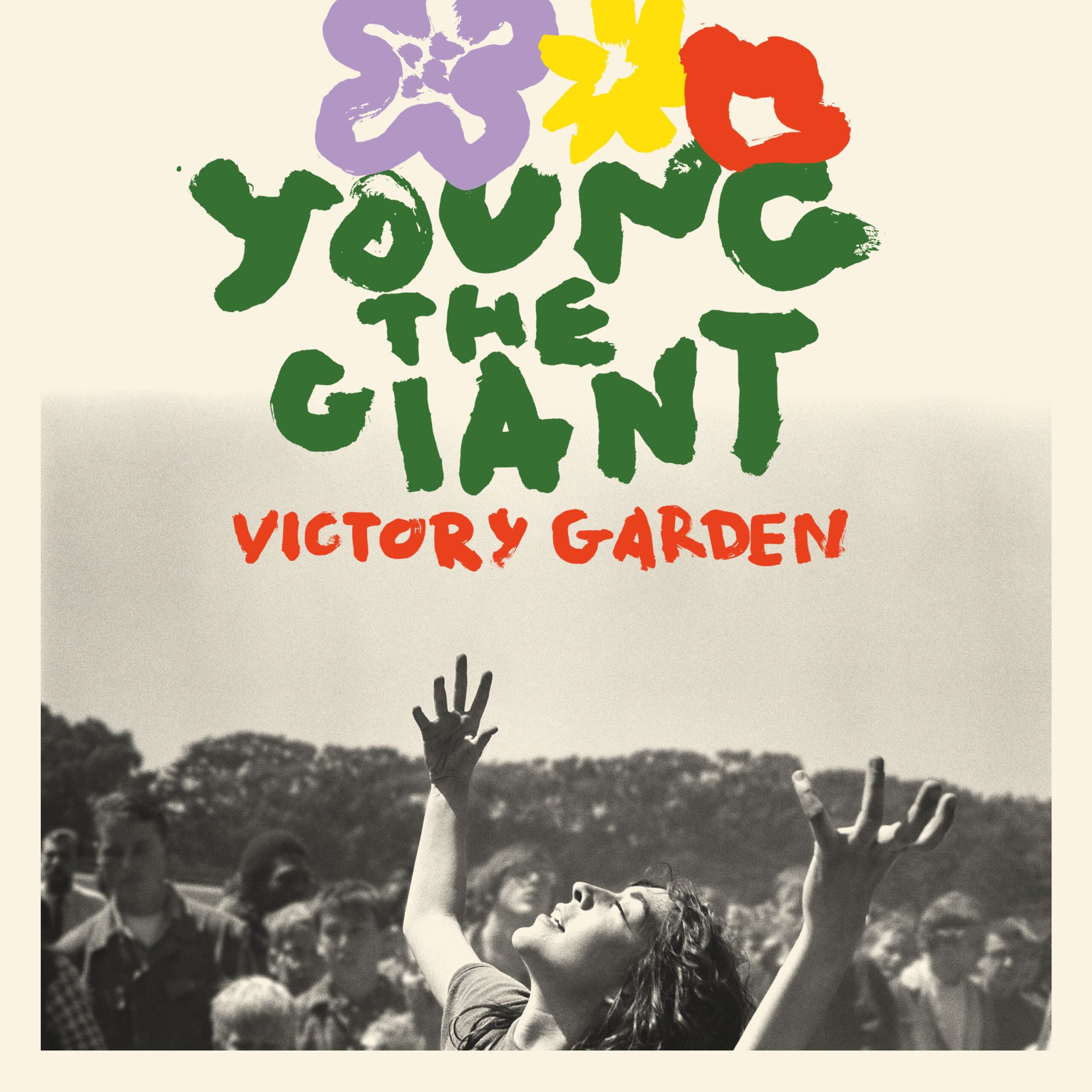
Young The Giant have never really been a band built for passive listening.
Even when they’re writing the kind of soaring indie rock that slips into festival sunsets and late night drives, there’s usually something heavier sitting underneath it, identity, distance, grief, connection, hope.
On their new album ‘Victory Garden’, the California outfit lean fully into that emotional push and pull, the record feels expansive without losing intimacy, there are songs about love, exhaustion, ego, family, survival, and trying to hold onto optimism while the world feels increasingly fractured.
Across 11 tracks, Young The Giant move between dreamy indie textures, cinematic rock moments, and quiet reflection without ever sounding disconnected from themselves.
For this exclusive track by track feature, vocalist Sameer Gadhia and guitarist Eric Cannata take us inside the making of ‘Victory Garden’, breaking down the stories, emotions, and strange moments that shaped the album, from writing retreats in Joshua Tree and Idyllwild to the emotional aftermath of the Los Angeles fires.
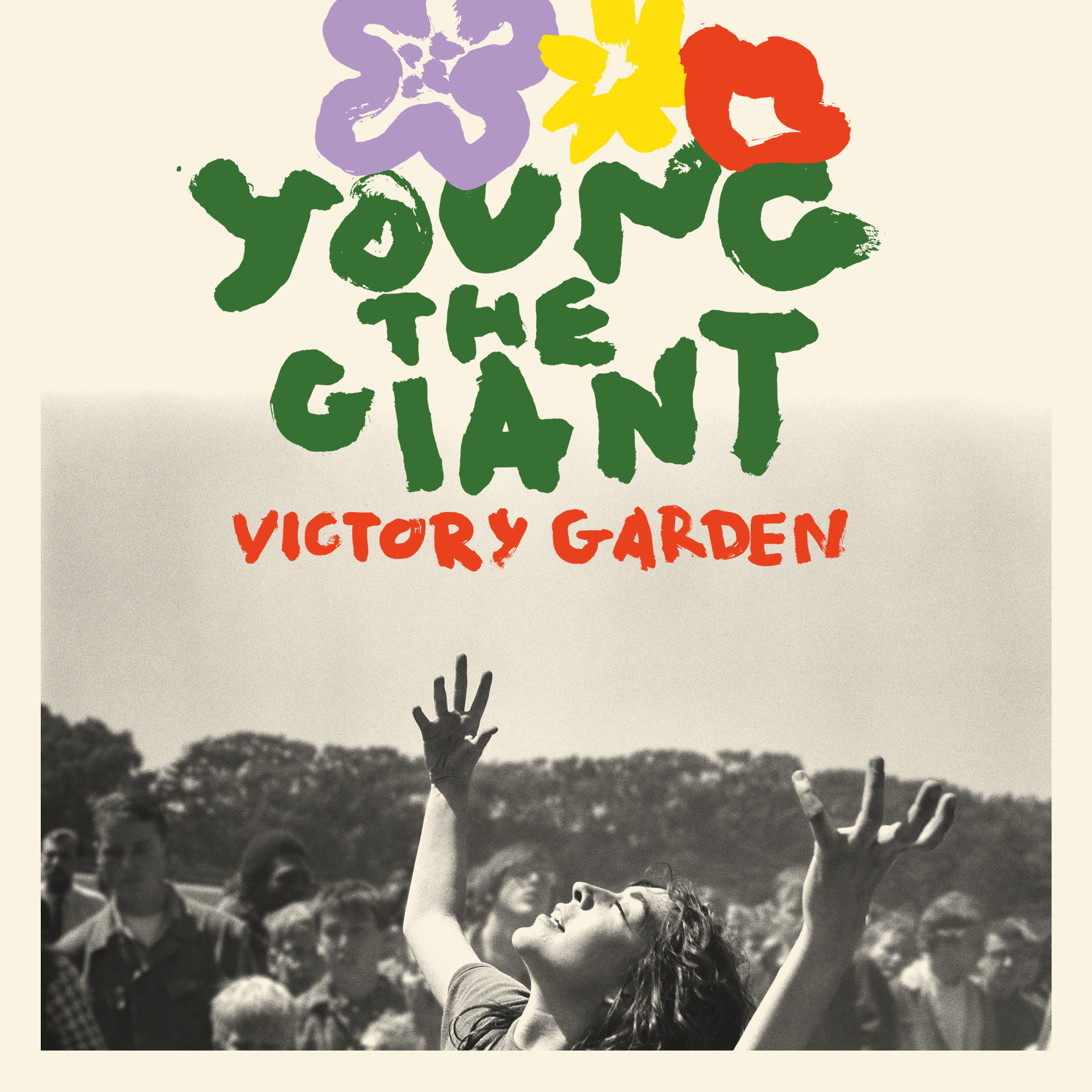
Evergreen
Sameer Gadhia: Evergreen’s the perfect intro to the record, into the Victory Garden. It takes you right in. It’s a song that was written at the very end of the writing process that really made us feel like the record had arrived, and that everything that we wanted to say was said. I think this song is the best example of that.
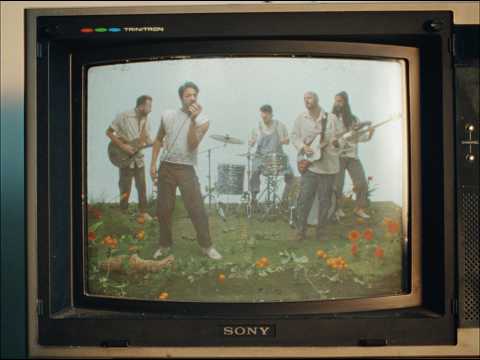
Different Kind Of Love
Eric Cannata: A Different Kind Of Love is a song we wrote that feels like a great mission statement overall for the record. It taps into this idea of radical empathy and it taps into the harder side of love that might not be showcased as much in terms of the difficult conversations, having empathy when it’s the hardest, and really trying to break through the walls that we build as we get into adulthood and try to find the joy again in our lives. It was written at our band house in Los Angeles, and it just felt like a real culmination of all five of us in a room together bouncing off of each other and writing something that we felt like was a real snapshot into the song being greater than any one individual.
Bitter Fruit
Sameer Gadhia: Bitter Fruit is about seeing the world through our children’s eyes. In order to be a parent, in order to be a steward of the world that we live in, you want to try and put something good there. And this song is about the struggle, and to try and see the world clear, fresh and new.

Already There
Eric Cannata: Already There is a song about being far away from those that we love and those that we’re the closest to, and realizing that you’re home no matter what with those people in your life. It comes from a real place of us travelling a lot for work, touring a lot, and being far away from home and our families. It’s an ode to that longing and love and the realisation that we’re also not necessarily looking for some end result or end goal, but that we have already arrived in being present, and being present with those that we love.
Ships Passing
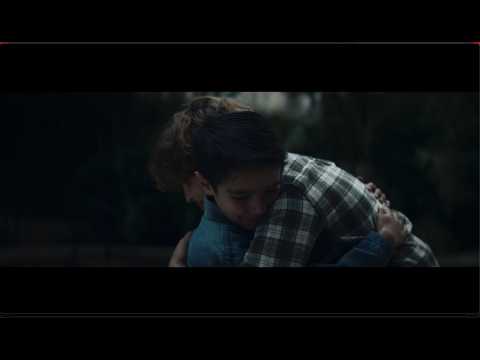
Sameer Gadhia: Ships Passing I think for us as a band is a shedding of trauma, at least in the verses. It’s where that song really took shape. And having these individual experiences of two bodies, two things that pass in the night that are going through the same thing, but are so separate from one another. It’s one of those songs from the record that really is surreal and allows the listener to have their own experience in it.
This Too Shall Pass
Eric Cannata: This Too Shall Pass is the oldest written song on the record. We originally wrote it, I believe, for Home of the Strange, our third record. And it was a song that I believe was inspired by someone who was a friend of Sameer’s, or a friend of a friend, who was going through a very difficult time. It’s a reminder to those going through a very difficult time to have hope and to continue on, continue fighting. It’s a song that took us a long time, clearly, to put out in the world, and it took some help, arrangement-wise, from Brendan [O’Brien, producer], but I’m so glad that it made it on the record. And it was actually one of these things where you hear about bands having certain songs that they’ve written a long time ago that ends up making a record in the future. I think that with this particular record, we wrote everything new, and This Too Shall Pass was a song that just raised its hand and was like, “I belong on this record.” Everything from the metaphors about trees and fruit and thematically as well, all these different things, it just fits so well.
Mona Lisa
Sameer Gadhia: Mona Lisa is kind of its own sidequest on the record, in this way. It’s a song that we wrote in the band house, and it really was about the Mona Lisa, the concept of the piece of art, what is happening there, and also the way in which people perceive art and having that dubious honour of being the most famous of anything is like a statement in itself. I saw the Mona Lisa for the first time a few months ago. It was cool. It was very small. I do have a great photo, just a side profile of the Mona Lisa, but then it’s just everyone else just taking the photos, jostling to really take the photos.
God As Witness
Eric Cannata: God As Witness is a song we wrote in our first writing retreat in Idyllwild, and it was a song that almost felt, in a way, like the most traditional rock song on the record, or the heaviest song. There’s also definitely elements sonically of almost outer space elements, I’d call them, like synth bass and weird samples. The song was almost about the Jekyll and Hyde of yourself. It’s like this idea of the most egotistical or the biggest version of yourself. And with the chorus, “lately I’m feeling myself”, it just felt like such a grand statement and almost in a comical way, a larger than life way. Sometimes when we get on stage, it is a part of it, you’re walking on stage and you can sometimes put on this character. We can all put on this character of being larger than life. And I think that song in particular is a good example of where we go into that element of character.
Are You With Me?
Sameer Gadhia: Are You With Me? is another one that was written at the band house. At first it had a cruisy vibe happening, which felt like such a beautiful moment, but it was just stuck there. We really did the work of excavating the song, and that really came out through the bridge of this song. I don’t think it would actually be a song without the bridge, because the bridge is about all the stuff that’s under the surface. The rest of the record is a calm body of water, and the bridge of this song is underneath, it’s just this weight and this mountain that’s underneath stuff that you need to get off of your chest. This song is about trying to acknowledge that, and encouraging people to acknowledge those things within themselves.
The Garden
Eric Cannata: The Garden was a song that we had initially written for our previous album American Bollywood. We never really fully realised it in terms of a musical piece, but it wasn’t until after the L.A. fires that we really dove in lyrically and thematically into this feeling of hopefulness in a time that felt so hopeless, in a time that just felt very dark and difficult for so many people that we know, and people that we’re close to. And just the feeling of that January, post-election and going into a new year with these fires that hit Altadena, the Palisade, Malibu, we felt really inclined or inspired to write something, a song that felt hopeful to us as we were going through a very difficult time then. There’s a lot, both thematically and lyrically, that ties into the rest of the record. It’s called The Garden, the album’s clearly called Victory Garden, and it felt like a song that encapsulates the hopefulness we’re trying to capture with the entire album.
Life Is A Long Goodbye
Sameer Gadhia: This song came from the last of the writing retreats in Joshua Tree, and I think Eric had that beautiful piano part that just came to him immediately. We were rumbling through lyrics, and then with the concept, it felt like everything was so fleeting and it felt like this perfect moment for the end of the record. Eric had the lyric, “life is a long goodbye”. And I think it’s just a beautiful sentiment to see the record off. The thing that makes something special is that it has to end. Initially, the song was actually a lot longer and we took it to Brendan and he was like, “I think this would actually be amazing. It’s just this one poetic piece that’s just two different parts and that’s it. We don’t repeat anything else and we just take it from there”. And that is the point in itself. It yearns to be there longer, but that’s what makes it beautiful, that it has to go.
Final thoughts
What makes ‘Victory Garden’ land isn’t just the scale of the songwriting, it’s the honesty running through it, Young The Giant aren’t pretending to have answers here. Instead, the album feels more like a conversation about learning how to sit with uncertainty, love people properly, and find small moments of hope while everything around you keeps shifting.
There’s a warmth threaded through these songs, even in the darker moments, whether it’s the existential ache of ‘Life Is A Long Goodbye’, the emotional excavation buried inside ‘Are You With Me?’, or the fragile optimism powering ‘The Garden’, the record feels deeply human at a time when so much music can feel disposable or algorithmically flattened.
Listen to ‘Victory Garden’ on your outlet of choice here.
Follow me for more on the Australian and US Metal Scene:
Comments are closed.