
👉 Join our monthly newsletter for native plant guides, design breakdowns, and seasonal planting tips: https://mailchi.mp/brightlanegardens/youtube
Products Mentioned:
Grid Paper for Landscape Design: https://amzn.to/3PhVfo9
Landscape Design Stencils: https://amzn.to/4tFXUa5
Designing a thriving garden in deep shade can feel frustrating… but when you understand how to work with shade instead of against it, everything changes.
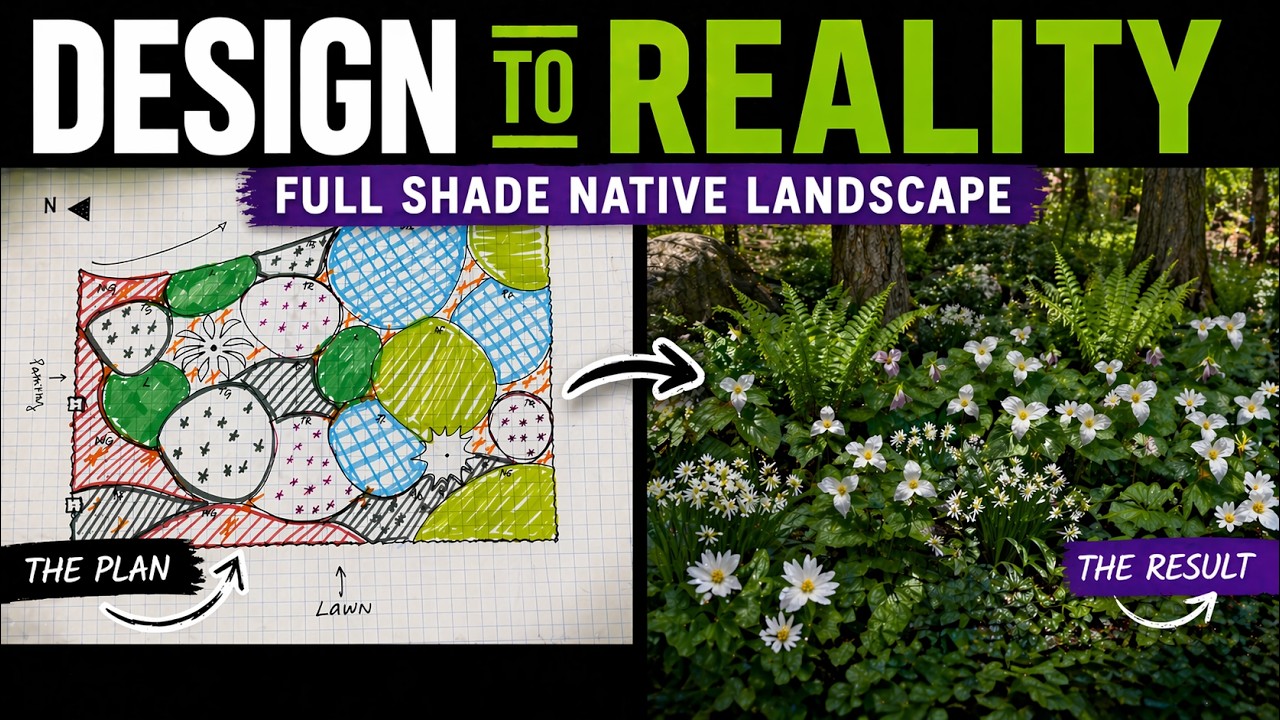
In this video, I walk you through a complete shade landscape design from start to finish, showing exactly how to draw and plan a full shade garden using native plants. This is a true step-by-step tutorial focused on real-world conditions like tree canopy, root competition, and low-light environments.
This approach is ideal for woodland gardens, understory plantings, and shaded areas where traditional landscaping struggles. By using full shade native plants, you can create a landscape that is low maintenance, visually layered, and highly beneficial for local ecosystems.
🌿 What You’ll Learn:
How to start a shade landscape design from a blank space
How to evaluate full shade conditions (light levels, soil moisture, root competition)
How to sketch and map your garden layout before planting
Proven design strategies like clusters, rifts (waves), and matrix planting
How to choose and place full shade native plants for structure and flow
How to design for seasonality, texture, and natural movement
How to create a cohesive understory planting that feels natural and intentional
🌱 Native Plants Featured in This Design:
This full shade native plant garden includes a carefully selected mix of woodland species that thrive in low light:
Maidenhair fern
Wild leeks (ramps)
Prairie trillium (Trillium recurvatum)
White trillium (Trillium grandiflorum)
Wild ginger
Jacob’s ladder
Allegheny spurge
Bloodroot
These plants are ideal for full shade native plant gardens, offering early spring blooms, layered foliage, and strong ecological value for pollinators and native insects.
🌳 Why Native Plants for Shade?
Using native plants in shade landscape design goes far beyond aesthetics:
Supports native pollinators and beneficial insects
Provides habitat and food sources for wildlife
Adapts naturally to woodland soil and light conditions
Requires less maintenance once established
Creates resilient, long-lasting landscapes
A well-designed full shade garden with native plants can outperform traditional shade landscaping while requiring less long-term input.
📐 Who This Video Is For:
Homeowners with shaded yards or woodland properties
Gardeners struggling with grass or plants failing in shade
Anyone interested in native plant landscaping
Landscape designers looking for understory design strategies
Beginners who want a clear, step-by-step garden layout process
⏱️ Timestamps:
00:00 Intro
01:40 Site Overview
05:06 Drawing Layout
07:25 Design Concept 1: Clusters
08:31 Design Concept 2: Rifts or Waves
08:51 Design Concept 3: Matrix Planting
09:41 Plant Overview
09:45 Maidenhair Fern
10:13 Wild Leeks
10:46 Prairie Trillium (Trillium recurvatum)
11:22 White Trillium (Trillium grandiflorum)
11:49 Wild Ginger
12:20 Jacob’s Ladder
12:43 Allegheny Spurge
13:13 Bloodroot
13:37 THE DESIGN
22:56 Utilizing Drawn Designs
23:59 FREE Design Newsletter
shade landscape design, full shade native plants, native shade garden design, understory garden design, woodland garden layout, how to design a shade garden, native plant garden planning, full shade landscaping ideas, shade garden layout tutorial, native plant landscape design, woodland native plants, shade tolerant native plants, matrix planting garden design, naturalistic planting design, how to design with native plants, Michigan native plants shade garden
6 Comments
First! I’m so lucky to have someone making these videos less than an hour’s drive from my house. Same climate, same deer.
Fun and educational to watch you putting the design together. Looking forward to follow-up videos, planting, growth one-year later, etc.!
What would you recommend for a dryer climate here in eastern South Dakota? Very shady under some maples and on the north side of some Black Hills Spruce. Currently its patchy Kentucky bluegrass
Great video. About how many plants total are you planning to put in, then? I'm doing some planning on a potential garden layout and trying to do some basic math in my head. Thanks!
Thank you for such a clear tutorial!
I love this info! Especially for natives! Happy to have found your channel!❤