
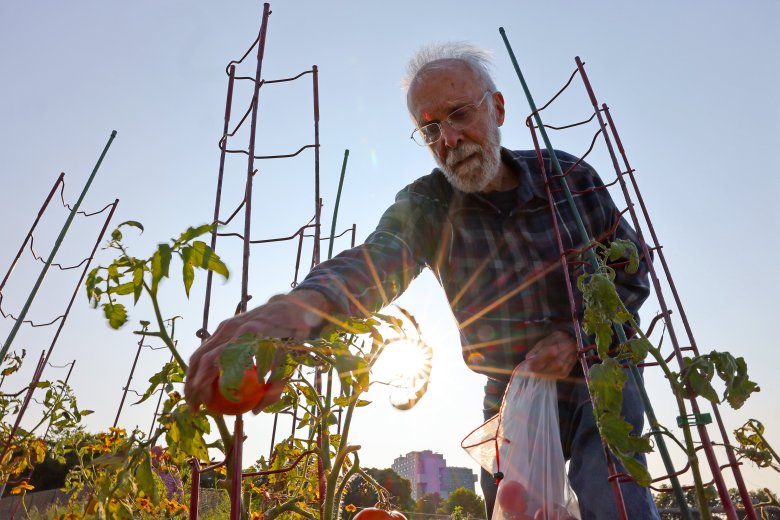
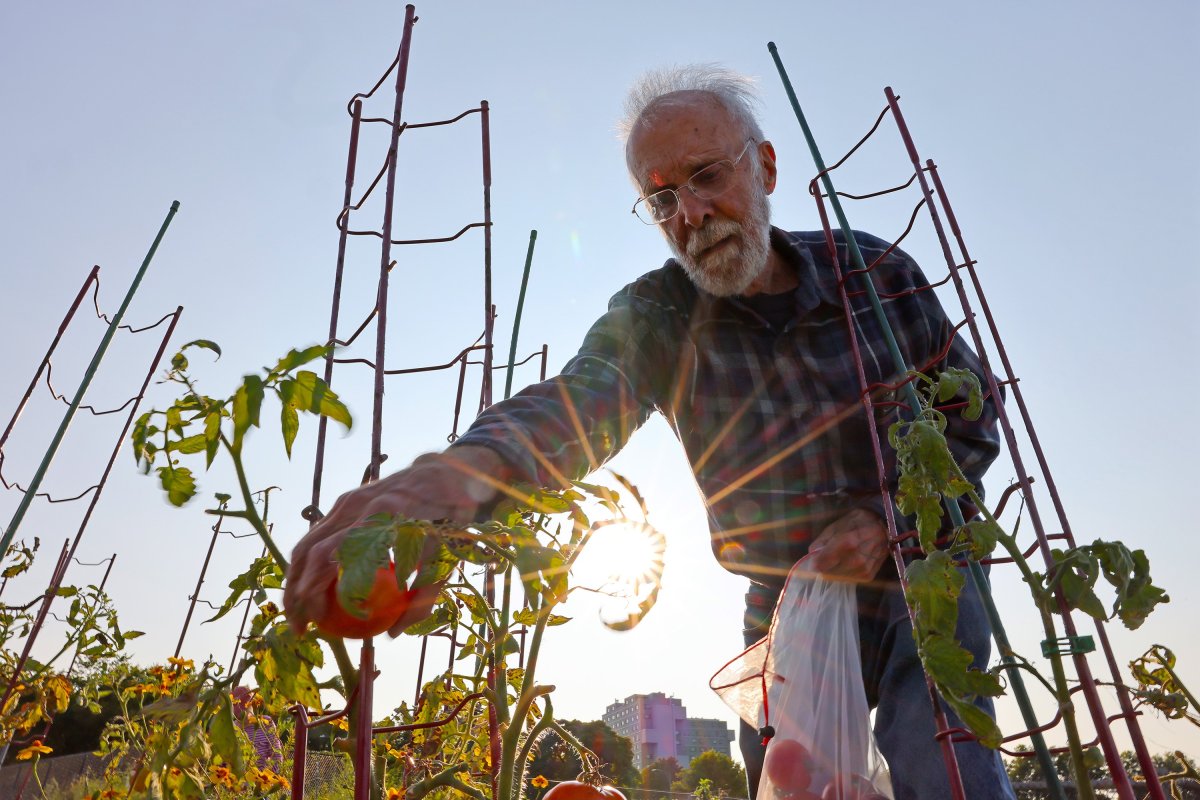
 Ted Kaynor, of Portland, picks tomatoes within the Community Garden at the Eastern Prom on Sept. 11, 2024. Kaynor, who has been gardening with his wife for the past 50 years, said the season “has been very productive and there have been very few pests,” though he hopes the city will build a fence around the plot, which is shared by a dozen gardeners. (Ben McCanna/Staff Photographer)
With spring underway in Maine, many of us are planning our vegetable gardens.
Besides preparing the beds and deciding what to grow, when to plant and how to encourage growth, we should consider the pests that will inevitably threaten our harvest: How can we control them — and do so sustainably?
One may immediately rule out many commonly used synthetic insecticides, particularly neonicotinoids (“neonics”). Because neonics toxify plants’ nectar, pollen and fruit, they are decimating pollinators like bees and butterflies. Neonics also persist in the soil and leach into water bodies, poisoning worms and aquatic insects, and killing the birds that feed on them.
Fortunately, in 2021, Maine banned use of the four most harmful neonics in “outdoor residential landscapes,” like vegetable gardens.
Sustainable pest-control strategies begin before actual planting. Maintaining rich soil by adding organic matter not only enables vigorous plants that can withstand pests, but also supports beneficial microorganisms and predatory insects. Also, designing one’s garden carefully makes a difference. Rotating crops disrupts pests’ life cycles and reduces soil pathogens, while reducing overcrowding and intermixing different plants hinder pests’ ability to spread.
In addition, try companion planting. Different types of plants growing near one another can confuse, distract or even repel harmful pests. Basil, for instance, is known to ward off tomato hornworms. Moreover, planting flowers like marigolds and nasturtium or flowering herbs such as dill and cilantro among vegetables can attract beneficial insects. Hoverflies, lacewings, ladybugs and parasitic wasps, for example, prey on aphids, caterpillars and mites.
As plants grow, covers or nettig can protect them from intruders. For uncovered plants, beer in a shallow dish will attract snails and slugs. Patrol the garden regularly and intervene as soon as you notice pests. Pick them off the plants by hand and drop them in soapy water. Should pests proliferate, try spraying soft-bodied types, such as aphids and spider mites, with a mixture of castile soap and water.
Natural insecticides like neem oil are effective, but be sure to follow the instructions carefully — and remember that they may also harm beneficial insects.
Although pests will inevitably pose a threat, careful planning, daily action and nontoxic treatments can ensure a productive and sustainable garden.
David Conwell belongs to the nationwide advocacy organization Citizens’ Climate Lobby and is a former member of Brunswick’s Sustainability Committee.
Comments are closed.