
 4 min read
With a long summer season of color, adaptability to a range of light and soil conditions, and even fall interest after blooms fade, hydrangeas remain one of the most popular flowering shrubs. But the conversation around them is changing. Instead of oversized plants that can reach six feet tall and wide—and overwhelm a bed—gardeners have often had to leave them out of smaller borders or containers for fear they would overwhelm an entryway or patio. Breeders have developed a new generation of hydrangeas to stay compact, typically around 3×3 feet, while still delivering the same key traits as their larger siblings.
“A compact hydrangea is typically 2 to 4 feet tall and wide, bred for smaller landscapes and beds, containers and patio plantings, and stronger stems with less flopping,” says Robin Trott, extension horticulture education at the University of Minnesota. Conditions vary by type, but as a general rule, smooth hydrangeas perform best in full sun to part sun, with some afternoon shade helpful in hotter climates, she says. Bigleaf and oakleaf hydrangeas, on the other hand, prefer morning sun and protection from intense afternoon light.
Courtesy of Proven Winners
Don’t make the mistake of thinking a smaller size means less impact, though. In reality, breeders design today’s smaller hydrangeas to punch above their weight—producing abundant blooms, strong stems, and extended color without sprawling beyond their space. Some offer more saturated colors that are harder to find in the traditional white, pink, and blue palette that hydrangeas are known for. Plant developers are working across the main hydrangea group—bigleaf, lacecap, panicle, and smooth—and each can have different light and care preferences. Get that right, and you end up with a plant that stays controlled in scale but still delivers full visual impact. Here are a few standouts to look for in garden centers.
Centennial Ruby (Bigleaf hydrangea; hydrangea macrophylla)
Zones: 4-9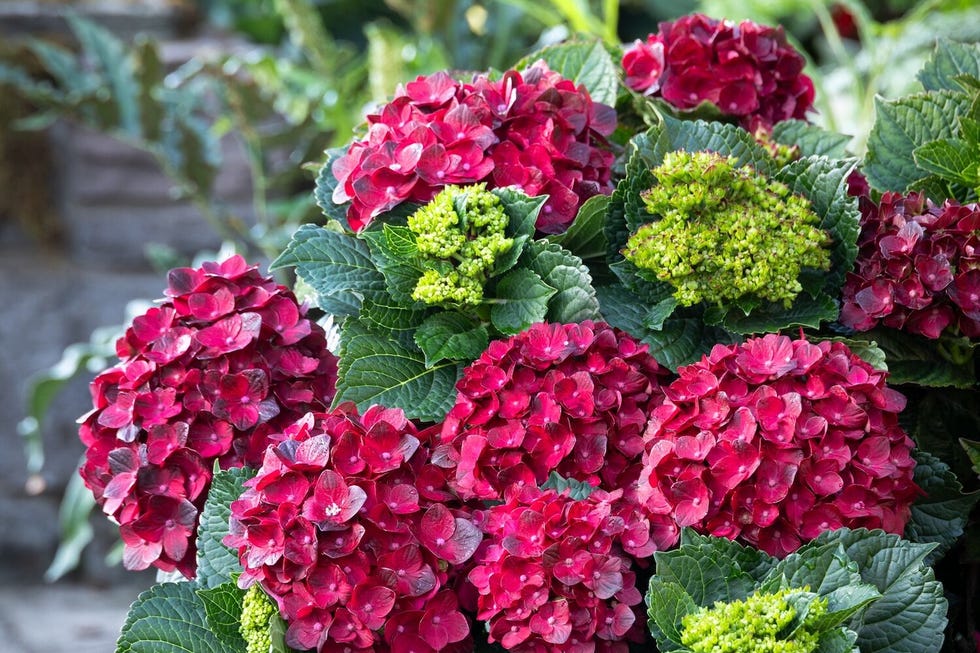
Courtesy of Monrovia
In a world of hydrangeas that typically run from white to green and soft pink to pale blue, Centennial Ruby is a saturated standout. Starting in late spring, the blooms open in a rich ruby red and deepen as they mature, often shifting into dramatically darker, near-black tones. In partial sun to shade, the plant reblooms throughout summer, with flowers held upright on strong stems that support the heavy flower heads above dense green foliage.
Incrediball Storm Proof (Smooth Hydrangea; hydrangea arborescens)
Zones: 3-8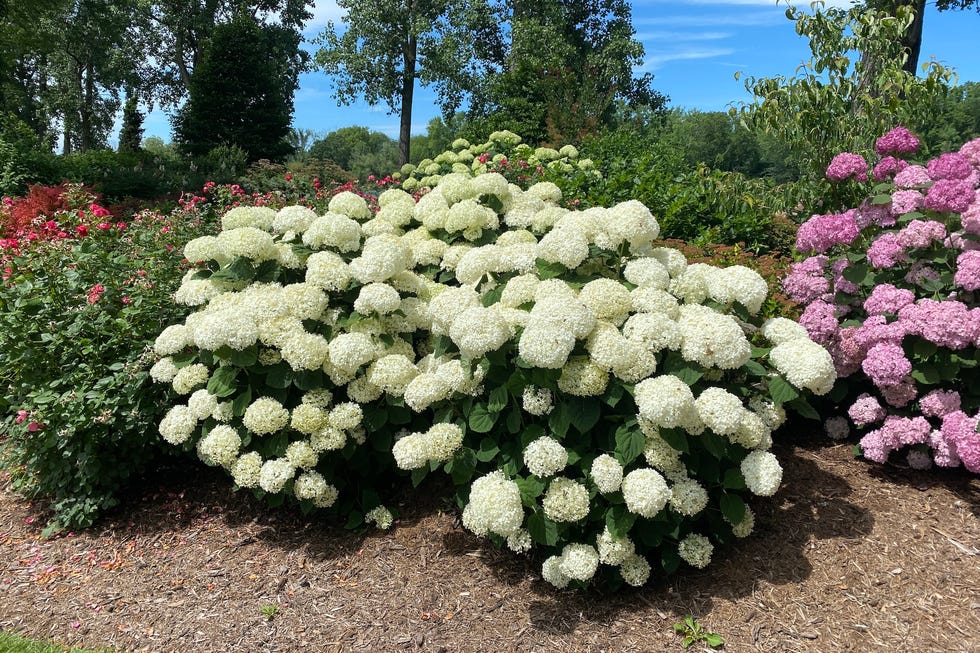
Courtesy of Proven Winners
In coastal gardens pounded by wind and rain, Incrediball Storm Proof holds its ground with a dense, well-branched form built on a foundation of thick, sturdy stems. Breeders have seen it stand up through downpours and remain upright without staking, which many full-size hydrangeas require. In summer, it produces large, puffy white blooms that can reach up to 12 inches wide, covering the plant from top to bottom. Reaching roughly 4 by 4 feet, Incrediball also eliminates the need to plant a smaller perennial in front to hide the typically bare lower stems on larger hydrangeas.
Dragon Baby (Panicle Hydrangea; hydrangea paniculata)
Zones: 3-8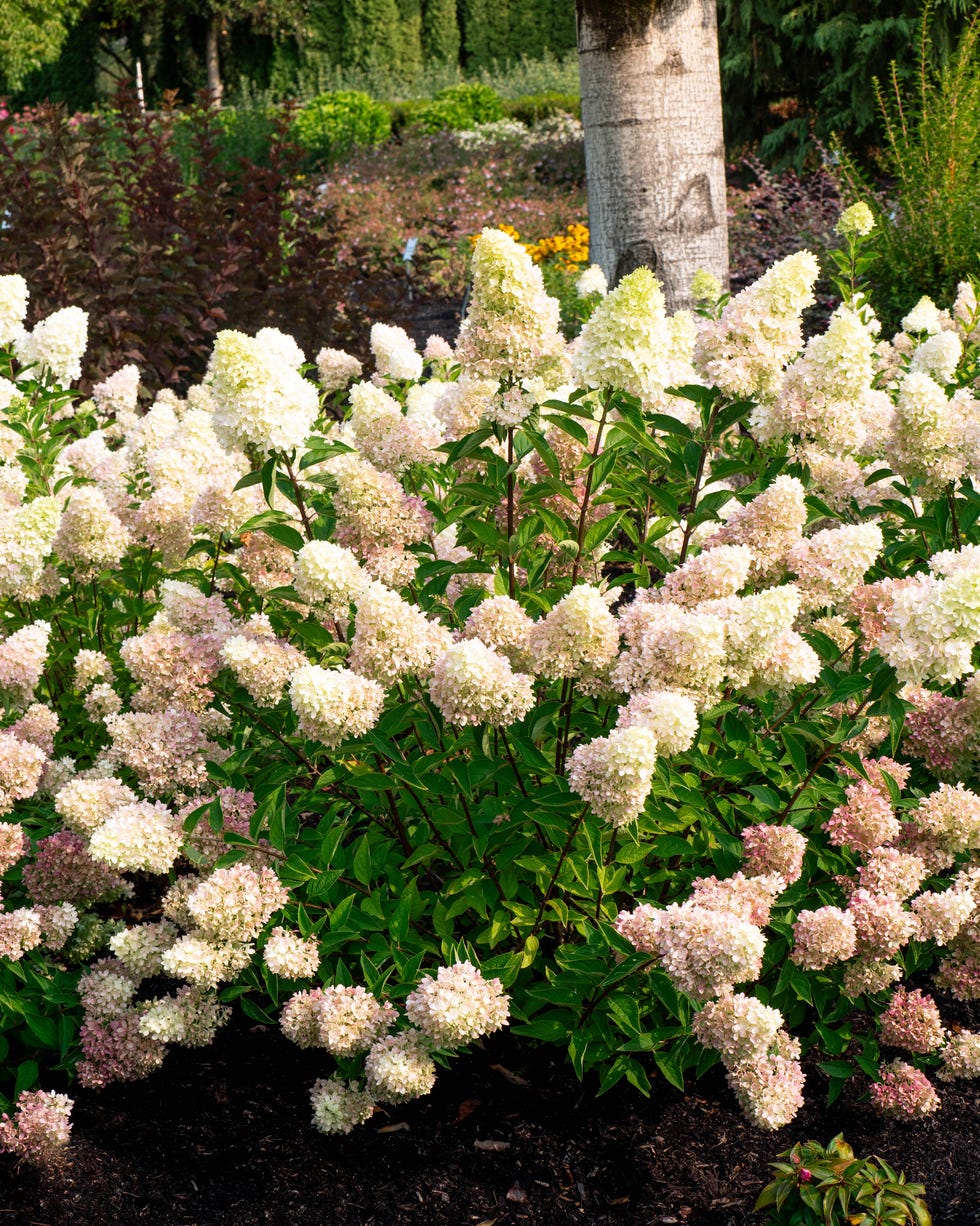
Courtesy of Bloomin’ Easy
The panicle hydrangea is the most common type trained into tree form, and Dragon Baby scales that look down to a compact, 3×3-foot size that fits perfectly in a 24-inch container on a patio or near a sunny entryway. Blooming from early summer into fall, the cone-shaped flowers open in creamy green tones before maturing into rich pinks as the season progresses, and they are also pollinator-friendly. The spent blooms continue to provide interest as they dry in the fall and often hold their structure through winter, even under a light dusting of snow.
Gatsby Glow Ball (Oakleaf Hydrangea; hydrangea quercifolia)
Zones: 5-9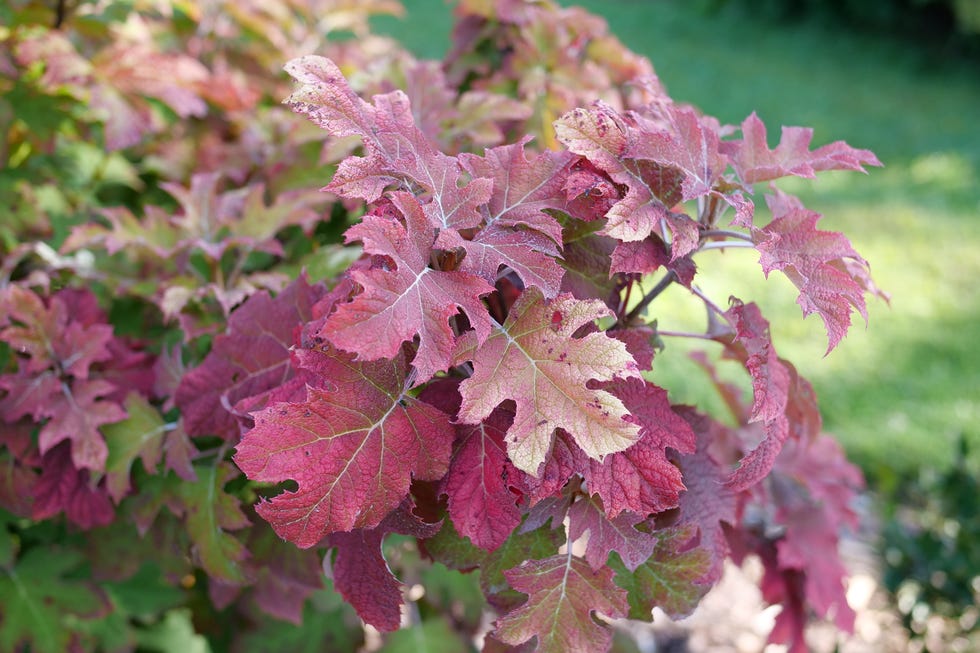
Courtesy of Proven Winners
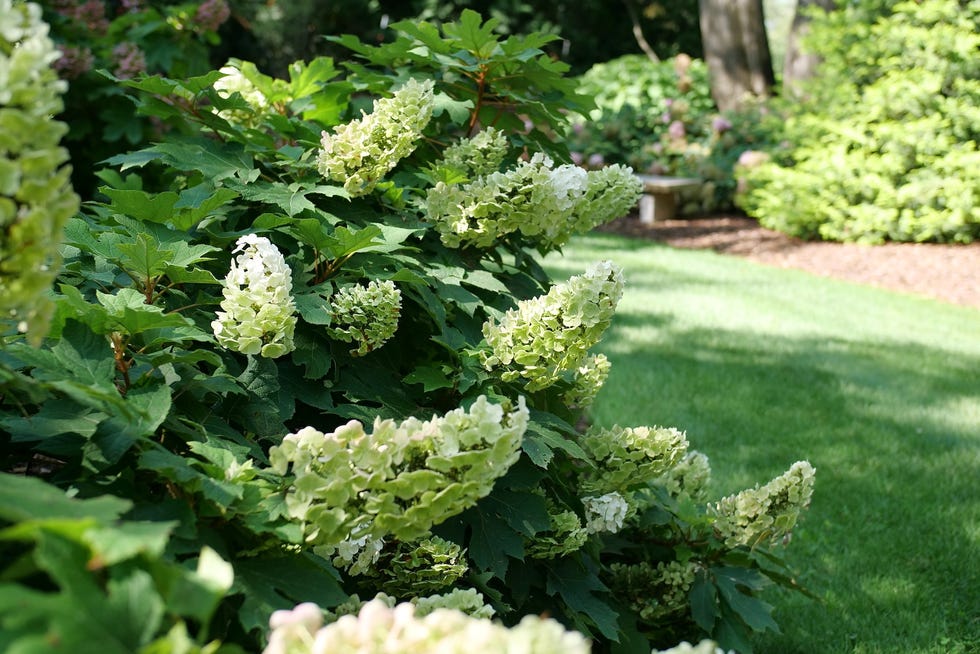
While the habit stays a tidy 4×4 feet, everything about this hydrangea reads large. The cone-shaped blooms can reach up to a foot long, set against bold foliage that spans about six inches across. Gatsby Glow Ball, a native hydrangea that attracts pollinators, forms a dense, ball-shaped habit of twisting stems that works equally well in formal beds or naturalistic woodland plantings, under large trees in dappled shade. Flowers open a crisp white in summer, mature to soft lime green, and are followed by foliage that starts green, then turns rich burgundy and red in fall, delivering multi-season interest.
Pop Star (Bigleaf hydrangea; hydrangea macrophylla)
Zones: 4-9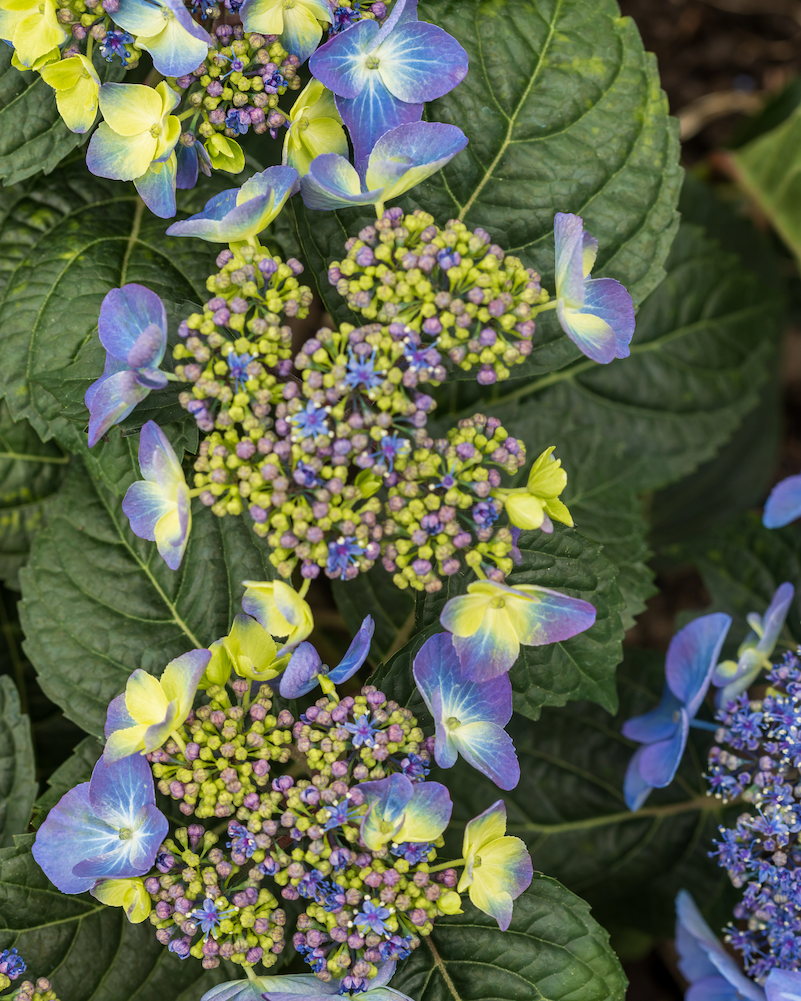
Courtesy of Endless Summer
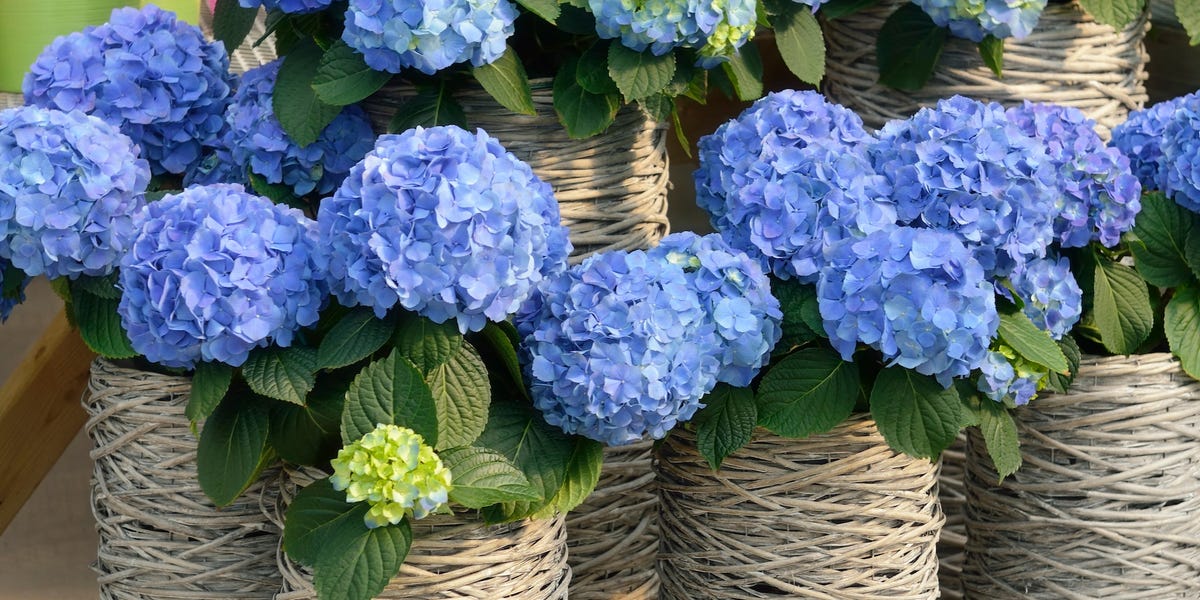
Like other bigleaf hydrangeas, Pop Star can shift from blue to pink, depending on soil pH, though its blue tones tend to be more vivid than older cultivars. This rebloomer first produces lacecap flowers in late spring and continues its color show through early fall, delivering a long season of flowers from a compact plant. Its blooms attract pollinators and float above bright green foliage that keeps the plant looking fresh throughout the season, making it especially well-suited to containers and entryways that receive morning sun and afternoon shade.
Wee Bit Innocent (Bigleaf hydrangea; hydrangea macrophylla)
Zones: 5-9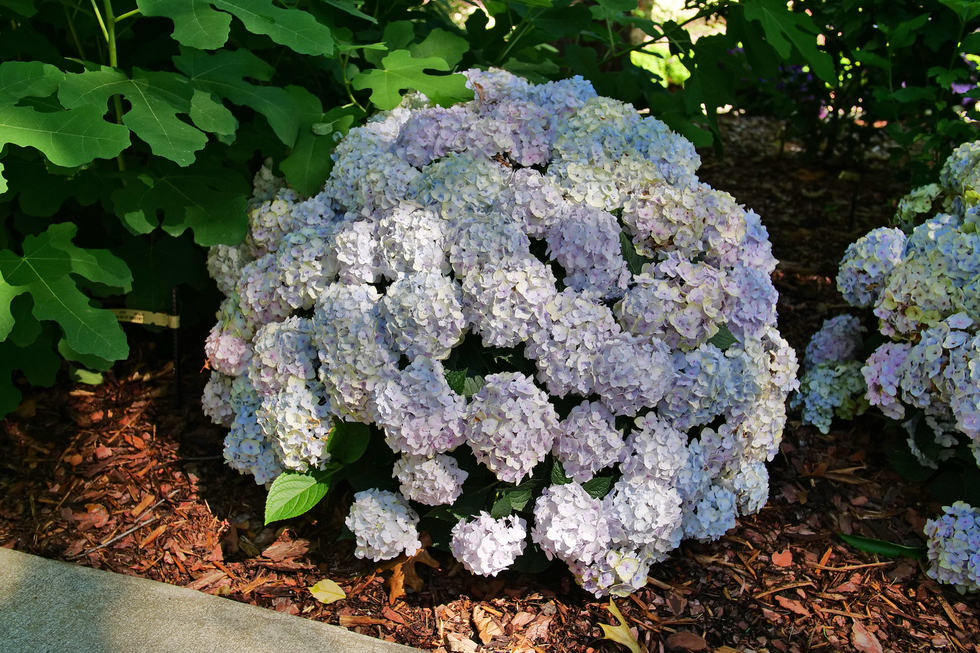
Courtesy of Proven Winners
Staying true to the classic palette of soft dusty pinks and blues, Wee Bit Innocent fills patios and small beds with large, fully doubled blooms that can reach up to six inches wide. Flowers open in soft honeydew tones before shifting to either pastel pink or soft blue, depending on soil chemistry. At just about 2 x 2½ feet, this compact hydrangea fits easily into containers, ideally in full to part sun, where it forms a naturally neat, mounded shape that requires no pruning.
The Bottom Line
Compact hydrangeas solve one of the biggest frustrations with traditional varieties: size, which quickly outgrows the space you planned for them. They deliver similarly abundant blooms and seasonal color, but in a scale that fits more spaces in the garden, containers, and tighter entryway plantings without constant pruning or reshuffling. When you scale back on size, you get more flexibility, less maintenance, and far fewer compromises on where you can actually use them.

Sal Vaglica is a freelance writer covering home, lawn and garden, tech, tools, and outdoor products since 2006 for This Old House, Serious Eats, The Wall Street Journal, Veranda, Wired, Men’s Health, and others.
Comments are closed.