
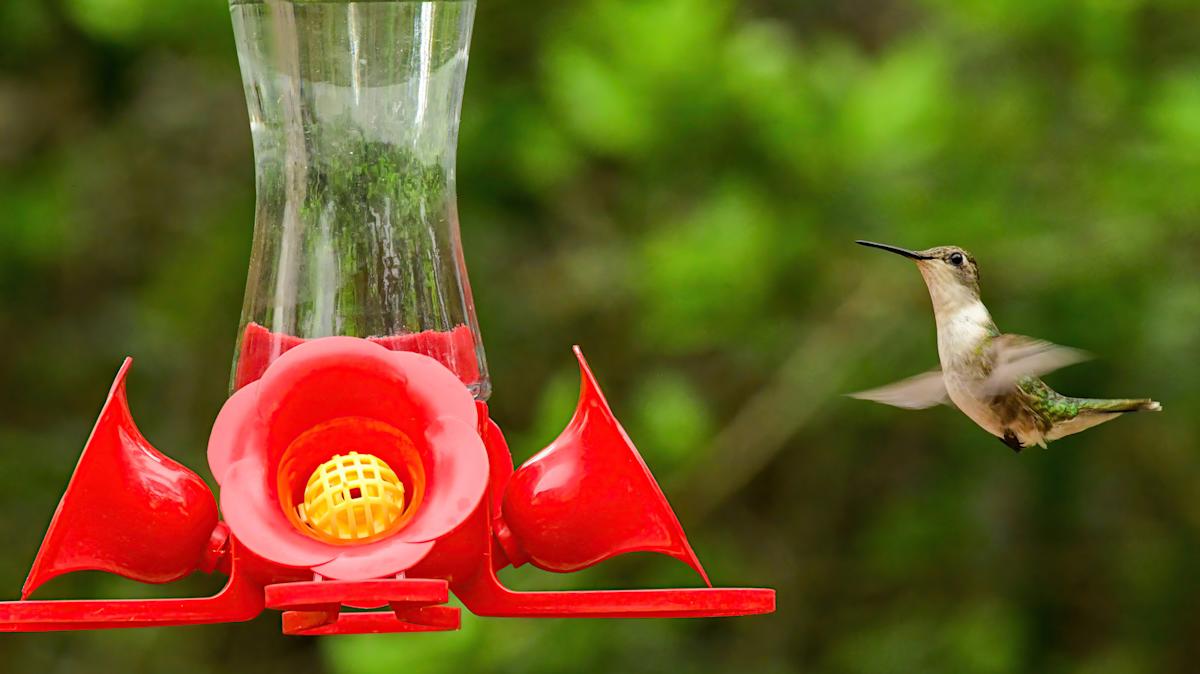
Hummingbird feeders are undoubtedly a staple in gardens and backyards. But they’re not really a set-it-and-forget-it solution. You have to refill the nectar regularly and clean the feeder often, so hummingbird visitors do not get sick from bacteria and mold growth. Between making homemade nectar and the constant upkeep, the reality is that a hummingbird feeder isn’t right for everyone. Yet you don’t really need a nectar feeder at all to invite these birds to your garden. Instead, consider landscaping with native plants that attract hummingbirds to your outdoor spaces with natural sources of nectar. Indian pink (Spigelia marilandica) is one such option hummingbirds love, and once it starts producing flowers, you’ll likely find that butterflies will come for a visit, too.
Also known as Carolina pink and pinkroot, Indian pink is attractive to hummingbirds and butterflies in several ways. Not only do these plants provide nectar, but they also sport tubular-shaped blooms during late spring and the early part of the summer; these are ideal for hummingbirds to feed from. Likewise, Indian pink’s bright red bloom color is a natural draw for hummingbirds, which are primarily attracted to red, orange, and pink. Importantly, hummingbirds are also the main pollinators of Indian pink plants. Meanwhile, butterflies are drawn to both the red blooms and the yellow centers.
Despite being a food source for hummingbirds and butterflies, Indian pink does pose a toxic risk to humans. All parts of the plant contain alkaloid spigiline, which can cause issues when ingested. Keep young children away from Indian pink as a precaution.
Advertisement
Advertisement
Read more: Unique Ways To Reuse 13 Old Household Items In Your Garden Instead Of Tossing Them
Indian pink growing tips for attracting hummingbirds and butterflies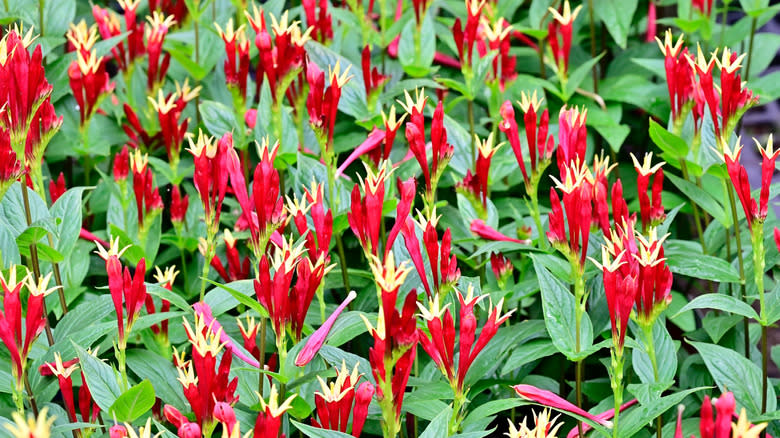
Densely growing Indian pink plants up-close – RoseWhisperer/Shutterstock
Indian pink is native to the southeastern U.S., and it’s primarily grown as a perennial in USDA zones 5 to 9. To ensure it produces blooms for hummingbirds and butterflies during the current season, plant Indian pink before June. You can use either seeds, cuttings, or young plants from a nursery. The plant thrives in full to partial shade; planting it in a sunnier spot will result in a smaller size but more abundant blooms. So, if you want these plants to invite hummingbirds and butterflies, find a partially shaded site that gets at least a few hours of sun daily.
While you shouldn’t overwater Indian pink or allow the soil to stay dry on a regular basis, this plant can tolerate both wet and drought-like conditions. For best results, water it occasionally to keep the soil moist at all times and make sure it gets good drainage. When grown under the right conditions, Indian pink can grow up to 2 feet tall and 18 inches wide. To prolong the blooming season later into the summer and keep visiting hummingbirds and butterflies happy, deadhead the flowers once they’re spent.
Consider planting Indian pink alongside other flowers that attract hummingbirds as well as stunning plants that invite butterflies. Since Indian pink blooms earlier in the season, ensure your other plants bloom at different times. This way, your hummingbird and butterfly guests won’t go without nectar.
Advertisement
Advertisement
Want more design inspiration? Join our free newsletter to get the best home and garden tips, design hacks, and DIY projects delivered right to your inbox. You can also add us as a preferred search source!
Read the original article on Hunker.
Comments are closed.