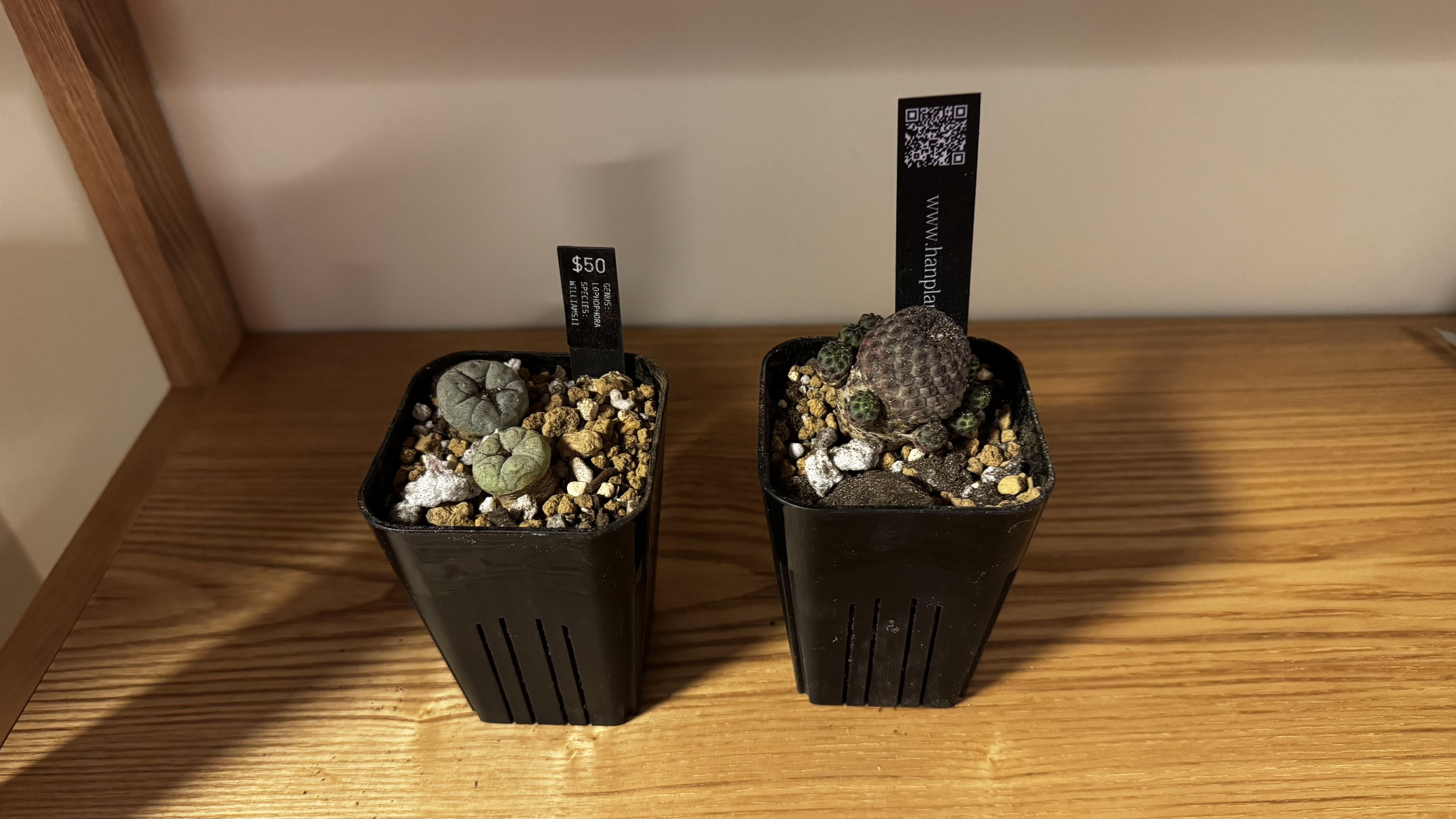
What kind of pot should I buy? How should I transfer it to the new pot? Watering about once a month?
by Tanakattack9

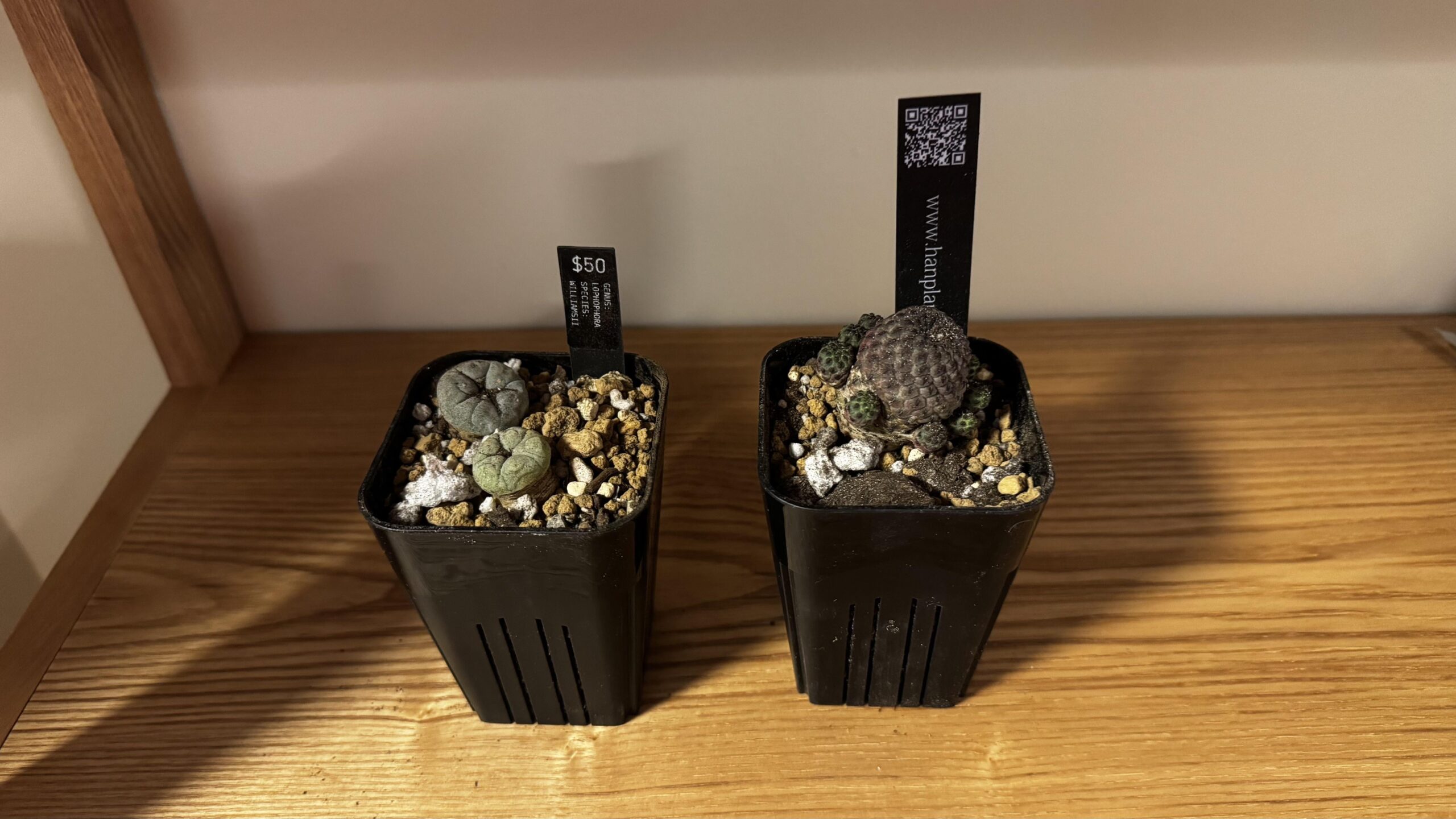
What kind of pot should I buy? How should I transfer it to the new pot? Watering about once a month?
by Tanakattack9
2 Comments
Keep them as bright as possible indoors, if you can put them outside but in a partially shaded but bright area(these are not as fond of strong direct sunlight).
They are also among the more difficult plants to grow, being (left) lophophora and (right) sulcorebutia rauschii. As in they like mineral soil(hopefully that is not top dressing I see in the pots but the actual soil) and less frequent watering(once a month maybe spring and autumn, in summer maybe bi weeky, just don’t soak them.
You’re going to need to provide them with no less than 25,000 lux for them to be happy. The mottled appearance of the lophs is concerning. Check for mites and thrips on both. Once you have light and pests addressed, let them dry out *completely* before watering. If it helps, weigh them dry and only water when they are at that weight.