
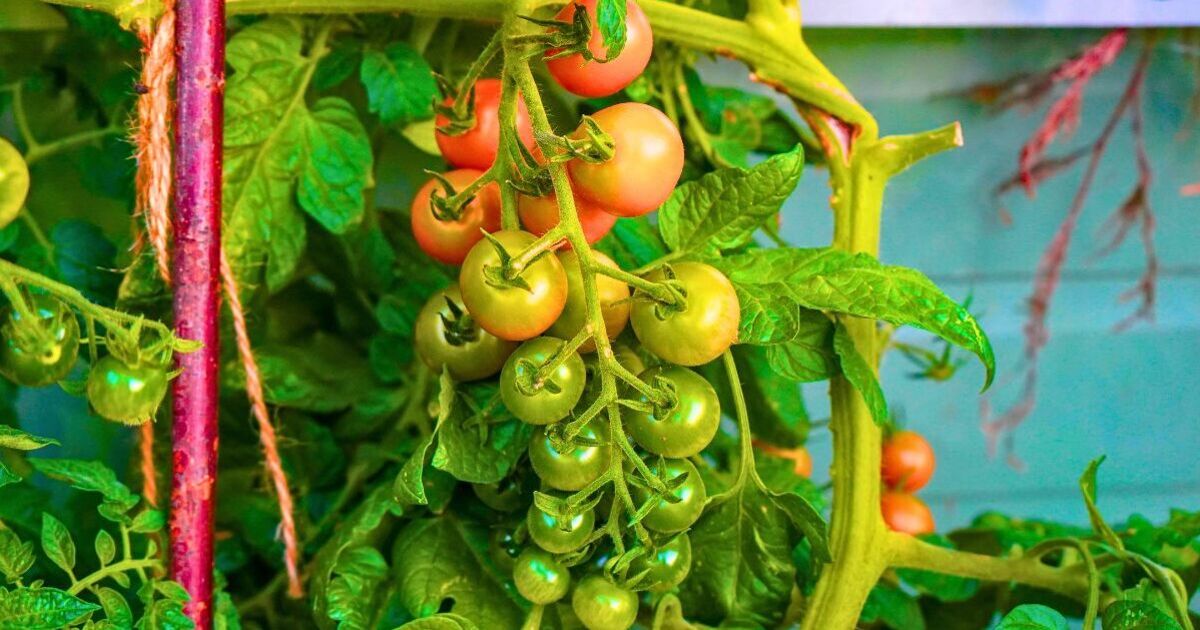
Tomatoes are beginning to flower and will soon produce plump red fruit, but without protection from blight in May gardeners may see little or no crop at all. Blight is a fungal disease that spreads in warm, wet weather, making it common in British gardens during summer, and it can destroy tomato plants within just a day or two.
It first appears as dark spots on the leaves as the infection attacks the foliage, and once it spreads to the stem, the plant loses its ability to absorb sunlight, causing it to wilt and die. Gardeners should start setting up barriers to protect tomato plants now in spring, as blight spreads rapidly and is far easier to prevent than cure once a plant is infected. Tiffany Selvey, a master gardener from Garden Tech, has shared that it is easy to keep tomatoes healthy, as you just need to scatter natural gardening items around the soil.
She said: “Mulch around the base of the plant with straw, wood chips or other natural mulch to prevent fungal spores in the soil from splashing on the plan.”
Mulching is the simple gardening technique of covering the soil around a plant with organic matter, which is known to keep the soil watered and weed-free for a much longer time.
It is also one of the best ways to prevent blight as fungal spores spread through moisture and tend to infect the plant by splashing onto the leaves when it is raining.
Mulch will act as a natural barrier between the soil and the plant, helping keep spores away and making growing tomatoes this summer as easy as possible.
Straw is the most popular mulch for tomatoes, as it is very airy and absorbent, making it very effective at stopping rain splashback but also prone to breaking down quickly.
If you use straw to protect tomatoes, you will have to mulch the soil regularly, which is why many gardeners use wood chips, as they can last up to a year without breaking down.
It is important to mulch tomatoes now before summer arrives to give the best chance of keeping blight at bay, but gardeners should also inspect their plants regularly.
Blight is a fast-acting disease, so you need to be checking for dark spots on the foliage every few days as getting rid of infected leaves early is the best way to save a plant.
Try to also plant tomatoes away from other crops that can also be affected by blight, such as eggplants, potatoes or peppers, in order to stop the spores from taking over large parts of your garden.
Make sure not to water tomatoes from above, as leaves that remain wet for long periods are more likely to become infected, and instead use a soaker hose to water them, which also helps prevent spores from splashing onto the plant.
Comments are closed.