
Peopleimages/Getty Images
Feasting on fruit that you grew yourself, in your own garden, is the dream. The flavor is often better, and things work out considerably cheaper. Besides, fitting in a greengrocer or a supermarket run is never fun, which is partly why so many Americans don’t consume enough fruit.
We all know we’re more likely to top up our five-a-day if all it requires is a quick saunter to the backyard. The one flea in the ointment? Growing fruit trees in your garden can be a complicated affair, with plenty of opportunities for things to go wrong. Even if the tree looks healthy, you can still end up with no harvest to speak of.
To avoid empty branches, we enlisted the help of two experts in the fruit gardening sector. James Bellante is the experiential design and special projects manager at Claremont Resort & Club in Berkeley, and Nalani Vaughn is the founder of Fruitmommy. Here, they both share their best tips and tricks for ensuring your supply of homegrown fruits stays plentiful.
Choose fruit trees that suit your local climate
Nakphotos/Getty Images
What’s the simplest and best tip for growing fruit trees in your garden? Make sure the climate is well-suited to that specific variety. In other words, if you tend to get cold and windy weather where you live, planting a tree that requires regular warm temperatures is unlikely to result in much joy. “Fruit trees need six to eight hours of sunlight each day, so you’ll need to make sure your garden provides this,” James Bellante says.
The other important question you should ask is whether your climate provides the correct number of chill hours. These refer to the amount of time the tree needs to be exposed to lower temperatures to ensure it springs back with full energy when the warmer months hit. “Ignoring chill hours is the number one mistake in planting fruit trees like apples, peaches, cherries, and even citrus,” Bellante warns. This is why in Berkeley, which enjoys mild winters, he opts for low-chill varieties that yield more reliable production. Nalani Vaughn is just as adamant about this point. “Planting a variety that requires high chill time would result in a low yield or no fruit at all.”
Bellante also believes in picking native, or as close-to-native varieties as possible. “Fig, apple, peach, and citrus are well-suited to the area, based on the climate.”
Make sure you plant at the right time of year
Nikada/Getty Images
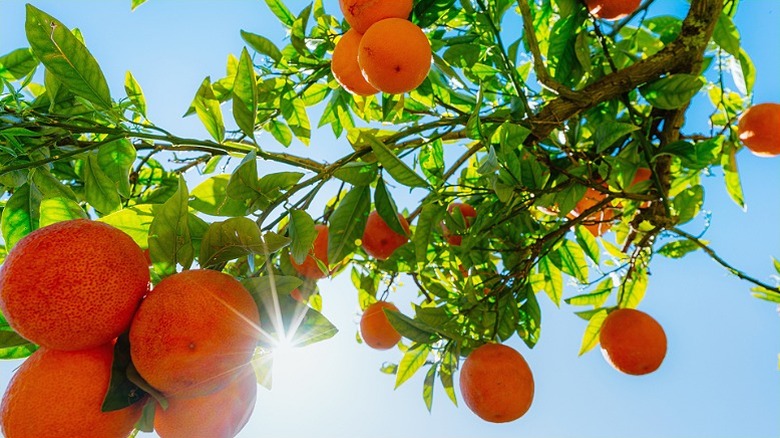
When it comes to planting trees, timing matters. Orange trees, for example, are known to require warm temperatures to thrive. Thus, not even the most skillful of gardeners is going to coax your tree into yielding fruit if you’re planting before the frost season is over. On the other hand, if you’re located in Northern California, James Bellante says that it’s best to plant fruit trees between late fall and early winter. This is especially true for bare-root trees planted during their dormant period. “Planting in the height of summer adds stress to the tree,” he says. Apple, lemon, and cherry trees are good examples of fruit trees you should plant in the fall.
With tropical trees, the advice is a bit different. Nalani Vaughn says that waiting for the hotter months yields better results, as exposure to the sun is imperative. “Plant stone fruits in the winter; citrus and avocados when it’s warmer, springtime or later,” she adds.
Do your homework before buying the tree
Oleg Opryshko /Getty Images
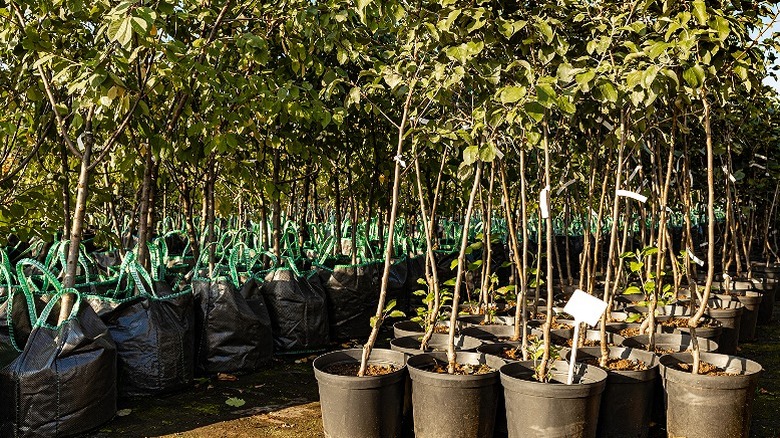
Ready to hit your local nursery, or perhaps the excellent selection of spring fruit trees at Costco? James Bellante says you should prepare a handy checklist before making any decisions. Among the questions you need to ask yourself before falling in love with that new tree is whether it is self-fertilizing or if you’ll need to take care of that side of things yourself. The size of the rootstock upon maturity also matters, as does whether your outdoor space is sunny or shaded.
Bellante adds another common mistake to the planning stage: not checking pollination needs. “Many fruiting trees need a partner to produce fruit,” he says, adding that trees like apples, pears, and plums will need to have a secondary variety planted close by.
Nalani Vaughn adds that you need to pre-plan a planting location that guarantees the correct amount of sun and that allows for a good-sized tree gallon, which is what gardeners call the size of the pot it’ll grow in. “Anything smaller than 15 gallons will cause trees to potentially struggle, as their root system is not large enough to handle variable changes in water and soil conditions,” she explains. This is even more important if the location where you’re planting has clay.
Match the tree to your garden’s conditions
Peter Shaw/Getty Images
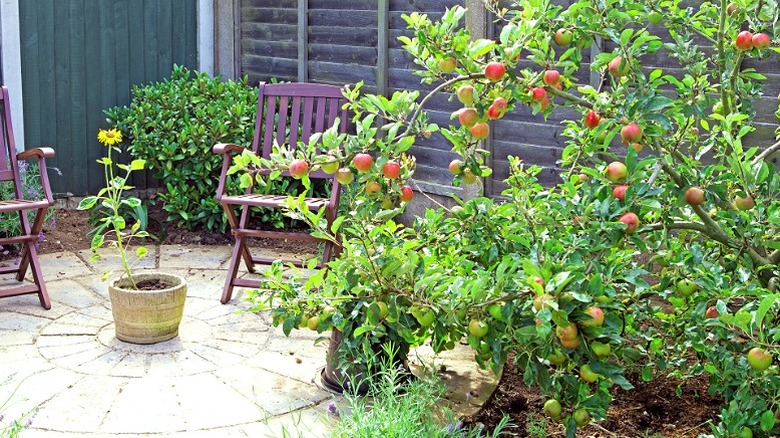
When James Bellante is planting trees, he always takes microclimates into consideration. Even across one state, weather conditions can vary wildly according to the area you’re in. Using California as an example, Bellante says that if your garden happens to be in the Hills, it is likely to be cooler and windier. The flats are warmer, and the Bay Area is foggy. “Each of these scenarios should be considered before planting, to ensure better success,” he says.
Nalani Vaughn adds that the specific location within your garden also matters. If you’re thinking about planting fruit trees in the grass or on the lawn, think again. This would make it difficult for you to water the trees correctly. Wind conditions are just as important, as they affect pollination. “Too much wind, and the pollen will blow away. No wind at all, and you will get bugs. Create an environment that is slightly windy, but not strongly windy.”
Understand the maintenance required
Vukasin Ljustina/Getty Images
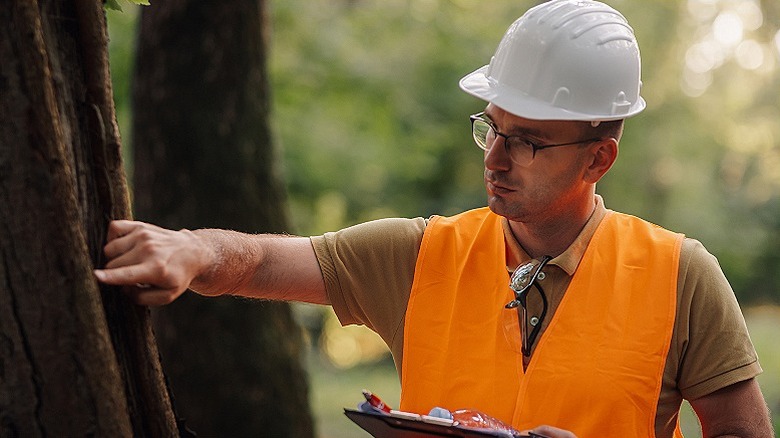
We’ve all been there. We get to the nursery with a precise plan, then we stumble upon a fruit tree and buy it without knowing anything about it. The reason? It will look gorgeous in your yard. Hold your horses and consider the tree’s needs first. Some varieties of fruit trees are indeed beautiful, James Bellante notes, but they are also hard work to maintain. Others, he says, attract a lot of bugs that will turn your harvest into a stressful process. He has one mantra: “You can’t ignore pests or maintenance.”
He uses peach and nectarine trees as examples. These are known for attracting a fungal disease known as leaf curl, which causes leaves to pucker, curl, discolor, and sometimes drop. Apple trees are vulnerable to the codling moth, with the larvae being the culprits behind the classic “worm in the apple” problem. Citrus trees are particularly attractive to scale insects, which attach themselves to the stems, leaves, and fruit. They can weaken the tree and often leave sticky residue called honeydew. If you don’t want to deal with any of these issues, the best thing is to avoid these fruit trees altogether.
Plant wide, not deep
Dominik Spalek/Getty Images
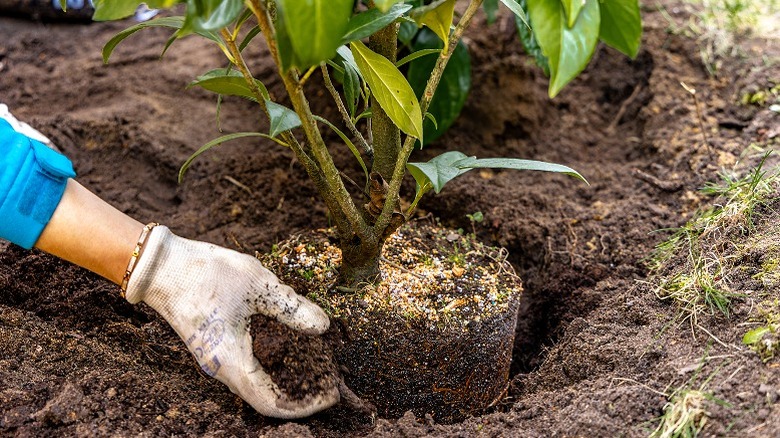
Now you’ve decided on the variety of your fruit tree, and exactly where it will live, it’s time for possibly the most complex part. The planting itself. There are plenty of opportunities to get it wrong, but Nalani Vaughn has some straightforward instructions to offer. Start by digging a hole that’s roughly twice as wide as the root ball. You’ll need to ensure it’s not deeper than the pot itself. Next, add a few inches of soil into the hole so that the root crown of the tree sticks about 2 inches out of the hole, giving it space to settle over time and helping it avoid root rot. “You do not want your tree to sink into a hole, causing it to retain too much water,” Vaughn explains.
She also points toward another planting mistake that will affect the tree’s ability to bear fruit: not having a good-quality soil buffer around the root ball. Bear in mind that roots need a decent surrounding zone of good soil so they can settle in, spread out, and avoid being trapped directly against poor, compacted, clay-heavy, or badly draining soil.
James Bellante also stresses the importance of not going too deep when planting your fruit tree, with the base of the trunk sitting slightly above the soil. “Dig a hole wide enough, but don’t fill with rich compost … it’s best to use mostly native soil from the area directly,” he says.
Soak the roots and mulch well
Andrey Abryutin/Getty Images
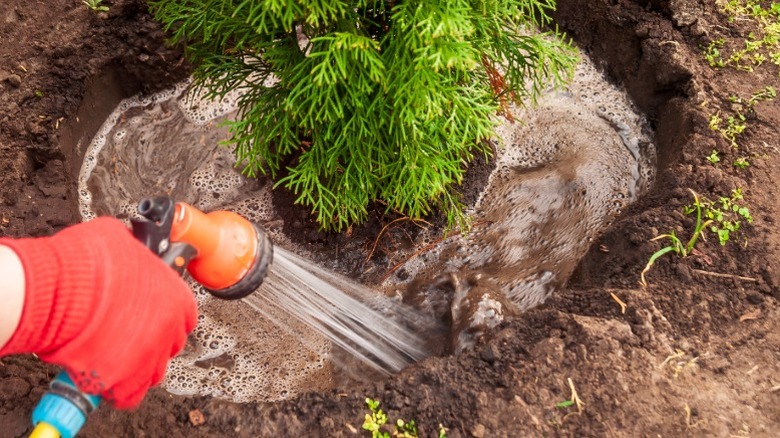
The trickiest part may be over once you’ve planted the fruit tree, but your work’s not done yet. You don’t want your fruit tree to start life in your garden under shock. James Bellante stresses the importance of watering deeply while using the right irrigation method. Even trees that do well in a drought will need extra watering TLC during the first two to three years. “A deep soak encourages strong roots. Think less often, but longer watering times,” he says.
“Mulch,” he adds, “is your best friend.” You’ll need to add between two and 4 inches around the base of the tree, but take care not to let it make direct contact with the trunk. Get it right, and you’ll be rewarded with better soil and fewer weeds.
As for frequency, Nalani Vaughn suggests weekly watering to allow the trees some dry time in between sessions. This method will help deepen root growth. That said, keep an eye out for droopy leaves, especially if you live in a typically warm climate. “This may indicate the tree needs a second watering,” she says.
Feed your trees nutrients at least four times a year
Krzysztof Siwek/Shutterstock
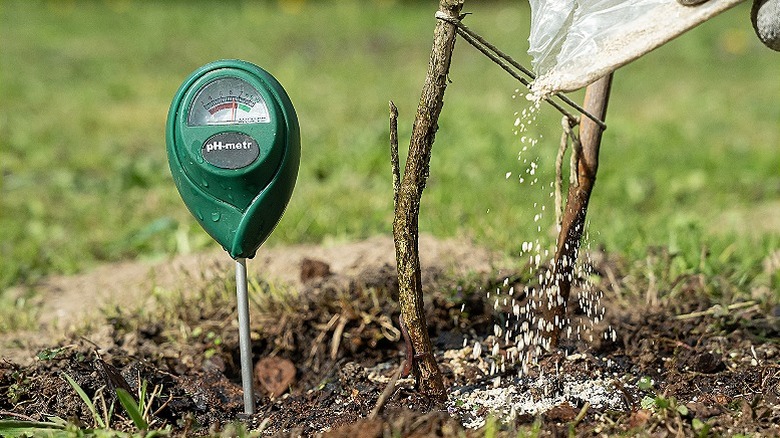
Nalani Vaughn points to another common mistake that can cost you your fruit harvest. Not everyone appreciates that fruit trees have very different needs from ornamental trees, and need regular food and watering. Your maintenance regime should also include regular soil building. “Trees need quarterly to biannual high-quality soil amendments,” she says. “These include things like humic acid, mycorrhizae fungi, kelp meal, compost, and wood chips.” These should be applied around the base of the fruit tree to enrich the roots.
Regular feeding, she says, is also crucial. She advises using several weekly liquid nutrient treatments with planting, then reducing to monthly or quarterly feeding using rapid-response amino acids or a pH neutralizer. “Feeding less than three to four times per year will reduce harvest, create poor-tasting fruit, and will shorten a tree’s life,” she cautions.
James Bellante adds that this doesn’t mean overloading your fruit tree with fertilizer. Using too much is just as bad as not using enough. “What will happen is beautiful full leaves, but little fruit.” Incidentally, if you’re after a cheap and easy way to boost nutrients in your soil, using eggshells in your garden will do the trick.
Prune your trees correctly
VH-studio/Shutterstock
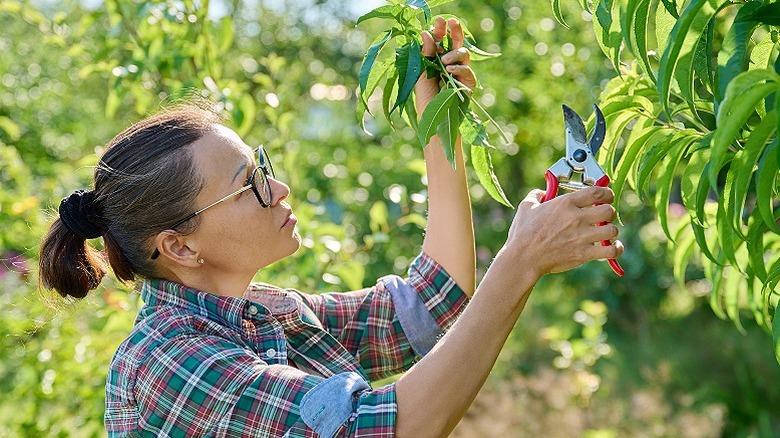
Pruning is not about prettifying. It’s actually a pretty essential part of the process if you want to grow fruit trees in your garden. Which means it’s crucial that you know what you’re doing with those shears. Nalani Vaughn doesn’t beat around the bush about the price you’ll have to pay if you don’t. “Incorrect pruning cuts,” she says, “shorten a tree’s lifespan and rob it of energy needed for growth, flowering, and fruiting.” Yet, bad pruning remains one of the main problems that she sees with backyard fruit trees.
Vaughn’s recommendation is to always opt for professional pruning if you have overgrown trees. “If cost is an issue, consider pruning just the interiors and dead wood every other year, with full pruning on the opposite year,” she adds. If you’re really confident enough to do it yourself, you’ll need to ensure that you don’t end up cutting off any fruiting spurs by mistake. She advises regular yearly corrective pruning, aiming to cut off 15% to 20% of the tree’s total mass. A vase shape typically makes the harvesting of stone fruit trees easier.
James Bellante has some additional words of wisdom related to the topic. “Removing some small interior branches when the tree is young will produce bigger and better-tasting fruit,” he says.
Be patient about fruit production
Drazen Zigic/Getty Images
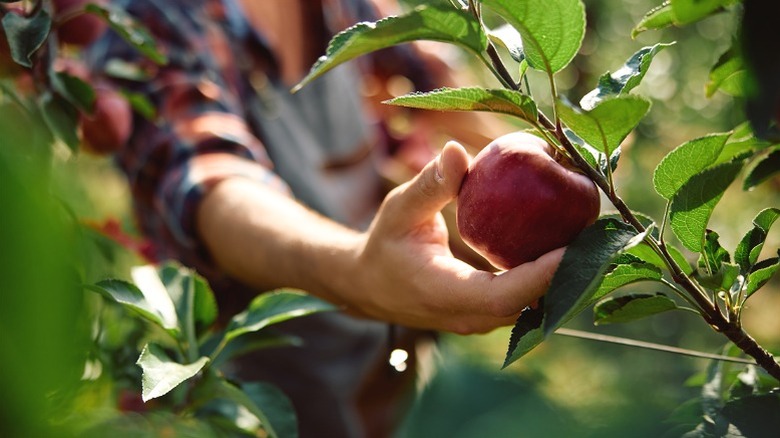
Few of us enjoy playing the waiting game. In an ideal world, we plant those fruit trees in the garden and hey presto, we’re enjoying freshly squeezed orange juice every morning, or adding slices of home-grown apples to our salads. Real life, sadly, doesn’t quite work like that. “Fruit trees take time. Don’t expect instant results,” James Bellante cautions, adding that you can typically expect a dwarf tree to take anything between one and three years to start bearing fruit. A regular-sized tree will take between three and five years, but some other fruit varieties can take even longer.
You’ll need to be most patient with sweet cherry and pawpaw trees, which can take up to seven years to bear fruit. Next in line with an extremely long game are pear and plum, which can take up to six years. The fastest-growing fruit trees, on the other hand, are citrus and fig trees, which can give you a decent harvest within one to two years, provided all conditions are right.
You should also exercise patience when it comes to harvesting, as there are plenty of mistakes you can make when picking your own fruit. Don’t simply assume you can harvest the fruit trees in your garden before they’re good and ready, as some fruits just won’t ripen after picking.
Let the good bugs in
Ruglig/Getty Images
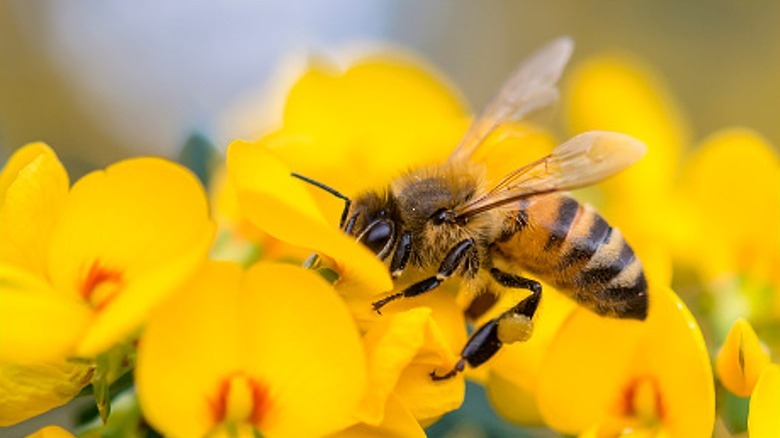
No one wants bugs on their fruit trees, let’s be honest. Yet, some insects actually spell good news as they help create conditions that support pollination and pest resistance through your garden ecosystem. So much so that Nalani Vaughn advises against using pesticides, as these kill the good kind of insects — the bees, mantises, and other predators that target the bad bugs. What you should be doing, instead, is attracting these friendly insects by planting pollinator flowering plants like African sage or pineapple and Mexican sage near the fruit trees in your garden. Pollinators are attracted to these plants because of their color, petals, and size.
Should you be hit by an infestation of small insects like aphids or whitefly, don’t panic. Instead, reach for neem oil and make sure it’s organic. “Neem oil can only be sprayed in the evening after the bees have gone to sleep,” Vaughn reminds us.
Comments are closed.