

The upcoming Mother’s Day weekend — or, more specifically, May 11 — is the milestone that southcentral Pennsylvania gardeners usually use to determine when it’s “safe” to plant the new season’s cold-wimpy summer flowers and warm-weather veggies, such as tomatoes and peppers.
That’s the guide because May 10 marks the area’s all-time latest springtime plant-killing frost date, according to temperatures recorded at the official National Weather Service monitoring site at Harrisburg International Airport.
Many plants are sensitive to sub-freezing temperatures and will die if exposed to even a few hours at that level on a single night.
Flower examples include ageratum, angelonia, begonia, bidens, blue and red salvia, calibrachoa, celosia, coleus, geranium, heliotrope, impatiens, lantana, marigold, sunflower, nicotiana, pentas, petunia, scaevola, verbena, vinca and zinnia.
In the vegetable garden, frost-tender crops include tomato, pepper, eggplant, cucumber, melons, summer squash, bean, corn, sweet potato, pumpkins and okra.
Most gardeners wait until after all danger of frost has passed before planting any of the above.
The May 11 target isn’t an absolute lock, though.
Last frost dates can vary widely from year to year and from area to area.
It’s even possible for one part of the same yard to experience a plant-killing frost — say, at the bottom of an open slope — while an area near a heated house wall is several degrees warmer.
These variations are why gardeners above Dauphin County’s Peters Mountain and in other colder, outlying areas sometimes wait as late as Memorial Day before pulling the trigger on their zinnias and tomatoes.
Even in the Harrisburg area, we’ve had some wild year-to-year swings.
Last spring, for example, the last sub-freezing night at HIA was on April 9. The year before, the last “official” frosty night was March 26, 2024.
However, the year before that, a rogue frost threatened many outlying gardens as late as May 18, even though the HIA low that night bottomed out at 40 degrees.
And in 2020, even HIA went down to 30 degrees early in the morning of May 10.
If you go by Harrisburg’s last-spring-frost dates since 2000, April 11 is the average.
Our freeze-free waypoint has been running earlier and earlier over the past 25 years.
The Dave’s Garden website has a free online tool that lets you zero in on your record first and last frost dates down to the Zip-code level. It also gives date ranges for average frosts, the near-guaranteed frost-free ranges, and the average length of your specific frost-free growing season.
The earlier end to frost (on average) has some gardeners moving up their flower and warm-weather-veggie planting times.
One strategy some gardeners use is to wait until mid to late April and then look at the 10-day forecast. If there’s nothing close to 32 degrees approaching the May 10 all-time-late-frost date, they’ll plant. If frost is a maybe, they’ll wait.
If you guess wrong and a frost pops up after you’ve planted, floating row covers or sheets can give a few degrees of overnight protection.
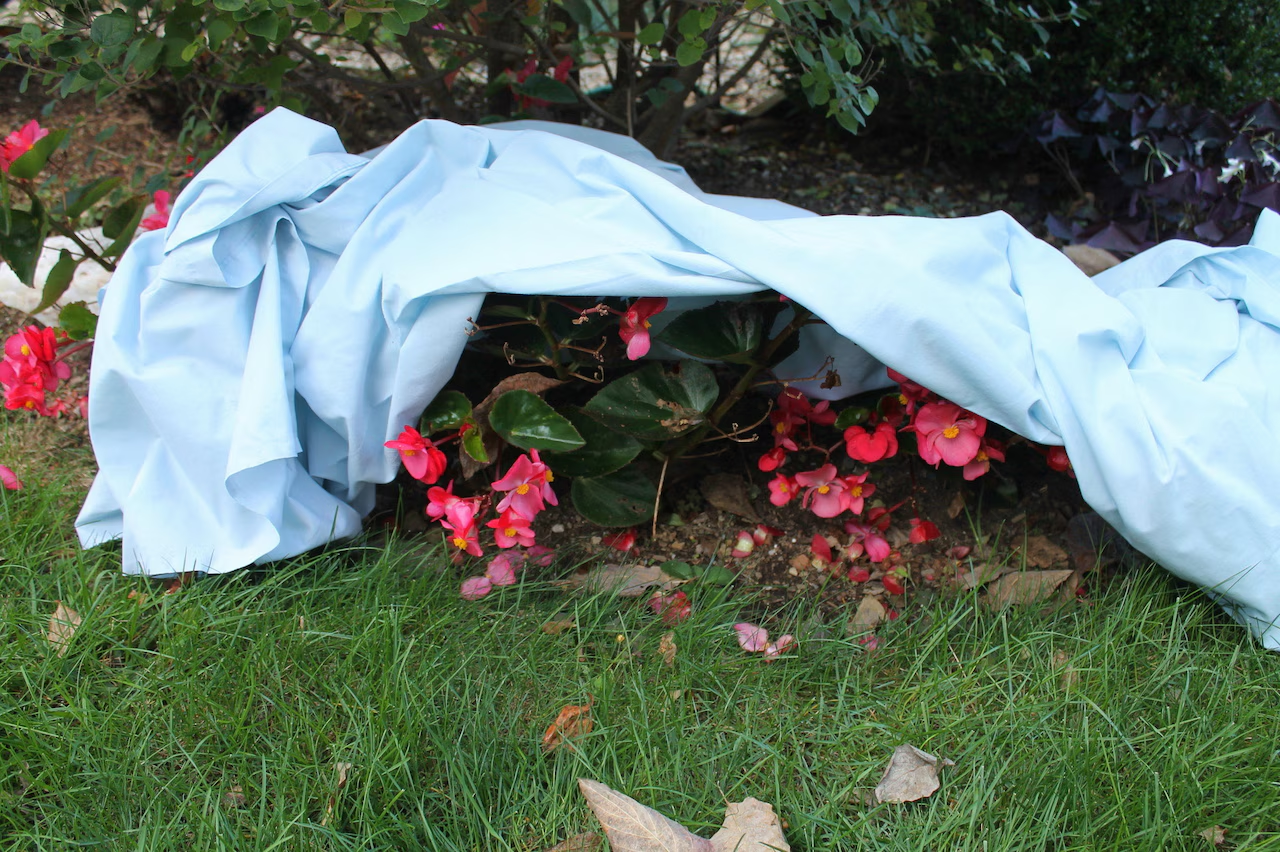 Temporary overnight coverings such as floating row covers or light-weight sheets can protect tender annual flowers from a late frost after planting.George Weigel
Another caveat to factor in: Even though a chilly night doesn’t dip below 32 degrees, some summer plants don’t do well anywhere close to that. Although they may not die, they’ll just sit and sulk until the real heat arrives.
Vinca is an example of an annual flower that often yellows when it’s grown in too-cool conditions. These sometimes never fully rebound after a chilly beginning.
Zinnias, basil, okra, hot peppers, eggplants and sweet potatoes are others that prefer solid warmth over chilly nights.
The bottom line is that the tender-plant planting decision boils down to each gardener’s risk aversion as well as how antsy he or she is to get started.
There’s no problem, by the way, with planting cold-hardy perennial flowers and new trees, shrubs, evergreens, and roses.
Those can tolerate frosty nights.
Just be sure to keep them well watered as temperatures heat up and summer’s soil dries out.
Comments are closed.