
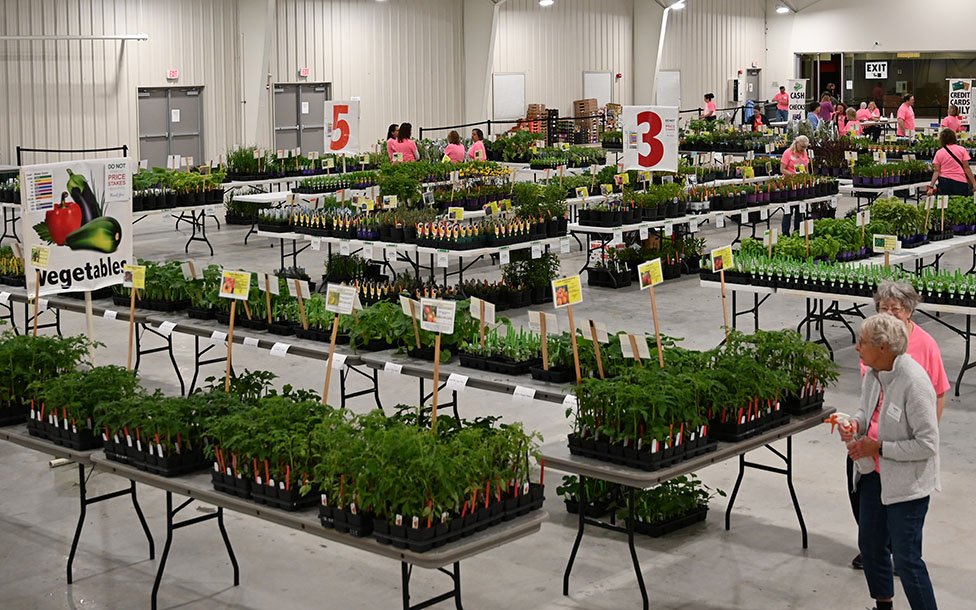
Every spring, the Ozaukee County Master Gardeners (OZMG) host a plant sale that has become, for many in the region, a not-to-be-missed seasonal ritual. For many devoted attendees, the sale marks the official opening of planting season, whether they select their vegetables, herbs and ornamentals in a painstakingly planned sudden blitz or spend time browsing the tables, chatting with the on-site experts, and finding unexpected treasures.
The plant sale’s current chair, Jeanne Mueller, became a master gardener in 2006. What qualifies someone for that title? She says, “You’ll know because they’re always sharing pictures on their phone. ‘This year, I’m raising purple basil! And I started it in the house!’” In reality, master gardeners need more than enthusiasm: They’re trained, tested, and certified through the horticulture division of UW–Madison’s Extension program, and must complete both volunteer work and continuing education each year to remain in good standing. Different counties in Wisconsin then have their own master-gardener groups; OZMG is relatively small but has an outsized impact.
The plant sale, originally run by the Herb Society of America, was adopted by the OZMG in the early ‘00s. In 2023, they moved the sale from its long-held location at Concordia University to the Ozaukee County Fairgrounds. Since then, the organizers have worked hard to iron out all the kinks involved in the relocation of a major event. Mueller even mounted a tall ladder to film the crowd and pinpoint bottlenecks (hint: the biggest one was at the tomato table). Leaving Concordia also meant they no longer needed to wait until after graduation; the event is now locked into the weekend before Memorial Day.
 Stay on top of the news of the day
Subscribe to our free, daily e-newsletter to get Milwaukee’s latest local news, restaurants, music, arts and entertainment and events delivered right to your inbox every weekday, plus a bonus Week in Review email on Saturdays.
Lines form before the doors open at 9 a.m.; the most devoted attendees turn up the same time Mueller does—at 6 a.m. One rainy year, the lack of a crowd waiting worried her, but at the strike of 9, there was a chorus of car doors opening and closing. Everyone had been sheltering in their cars, wanting to stay dry but not wanting to miss the opening. “Lines do form, but you don’t need to come that early,” says Mueller. “Some bring chairs and nap, or drink lots of coffee—and yes, the outside restrooms are open—but no matter what time you arrive, there’s something here for you.”
Heirloom Tomatoes
What’s the draw? Over 40 varieties of heirloom tomatoes, with new favorites like Italian Red Pear slotting in next to old standbys Tiny Tim, Abe Lincoln and Amish Paste (the one causing the bottleneck). Three different eggplants, plus cucumbers, zucchini and squashes (spaghetti squash is new this year). Twenty-three varieties of peppers, displayed in order of hotness, from the sweet California Wonder, which scores 0 Scoville units, up to the Magnum Habanero, which scores an eye-watering 150,000–350,000 Scoville units. (For reference, a nice poblano scores 500-1,000.)
The event is serious business for some, who come armed with marked-up checklists of the precise plants they want (the list of available plants will be posted the first week in May) and rolling carts. For others, it’s about finding inspiration in plants they’d never considered. Master Gardeners circulate, ready to answer questions and make suggestions. “If they talk to me,” Mueller says, “they’ll go home with a sedum and a yarrow plant!”
Tables are organized into plant types, including culinary herbs, aromatics and ornamentals. A “plant parking” area allows shoppers to temporarily leave their finds while they browse, which keeps aisles navigable; student helpers carry purchases to cars. Organizers suggest attendees bring boxes; they usually run out by the midpoint of the sale.
Midwest Growers
The plants come from three area growers; the furthest is in northern Illinois. Master Gardeners adopt the vegetables after they’ve been seeded and are about an inch high, and carefully tend them, adjusting climate and food so they’re the right size in time for the sale. “We grow them ourselves instead of buying them because we get funky ones vs. just the normal ones,” says Mueller. “Having master gardeners test them to say, ‘Yes, this one is good, this one will grow,’ is very useful.” Sometimes, the master gardeners will fill gaps. “None of our growers had kale,” says Mueller, “so I actually grew kale plants in my basement. They’re my babies. Putting them on the table for sale felt like interviewing the family! ‘Are you going to be good to my plants?’”
The master gardeners are also evangelists about environmental connections and what plants make sense for the ecosystem. Mueller will happily talk about keystone plants and the need not just for milkweed, a natural draw for caterpillars, but how adult butterflies need nectar plants—and how baby birds need caterpillars! “We’re hopefully helping people to get more variety. The more variety, the more insects they’re attracting. It’s more than ‘Oh, we’re going to put some plants in the ground.’ What are those plants doing to the environment? And how are we all trying to live together?”
Keep the Shepherd Free
Support Milwaukee’s locally owned free weekly magazine.
LEARN MORE
The sale is the organization’s largest fundraiser, and they direct the proceeds right back into public service. A guest speaker series is free to the public. Live and streaming sessions cover topics such as extending the gardening season and creating mini meadows. Members lead workshops on composting, winter sowing and seed saving. The organization provides student scholarships and grants for public libraries and tends public gardens throughout Ozaukee County. Their hydroponic gardens at the Ozaukee Food Alliance in Saukville provide fresh produce to families in need.
The event is designed not to compete with other fundraisers, and deliberately does not stock the staples of Scout, school and church sales. “We don’t sell annuals such as petunias, marigolds, and flower baskets,” says Mueller. “Please support your local groups!”
The group attempts to keep prices low, which leads to some sacrifices (peonies, with a hefty wholesale price tag, had to go), but does uncover more unusual suggestions: Two varieties of Bleeding Heart made the cut this year. “I was told we had to raise our prices on our tomatoes,” says Mueller. “But I gotta tell you, if we don’t make that extra 50 cents or whatever we think we’re going to raise … we want to keep prices as low as possible so people can buy plants to enjoy them, and to grow for food—and to help pollinators.”
Ozaukee Master Gardeners Plant Sale
ozaukeemastergardeners.org.
Saturday, May 16, 9 a.m.–12:00 p.m.
Ozaukee Co. Fairgrounds, Ascension Columbia St. Mary’s Expo Center, W67N890 Washington Ave., Cedarbug
Other Milwaukee-Area Plant Sales
Elm Grove Beautification Committee
Enderis Park Bloom & Groom
Friends of the Monarch Trail:
themonarchtrail.org
Order online, pickup Sat. May 9, 11 a.m.– 4 p.m.; Sun. May 10, 11 a.m.-2 p.m.
Greenfield Park Pavilion, 2028 S. 124th St, West Allis
Friends of Wehr Nature Center native plant sale (fundraiser)
friendsofwehr.org/plantsale
May 30-31, 10 a.m.–3:30 p.m.
Pre-orders end April 22, shop in person during the sale.
Wehr Nature Center, 9701 W College Ave., Franklin.
Comments are closed.