
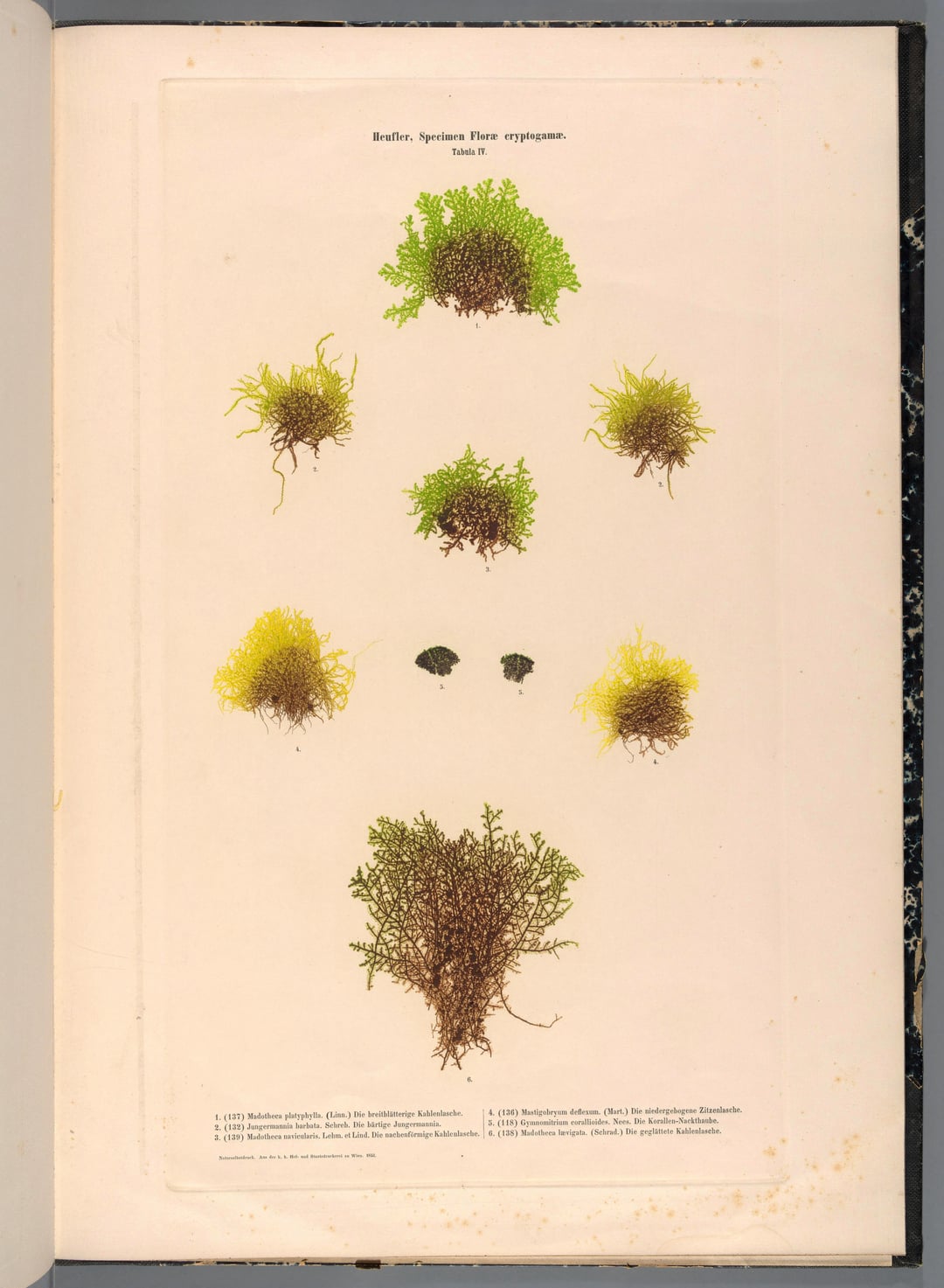
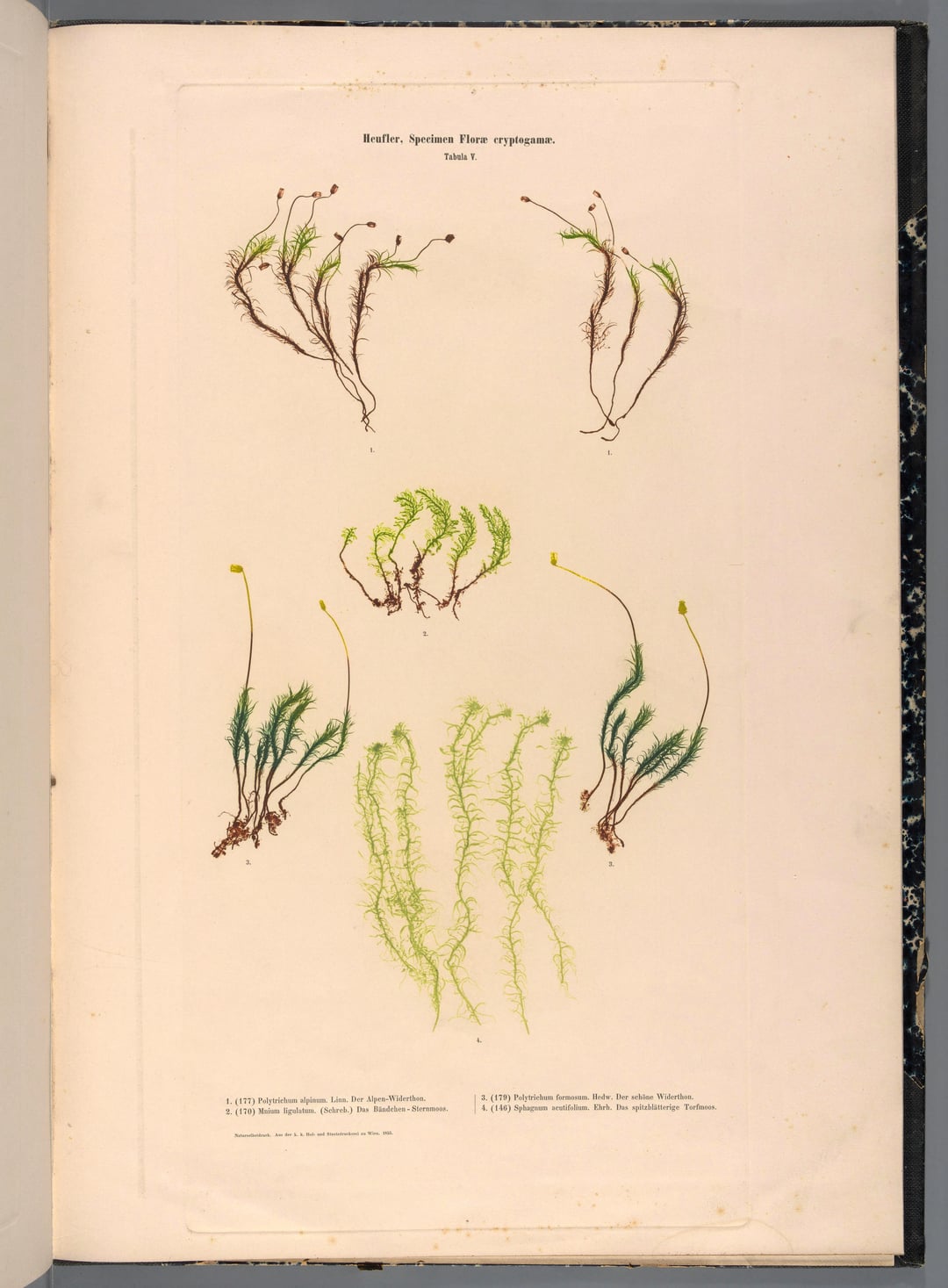
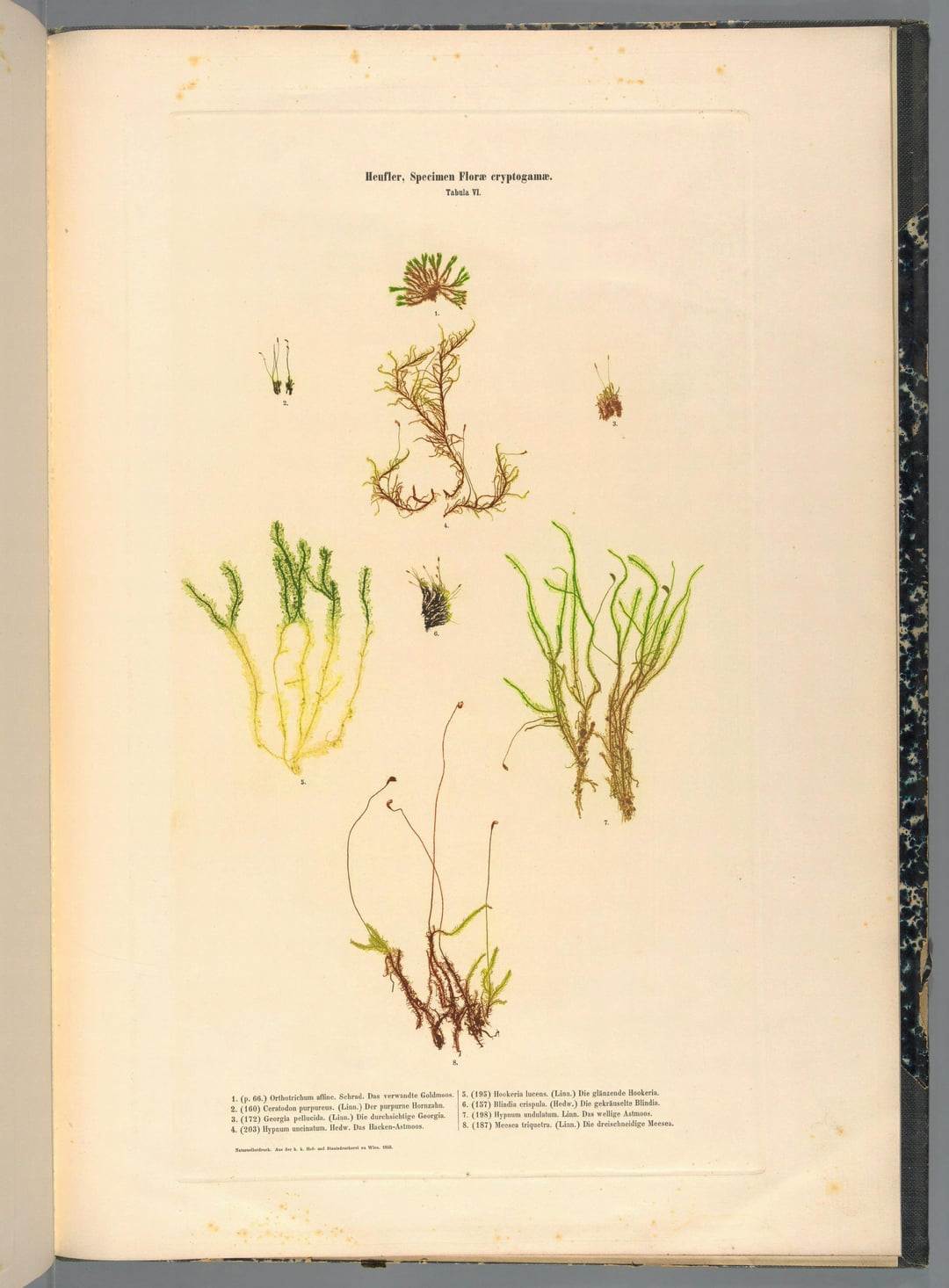
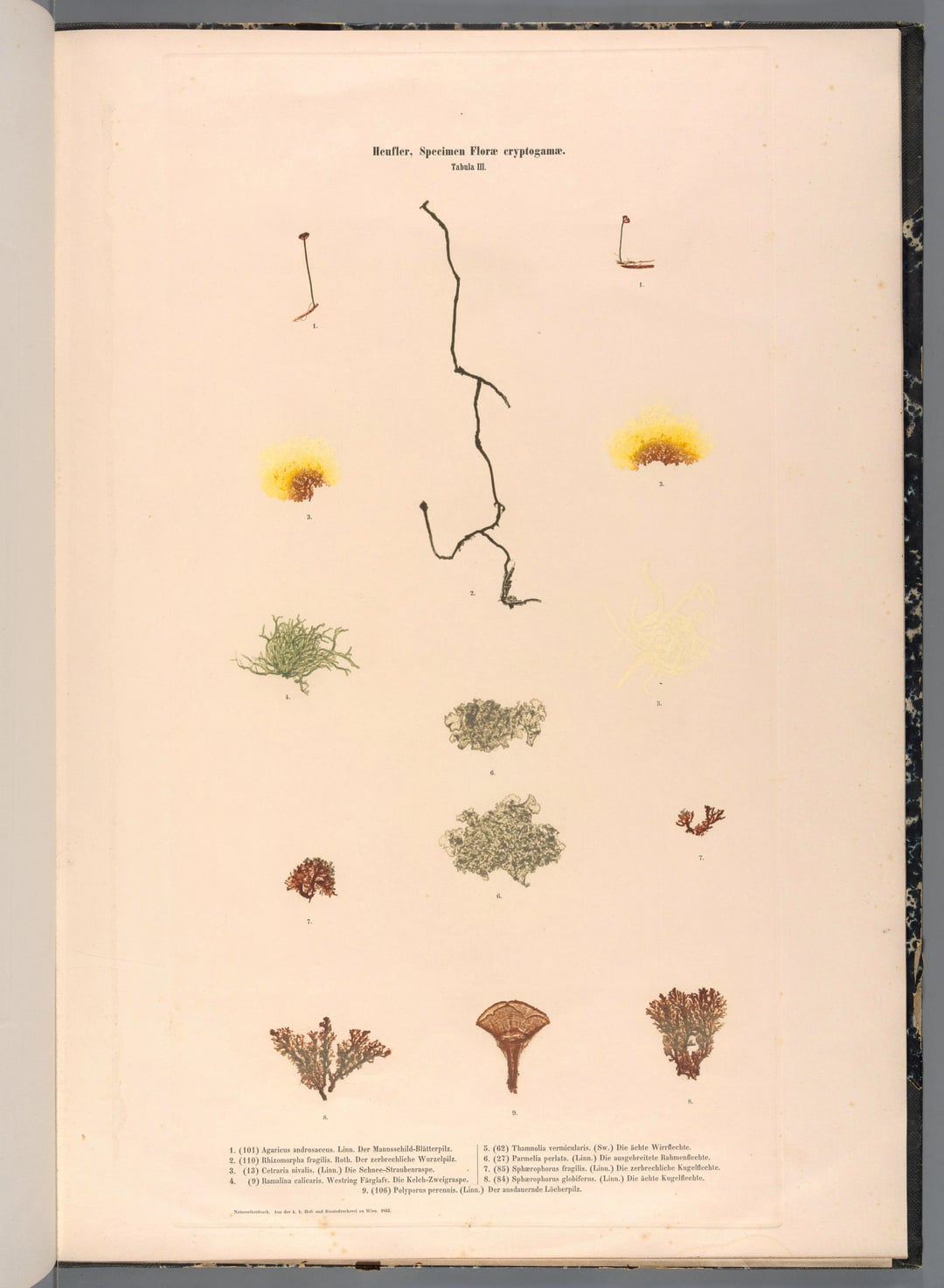
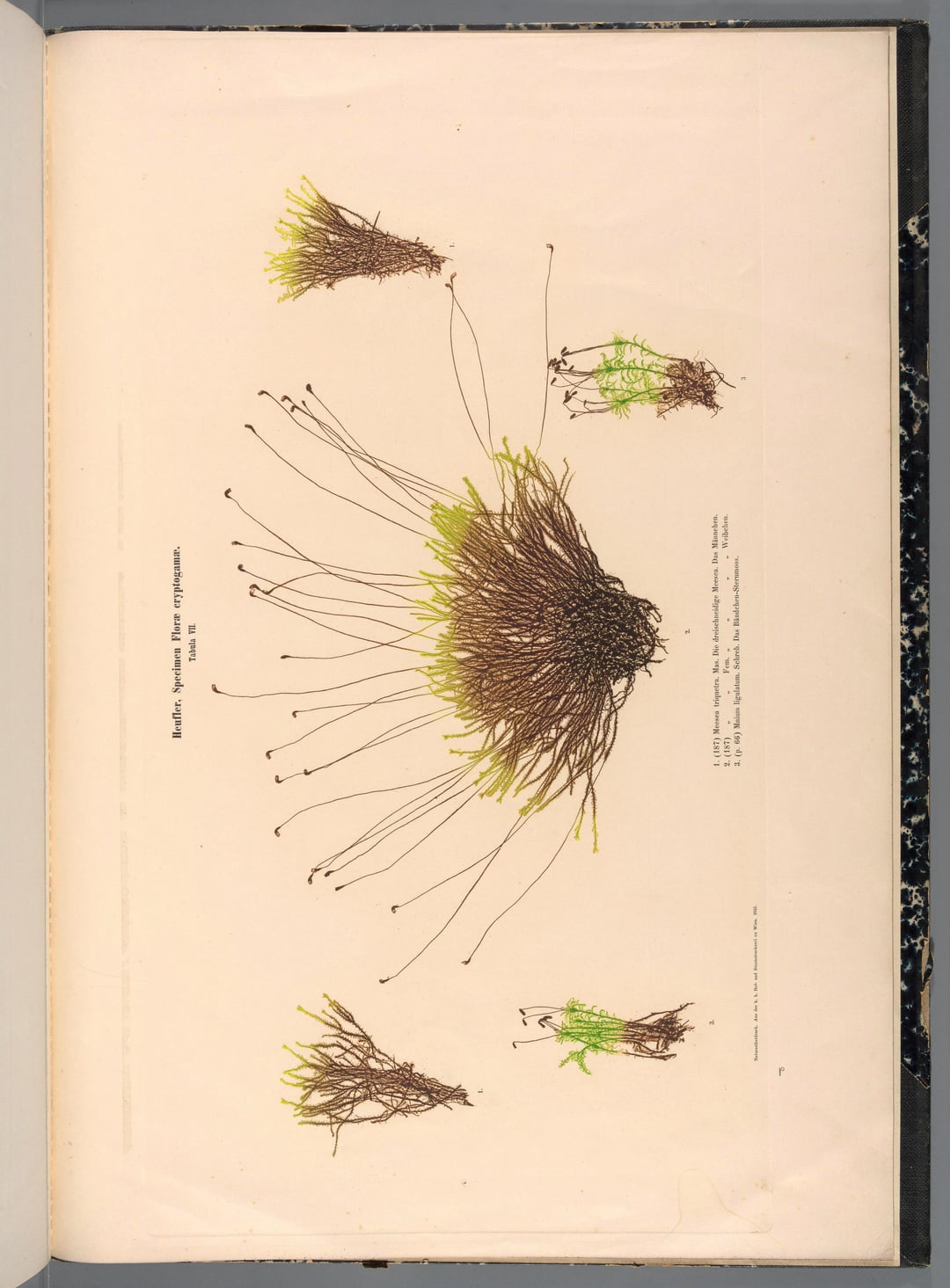
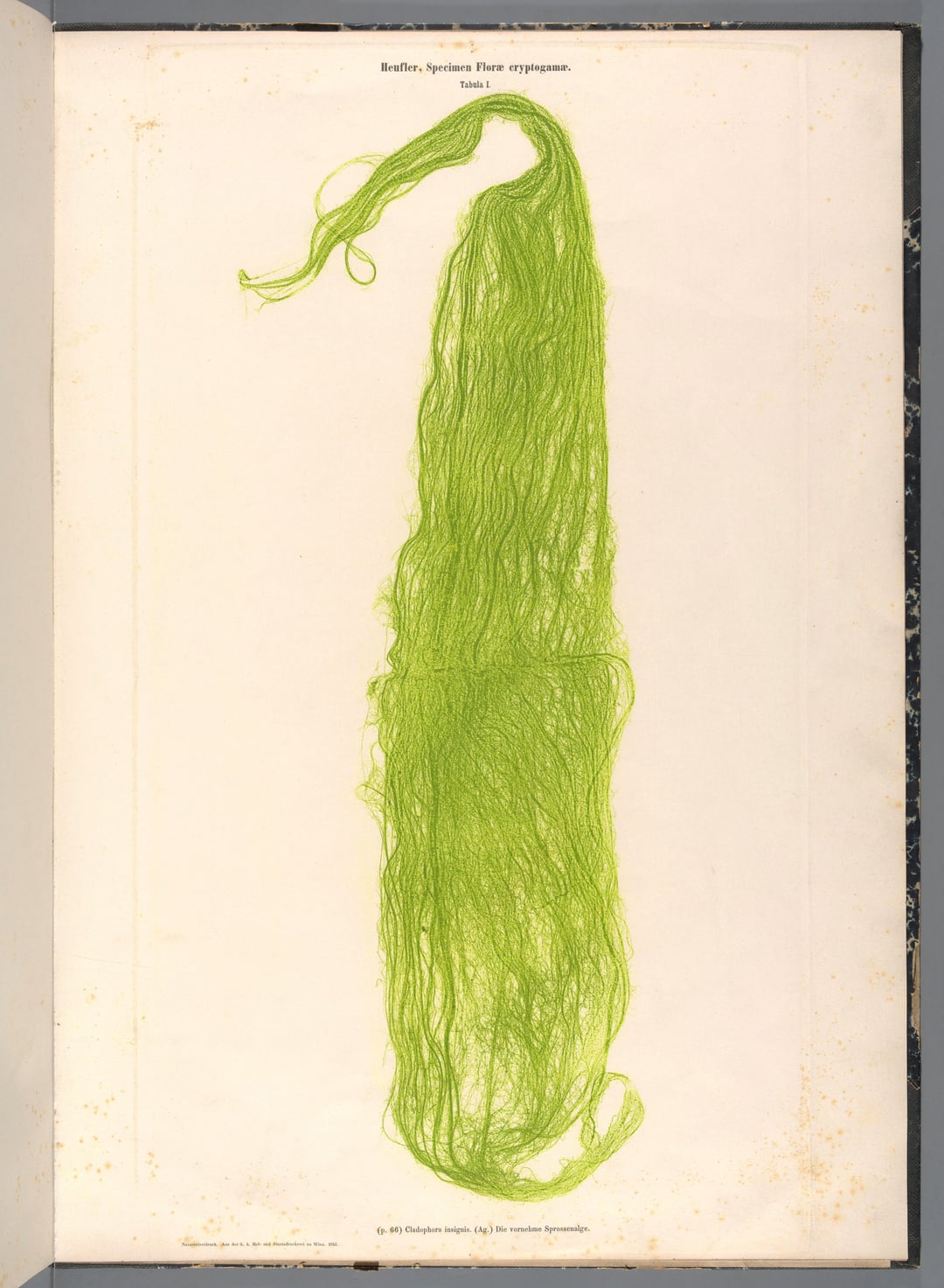
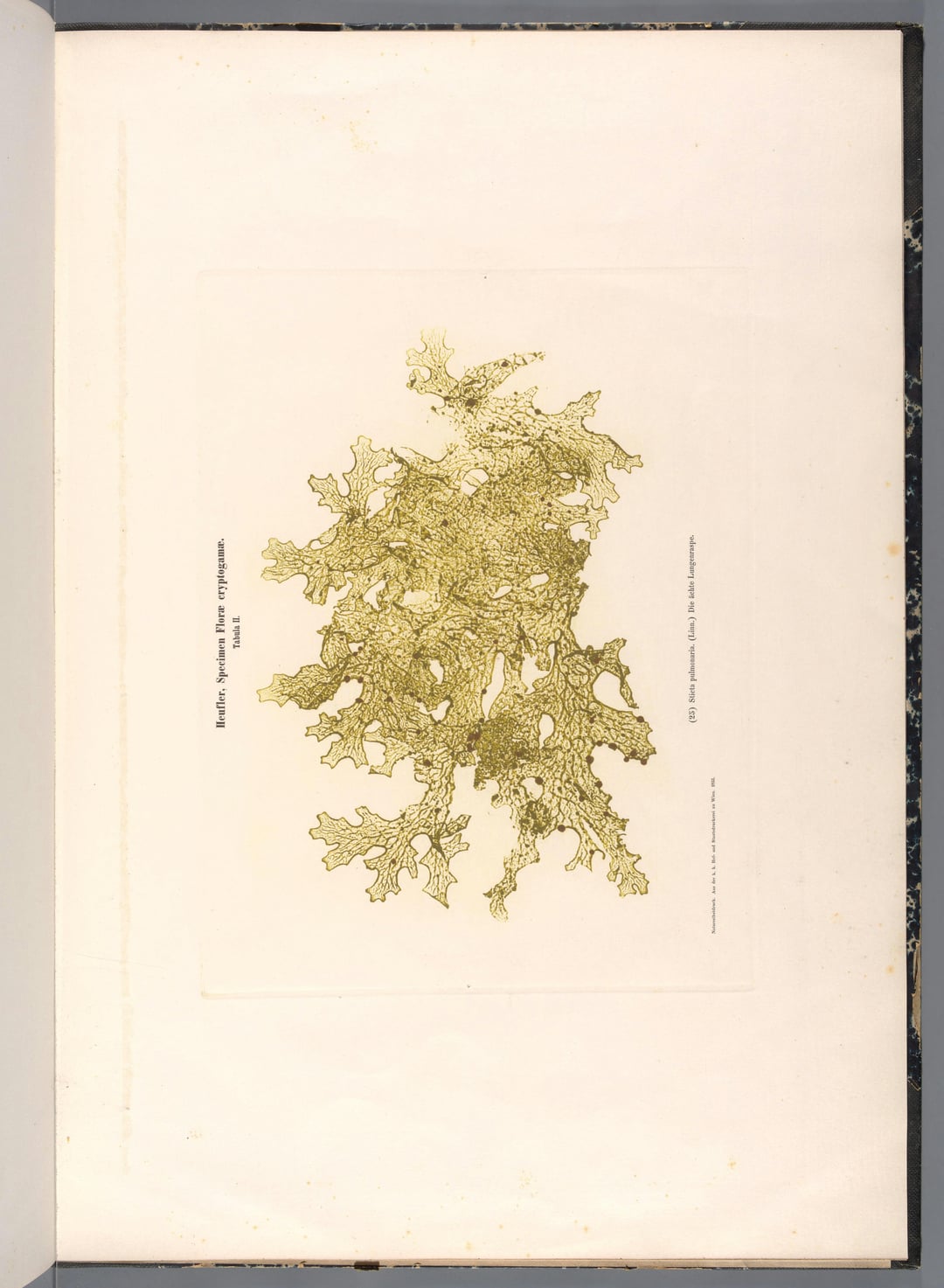
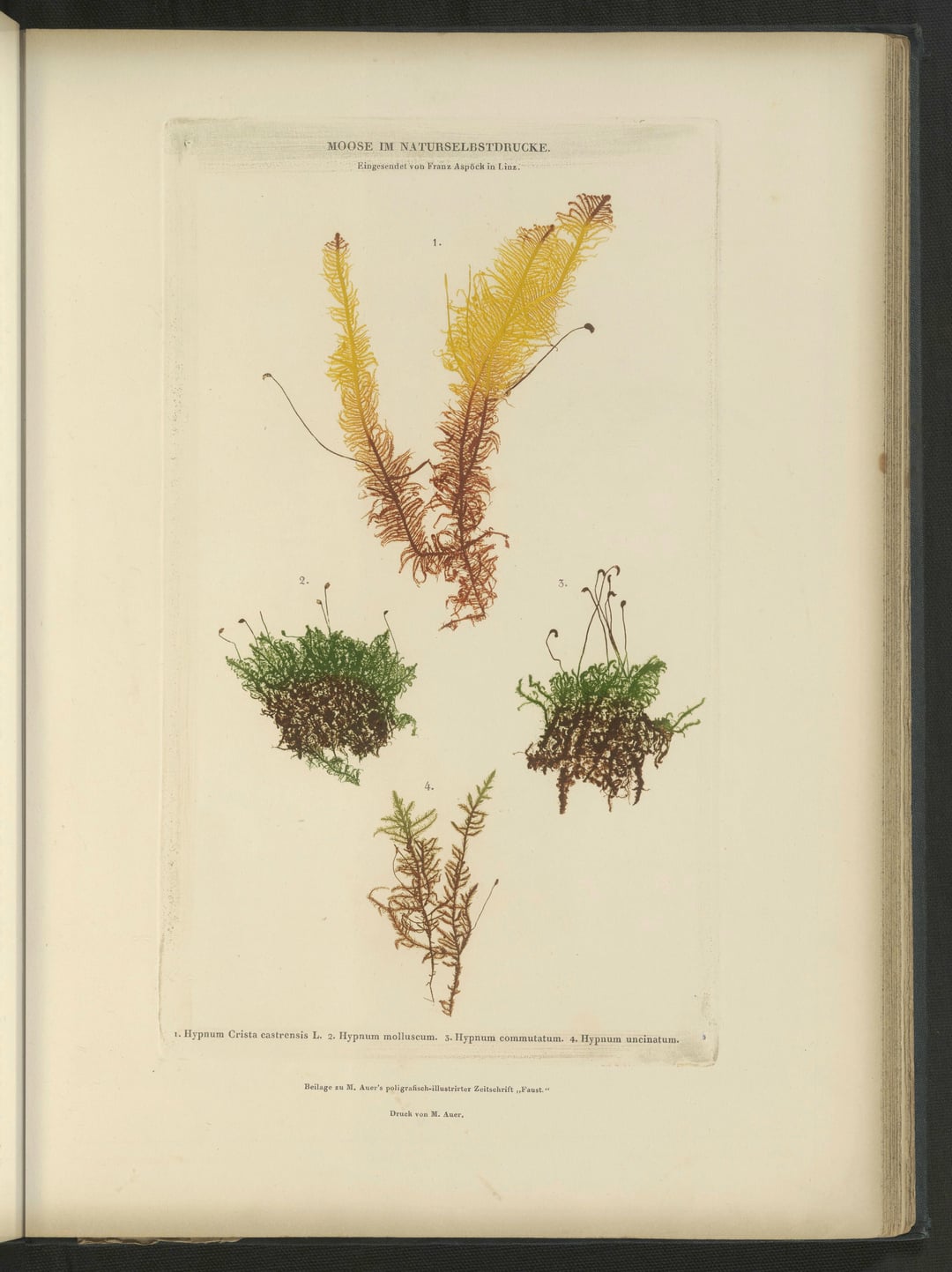
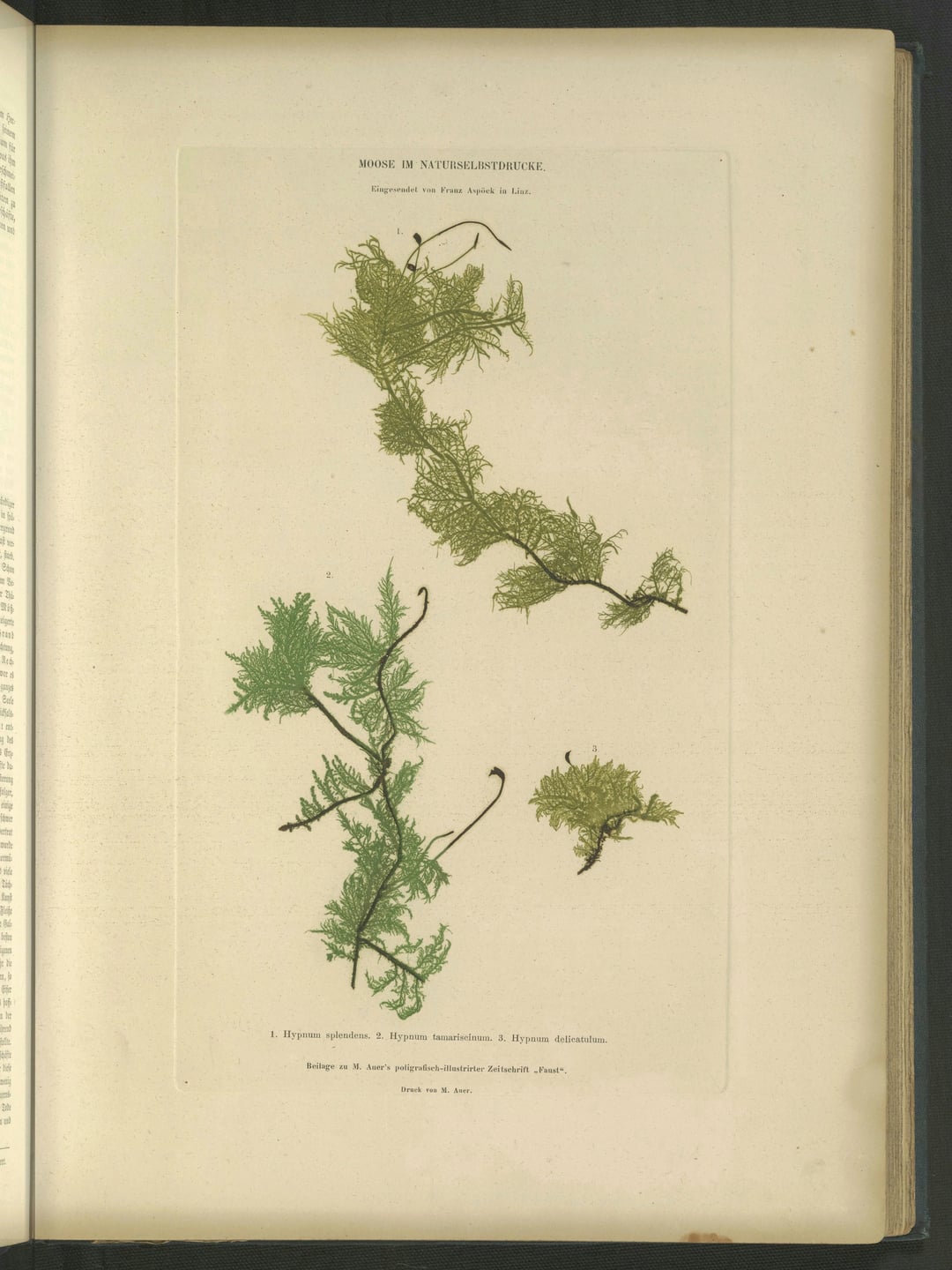
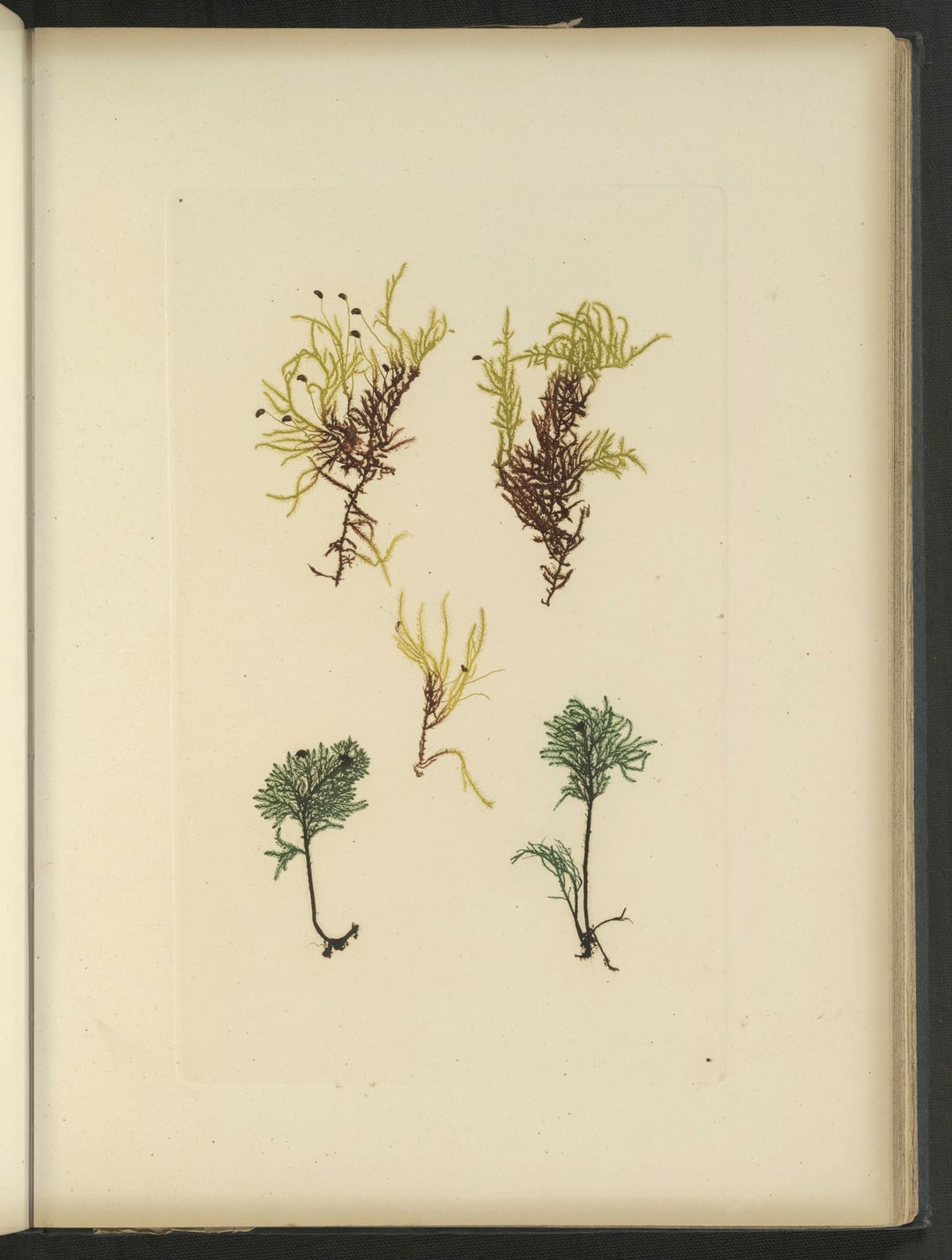
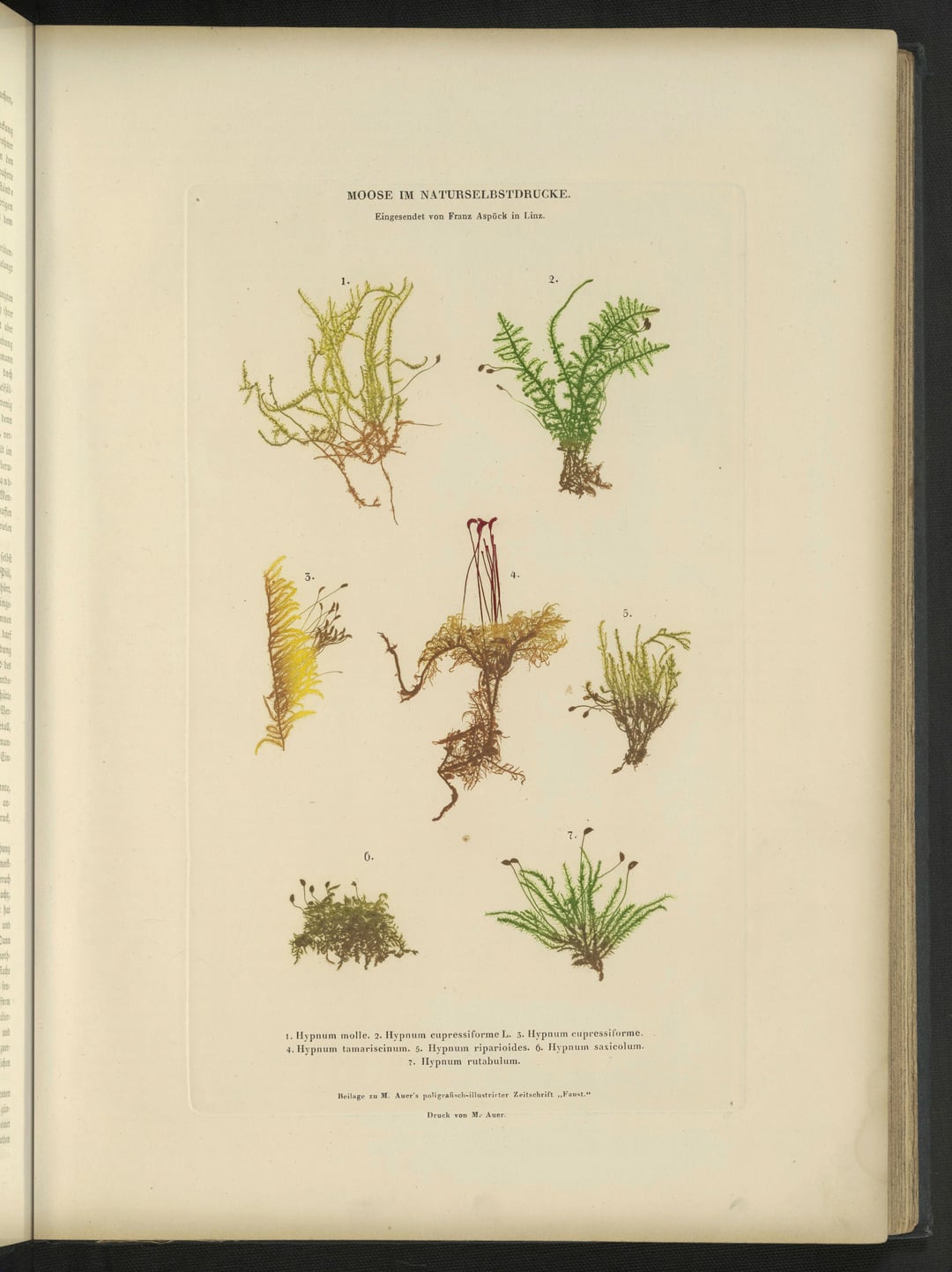
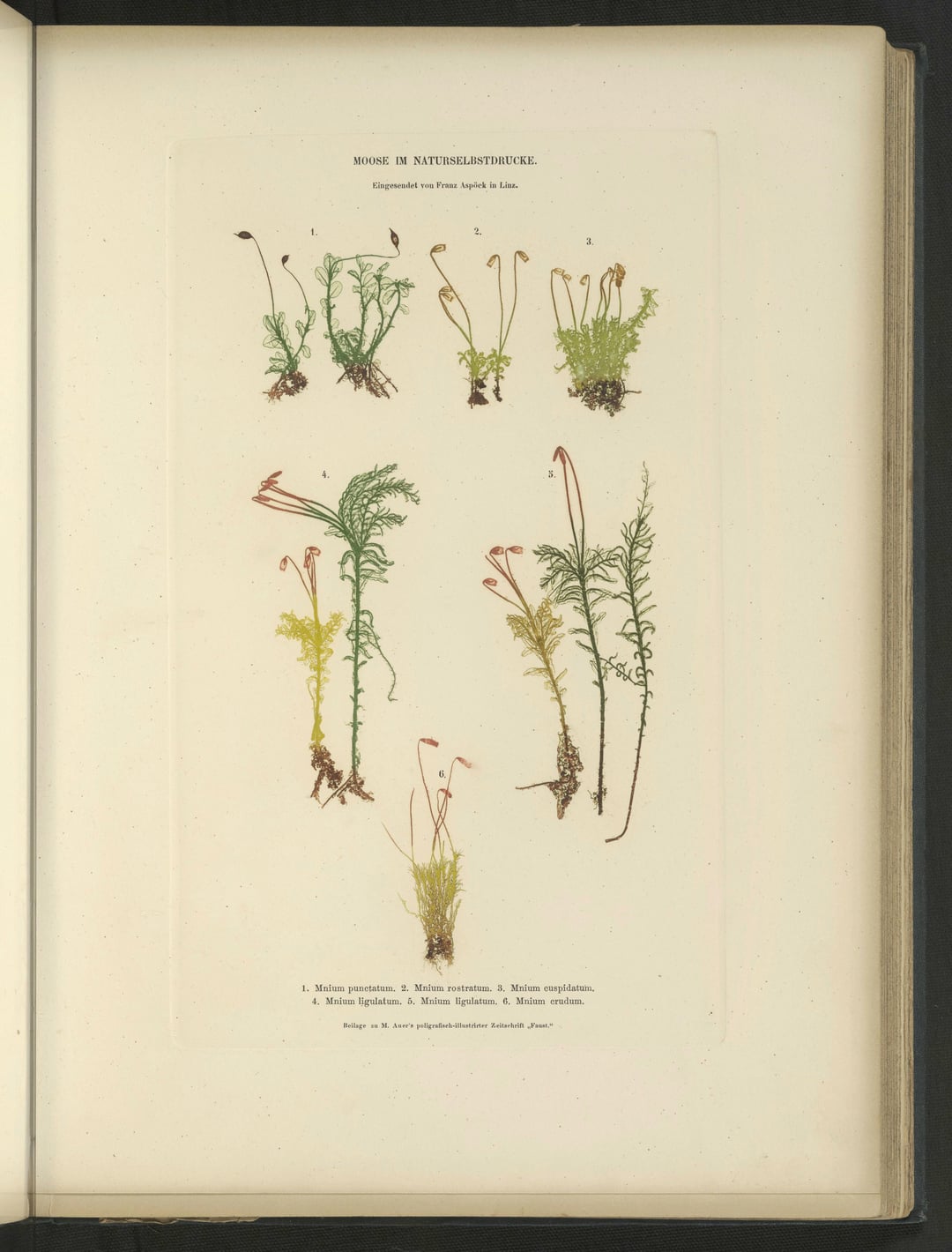
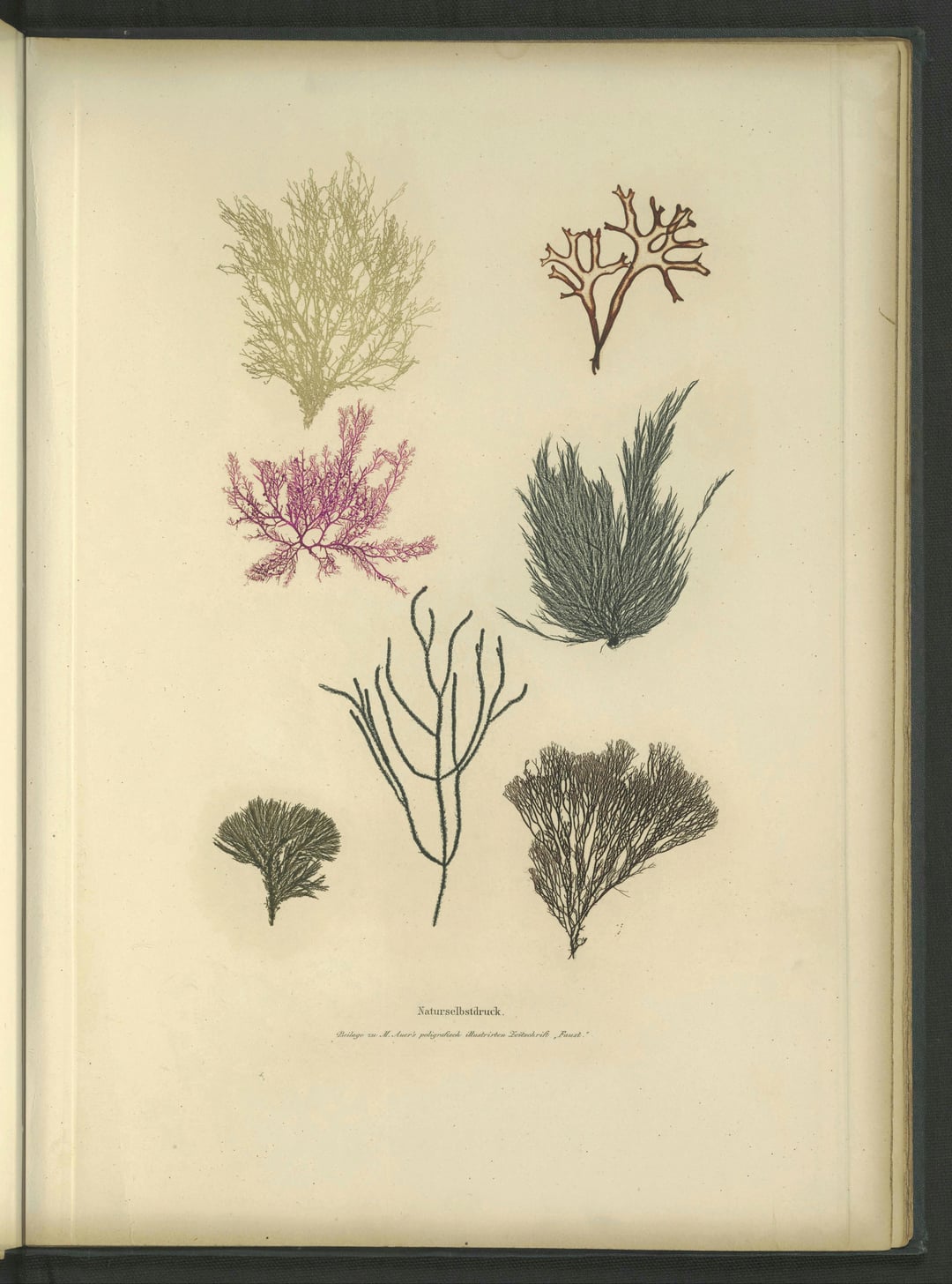
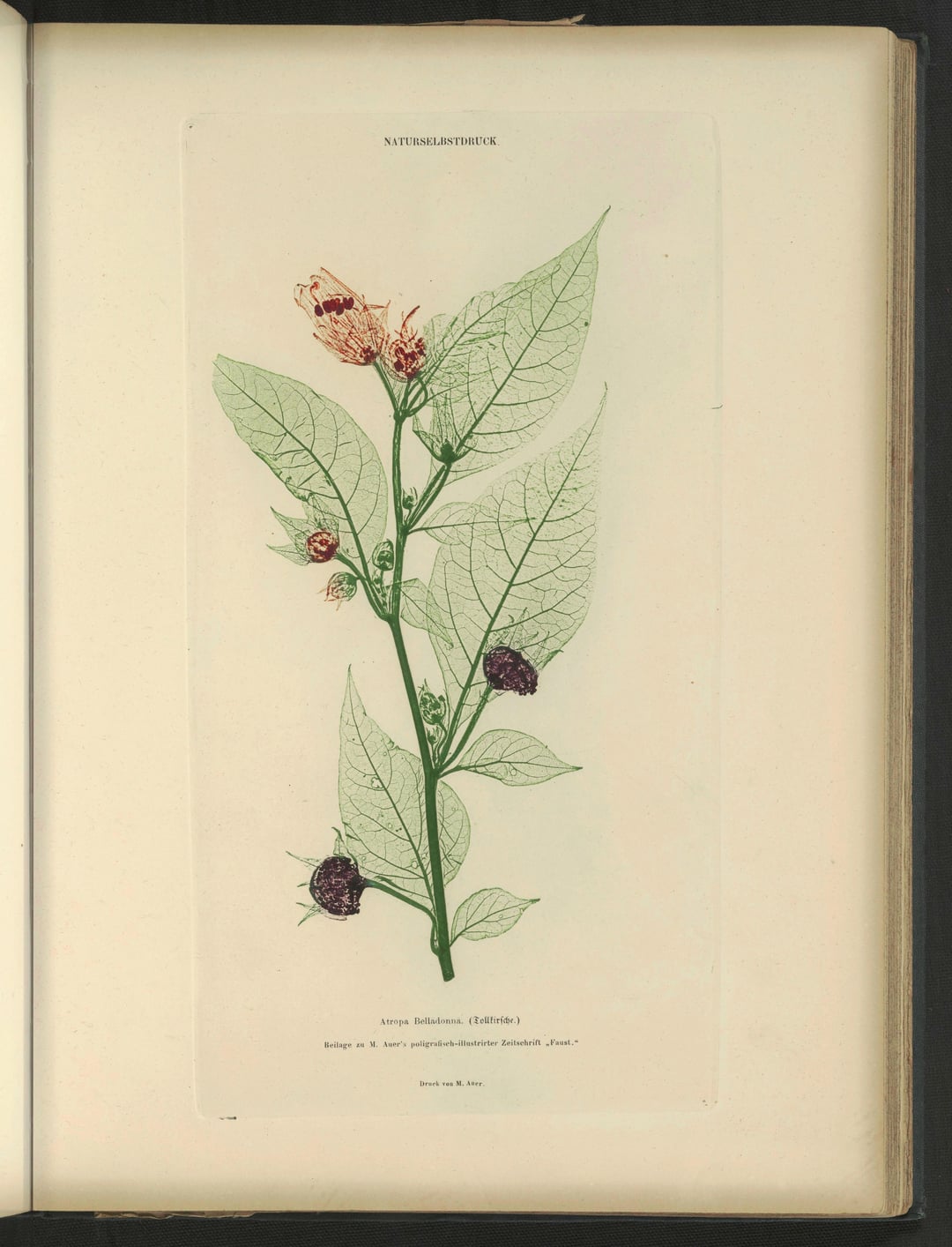
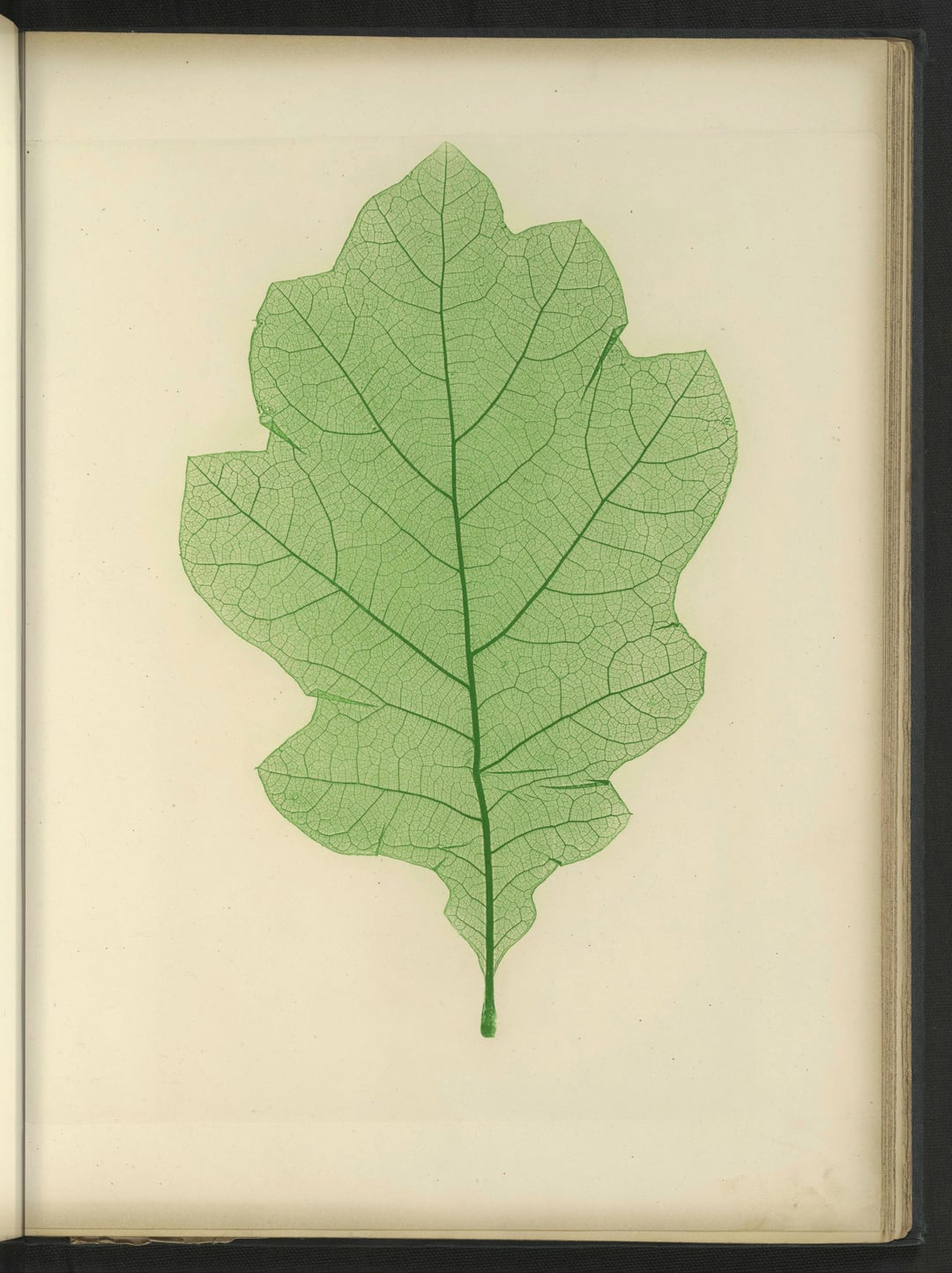
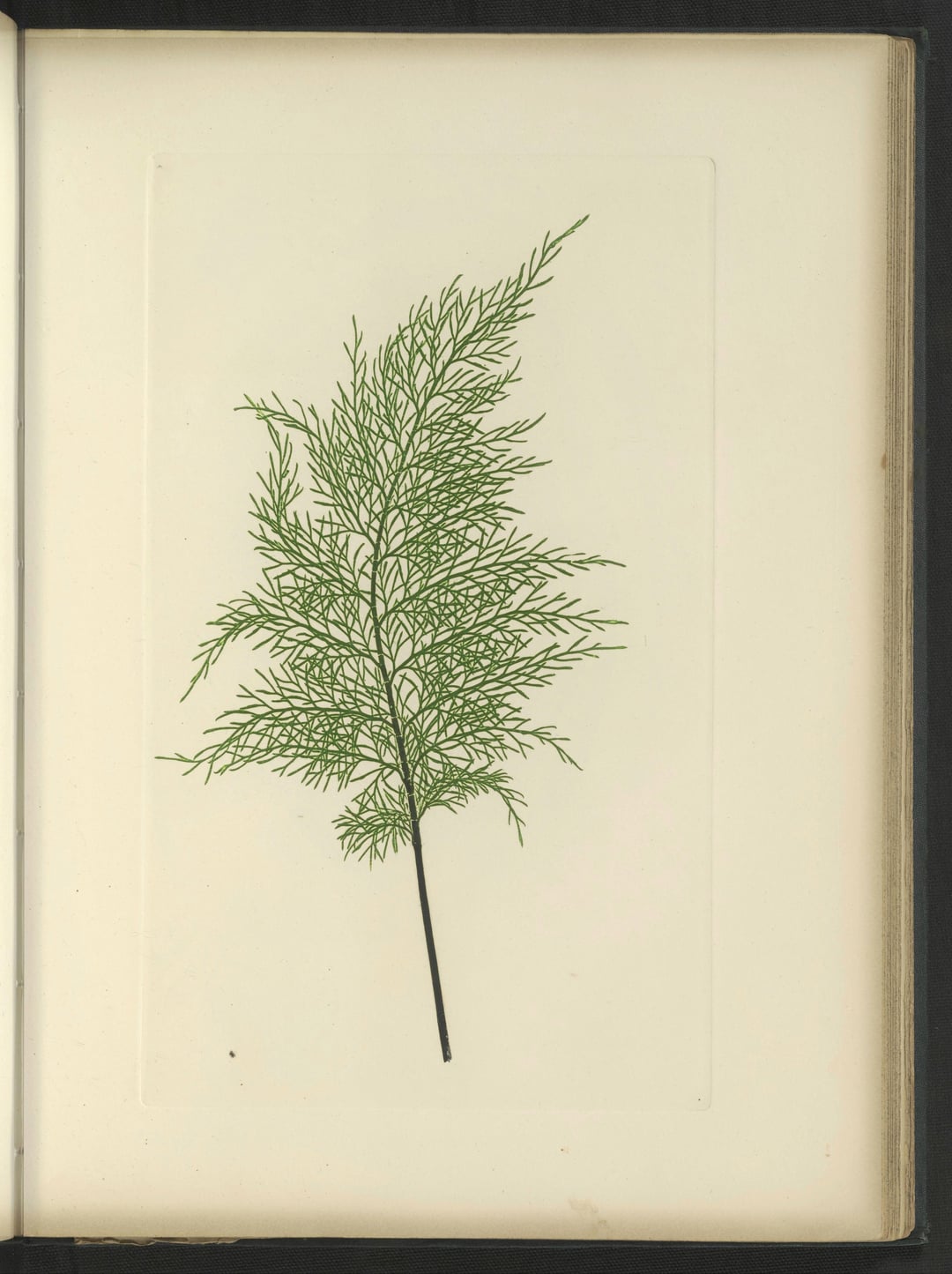
Naturselbstdruck (nature self-printing) is the process
of using an actual specimen, like foliage or a wing, to create a permanent, high-fidelity printing matrix.
While centuries of simple manual "leaf-stamping"
preceded it, the technique became a scientific
powerhouse in the 1850s through a sophisticated
intaglio method.
Alois Auer (Vienna): In 1853, as director of the
Imperial and Roval State Printing House, Auer
perfected the industrial application. He used extreme
pressure to embed a specimen into a soft lead plate
then electrotyped it with copper. This allowed for the
mass production of incredible detailed botanical
plates that were essentially "photographic" in their
accuracy.
Henry Bradbury (London): Bradbury studied under
Auer and brought the technology to England. He
refined the process to achieve unprecedented color
fidelity and texture, most notably in his masterpiece,
The Ferns of Great Britain and Ireland (1855)
By capturing the physical topography of a specimen
these prints provided a level of objective,
unmediated data that traditional hand-drawn
illustrations could not match.
by datisnotcashmoneyofu
Comments are closed.