
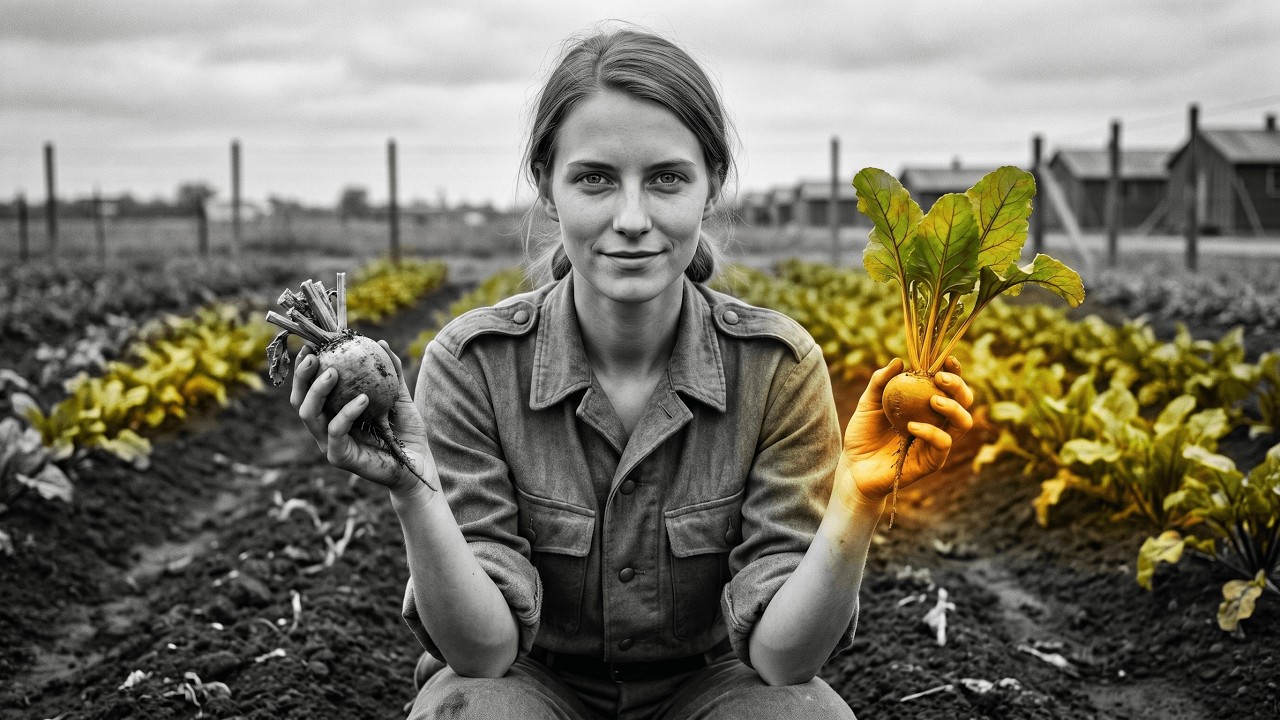
Camp Concordia, Kansas. 1945. Every day, the camp garden crew threw away hundreds of beet and turnip tops. Then a German prisoner started pushing them back into the dirt.
The garden supervisor told her to stop. Six weeks later, those ‘scraps’ had doubled his harvest.
This is the story of Ilse Falkner — a farmer’s granddaughter from Saxony who carried a 300-year-old German farming technique called Nachkultur across the Atlantic, into an American prison camp garden, and proved that one planting could produce two harvests. What she demonstrated would spread to three Kansas farms and change how an entire county grew food for 20 years.
Topics: WW2 German women POW stories, German farming techniques, Nachkultur, root vegetable replanting, beet farming, Camp Concordia Kansas, American agriculture WW2, traditional farming methods, sustainable agriculture history, food production wartime, German agricultural knowledge, generational farming wisdom, Kansas farming history, POW camp gardens, forgotten women of WW2.
#ww2 #GermanWomanPOW #farming #agriculture #untoldstories #forgottenhistory #Nachkultur #foodproduction #KansasFarming #sustainableagriculture
Comments are closed.