
By Kim Snowdon
Colorado Master Gardener
“When the well is dry, we learn the worth of water.” — Benjamin Franklin
Colorado set lots of precipitation records last winter, and most were bad from a gardening standpoint. Record-low snowpack and record-high temperatures mean the region is likely facing strict water restrictions this summer. Many communities have already implemented restrictions.
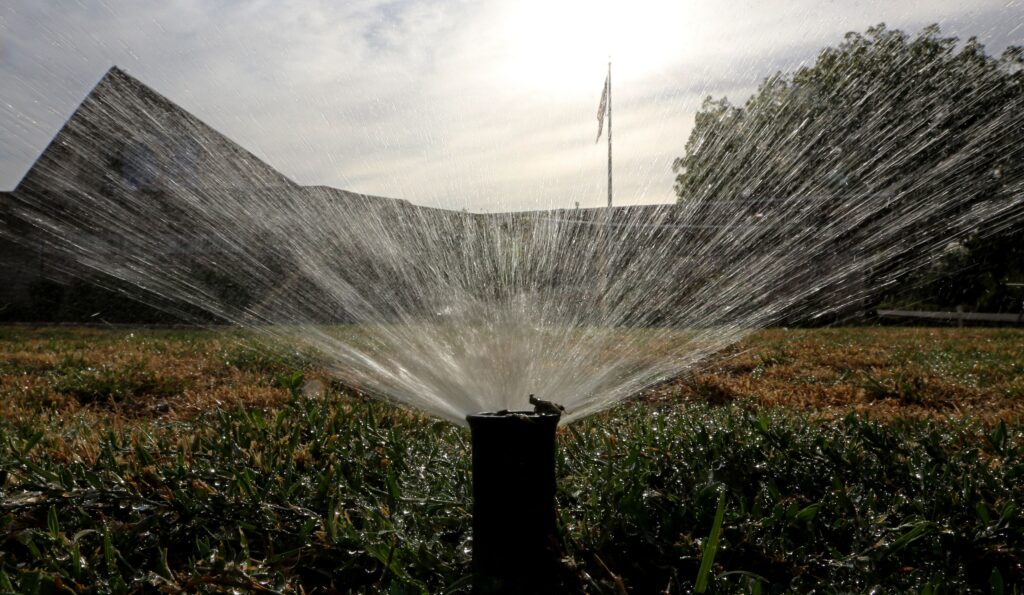
According to Colorado State University, 40% to 50% of home water usage is watering gardens and landscapes. So it’s vital that residents use water wisely to make the most of this invaluable resource.
Lawn
— Understand current water restrictions in your area, including days and times.
— Make sure sprinkler systems are working properly. Effective irrigation considers soil type, slope, and exposure.
— Install rain sensors on irrigation systems and only water when needed. If you walk on your lawn and it springs back, it doesn’t need watering. If your footprint remains, the lawn is thirsty.
— Water lawns and gardens late at night or early in the morning to reduce evaporation. Avoid running sprinklers when it’s windy. Water deeply and less frequently to encourage deep roots.
— Aerate your lawn to increase moisture penetration and to promote root growth.
Trees, shrubs, perennials
— Prioritize watering expensive landscape trees and shrubs. Allow lawn to go dormant in extreme drought. It will recover when you can water again.
— Consider drought tolerant plantings. Native species are often better suited to our high desert climate.
— Group plantings according to water requirements so that you’re not overwatering more xeric plants.
— Get to know your plants. Some will wilt in the heat of the day but this may not indicate that watering is needed; check soil moisture first, perhaps using a moisture meter.
— Keep weeds under control so they don’t compete with desired plants for moisture.
— Apply 2-4 inches of mulch to perennial beds to retain soil moisture, reduce evaporation, and moderate soil temperatures. Rock mulch may be more appropriate at home foundations to reduce fire risk.
— Plant groundcovers; soils shaded with leaves will lose less moisture.
— Water at the base of plants, either with hose sprayer directed at the soil, soaker hoses, or with drip irrigation. Avoid overhead spray that increases evaporation. Drip systems should be installed below mulch to insure water penetration.
Consider other household tasks and avoid water, if possible. One example is sweeping garden walks instead of washing them off. Homeowners are allowed to install up to two rain barrels to collect and store gutter runoff. These storage containers must be covered, and no larger than 55 gallons each. The collected water can be used for irrigation. Gardening and water conservation can work together with careful and strategic planning.
Submit gardening questions to [email protected] or call 719-520-7684. The in-person help desk is open Mondays, Wednesdays and Thursdays from 9 a.m. to noon and 1 p.m. to 4 p.m. Visit elpaso.extension.colostate.edu and register for upcoming classes at epcextension.eventbrite.com.
Comments are closed.