
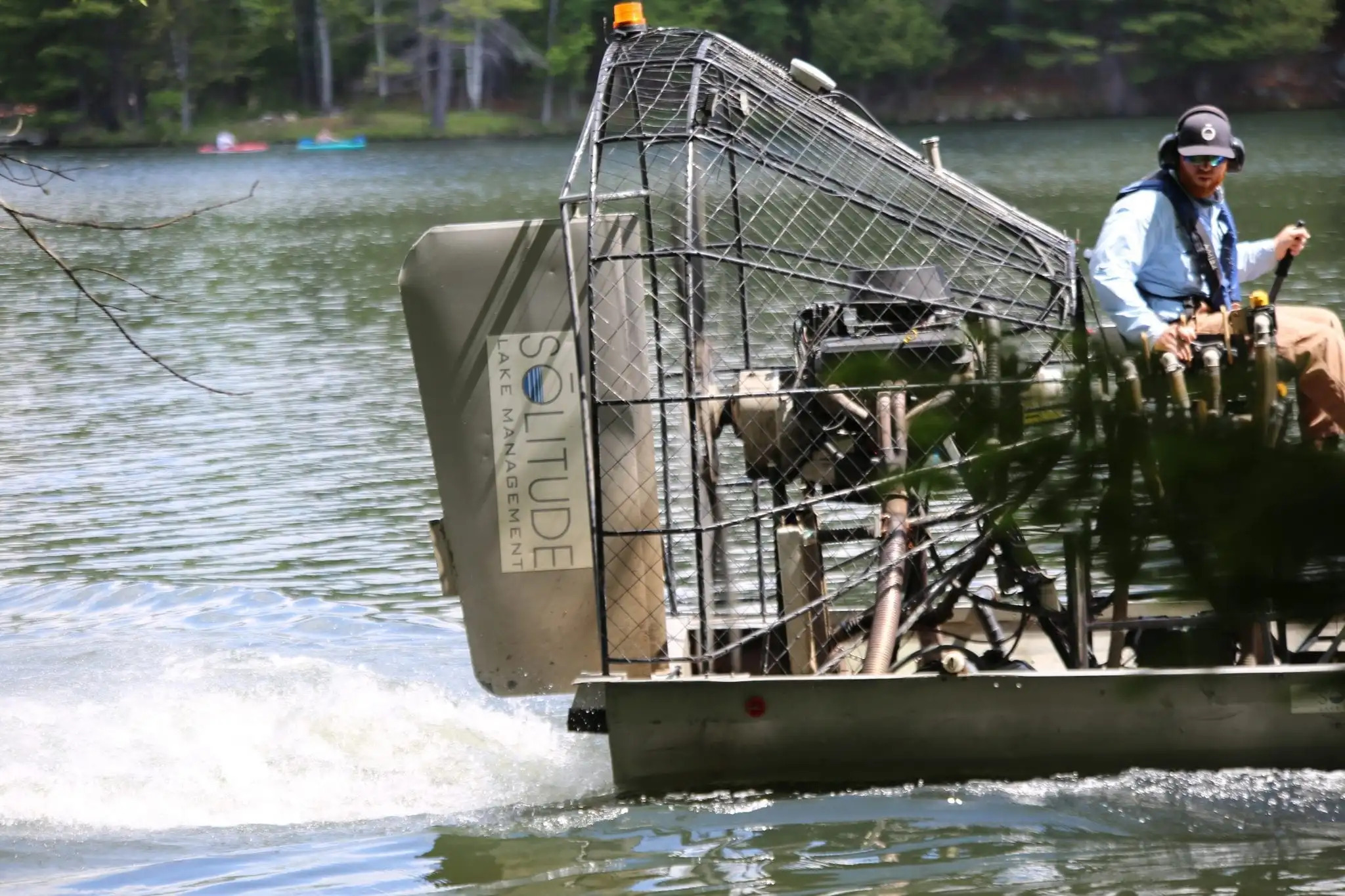
Minerva Lake was the first lake in the Adirondack Park to use the herbicide ProcellaCOR against invasive milfoil. The town is seeking permission to do it again.
Gwendolyn Craig/Adirondack Explorer
The sun sets over Eagle Lake near Ticonderoga in the Adirondacks. The Eagle Lake Property Owners Association is seeking APA approval to use an herbicide for the second consecutive year in the 420-acre Essex County lake.
Herb Terns/Times Union
Six years after becoming the first community in the Adirondack Park to use the herbicide ProcellaCOR against invasive milfoil, Minerva Lake is looking to do it all over again.

The town is seeking approval at the Adirondack Park Agency’s meeting next week to use the herbicide in its 79-acre eponymous waterbody, aiming to scuttle a nascent reinvasion of Eurasian watermilfoil that was killed after the initial treatment.
Article continues below this ad
More than a dozen lake communities across the park have followed Minerva in the years since it used the herbicide, finding it a cost-effective approach to managing an invasive plant that has long bedeviled local leaders.
Surveyors did not observe any invasive milfoil in Minerva Lake in the two years following the 2020 herbicide treatment, but it started to gradually return in the years since. The town managed the small number of milfoil plants with diver harvesting, but by last September, milfoil was documented at over a third of the sites checked in a lakewide plant survey. The invasive plant’s densities remained sparse, according to the survey.
“We have done everything right, we have spent the time and done the hand harvesting,” Minerva Supervisor Stephen McNally said. “It’s back.”
Make the Times Union a Preferred Source on Google to see more of our journalism when you search.
Add Preferred Source
McNally said the use of ProcellaCOR has saved the town significantly on its milfoil management budget line.
Article continues below this ad
In the five years prior to the initial ProcellaCOR application, Minerva spent an average of $56,085 per year on hand-harvesting contracts and other milfoil management. In the six years following the herbicide use, the town’s milfoil expenses dropped to an average of just over $11,000 per year, according to the town’s APA application.
“It’s been a game changer for all of the towns that have used it,” said McNally, who also serves as board president of the Adirondack Association of Towns and Villages.
McNally said he didn’t expect to ever eradicate the region’s most pervasive invasive plant from Minerva Lake, suggesting in another five or so years he may be seeking permission again to use the herbicide.
Separately, the Eagle Lake Property Owners Association is seeking APA approval to use the herbicide for the second consecutive year in the 420-acre Essex County lake, treating a zone of the lake left untouched.
Article continues below this ad
Last year, the association applied the herbicide in three areas north of the causeway where state Route 74 crosses the lake, successfully wiping out milfoil in those areas. The association this summer plans to treat areas south of the causeway, where milfoil infestations were untouched by the earlier application.
The application says the association plans to supplement its ProcellaCOR treatments with continued hand harvesting as a more cost-effective approach to controlling invasive milfoil.
“We understand this is not about one or two treatments, but about responsible stewardship of our lake,” the association wrote. “It is our responsibility to ensure that Eagle Lake returns to a healthy, vibrant lake where all native plants and animals live in a sustainable environment, without the threat of Eurasian watermilfoil.”
Article continues below this ad
This story originally appeared in the Adirondack Explorer, a nonprofit news organization covering people and policy inside the forest preserve.
Comments are closed.