
By Jill Severn
I once had a neighbor who earned a Master Gardener title by attending a series of classes. She had never grown a single broccoli plant, but she was quite free with “expert” gardening advice. After one annoying visit, I never invited her back.
Alas, the world is full of books, magazines, websites, social media, and self-proclaimed experts, all claiming to tell gardeners the right plants to grow in our vegetable gardens and the right way to grow them.
It’s not that the ocean of garden advice is ill-intended; even my annoying neighbor meant well. But there are reasons to take all garden advice, including what you find here, with several grains of salt.
Most garden publications, on all platforms, are not written for our climate, which is similar only to those of certain regions of Japan, Korea, New Zealand and England. There are arguments about how much we resemble other places, like Bilbao, in the Basque country of Spain. But nationally published books are not likely to get things right for us. Planting times will be off; recommendations about what to plant will be too.
Some garden advice is just ridiculous. Planning guides, such as the one in an The Old Farmer’s Almanac, will try to tell you exactly what to grow, and how much of it. The Farmer’s Almanac writers thought you should have five tomato plants, four zucchini, six peppers, etc. And you should grow marigolds to discourage rabbits. Personally, I have never known a rabbit to be that easily discouraged.
And the plant list is just silly. People should grow the vegetables they like best, in my obviously not very humble opinion. If you don’t like zucchini, why grow them at all? In my old neighborhood, my garden mentor grew too many one year, so he snuck around at night putting zucchini on people’s porches. I have since learned that this is not an uncommon practice.
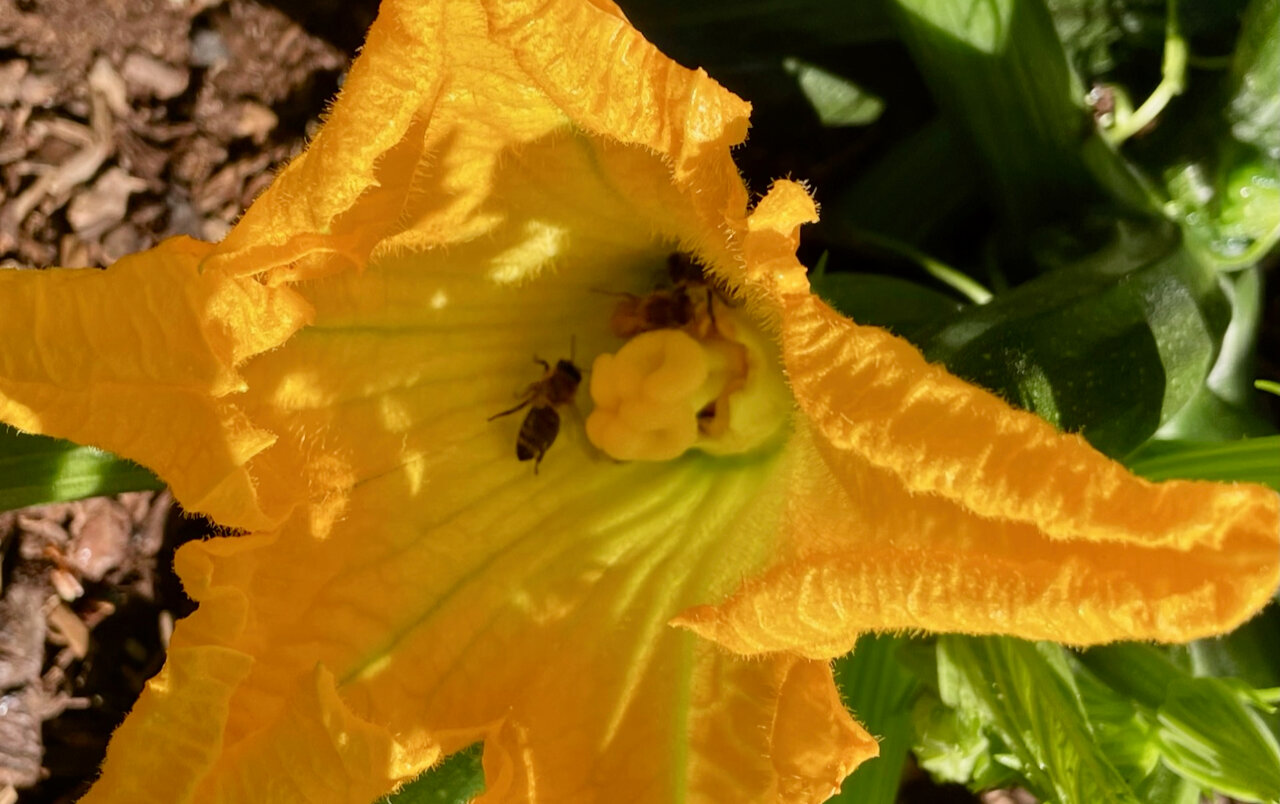
(A digression: One early morning in Rome, in a neighborhood near the Vatican, I walked past several handsome, formally dressed waiters sitting in front of an upscale restaurant. They were gathered around a big basket of fresh zucchini blossoms, stuffing each flower with some wonderful Italian stuff — ricotta, basil and possibly parmesan is my guess — and I was struck with a terrific crush on all of them, both waiters and blossoms. I went home and planted too much zucchini.)
But as to the lists … some will argue that the Farmer’s Almanac list is not all bad, because it omits kale. I will simply stick to my opinion that prescribed lists of what to grow are a bad idea no matter what’s on them. The highest and best use of garden space is to grow food that pleases you and yours, even if that means an entire garden planted to carrots and cucumbers.
While we’re on the subject of food fads, it’s worth noting that cabbage, and Savoy cabbage in particular, have eclipsed kale. Cabbage is now the “It” vegetable. It’s even featured in, of all places, Vogue. And it’s not only about growing and eating; a 77-year-old British gardener and internet influencer (yes, really) has helped inspire clothing, handbags and dishes with cabbage patterns and motifs.
So who can you trust for good advice? There is a good book written for our climate that’s readily available. There’s another, long out of print, that’s best for beginners. However, it was written by an author so young and foolish she thought rotenone must be a safe pesticide because it was used by indigenous people in the Andes. Rotenone is mostly banned now. Aside from that dangerous error, it’s a decent and modest book, but becoming hard to find. Used book prices for it range from a little to way too much.
But though garden writers do our best, it’s a thousand times more informative to visit people whose gardens are thriving. It’s important not to be intrusive, but if you ask nicely, most experienced gardeners are more likely to invite you in than to chase you off. People typically like to talk about our successes.
And that’s what we need. In the garden world, we could use less writing and more looking, talking and digging.
Comments are closed.