
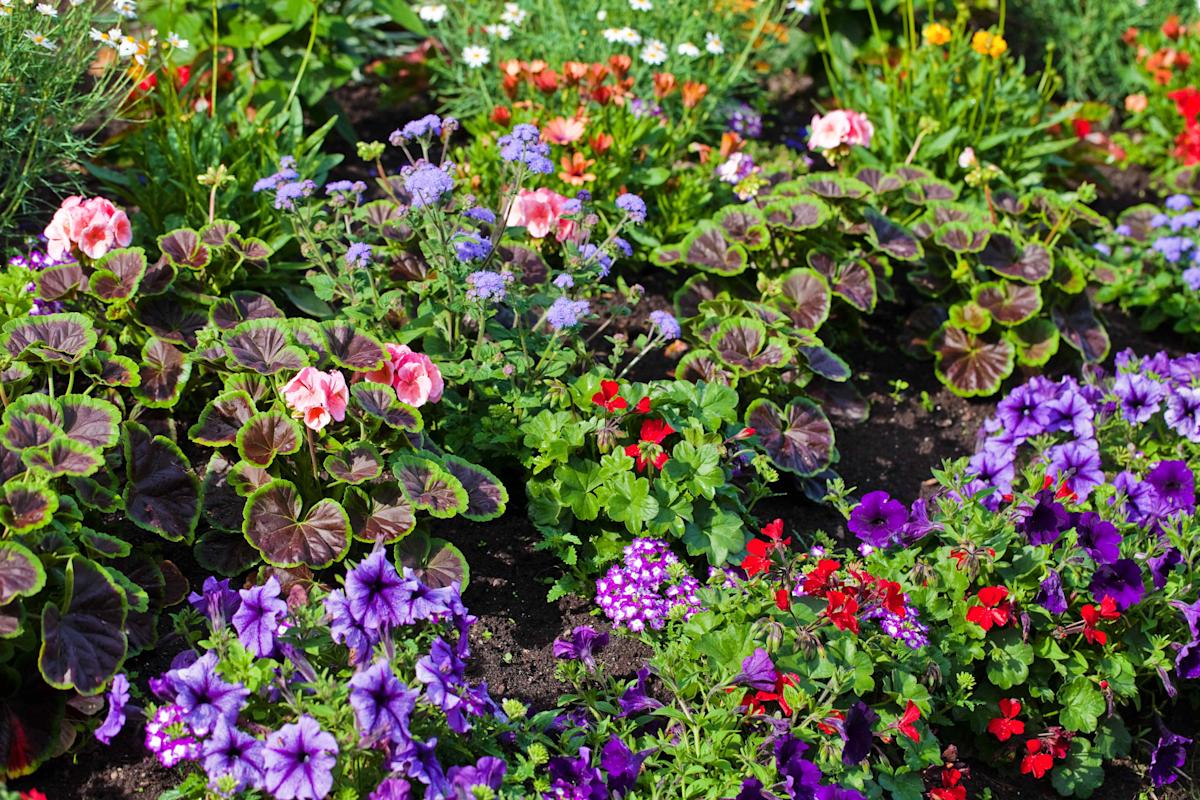
Small-space gardening can be a bit of a challenge. You want your garden to look full, not cluttered, and you need room to walk around and actually do the down-and-dirty weed-pulling and planting of it all, without stepping on any precious veggies or flowers. So what are some creative ways to orient yours for maximum garden power with minimum space? We spoke to Joe Raboine, vice president of design at Oldcastle APG, for some clever, actionable ideas.
Rethink Your Ground Surface
“Grass isn’t always the best choice in smaller areas,” says Raboine. Instead, he says that hardscape is becoming popular for ground cover to reduce maintenance and create a functional area. “There are lots of organic shapes and textures that can soften the visual impact of the space while also maximizing functionality,” he explains. Look for pavers with organic shapes that won’t look out of place in a garden.
Explore Entangled Designs
Entangled designs are when layouts with hardscaping (like pavers) flow naturally into the surrounding greenery. “This integrated approach can make even the smallest garden feel intentional,” Raboine explains. Including elements like pea gravel to create petite pathways between beds can also help achieve this.
Don’t Clutter Your Space
“Using similar materials and tones helps make a small area feel more expansive, rather than crowded,” says Raboine. “Monochromatic and neutral color schemes are favored, as they prevent visual clutter and open up the space.” He suggests adding in pops of color with plants and accessories, like pots or an outdoor throw pillow, rather than large or busy elements.
Consider a Container Garden
If you have such limited yard space that you can barely plant a proper garden, consider lining a porch or patio with clusters of potted plants. Mix in pots and plants of different sizes so the eye travels along the edge of the space in an organic way. If everything is the same shape and size, your container garden can look a little ho-hum!
Go Vertical
It may come as no surprise that small spaces benefit from vertical elements, as you get more bang for your buck. “You can use raised flower bed planters or container gardens, and if you have a retaining wall, you can use that as a backdrop for a vertical garden,” he says. A trellis covered in fast-growing vines will fill in before the end of summer. If you aren’t able to go vertical, Raboine suggests layered greenery to add dimension without overwhelming the space.
Think About Sight Lines
If you have a deck or need a railing or fence in the area, consider cable railing, a black aluminum-look railing, or a fence. “These can frame the space while the material visually fades into the background. Railing or fences can often be an afterthought, but should be considered first when it comes to material to ensure they don’t take away from your natural space.”
Read the original article on Real Simple
Comments are closed.