
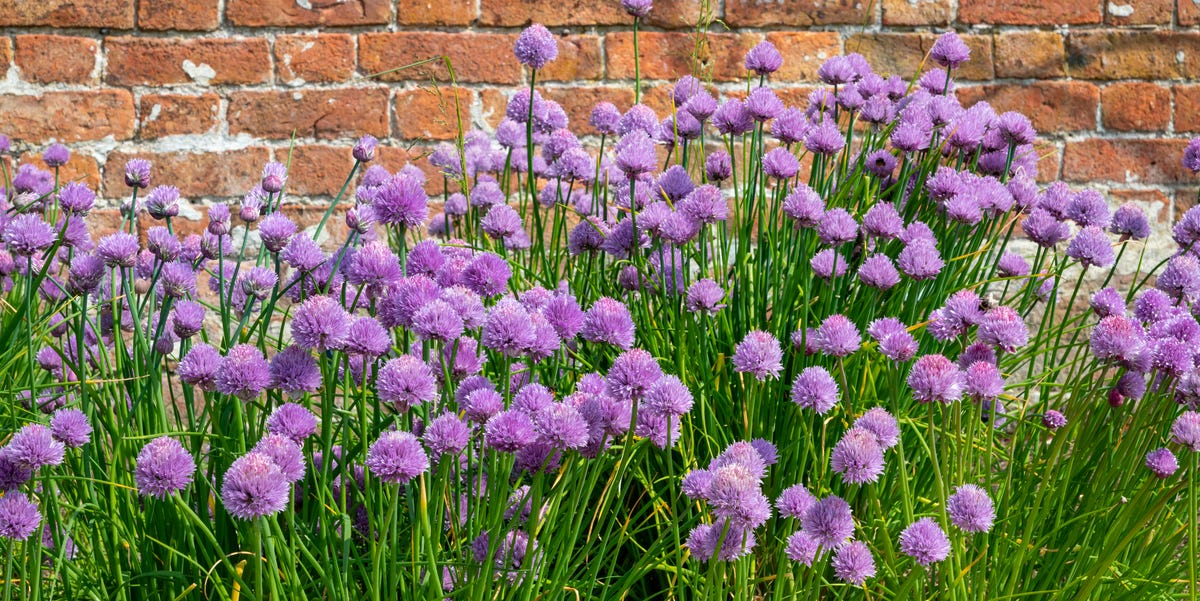
Purple flowers are one of the easiest ways to make your garden stand out. From soft lavender hues to deep violet blooms, these plants add rich colour, attract pollinators and bring a lush, romantic feel to any outdoor space.
It’s also a huge trending colour for garden planting – spotted by the Country Living team in swarms at RHS Chelsea Flower Show 2025, as well as more recently at RHS Malvern Spring Show 2026.
While some of our favourite purple flowers are spring bloomers – think lilacs, lupine and wild violets – there are plenty of flowers that carry the colour through summer. Ahead, we rounded up some of our favourite purple flowers to grow in the summer, complete with names, photos and light requirements to help you choose the right ones for your garden.
Whether you’re looking for low-maintenance picks, long-lasting colour, or flowers that will attract butterflies and bees, these purple blooms deliver.
Does your favourite summer-blooming purple flower make the list?
1. Bellflower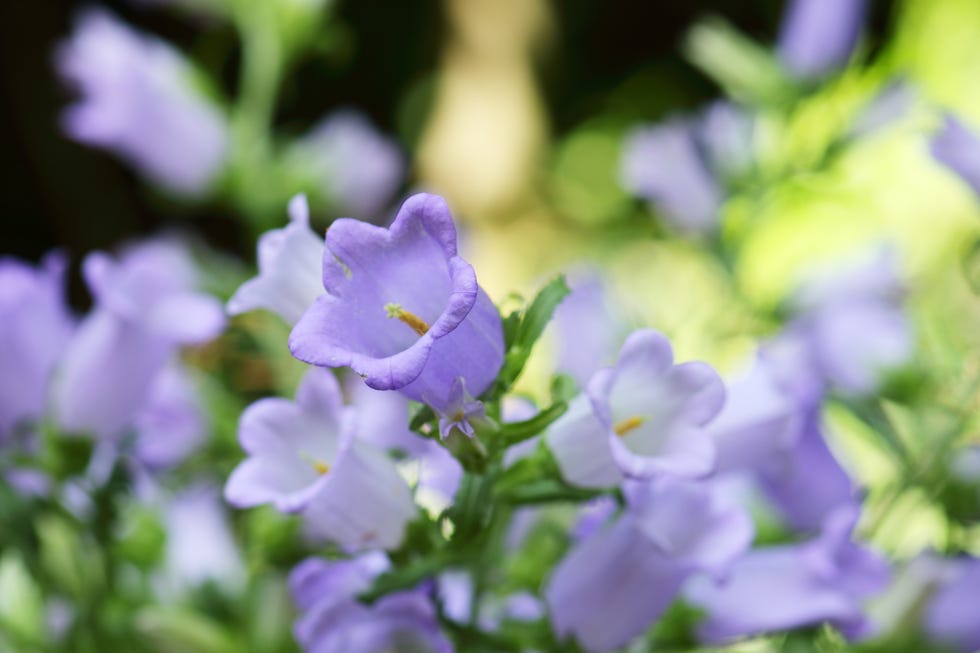
Chiara Benelli//Getty Images
These bell-shaped blooms grow in both white and bluish-purple varieties, but the latter is most common. They enjoy well-drained soil and plenty of sunshine.
Full sun to part shadeBlooms late spring to summerPerennialPollinator-friendly2. Lavender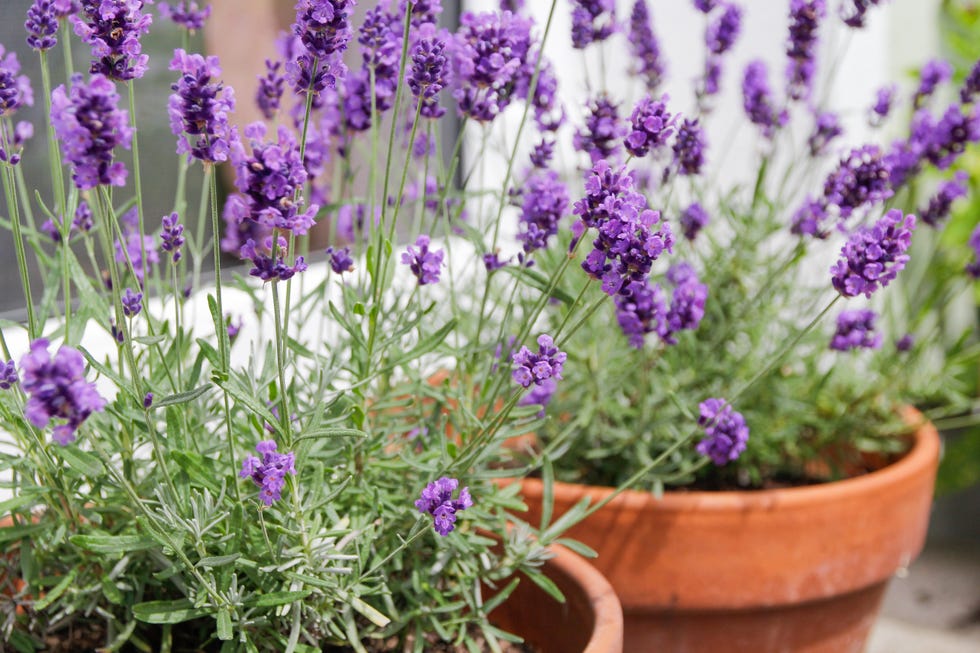
Kinga Krzeminska//Getty Images
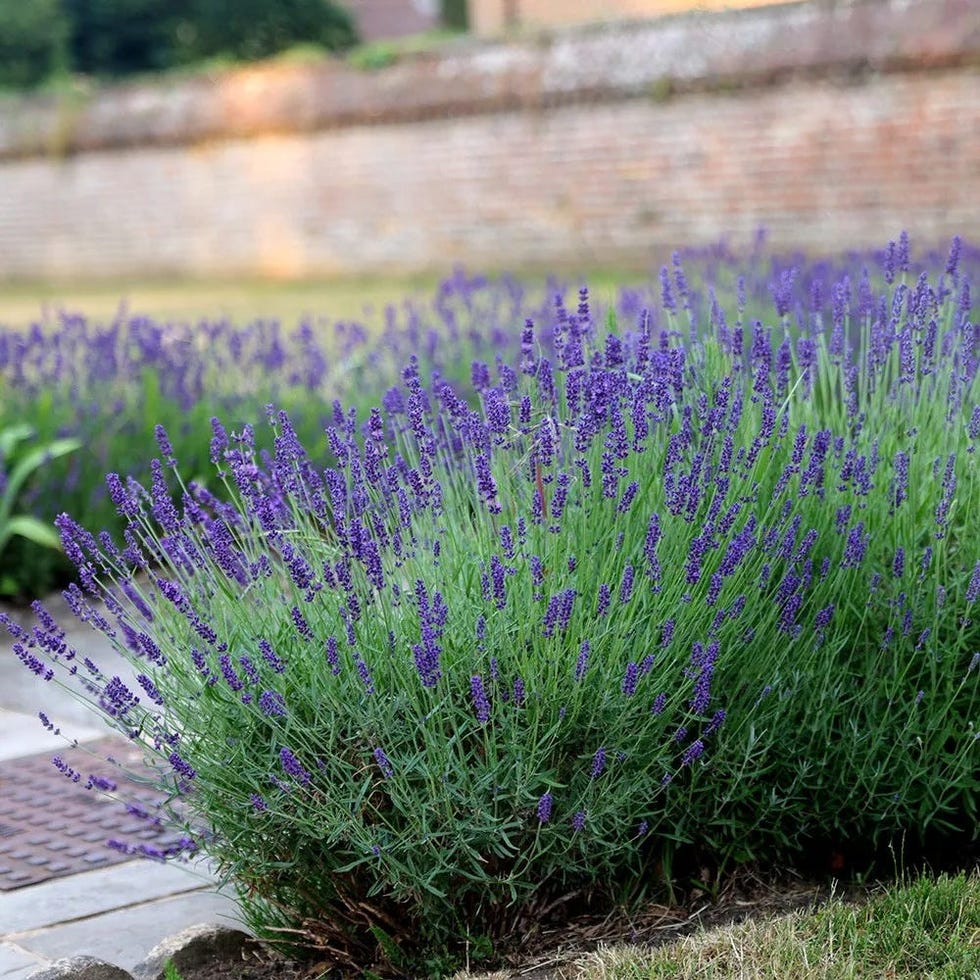
Use this sun-loving plant along walkways or garden paths where you can really enjoy its scent. Ranging from less than 1 foot to more than 3 feet tall and wide, these small shrubs will also supply you with raw materials for divine-smelling lavender crafts and recipes.
Full sunBlooms in summerPerennialPollinator-friendly
Get the guide: How to grow and care for lavender plants
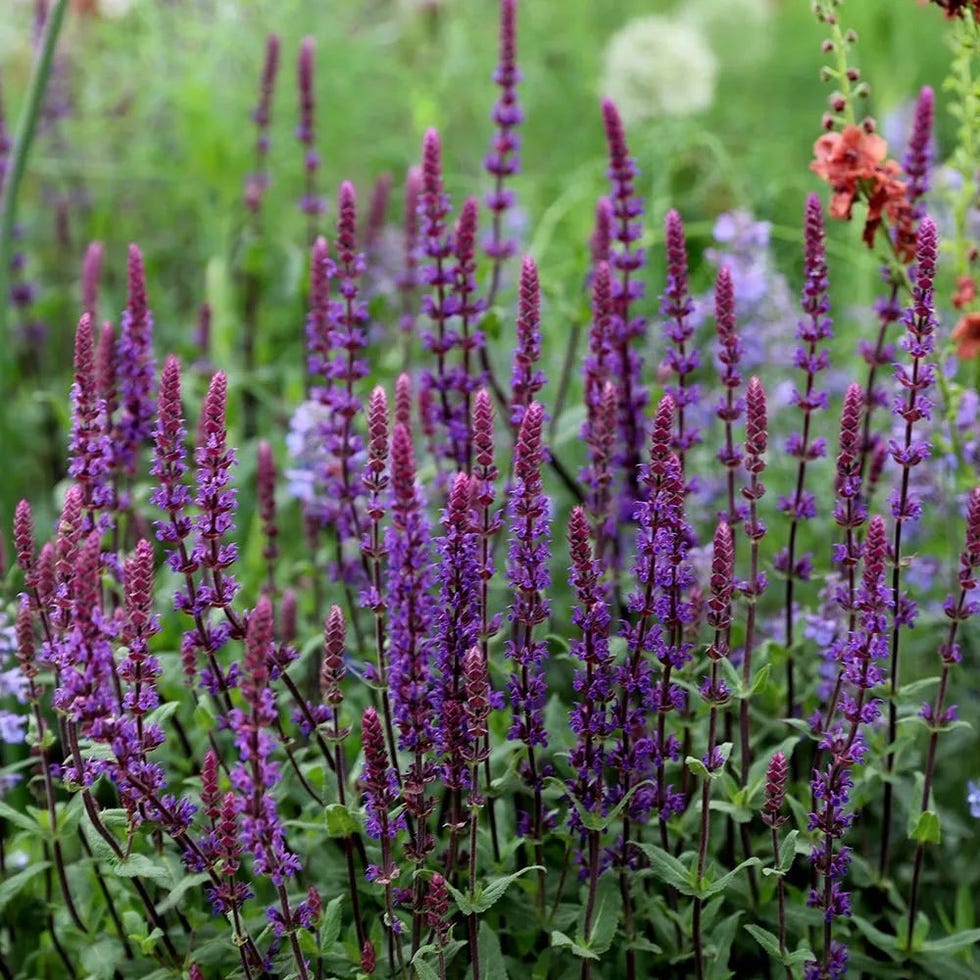
3. Salvia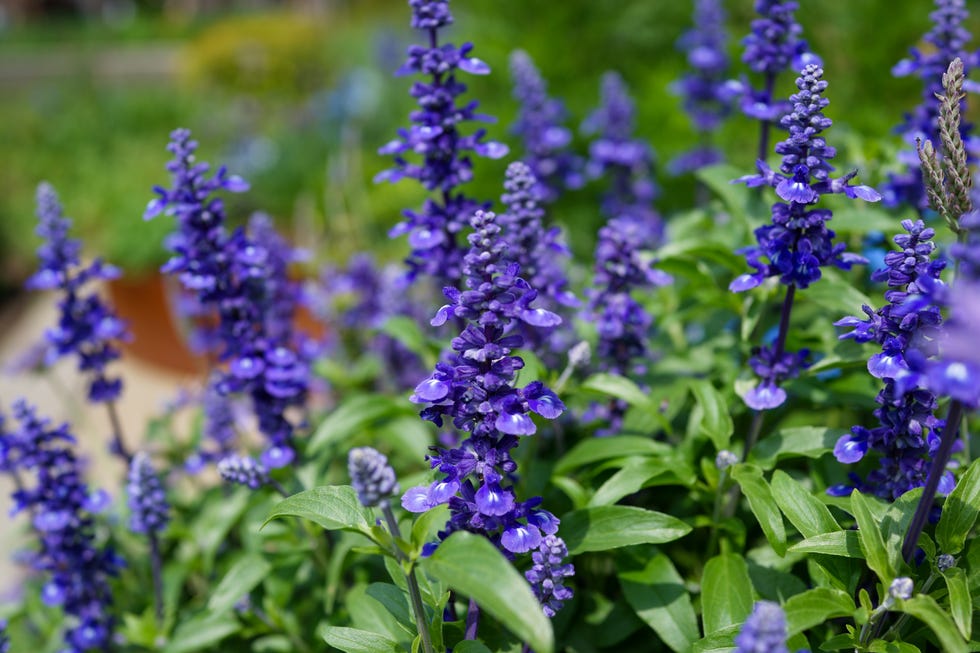
wulingyun//Getty Images
You can’t beat salvia for a low-maintenance flower in sunny beds. They are drought-tolerant once established, and there are many varieties that bloom in purple shades.
Full sunBlooms late spring through fallAnnual or perennial, depending on variety and hardiness zonePollinator-friendly4. Petunias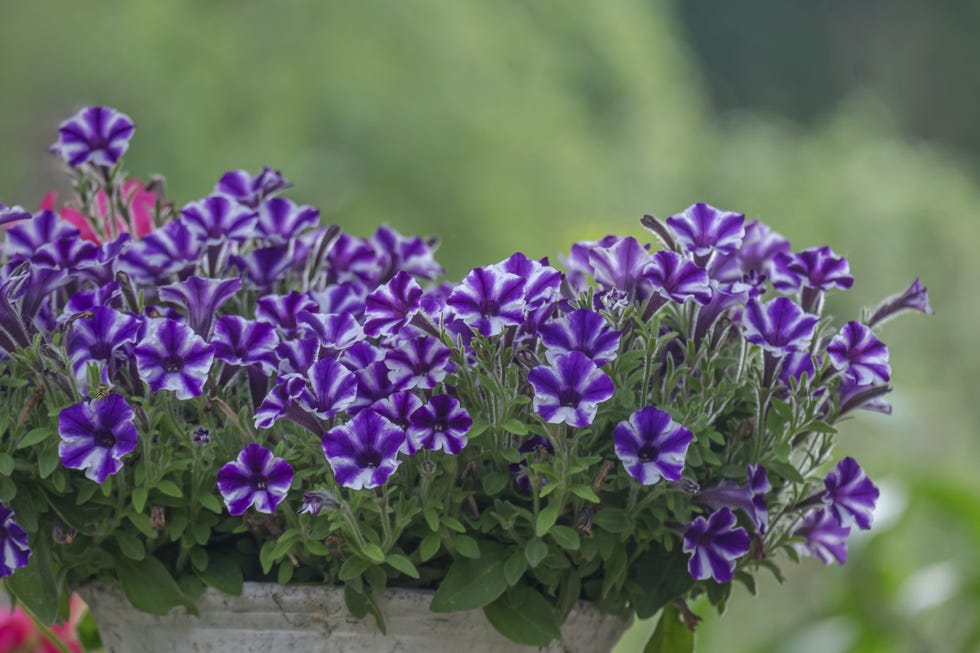
imageBROKER/AnnaReinert//Getty Images
These tough little blooms can thrive in all sorts of climates. They look especially great as outdoor hanging plants for baskets and sunny window boxes. In very hot climates, afternoon shade can help them continue blooming through peak summer heat. Purple-flowering varieties range from the deep purple ‘Royal Velvet’ to the softer plum-pink ‘Bordeaux’ to the striking speckled ‘Night Sky’.
Full sun; in hot climates, provide afternoon shadeBlooms late spring through first frostAnnualPollinator-friendly
Related: How to grow and care for petunias
5. Stokes’ Aster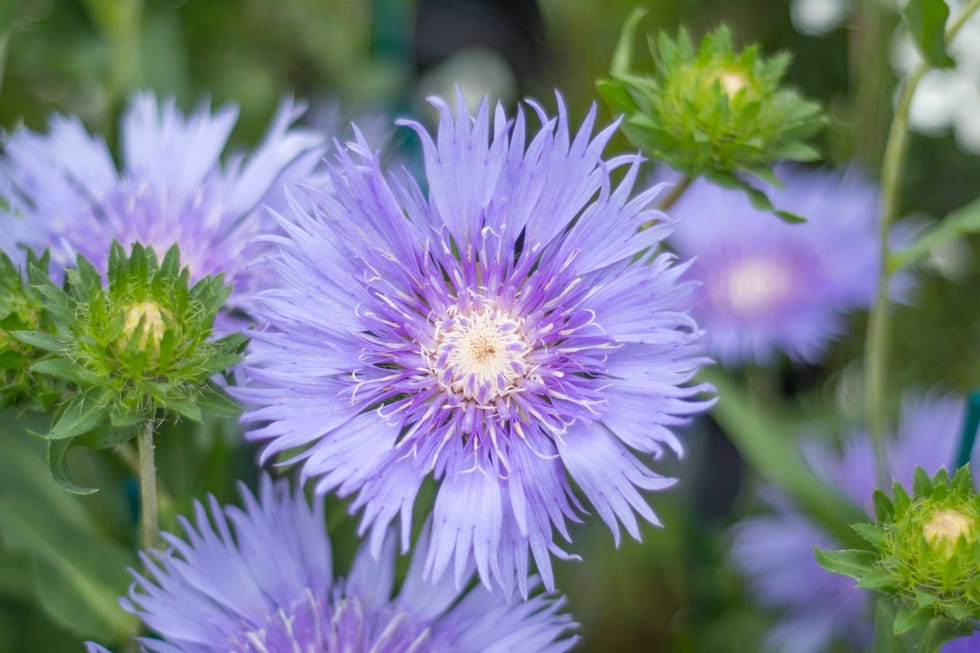
By Eve Livesey//Getty Images
This drought-tolerant member of the daisy family is a good nectar source for butterflies. Purple varieties range from ‘Riptide,’ a pretty periwinkle shade, to ‘Colourwheel,’ with blooms that turn from white to mauve with age.
Full sunBlooms in the summer; deadhead spent flowers to encourage new blooms.PerennialPollinator-friendly6. Purple Coneflower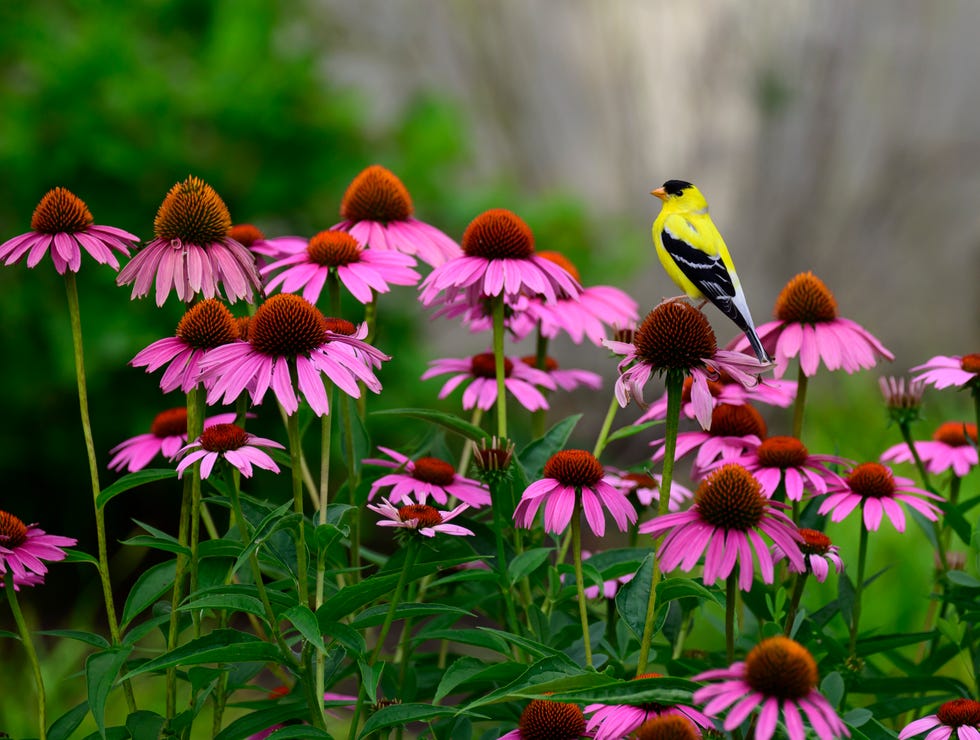
photo by Bill Koplitz//Getty Images
Also known as echinacea, coneflower can grow up to five feet tall and prefers average to poor soil – overly rich soil can lead to fewer blooms. This cottage garden favourite, with its purple-pink flowers and attracts bees and other pollinators to your garden.
Full sun to part shadeBlooms early to late summerPerennialPollinator-friendly7. Verbena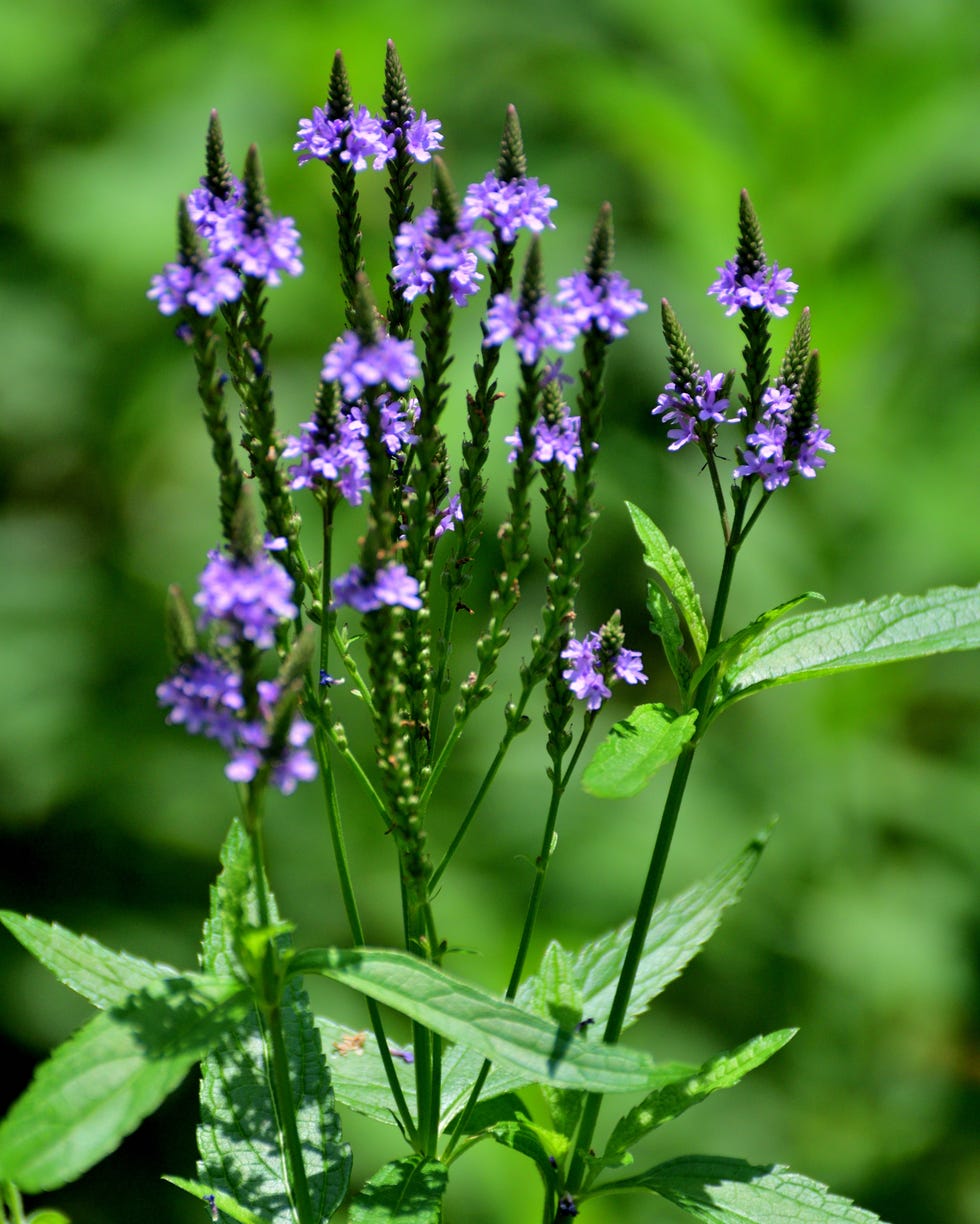
Photos from Japan, Asia and othe of the world//Getty Images
With many species to choose from, verbena offers something for almost every garden. It stands out for its tall, airy spikes of purple flowers and natural, meadow-like look. It adds height and movement to beds and borders and is especially attractive to bees and butterflies. This native prefers moist soil but can tolerate short periods of drought once established.
Full sun to part shadeBlooms mid to late summerPerennial (varies by species)Pollinator-friendly8. Alliums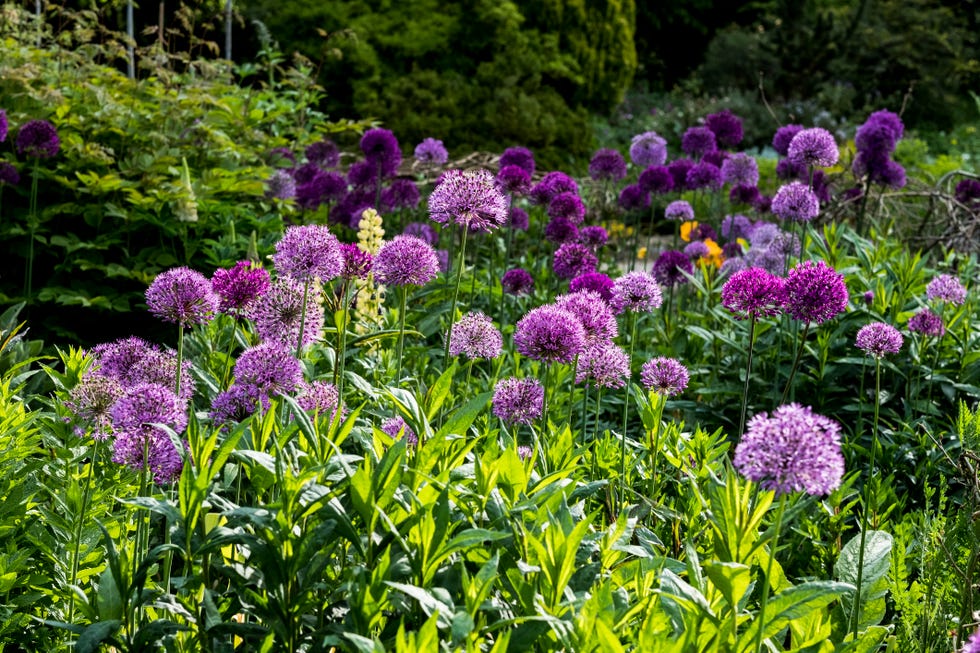

Mint Images//Getty Images
Popular for their dramatic shape and punchy purple tone, these plants are great for adding height to borders and pots. Bees love these ornamental beauties too. When planting, combine them with hardy perennials that thrive in similar conditions (for these it’s sun/well-drained soil) to cover their base, as their leaves can start to look tired by the time they bloom.
Full sunBloom in early spring to mid summerPollinator-friendly9. Chives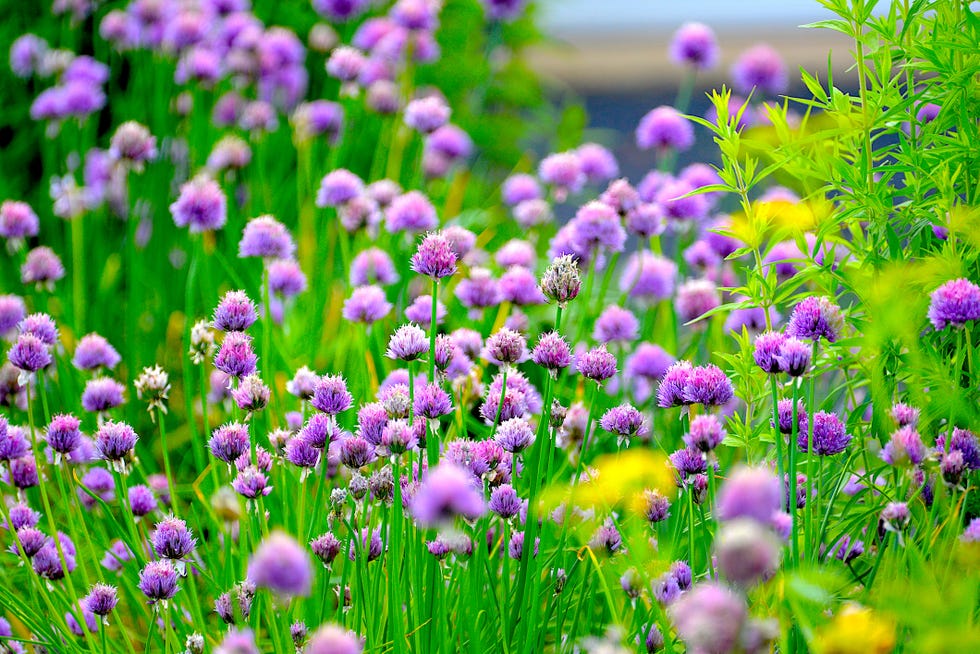
Philippe Gerber
In a similar vein to alliums when it comes to style and structure, chive flowers also form globe-shaped blooms. The purple rounded heads make them attractive in borders, herb gardens and containers.
Full sunNeed well-drained soilHardy perennialPurple plants edit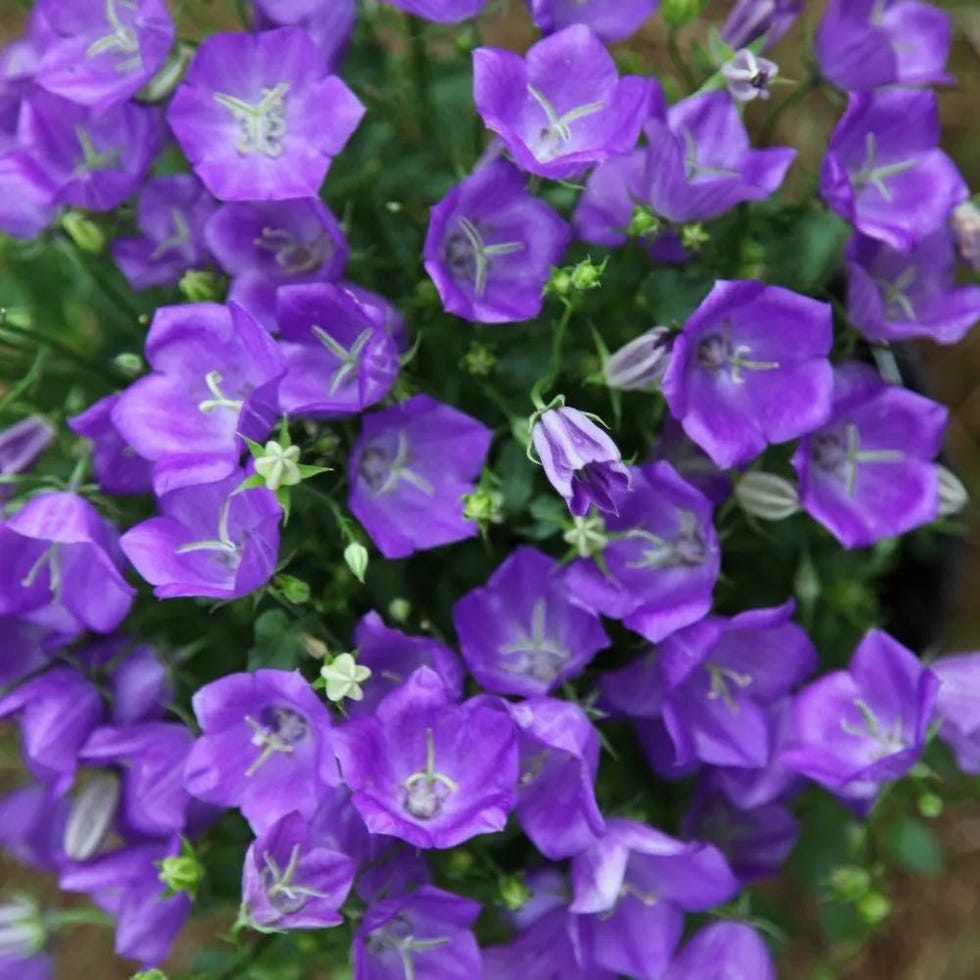
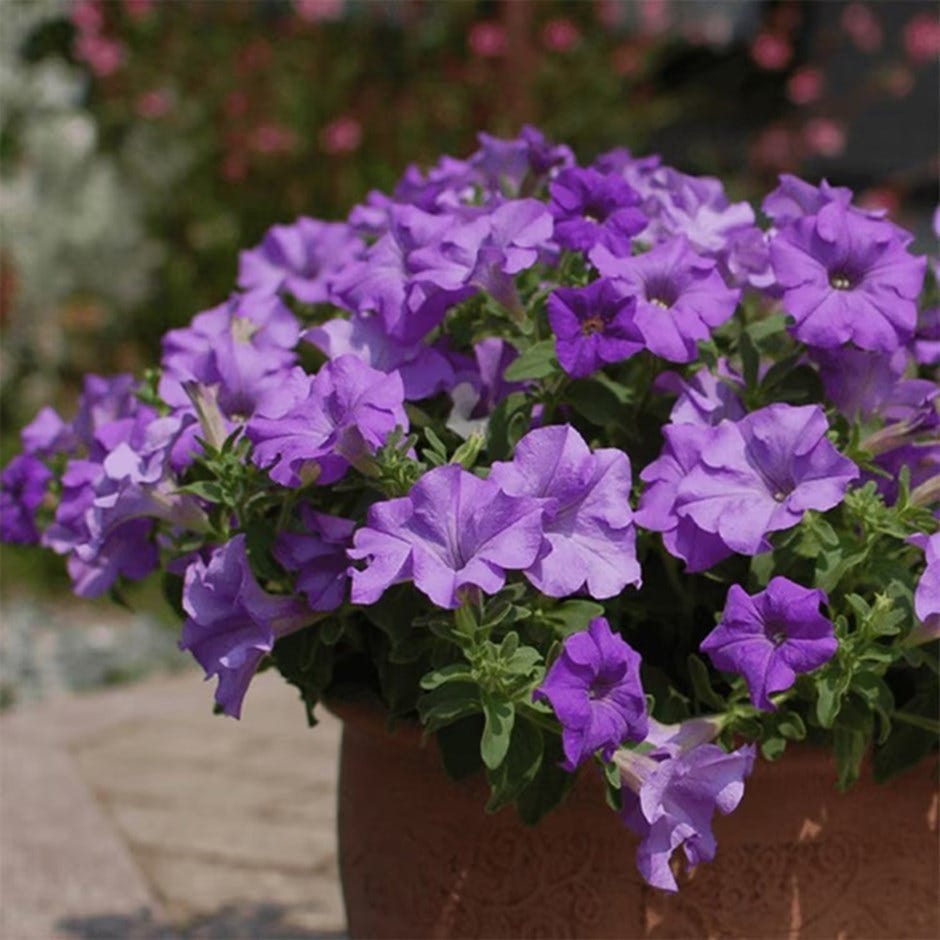 (Surfinia Series)
Now 20% Off
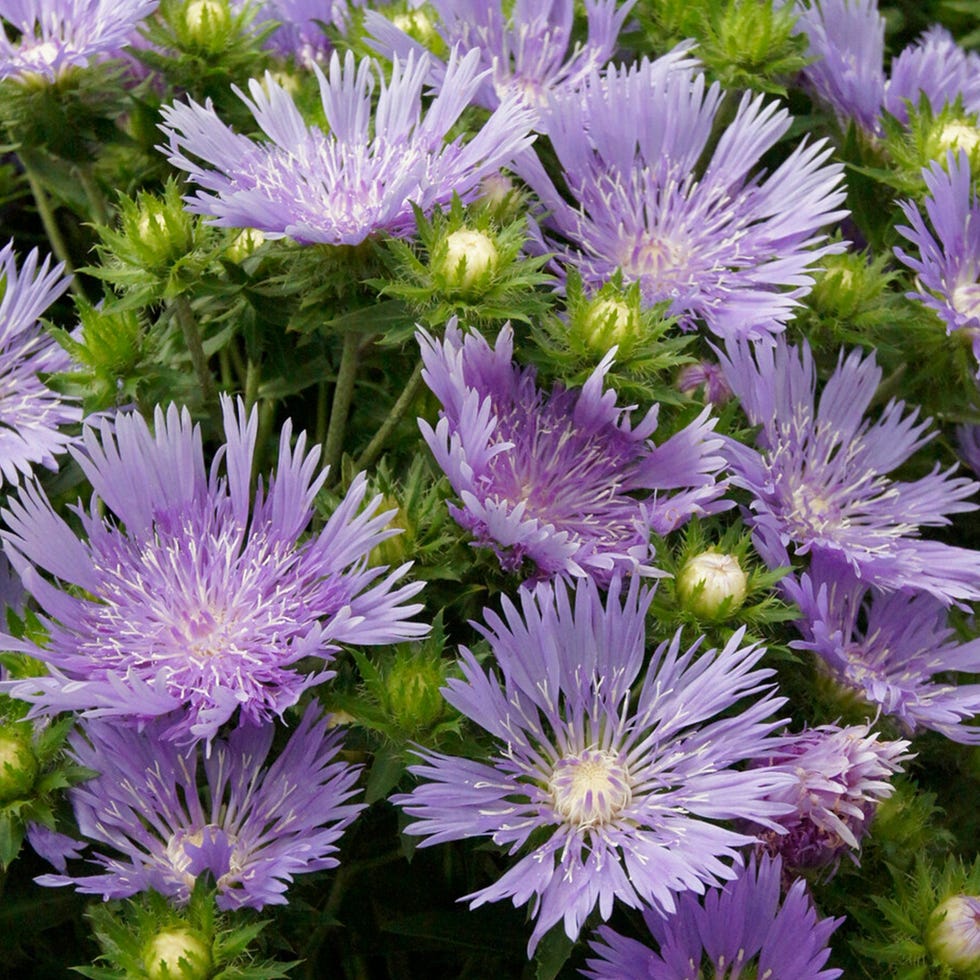 Gardeners Dream Stokesia ‘Mels Blue’
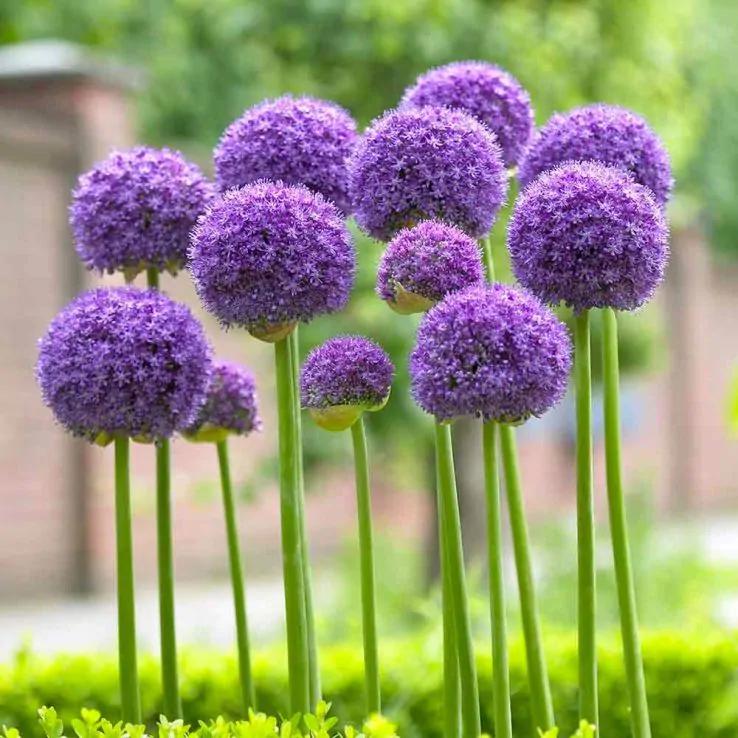 Allium hollandicum Gladiator – In Bud & Bloom
Now 38% Off

Charlyne Mattox is the Food and Crafts director with over 20 years recipe development, recipe editing, and crafting experience. Prior to starting at Country Living in 2014, she worked in the crafts department at Martha Stewart Living and Martha Stewart Kids before attending cooking school at the Institute of Culinary Education in New York City. She was nominated for a James Beard media award while a senior editor at Real Simple magazine and authored a cookbook Cooking with Seeds.
When not in the kitchen she loves to garden, focusing on growing flowers and kitchen herbs (of course), watering her 25 house plants, and knitting scarfs or hats she will never be able to wear in the always hot and steamy Alabama.

Lizzie is the Daily Editor at Country Living, where you’ll find her writing about unique property market finds and dreamy UK staycation spots. Her specialisms include interiors, property, wildlife, travel, slow living and more. Previously, she’s written for Metro, Evening Standard, Ideal Home, Woman & Home and various other home and lifestyle titles. Lizzie studied English Literature at University of Liverpool, where she also was a writer and editor for her uni paper.
Comments are closed.