


The weather has warmed up, and hopefully it continues that way. Keep an eye on the forecast if you have vulnerable plants growing outdoors. I
f we are lucky we won’t get any damaging frosts in May, but it is always good to be prepared. Blossom can be lost after a hard frost, small onion plants may be more prone to bolt, runner beans can die back and potato foliage can blacken. It is safest to cover any vulnerable plants if a frost is forecast.
Apple blossom
Apple trees put out small clusters of leaves first and at the heart of these there are small buds. The buds open out with a bit of sun and the trees are suddenly full of beautiful apple blossom. Some need two different trees to be in blossom at the same time, others need only one, and it always helps pollination to have plenty of insects to spread pollen between flowers. Not all flowers will set fruit and there are many pitfalls between this stage and harvest: birds can eat the buds before they open; frost can blacken flowers; and sometimes there aren’t enough insects to pollinate. Do your best to protect future crops and remember that lots of blossom means that some can be lost and you can still have enough to make a good crop.
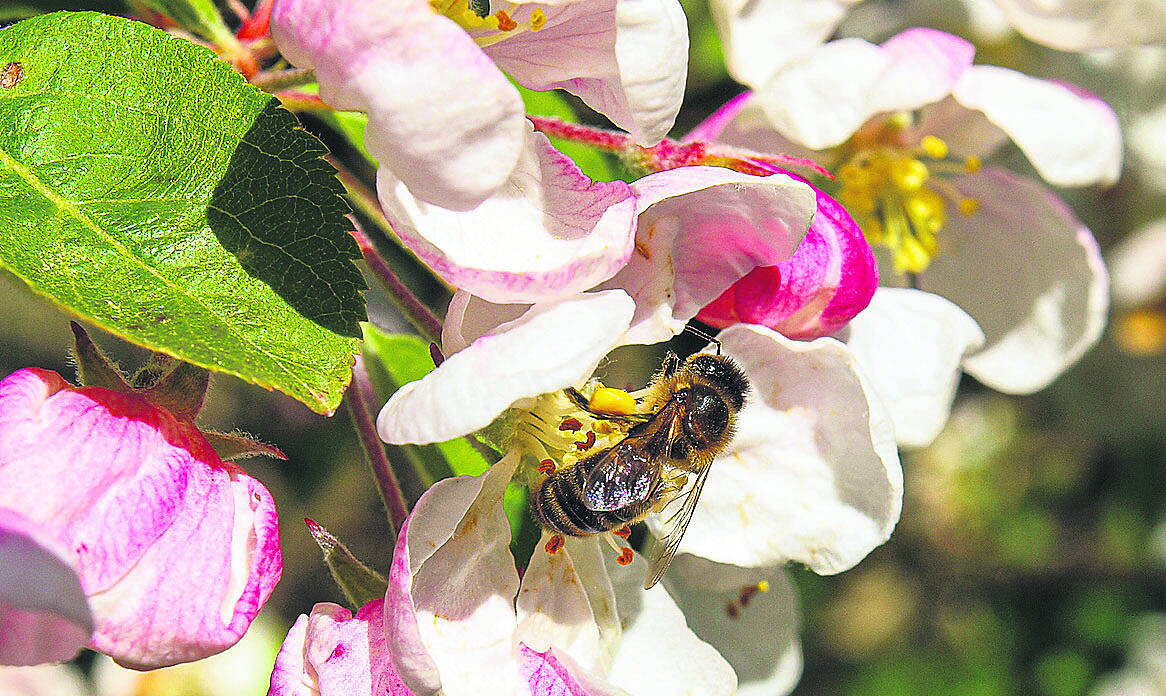 Lots of apple blossom.
Planting tomatoes
The end of April is my preferred time to put tomato plants out in the polytunnel. I know we may still get cold nights, but plants are pretty hardy and if needed I will wrap something around them for protection. I prepare the bed well in advance to make sure there is enough nutrient-rich material dug in and that there are good sturdy supports for each plant. Tomatoes don’t like dry soil so a water pipe that can seep liquid out over the bed is a good choice. This will make watering easier in the summer months. Plants seem small now, but they grow fast. Harden them off for a few days to wean them off the heat of a propagator. Don’t crowd them in, or you increase the risk of disease and you won’t be able to reach in between to do the jobs that you want. Put each plant into a compost-filled hole at the base of a support. If plants are tall, then you can tie them in straight away. Use strong string and leave plenty of slack for the stem to grow. I usually wait a week, for young plants to settle in, before I nip out any side-shoots growing from the joints between leaves and stem. Don’t damage the growing point. It’s worth being selective if you can. Only choose healthy plants with well-coloured leaves and ideally they shouldn’t be starved in small pots. Young plants grow fast once they get their roots into fertile soil.
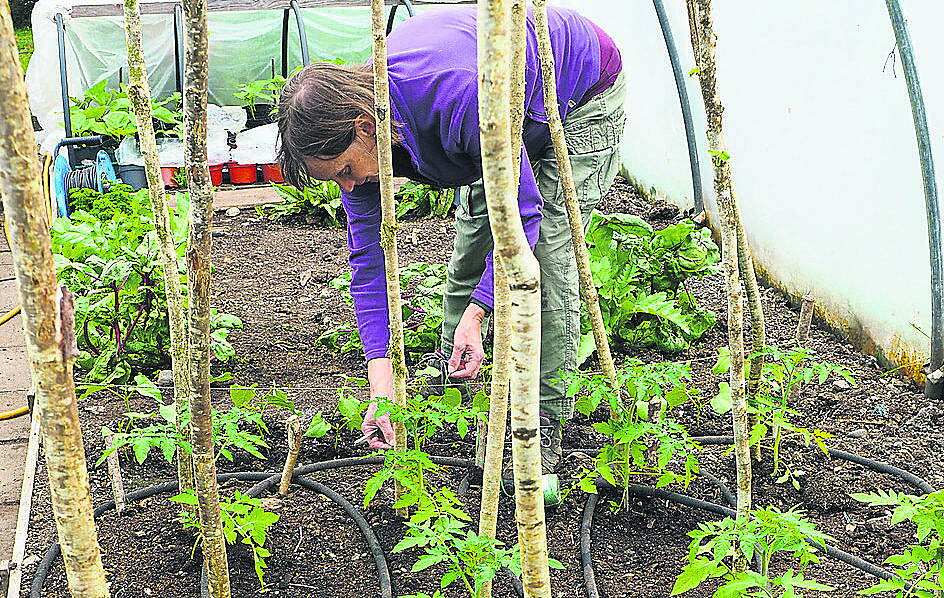 Get tomato plants into the ground.
Protect fruit
Birds enjoy strawberries, redcurrants, raspberries, strawberries – in fact all soft fruits – as much as we do. Cover bushes and plants with netting now, if you want to get ripe fruits through the coming months. You can do this later, but the bigger fruits grow, the harder it is to net them without pulling lots off. Raise the net up on poles that are higher than the plants and put a jam jar on top of each pole so the net doesn’t snag. Drape the net down all around, until it touches the ground, and weight the edges down with stones, timber, or whatever comes to hand. Make sure there are no gaps. I’ve watched blackbirds and thrushes going round and round edges of the net, looking for a way in. They are very persistent and can easily get tangled if they get in through a hole and then can’t find their way out.
Keep sowing
You may well be picking and eating a good variety of things and thinking to yourself, ‘what’s this hungry gap that people talk about?’ Well, the secret to not having gaps is regular sowing throughout the year and not missing the best time to get seed packets out. You can sow kale, cabbage, chard, spinach, cauliflower and heading/sprouting broccoli now to keep you in greens for months. A wide variety of salad leaves and lettuce can be sown now. Or choose a pack of mixed seeds and sow in a row to cut as you want. You can still sow cucumber and sweetcorn for growing on in a greenhouse or polytunnel. Sow pumpkins, French beans, climbing beans and peas early in the month if you want to be sure of good crops. Sow basil early in May on a kitchen window ledge. Or for a faster way to grow this herb, buy a supermarket plant and split the root-ball into several sections to plant out and grow on.
Comments are closed.