
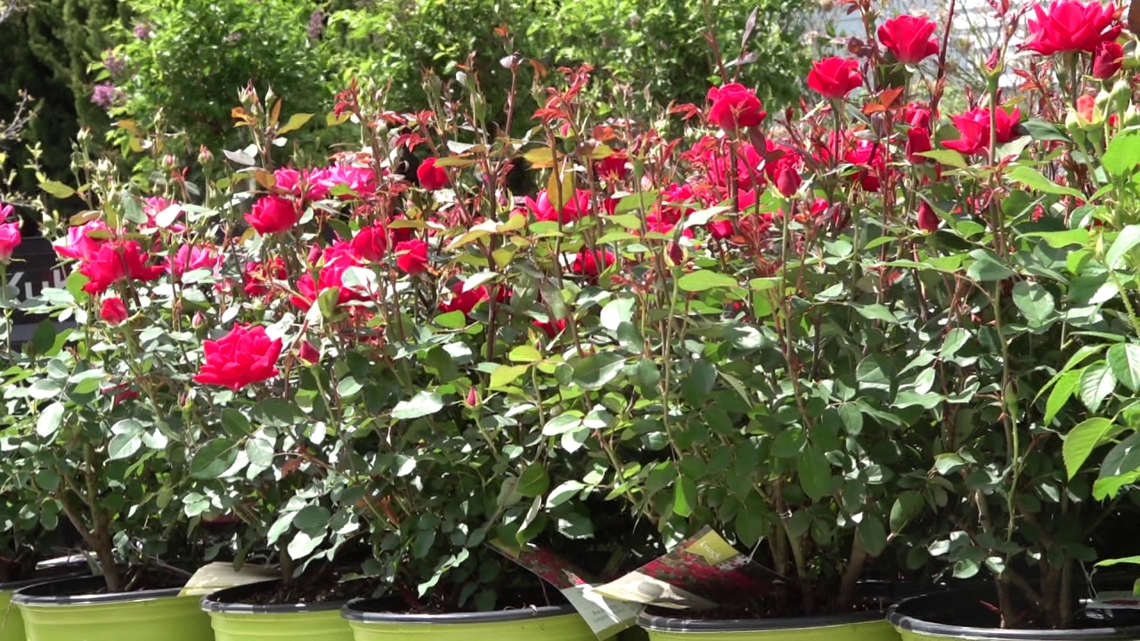
Experts suggest you plant native plants and limit spraying to help pollinators thrive in your garden.
LACKAWANNA COUNTY, Pa. — It is almost time to start planting your gardens. Experts say there are plenty of easy ways to help make your space pollinator-friendly.
Workers at Corky’s Garden Path Greenhouse are busy bees this time of year.
“This week, now that we are seeing some sunshine and warmer temperatures, we’ll start picking up for the rest of the season,” Trevor Kashuba said.

This story continues below.
Kashuba co-owns the nursery in Scott Township. He says that while it is still early in the season, now is actually the best time to prepare for planting. He says attracting pollinators is key to a healthy garden.
“There is a massive decline in the honeybee and bumblebee population, as well as butterflies and all stores of different birds,” Kashuba said.
Don Houser is one of many gardeners looking to combat the dwindling pollinator population.
“It’s good for the environment, and it’s always nice to see butterflies and birds and wildlife,” Houser said.
Gardeners say the first step to encourage pollinators to visit your yard is to make sure you have a good mix of early and late season bloomers in your garden.
“Early season. I’d think of a salvia… it is starting to show full color now. This is a great early season. Even during the day, when we get some sunshine. These things will be covered in bumblebees and honeybees. Then you can get into some midseason products like your yarrow or lavender. That will show you some good summer color,” Kashuba said.
Experts also stress finding and planting native species. There are also ‘nativar’ plants that mimic native plants but are slightly different in blooming time, disease resistance, size, etc.
Kashuba advises minimizing spraying your plants for pests. Also, plant your shaded plants in areas you know will see shade most of the day, and plant your sun-needy flowers in areas they will get at least six hours of sunshine on a clear day.
Kashuba says planting very close to each other isn’t essential, but it can help.
“The more you can group together to give them a large source of nectar and pollen to bring back to the hive,” Kashuba.
Earlier this week, the Pennsylvania State House passed a resolution to conduct a study and issue a report on the decline of pollinators like bees and butterflies across the commonwealth.
The final report is due this fall.
Comments are closed.