
Does Black Sooty Mold Hurt Milkweed?
 Courtesy Pam Monahan
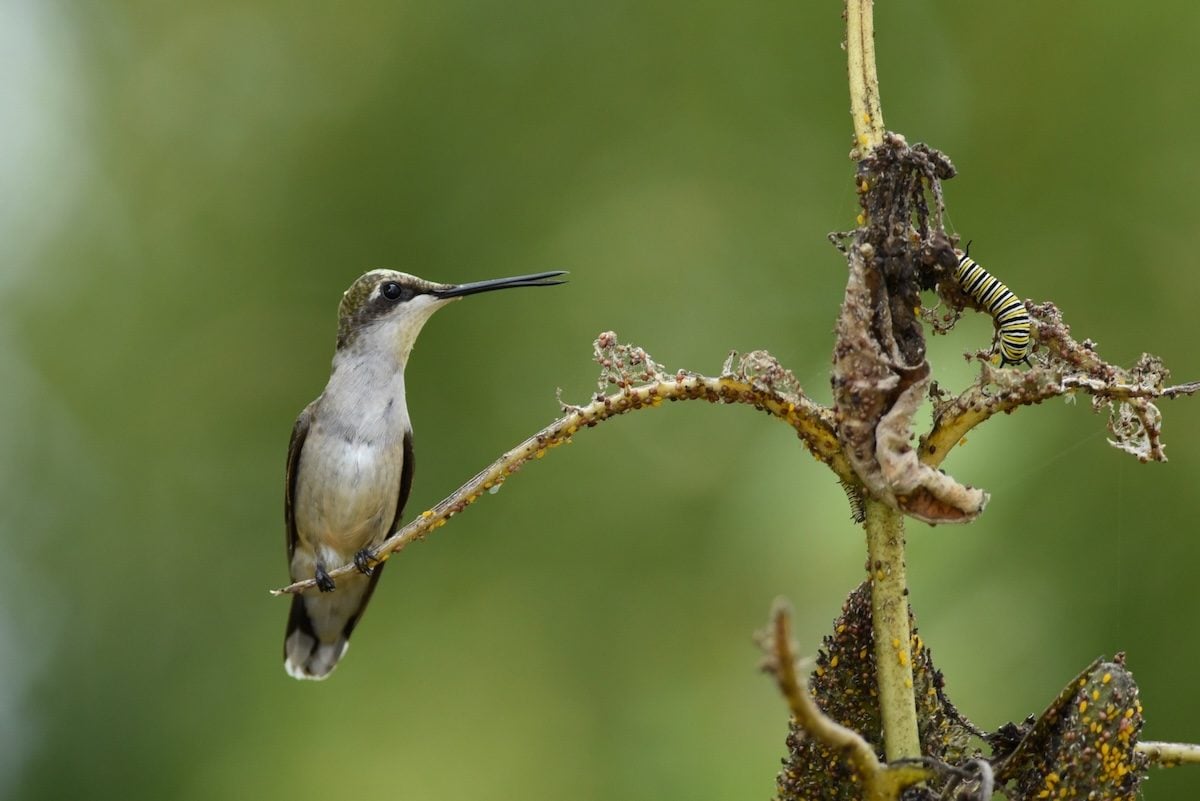
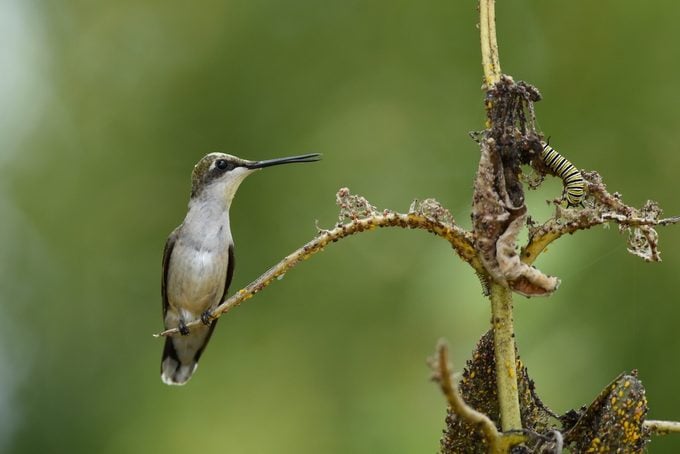
Ruby-throated hummingbird on common milkweed with monarch caterpillars and aphids
“What’s the black stuff on my milkweed leaves, and does it hurt the plant?” asks Birds & Blooms reader Stacy Jones of North Liberty, Iowa.
Horticultural expert Melinda Myers says, “This is a clue that aphids may be feeding on your plants. Aphids and other insects, such as mites, scales and whiteflies, feed by sucking up plant sap. They secrete excess as a clear, sticky substance called honeydew. It is often the first clue these pests are feeding on your plants. The black color is from a sooty fungus that grows on the honeydew. It becomes a problem when the sooty mold covers the leaves, blocking the sun and turning the leaves yellow.
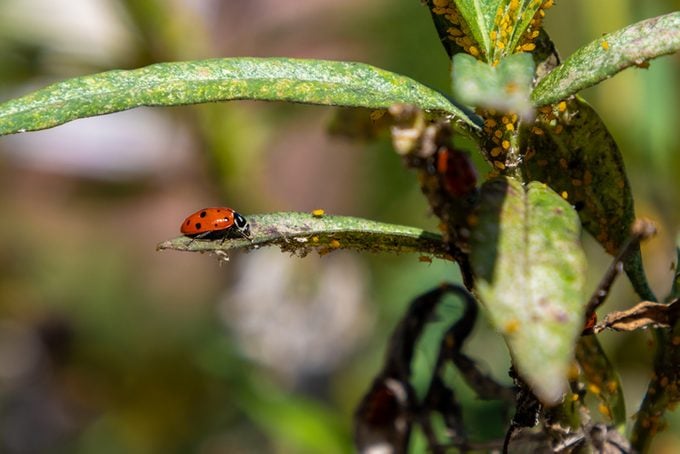
Lady beetles, other predatory insects and birds often move in and eat the aphids that are the root cause of the problem.
You can smash the aphids by hand or knock them off the plant with a strong blast of water. Just be careful not to harm the monarch eggs and young caterpillars. Insecticidal soaps can be used if no caterpillars are present, but milkweeds are tough and will survive the fungus damage.
Signs of Aphids on Milkweed
 Ajax9/Getty Images
A lady beetle hunts aphids
“I grow milkweed and see many monarch caterpillars. Do aphids bother them?” asks reader Sylvia Barbero Levy of Beacon, New York.
Melinda says, “Aphids are a common milkweed pest. They don’t harm caterpillars unless the populations are so high that their feeding damages the plant itself, limiting the food available to the caterpillars. Aphids feeding can turn leaves yellow and brown. They also secrete a sticky liquid called honeydew that sets the stage for the black fungus sooty mold.”
About the Expert
Melinda Myers is the official gardening expert for Birds & Blooms. She is a TV/radio host, author and columnist who has written more than 20 gardening books. Melinda earned a master’s degree in horticulture from the University of Wisconsin-Madison.
Comments are closed.