
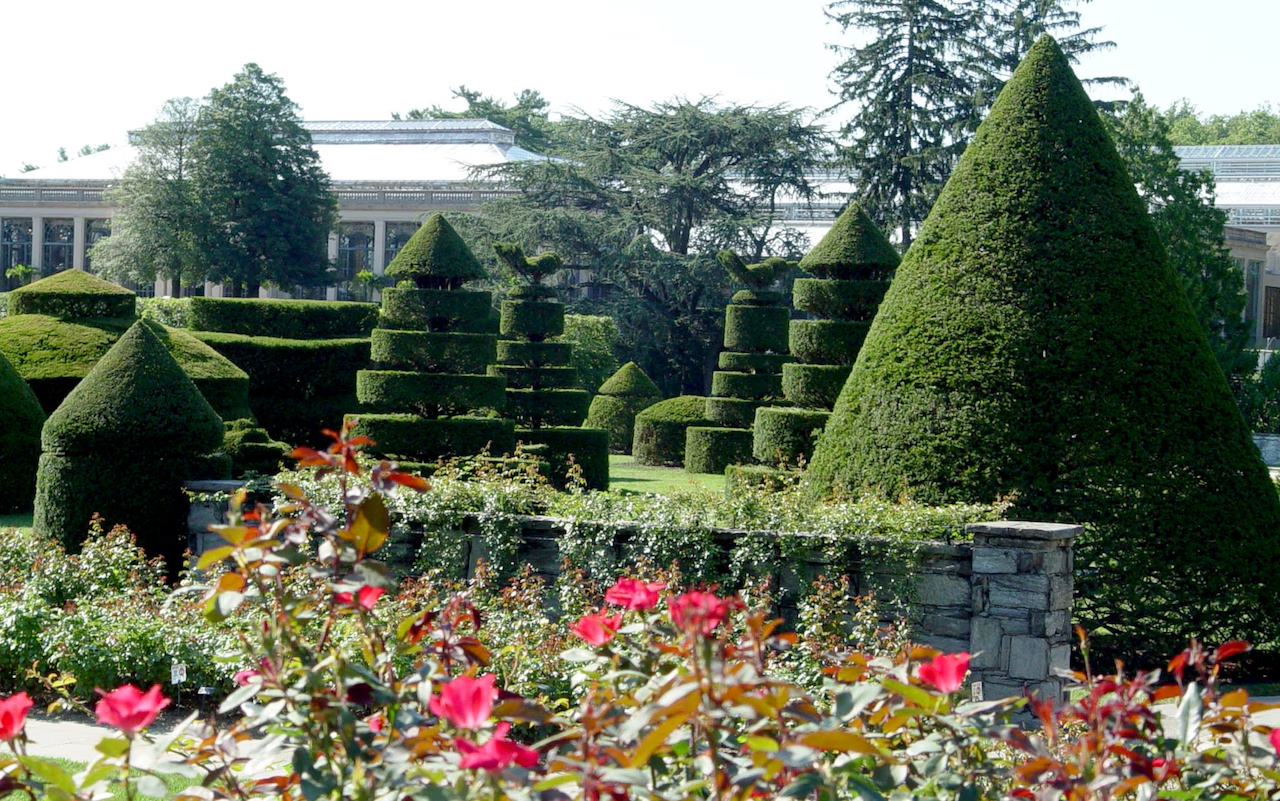
America’s hundreds of public gardens draw some 300 million visitors a year, led by such chlorophyllic treasures as Chester County’s Longwood Gardens at more than a million alone.
People come from all walks of life to enjoy the basic beauty of public gardens, the relaxing time in the fresh air, and the brief escape from the world’s troubles.
Spring is especially ideal for a garden visit, which is why tomorrow — the Friday before each Mother’s Day — is set aside as National Public Gardens Day.
Many gardens mark the day with special activities, such as the online voucher that Hershey Gardens offers for half-price admission. (Moms also get in free May 9 and 10.)
The Philadelphia area in particular is the nation’s hot spot for public gardens, sporting three dozen of them. The region even bills itself “America’s Garden Capital.”
But every state has several public gardens. They’re all different.
Some are beauty-driven “pleasure gardens” that celebrate plants purely for the enjoyment they bring.
Others are more scientific-leaning botanical gardens that feature collections, themed gardens, and plant labels.
Still others showcase trees (“arboreta”) or combine art and plants or animals and plants.
I’ve visited at least 200 public gardens throughout the U.S. over the years and have settled on the following list of 10 favorites for those of you interested in skimming off the best of the best.
If you’d like even more, I just wrote a book called, “50 American Public Gardens You Really Ought to See.” (Hint: 18 of the 50 are within day-drive range of Harrisburg.)
Here, in order, are my top 10:
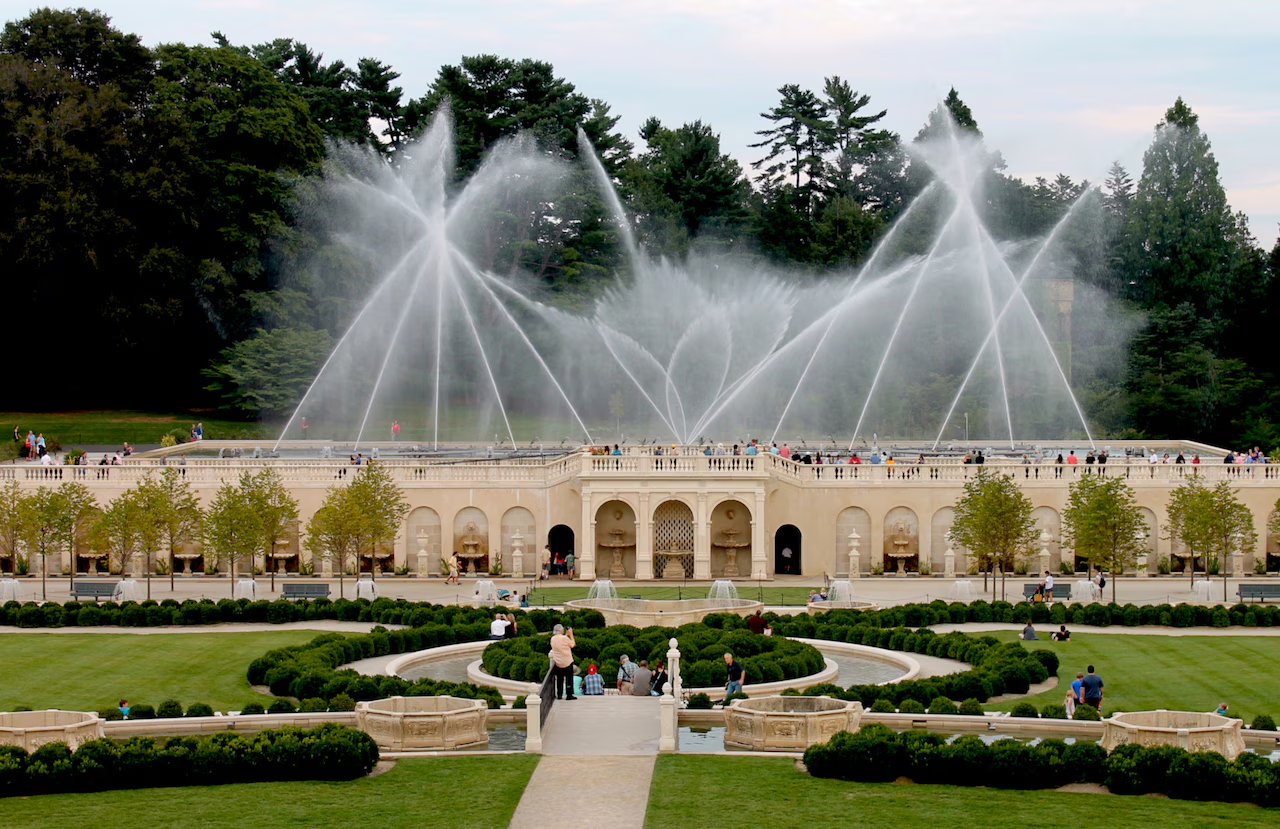 The Main Fountain Garden is Longwood Gardens’ most famous feature.George Weigel
Highlights: The centerpiece of this one-time estate of industrialist Pierre du Pont is the Main Fountain Garden with its computer-guided shows that combine water jets, plumes of fire, and music.
But Longwood is eye-popping throughout its 1,100 acres with elaborate conservatories, sprawling flower displays, a topiary garden, an innovative Idea Garden, a water-filled indoor Children’s Garden, numerous plant collections, a huge meadow, and an Italian garden with even more fountains.
George’s Take: Longwood lands at the top of many people’s list of best U.S. gardens for good reason. It’s one of a kind, and there’s no “off” time to visit, either.
Of all of the gardens I’ve seen worldwide, I can’t say any are better than Longwood, so it must rank at least tie for first in my mind. If you only visit one American public garden ever, make it Longwood.
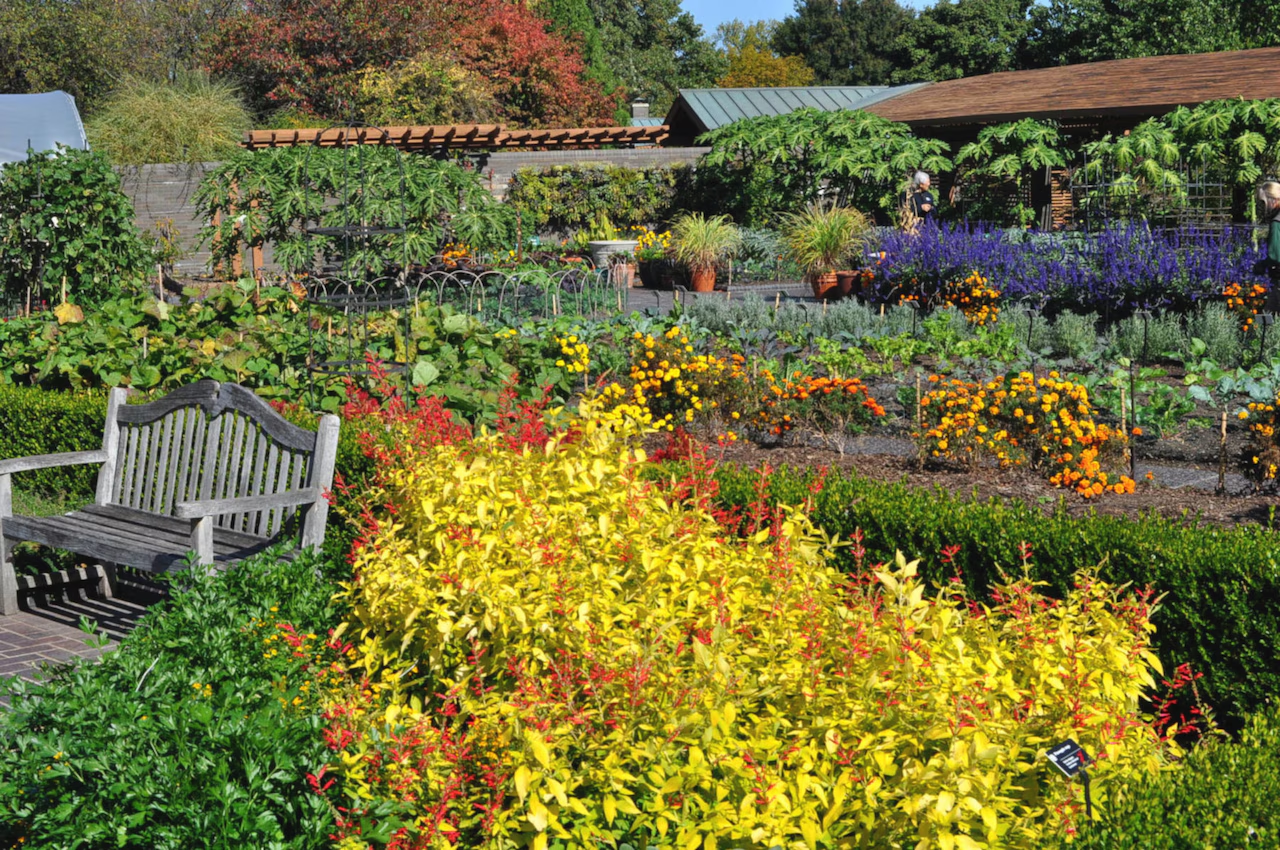 This is a shot of the Kemper Center gardens at Missouri Botanical Garden.George Weigel
Highlights: You’ll find jaw-droppers everywhere in this 79-acre garden in the heart of St. Louis, starting with the unique signature “Climatron,” a half-acre, geodesic glass dome that’s home to some 1,200 different plant species alone.
The grounds include a 14-acre Japanese strolling garden, Victorian gardens with geometric flower and knot gardens, a novel two-acre children’s garden with wetlands and a prairie village, a rose garden, a Chinese garden, rare orchids, and a highly idea-inspiring Kemper Center with 23 home demonstration gardens.
George’s Take: “Mobot,” as it’s called, is in the middle of a city neighborhood, but you’d never know it. It’s a world-class garden, and the whole Kemper Center is especially brilliant and inspiring for home gardeners.
For education, beauty, plant diversity, fun for the kids, you name it, this garden has it all.
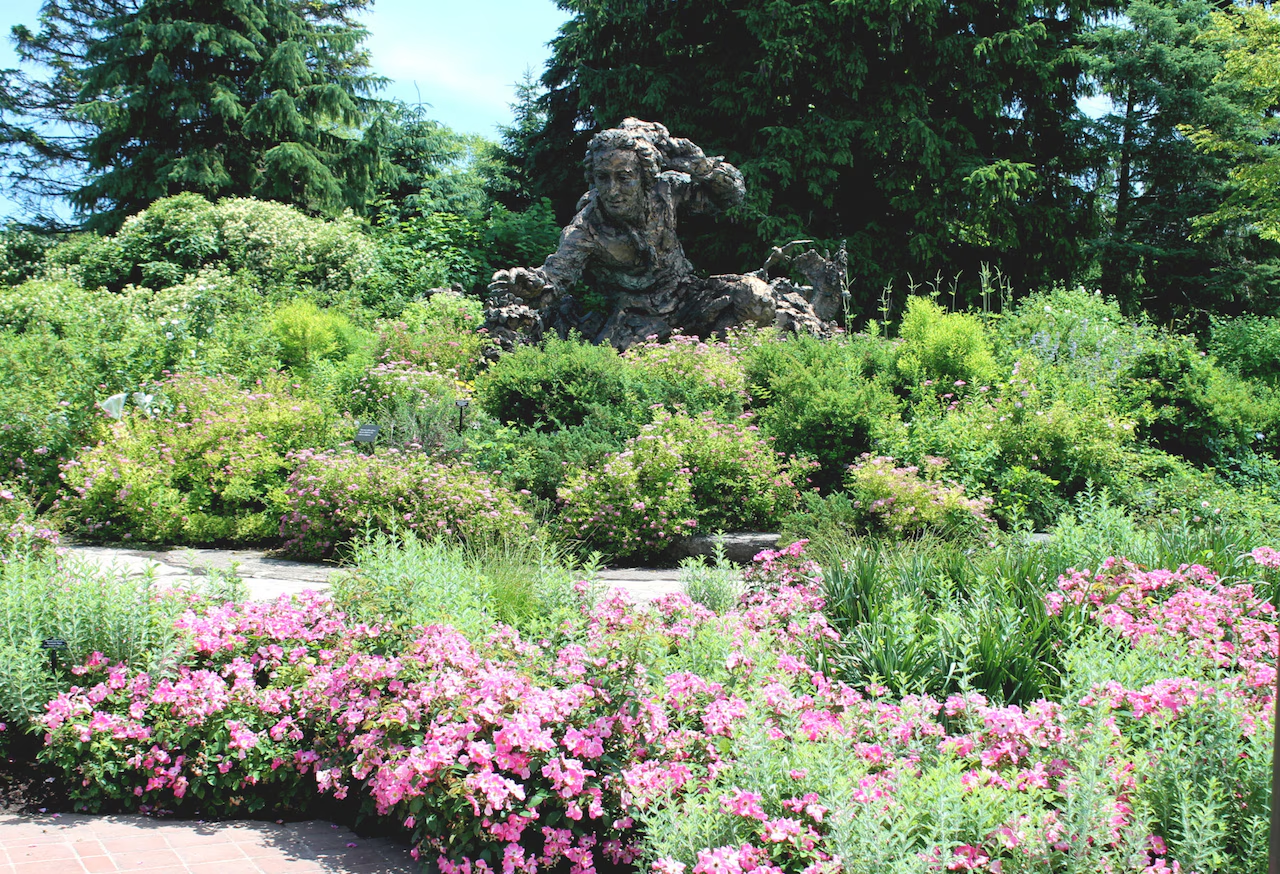 A statue of Carolus Linnaeus oversees the Heritage Garden at Chicago Botanic Garden.George Weigel
Highlights: Located in the Chicago suburbs, this 385-acre garden features novel display gardens such as a colorful English Walled Garden, an Enabling Garden with accessibility ideas, and a Heritage Garden of classic plants divided by geography and scientific classification and overseen by a huge bronze statue of the father of plant taxonomy, Carolus Linnaeus.
Chicago Botanic also has active plant-collecting and plant-evaluating programs, a bonsai collection, fruit and vegetable gardens, a sprawling Japanese garden in a lake setting, a stroll-through rose garden, water features, a dwarf conifer garden, a famous winter orchid show, and a superb plant information service for home gardeners.
George’s Take: The themed gardens here are creative and diverse, the views on Evening Island and in the Japanese Garden are particularly stunning, and the whole place is meticulously maintained.
Altogether, the garden displays a staggering 2.6 million plants of nearly 10,000 varieties. It’s amazing from end to end.
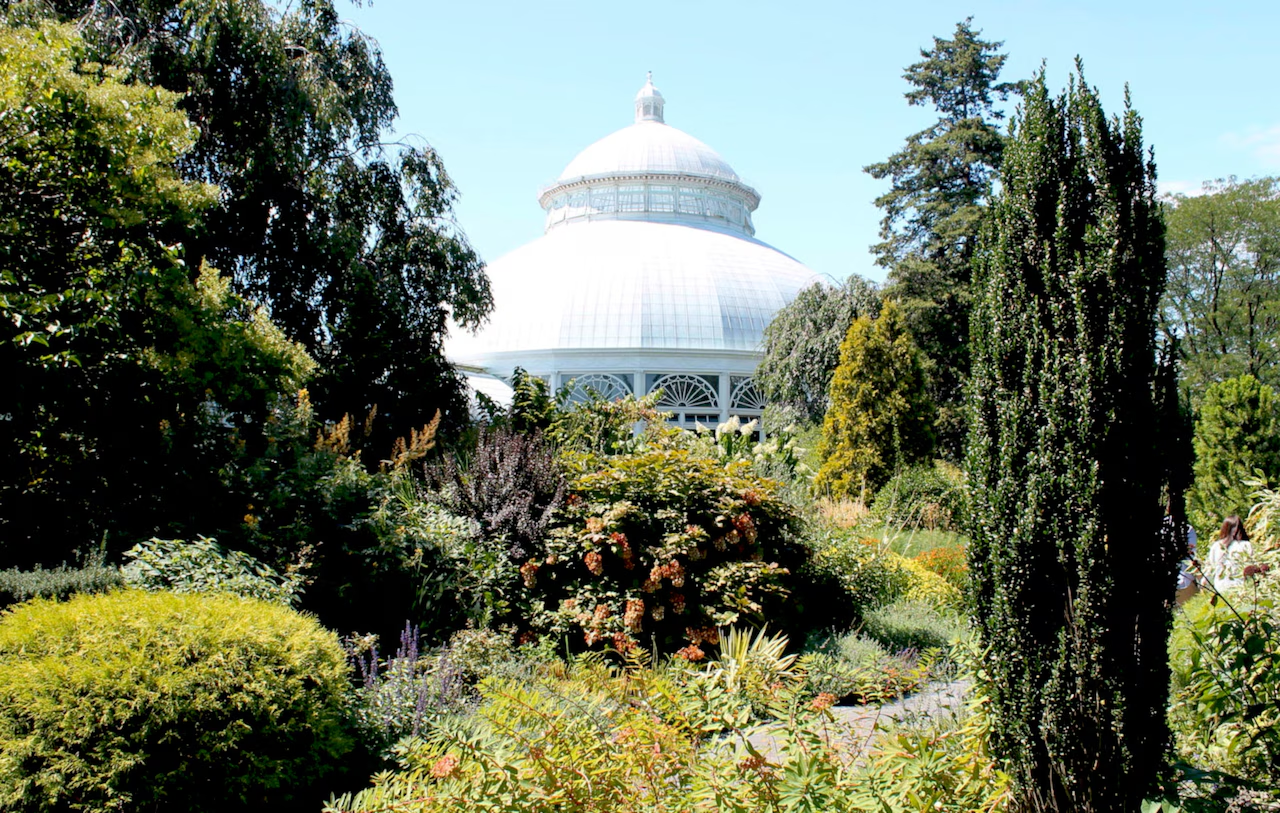 New York Botanical Garden’s Enid Haupt Conservatory can be seen backdropping this perennial garden.George Weigel
Highlights: One of America’s oldest and biggest public gardens at 250 acres, New York Botanical Garden has a multi-faceted Children’s Adventure Garden, 1 million kinds of plants, the world’s fourth largest dried-specimen collection, one of the world’s largest rock gardens, conifer collections, numerous border and flower gardens, a large rose garden, 8,000 orchid varieties, 30,000 trees, and a home-garden demo section.
Its signature landmark is the shining, tropical-plant-filled Enid Haupt Conservatory that’s America’s largest Victorian-style glasshouse.
George’s Take: NYBG has a simply staggering diversity of plants but also enough sheer beauty to keep both the serious plant geek and the more stroll-minded spouse happy.
The conservatory is particularly amazing at Christmas time when it’s decorated for the holidays and sporting famous New York landmarks made out of plant parts.
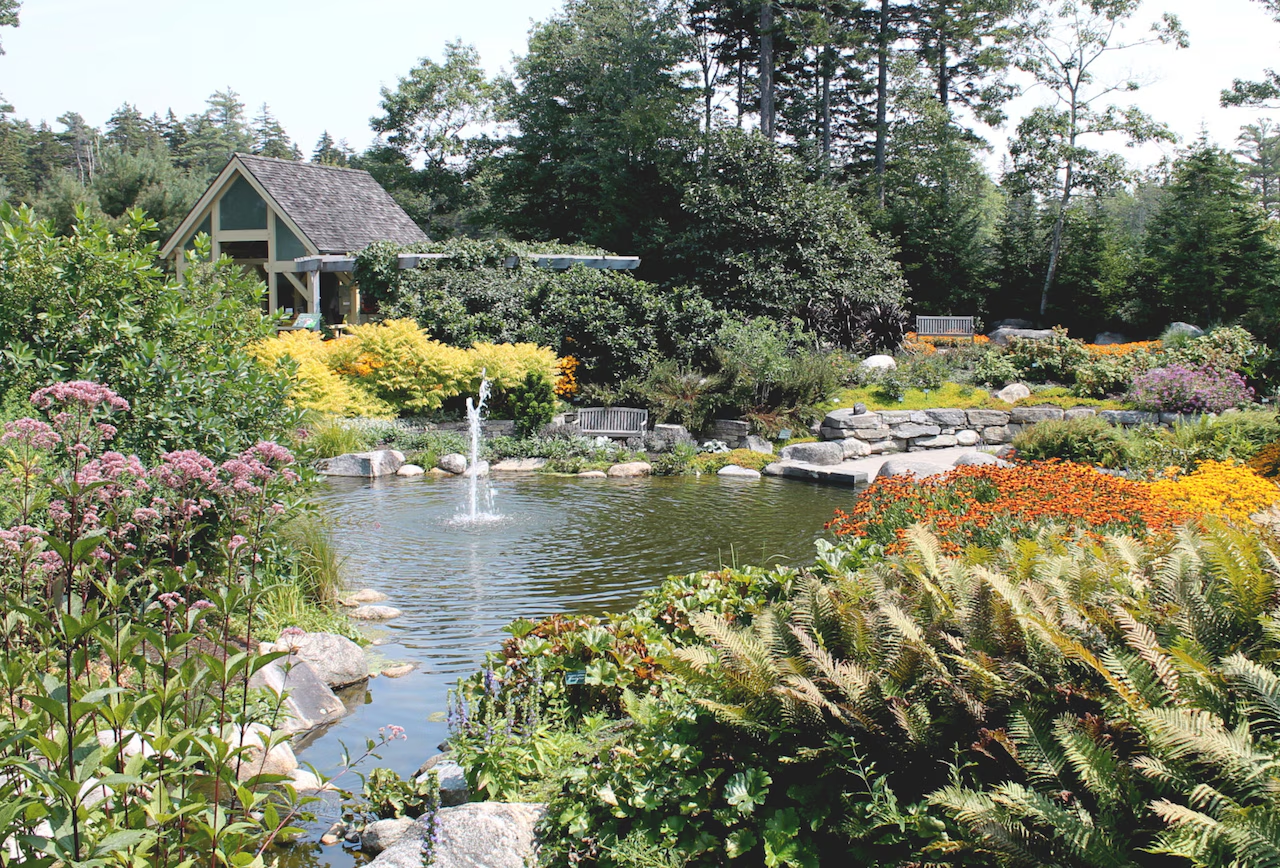 The Lerner Five Senses Garden is one of Coastal Maine Botanical Gardens’ top attractions.George Weigel
Highlights: The “sleeper” on this list, Coastal Maine Botanical Garden is surprisingly impressive but not well known because it’s fairly young, and it’s not near any major metropolitan areas.
Dubbed “The People’s Garden” for its founding by residents who mortgaged their homes to buy the garden’s 300 acres, CMBG is in a great site location that gives a mix of coastal land, wooded shoreline trails, a hillside for a naturalistic shade garden, and level ground for a selection of theme gardens.
Its best two gardens are the Alfond Children’s Garden, which is a large and distinctively Maine-flavored space with clever exploratory features, and the Lerner Garden of the Five Senses, a walk-through, colorful garden with a large central pond.
There’s also a perennial and rose garden, a Meditation Garden, a kitchen garden of edibles, and a woodland garden.
George’s Take: What a gem! And this is only the beginning. If these folks keep working on the master plan with the same quality and creativity as the initial gardens, CMBG will give the top-tier botanical gardens in New York, St. Louis, Chicago — and dare I say Longwood? — a run for their money.
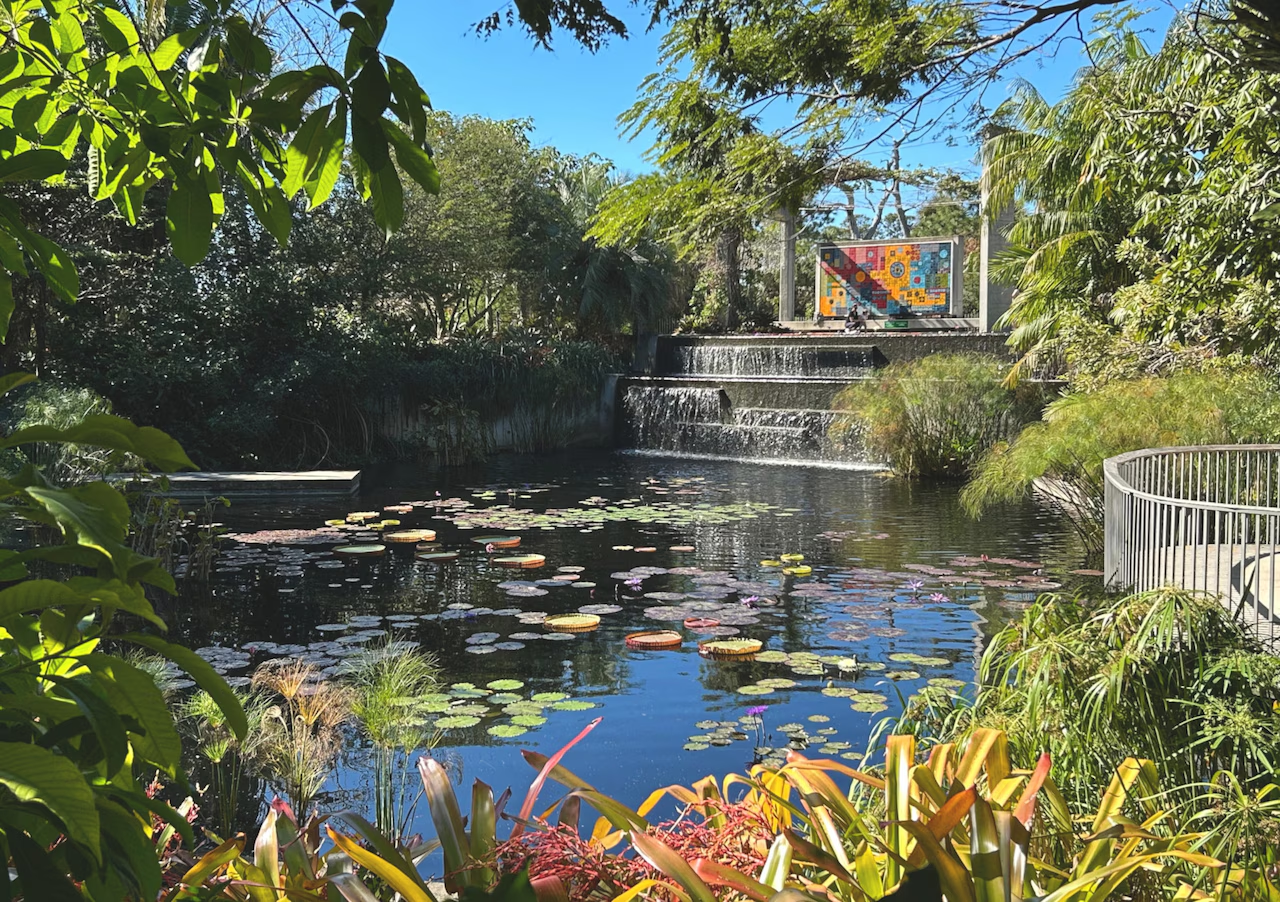 This Brazilian Garden with its pond centerpiece is the first main view visitors see when they enter the Naples Botanical Garden.George Weigel
Highlights: Set on 170 acres of the southwestern Florida coast, Naples Botanical Garden immerses you in water-laden, elaborate gardens even before you get to the ticket window.
Once inside, you’ll first run into a tropical-plant-lined pond with a waterfall that’s backdropped by a colorful, elevated mosaic wall created by the famous Brazilian designer Roberto Burle Marx.
Paths then wind you throughout this tropical garden into a Caribbean Garden, a garden of Florida native plants, an orchid collection in a garden setting, an Asian garden with an unusual mosaic pergola, an Enabling Garden, the Garden Club of Naples Idea Garden, plenty of palms and bromeliads, and lots of moving water.
George’s Take: This place is extremely colorful, but the many plant textures and forms — not to mention the excellent plant-pairing — are just as impressive. This is one of the most photogenic gardens I’ve ever seen.
I really liked the flow of this garden as well as the many views out into the surrounding lake.
Florida’s blue skies and Naples’ year-round warm temperatures (80s even in January) don’t hurt either.
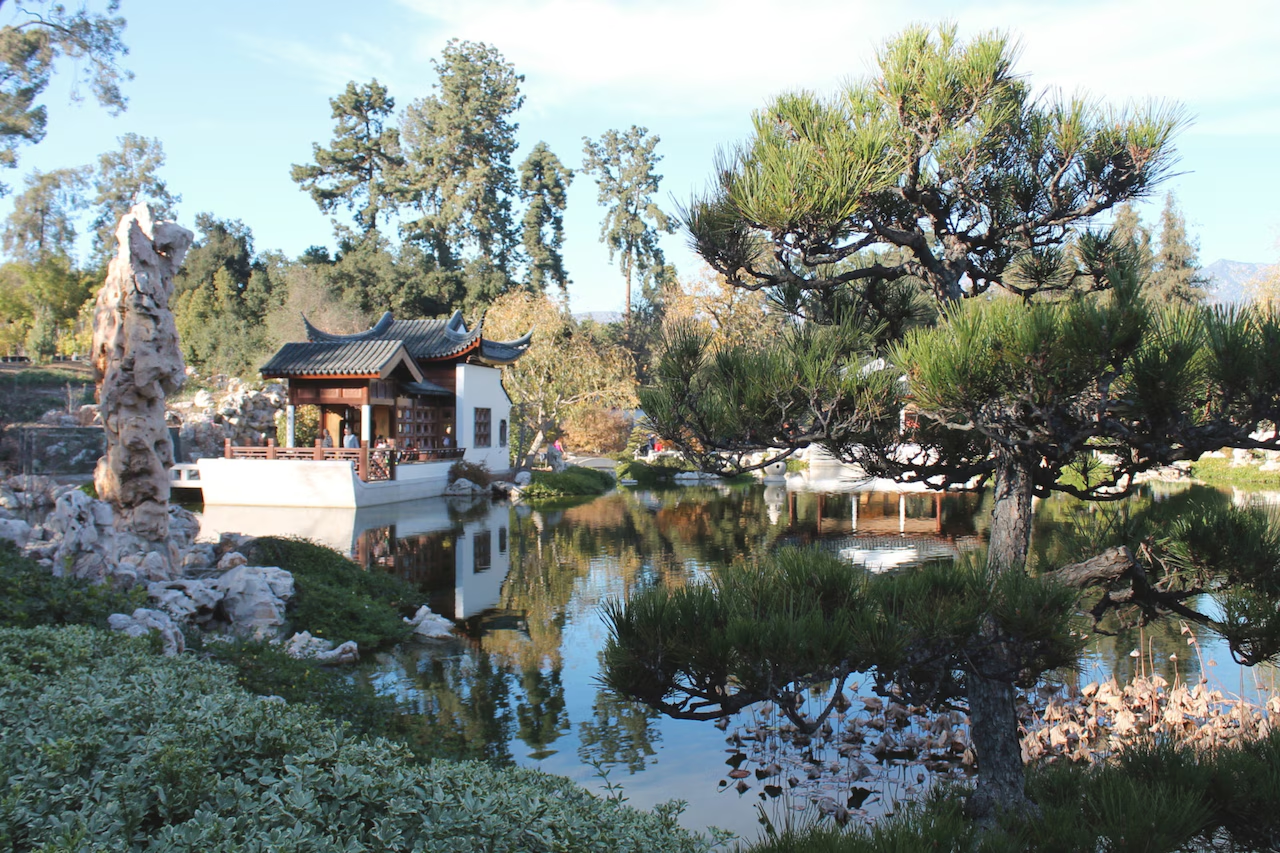 This Chinese Garden is one of the biggest and best gardens at California’s Huntington.George Weigel
Highlights: This 120-acre suburban-Los-Angeles estate of transportation tycoon Henry Huntington is actually three world-class attractions in one: a rare-book library, an art museum and elite gardens.
Two features stand out most to me here.
The first is one of the world’s biggest and best desert-plant gardens — a 10-acre collection of 60 different beds displaying some 2,000 species of succulents.
The second is the Chinese Garden, an impressive 12-acre area with pavilions set around a large pond and a stunning view of the San Gabriel Mountains beyond.
You’ll also find a children’s garden with maze, topiary, and water-play area; a 4,000-plant rose garden; a spacious Japanese garden with waterfalls, pond, and a great view from above; a garden featuring Australian plants; a camellia collection of 1,200 varieties, and a six-and-a-half-acre California Garden.
George’s Take: The Huntington gardens turned out to be way more impressive (underrated?) than I anticipated. Maybe the library and art compete for the glory?
The Desert Garden alone is worth the trip. So is the Chinese Garden. But really, everything is so well done here, with surprising diversity, too.
The beautiful setting at the foot of the mountains is icing on the cake.
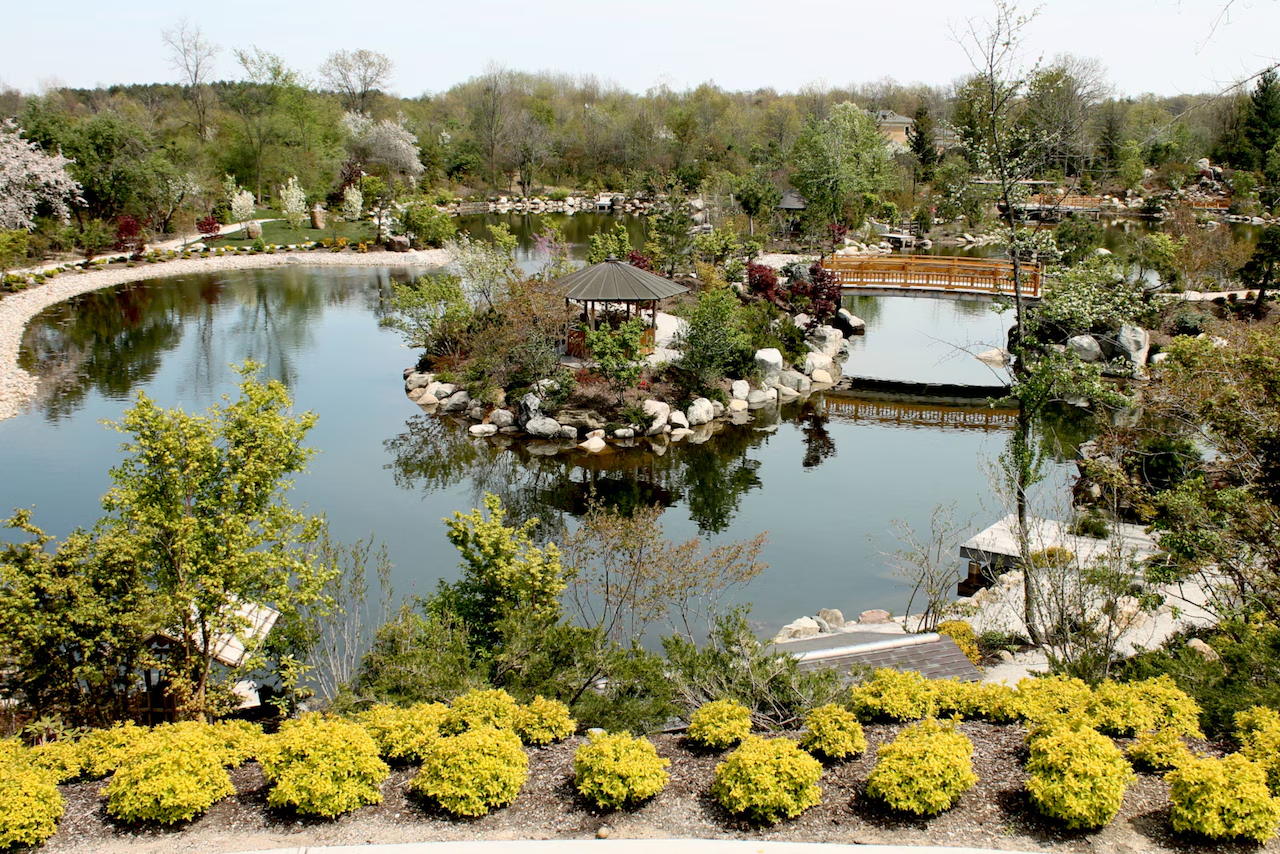 Meijer Gardens’ huge Japanese Garden is best seen from the top of a knoll within the garden.George Weigel
Highlights: The multi-peaked, five-story glasshouse makes an imposing first impression at this 158-acre public garden in the western-Michigan countryside.
Some 170 large sculptures of all kinds are woven among the themed areas that include an action-packed, five-acre Children’s Garden with a water-feature map of Michigan, an English perennial and bulb garden, a shade garden, a bonsai collection, a three-acre section devoted to Michigan farming, a large amphitheater, and nature trails with a wetland.
The pinnacle of Meijer’s gardens, though, is the eight-acre Japanese garden with bridges, a teahouse, statuary, intricately pruned plants, and hundreds of boulders.
George’s Take: That Japanese garden is incredible… especially when seen from the landscaped knoll that’s part of the garden.
The whole place is nicely laid out, and you’ll enjoy the sculptures even if you’re not an art connoisseur.
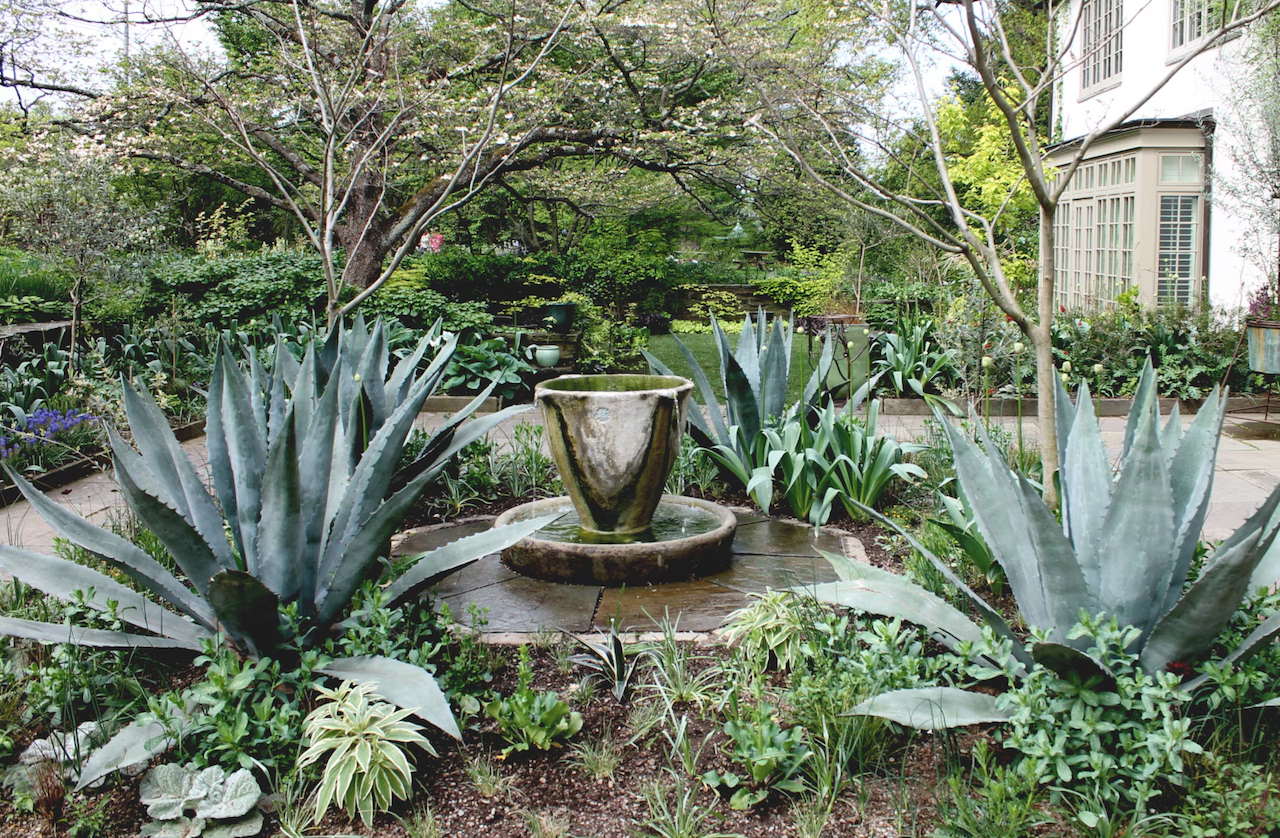 This is the iconic Teacup Garden at Chanticleer in Delaware County, Pa.George Weigel
Highlights: A classic “pleasure garden” filled with artfully composed plant-pairings and an interesting mix of gardening styles, Chanticleer is the 30-acre one-time estate of the pharmaceutical Rosengarten family.
One of its more unusual areas is the Ruins Garden, displaying plants that seem to be colonizing an abandoned and decaying stone building.
But Chanticleer also is known for its exuberant use of container tropicals, its signature Teacup Garden (where showy plants surround an oversized stone teacup that’s spilling water), a woodland Asian garden, a cut-flower and vegetable garden, mixed gardens in a former tennis court, native plants, tens of thousands of spring bulbs, and many majestic mature trees.
George’s Take: Creativity comes to mind first here. A large part of Chanticleer’s charm and artistry comes from the fact that the gardening staff “owns” the gardens they’re assigned, which lets them imagine without chains.
Staff also makes many of the benches and other structures here, too. They’re more gardening artists than just skilled gardeners.
Go to Chanticleer to enjoy, not to study. It’s a plant-lover’s paradise.
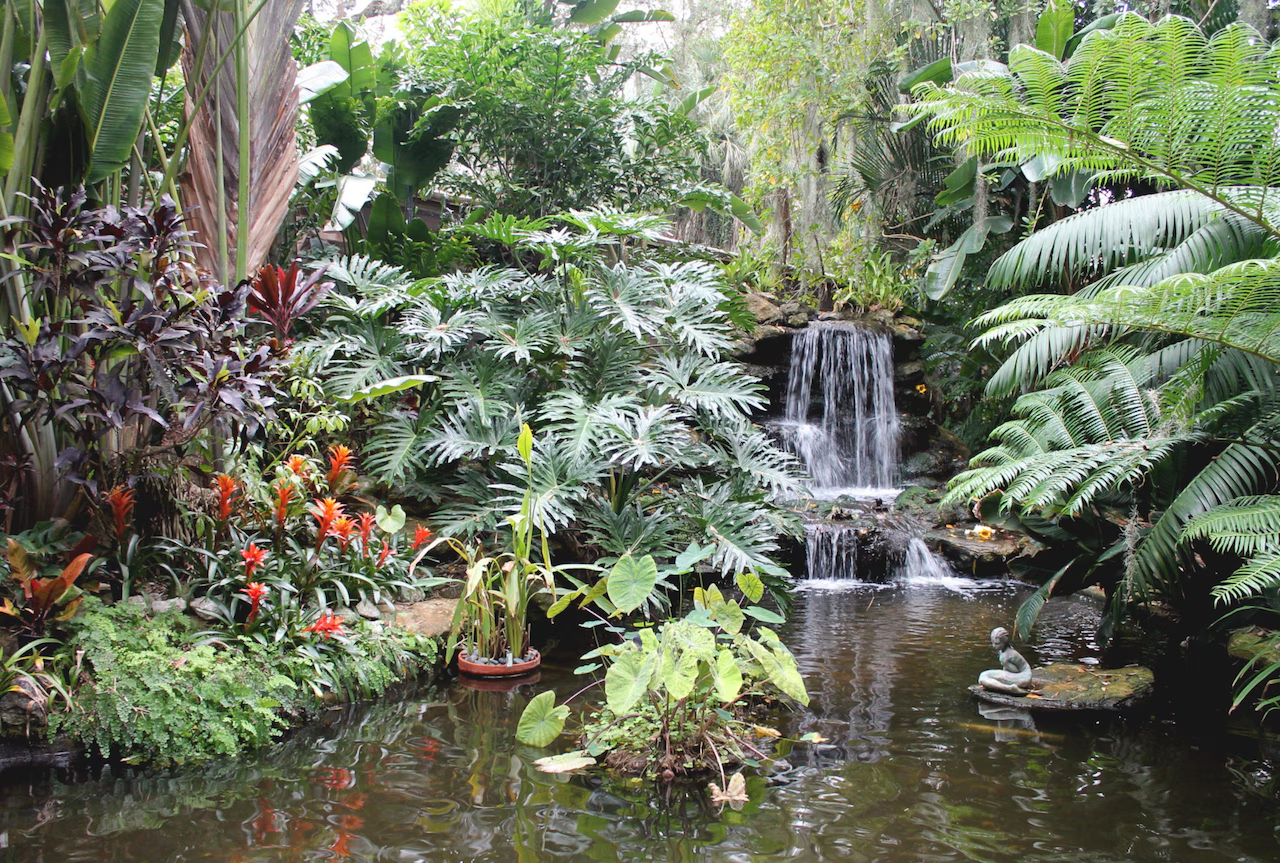 This is the koi pond in the tropical woods at Florida’s Marie Selby Gardens.George Weigel
Highlights: Although Selby Gardens has one of the world’s premiere collections of epiphytes (air plants), I most enjoyed the tropical trees – “strangler figs” that choke out existing trees, a floss silk tree with conical spikes all over the trunk, a Moreton Bay fig with its eerily creeping, panel-like root system, and a rainbow gum tree with its green, gray, and maroon bark.
The 15 acres of themed gardens include loads of orchids in a conservatory, numerous palms and tropical ferns, a bromeliad garden, a butterfly garden, succulents, and a nicely done Children’s Rainforest Garden with a 12-foot-tall waterfall, huts, and other fun-to-explore facets.
This site was the home of Marie Selby – an Ohio native who’s best known as the first woman to cross the U.S. in a car.
George’s Take: I thought it was going to be a “stuffy” place because I heard it was a research facility specializing in epiphytes. Not at all. There’s much variety here, and flat-out beauty beyond the botanic names, plus those amazing trees.
Kids will love exploring in the children’s garden that’s patterned after an Amazon rainforest.
Selby Gardens might be small, but there’s a lot to see here.
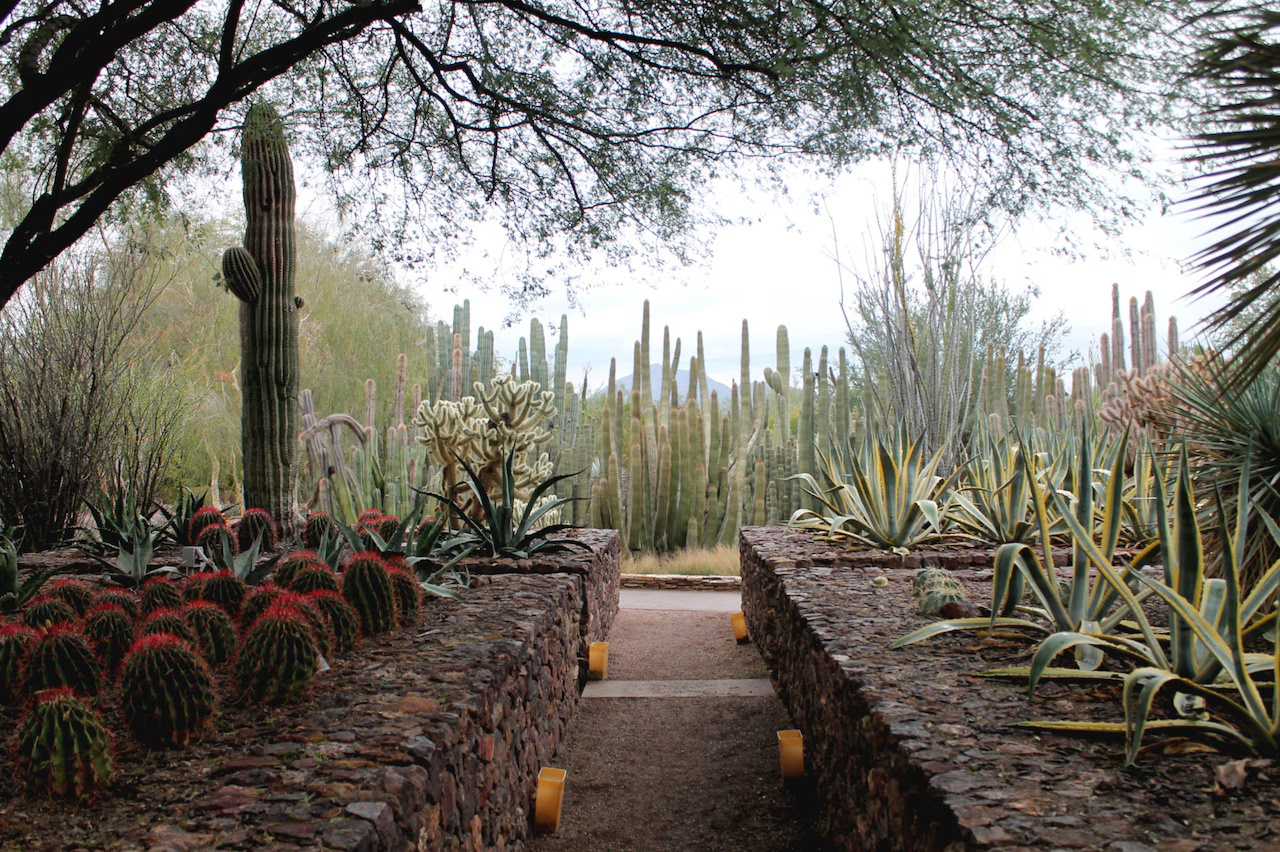 Phoenix, Arizona’s Desert Botanical Garden is one of the some 400 gardens in the AHS Garden Network.George WeigelA public-garden money-saver
Ticket prices at public gardens are comparable to what you’d pay to get into a museum or a zoo.
Some are even free, especially those run by governments or affiliated with universities.
Most gardens also offer annual memberships that pay for themselves in three to five visits.
But the best bargain comes via the American Horticultural Society’s reciprocal admissions program.
Under AHS’s Gardens Network, if you’re a member of any garden in the network, you get into some 400 other public gardens nationwide at no charge. (The exception is gardens within 90 miles of your “home” garden.)
For example, becoming a member at Hershey Gardens gets you in free at the hundreds of other network gardens, which includes most of the above and other top-tier gardens such as Wave Hill and Brooklyn Botanic Garden in New York, Phoenix’s superb Desert Botanical Garden, the Lewis Ginter Botanical Garden in Richmond, Va., and Florida’s Bok Tower Gardens, Fairchild Tropical Botanic Garden, and Harry P. Leu Gardens.
More details and a map of network gardens are posted online on the AHS Gardens Network page.
Comments are closed.