
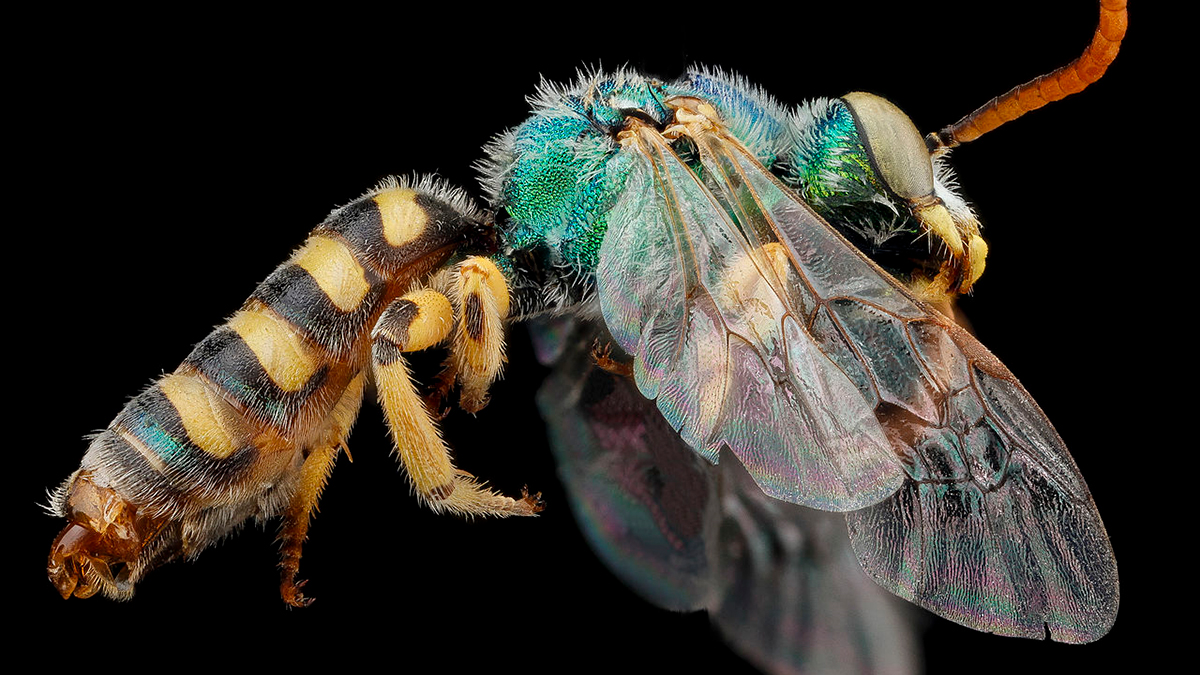
Header photo: Male small striped sweat bee (Agapostemon angelicus). Credit: USGS Native Bee Inventory and Monitoring Laboratory
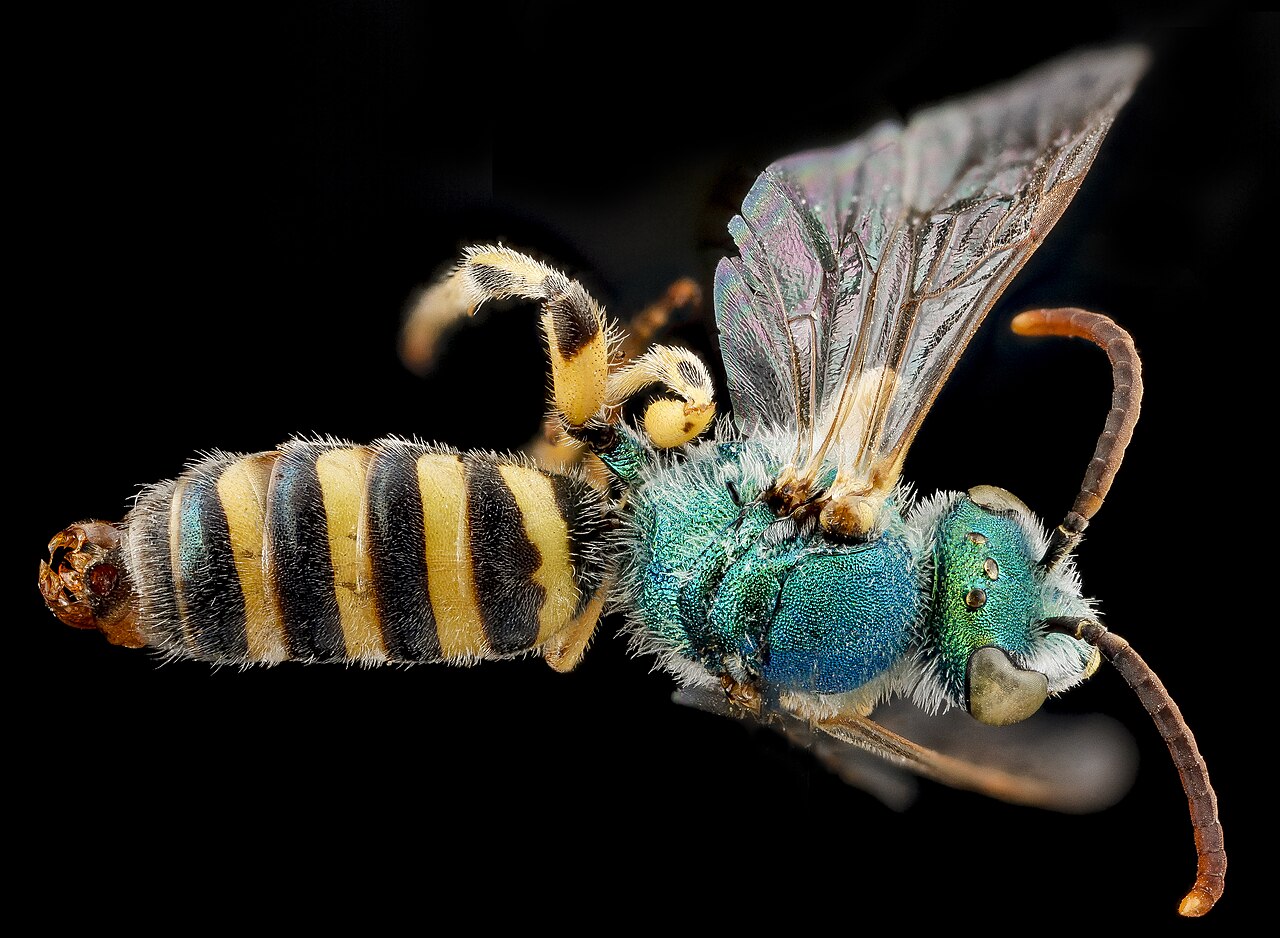 A male small striped sweat bee (Agapostemon angelicus), a native pollinator common in the American southwest. Credit: USGS Native Bee Inventory and Monitoring Laboratory
To many Utahns, Red Butte Garden and Arboretum is a refuge; a shady stroll through flower beds or a hike in the foothills of the Wasatch Mountains offers a break from city life. What some fail to notice is that the carefully curated landscape supports a thriving, complex world of bees. Sarah Hinners, director of conservation and research at Red Butte Garden, is leading ongoing efforts to better understand this hidden ecosystem.
A 2015 biodiversity survey identified 130 bee species within Red Butte’s grounds. That’s roughly 10% of all known bee species in the entire state contained in just 100 acres. A decade later, Hinners is taking a second look.
“I like looking at bee diversity as a metric of an ecosystem’s health,” Hinners said. “A bee species count is an incredible reference point. If I had to pick the perfect habitat for bees between the Wasatch and the Oquirrhs, it would be Red Butte.”
As an urban ecologist, Hinners studies how living organisms interact within built environments. When completed, her findings may provide a blueprint for transforming urban spaces into ecological hotspots.
“I can ask, ‘What species falls off outside the garden? What features does the city space have in common? What changed?”
Bees as a measure of health
From shady creeks and dry foothills to manicured beds and natural areas, the garden provides what bees need most: a steady supply of flowers throughout the growing season, water sources, and plenty of places to nest. Combined, abundant food and wide-ranging habitat fuels a powerful feedback loop.
“A diversity of pollinators helps support a diversity of plants,” Hinners said. “A diversity of plants helps support a diversity of pollinators.”
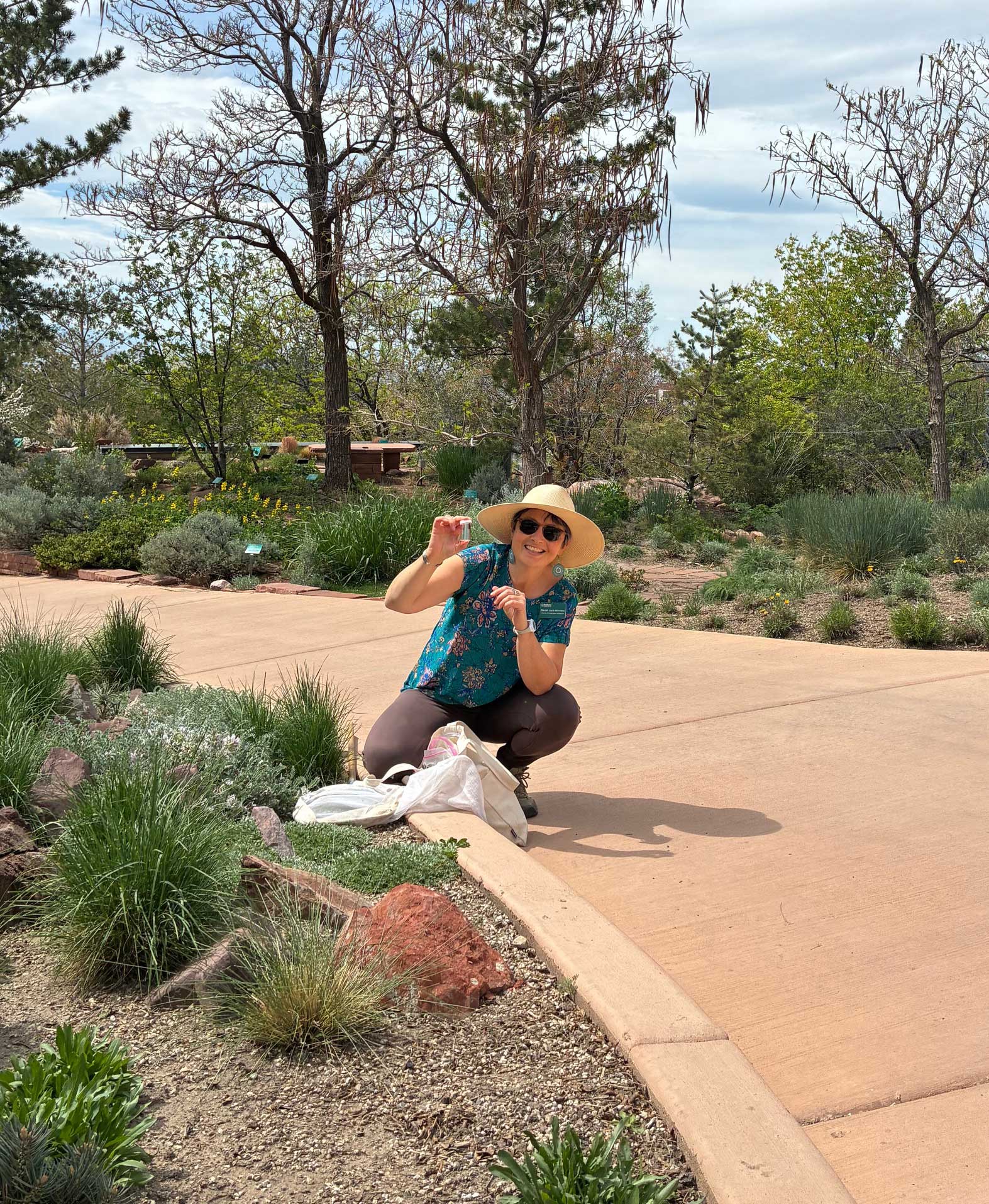 Sarah Hinners collects a bee while surveying bee diversity in Red Butte Garden. Credit: Danya Rumore
The key to their relationship is everyday foraging. Like us, bees need a balanced diet. Nectar provides carbohydrates while pollen provides proteins, amino acids, vitamins and minerals. As they buzz along their workday, the bees collect food by stashing pollen on hind-leg “baskets,” in belly hairs, or on their fuzzy bodies. In the process, stray grains are transferred between blooms and enable reproduction. Pollinated plants then produce seeds, some encased in fruit, enticing animals to disperse them. In turn, these seeds and fruits support other insects, birds, mammals and entire food webs.
“Seeing a diversity of other organisms that are thriving is a really important signal to me that I’m living in a healthy, ecologically functioning place,” she said.
But documenting that diversity can be a challenge. Over the summer, Hinners and a dozen volunteers began collecting bees. Joe Wilson, the biologist from Utah State University who led the 2015 Red Butte survey, joined the effort.
From May through September, Hinners split the volunteers into teams to cover the most ground in areas representing different habitats. They scooped up bees in nets, stored them in plastic vials and documented the date, the garden area, and the plant it was found on.
Small changes, big impact
For now, the research is ongoing. Dozens of collected bees still need to be identified and even with months of field work, it’s nearly impossible to measure diversity completely. Some species are rare, others only appear under certain conditions, and identifying bees down to the species takes a long time.
While Hinners can say that the garden is rich in bee life, she can’t say how rich just yet—or how it compares to the past. What’s clear is that biodiversity can flourish if humans make room for it.
“Most city parks emphasize what people like—grass and shady trees, which bees don’t love,” Hinners said. “Bees don’t need a lot. They need sufficient floral resources and a place to nest. Just adding native plants that flower across the full growing season, leaving a few areas of bare soil and limiting pesticides could make a big difference.”
Comments are closed.