
 5 min read
There’s nothing like picking fresh herbs straight from your garden or windowsill and using them in your culinary dishes. Basil is ideal for pasta lovers, and making pickles with homegrown dill is so special. Rosemary is an essential for any home cook, but the true standout herb is mint, especially in the summertime.
Used in both refreshing drinks and bright yet savory meals, mint is an extremely versatile herb that’s surprisingly easy to grow, and there are plenty of types to choose from. Whether you prefer peppermint or spearmint, or maybe even catnip for your feline friend, our mint plant care guide will ensure you grow this herb to perfection.
As mint is quite invasive, most gardeners will suggest growing it indoors so it doesn’t completely take over your garden bed. Thankfully, it works perfectly in a planter on your windowsill or countertop. But just because it’s known to be low-maintenance doesn’t mean you can plant it and forget about it. Our mint plant care guide below takes you through all the steps for making sure this herb thrives, from watering to the amount of sunlight it needs.
Additional copy by Meghan Shouse.
Related StoriesMint Plant Care Basics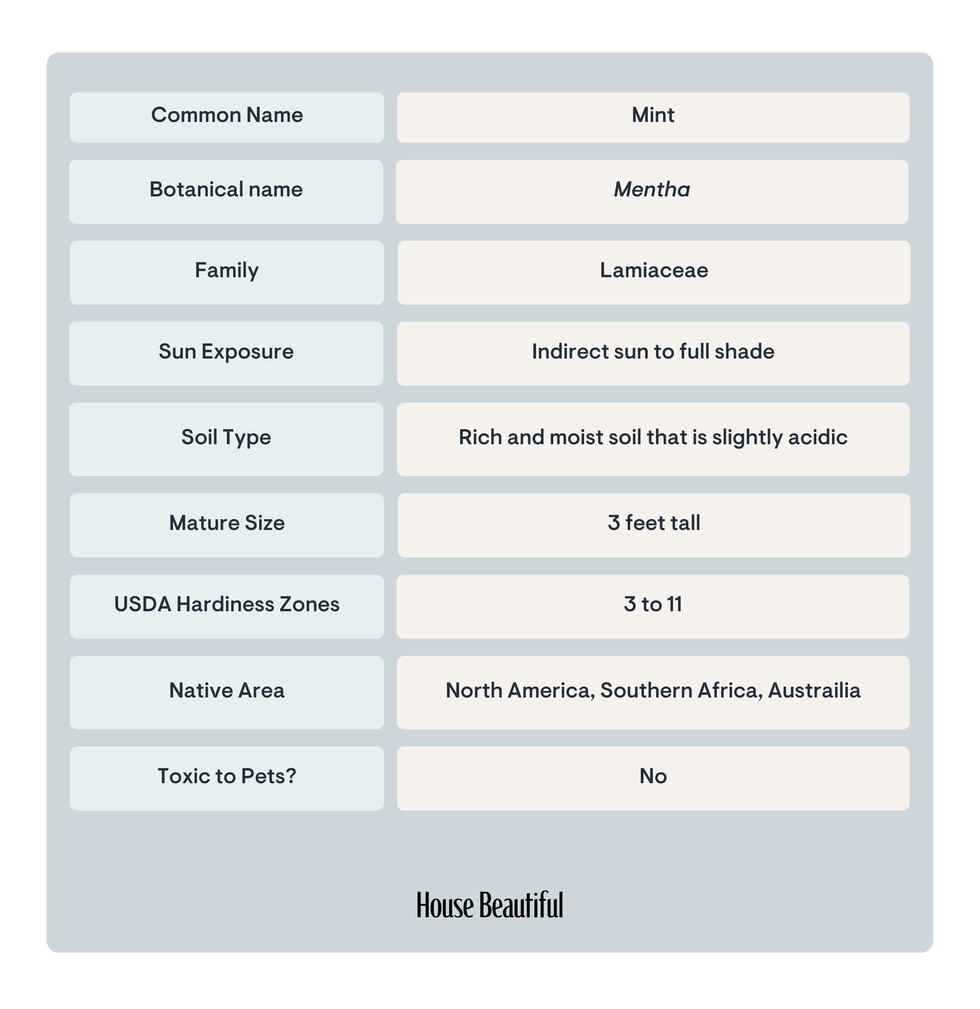
Soumi Sarkar
Most Common Types of Mint Plants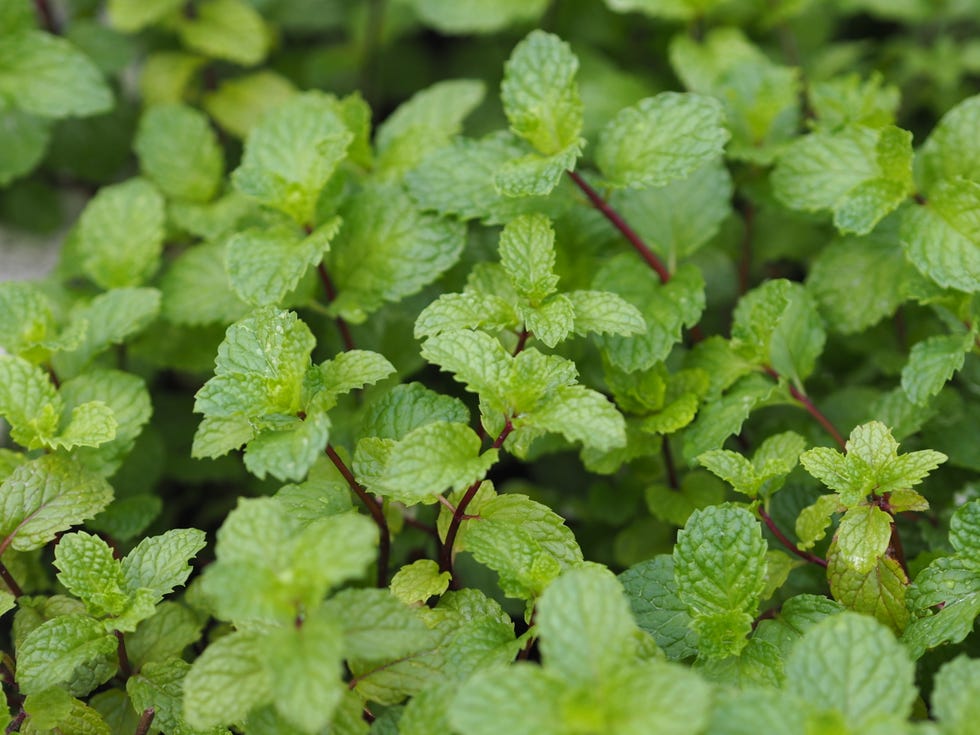 Penpak Ngamsathain//Getty Images
Peppermint plant (Mentha piperita).
Peppermint and spearmint aren’t the only mint varieties you can grow. Here are some of the most common types of mint plants to keep in mind for your garden:
These zones include all but the northernmost and southernmost parts of the United States. If you’re not sure which zone you live in, check the USDA Plant Hardiness Zone map.
How to Grow a Mint Plant Indoors
redhumv//Getty Images
Sunlight
A mint herb plant grows best in partial shade. While it thrives in morning sun, the scalding afternoon rays can easily scorch its leaves. For optimal growth, put your mint plant near an east- or west-facing window or in a spot that gets consistent light but direct sun for only a few hours each day.
Water
Like other leafy herbs and houseplants, mint likes its soil to be moist but never soggy. Add more water when the top inch of soil feels dry to the touch. Wilting leaves are a sign that your mint isn’t getting enough water. Darker leaves are a sign of too much water. If your mint plant sits in the sun, try watering it in the morning so it has plenty of hydration as the temperatures rise throughout the day.
Soil
A rich potting soil with plenty of nutrients is ideal for mint, according to the University of Maryland Extension. Good drainage is essential, but focus on the soil’s nutrient content first. It’s best to use a rich, moist soil, but mint is highly adaptive and can thrive almost anywhere.
Fertilizer
The Utah State University Extension states that while fertilizer isn’t necessary, a teaspoon of slow-release fertilizer at the start of the spring growing season can help spur growth.
Temperature and Humidity
Mint thrives in a wide range of outdoor temperatures and is remarkably resilient, with many varieties able to withstand cold temperatures as low as -20 degrees Fahrenheit. However, when it comes to humidity, mint plants prefer normal to low levels. Excessive moisture in the air can cause them to struggle.
Related StoryHow and When to Plant Mint Outdoors
Whether in a pot or the ground, mint can grow just as well outdoors as it does in. It’s best to plant mint in the spring, just after the last frost (likely late March to early May, depending on which Hardiness Zone you’re in). The herb is fast-growing, so you won’t have to wait long or allow extra time for the roots to take hold. Because of mint’s quick-growing nature, it’s important to space your plants at least 18 to 24 inches apart.
You should plant mint in containers before placing those containers in your garden bed to help contain the fast-spreading roots. Because mint is such an aggressive grower, it’s best to put it in a confined area like a walkway border or an outdoor planter to prevent it from taking over your entire garden.
How to Harvest a Mint Plant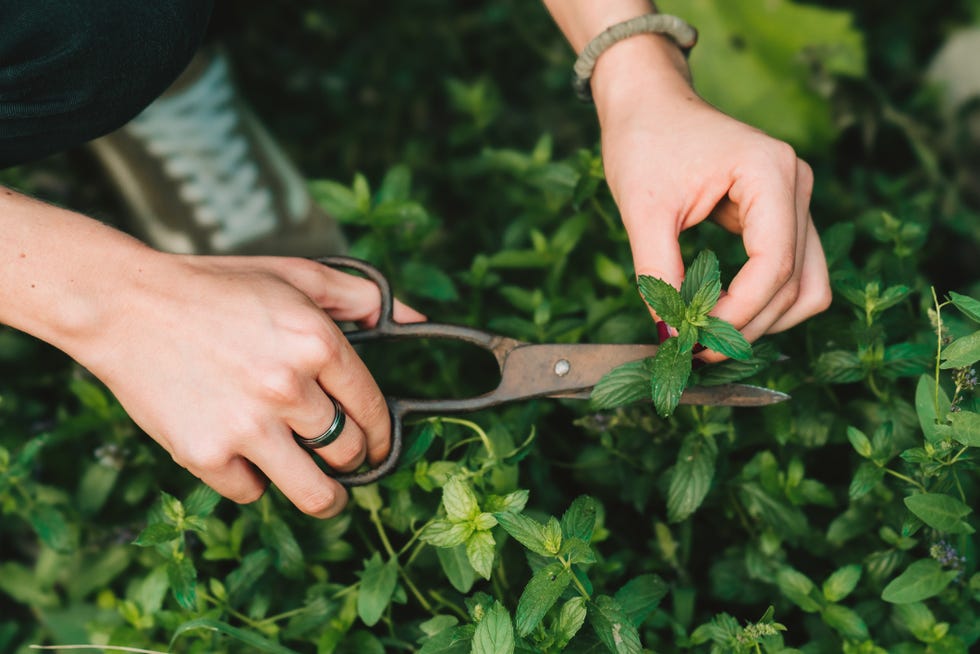
YorVen//Getty Images
Once plants are three to four inches tall, the University of Utah Extension states that you can begin harvesting. Harvest mint leaves of any size by pinching off the stems at the base of the leaves. According to the Extension, “The youngest leaves and stems are the most flavorful. Cut the stems to within one inch of the soil, picking late in the morning on dry and sunny days.”
If you’re looking to harvest more than a few leaves, cut the whole plant to just above an inch from the soil. This ensures the roots remain intact. Allow the plant to regain some growth before harvesting again.
FAQs About Mint PlantsHow fast does mint grow?
From seed, it takes only a few months for mint plants to root and grow enough to be harvested. While it’s not recommended to start from seed (you can easily find seedlings in nurseries and grocery stores), you should be able to have homegrown mint ready for use within the first year. From a mature mint plant, new growth should happen almost immediately. Allow for a few weeks of stagnant growth while the roots settle into their new home.
Is mint easy to care for?
Yes! Mint plants are incredibly hardy and can survive almost anything. That makes it a great introductory herb or plant for those new to gardening.
Will mint plants survive through the winter?
Mint plants are hard to kill, even through winter frosts. If they’re planted outdoors, trim your mint plants close to the ground and cover them with mulch or leaves. The Royal Horticultural Society recommends bringing outdoor mint plants indoors and leaving them on a windowsill until spring. However, they are cold-hardy and can be left outdoors if you choose. Leave your plants alone until springtime, provide a bit of fertilizer in the spring, then continue your regular care routine.
Follow House Beautiful on Instagram and TikTok.
Comments are closed.