
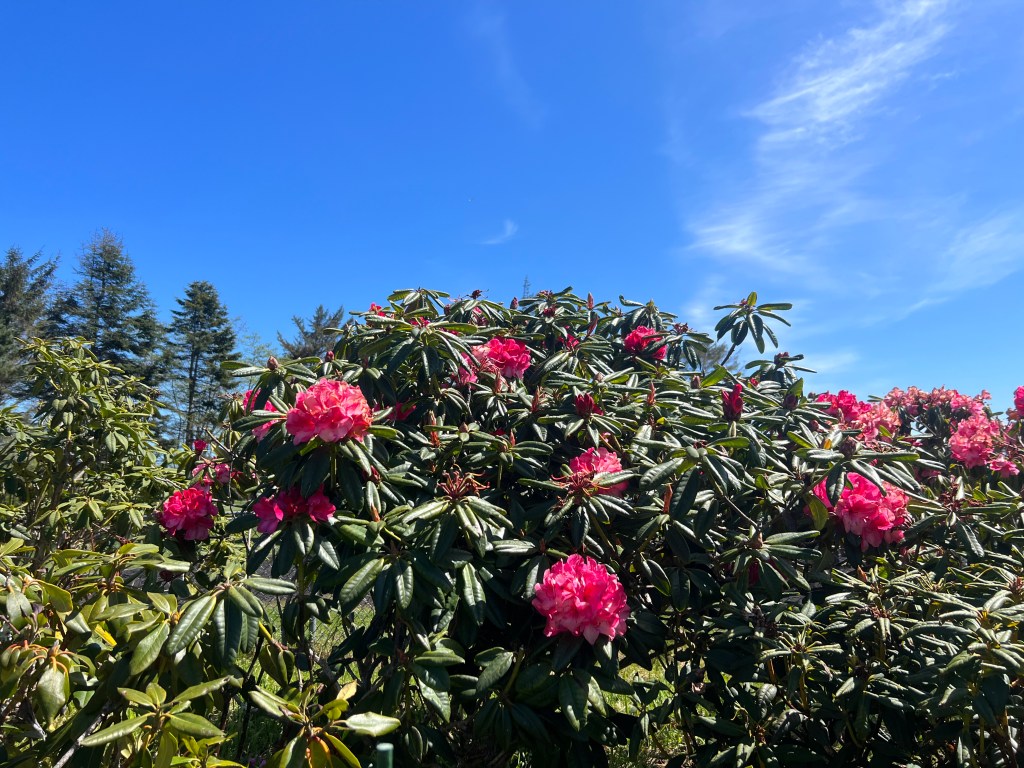
May busts out in full color here on the North Coast. Rhododendrons, dogwoods, viburnums and apple trees all fill our neighborhoods with flowers. Nurseries overflow with beautiful plants.
So far this grand month of spring has also started out cool and drizzly. Here’s what you can do now to make your garden healthy and happy:
PATROL AND DESTROY: Feeling a bit peevish here since I discovered a slug mowed down a tender batch of carrot seedlings. It’s a reminder to check fresh plantings early every morning for slugs and snails. Bait, trap and patrol. Organic slug baits are effective, but they always work best if put out a few days before setting out transplants.
MOW HIGH: No Mow May Month might not fit your garden style when it comes to pollinator habitat. Consider mowing high by maintaining a 3- to 5-inch height. Keeping grassy areas mowed high will allow English daisies, dandelions, self-heal and clover to bloom and feed the pollinators.
FERTILIZE ALL: When soil warms up and daylight lengthens, it is time to feed all garden plants. Roses, berries, perennials, newly established fruit trees and just about all landscape ornamentals benefit from a spring fertilization. If you wish to keep the lawn green all summer long, give it a good feeding this month. For most plants, an all-purpose fertilizer that is slow release will be good enough. Blueberries, rhododendrons and azaleas prefer acid based fertilizers. Always be sure to water plants after fertilizing.
PLANT MORE: This month, the soil is warm and moist, ripe for planting just about anything. Warm-season vegetables available for planting out include corn, tomatoes, peppers, eggplant, peppers, tomatillos, winter and summer squash. Herbs include dill, basil, cilantro, chives, parsley, oregano, rosemary and more. These days, our local nurseries are well-stocked with shrubs, trees, bedding plants, roses and more.
SOW SEEDS: May is a good month for direct sowing seeds into the soil. Carrots, turnips, beets, peas, beans and summer squashes are among the many vegetables that can be directly seeded this month and next. It’s not too late to get potatoes in as well.
MULCH: Once a vegetable garden is planted, it is important to mulch with rice straw. This inexpensive material will keep weeds from taking over and conserve a good deal of moisture. It quickly forms a tight mat that prevents many weed seedlings from poking through.
Terry Kramer is the retired site manager for the Humboldt Botanical Garden and a trained horticulturist and journalist. She has been writing a garden column for the Times-Standard since 1982. She currently runs a gardening consulting business. Contact her at 707-834-2661 or terrykramer90@gmail.com.
Comments are closed.