

There are some gardeners who swear by wearing gloves, whatever they’re doing in the garden. There are others, like me, who used to swear at wearing gardening gloves! That was until a few years ago, when I was doing some garden clearance.
In the past, I’d always thought that they were cumbersome, unnatural things that just got in the way, and if I picked up blisters and calluses or even picked up something nasty in the soil (I think you know what I’m talking about!) or thorns when pruning, then that was just one of the risks of the job. But now I’m a convert, and choosing the best gardening gloves is certainly an important task.
The range of gardening gloves available today is astronomical, and there are types that match the gardening job you’re doing with the right level of protection, dexterity, etc. Taking time to choose the right kind of glove for the task is essential, as they can either help or hinder. Discover our thoughts on the leading gardening gloves on the market.
 Photo credit: Shutterstock
For pruning roses and other prickly plants, carrying out digging or other heavy-duty jobs, you’ll need a pair of gloves that are tough enough to withstand these demands, but supple and dexterous enough to be able to use your pruning and other tools properly.
Even among heavy-duty gloves, there is a range of styles and materials used. Leather is the go-to material for tough gloves, but this may be an all-leather glove or gloves where leather is used for reinforcements and added protection and durability. Rigger gloves, for instance, are the mainstay of landscaping and other similar industries. These reinforced gloves traditionally have a leather palm and a fabric back with a leather strap over the knuckles. While protecting the hands, they tend to have a loose fit and don’t usually have very good dexterity.
The design of the cuff can affect comfort. Those with a wide or very open cuff can fill up with all manner of debris. An adjustable Velcro wrist strap closure ensures a secure fit and prevents debris from getting inside the glove.
And, of course, it’s important to buy the right size, so that the gloves fit like a second hand – or even like a glove!
 Photo credit: Shutterstock
I tested the gloves in the following ways: while digging with a spade, to see how well they protected against possible contact shocks/vibrations; when using secateurs – there’s no point having thorn-proof gloves when pruning roses if you can’t operate the secateurs!; picking up a £1 coin from a hard surface to test their dexterity; and picking up thorny bramble stems.
Best thornproof glove: Henchman Gardening Gloves
Best rigger glove: Draper Tools Expert Premium Leather Gardening Gloves
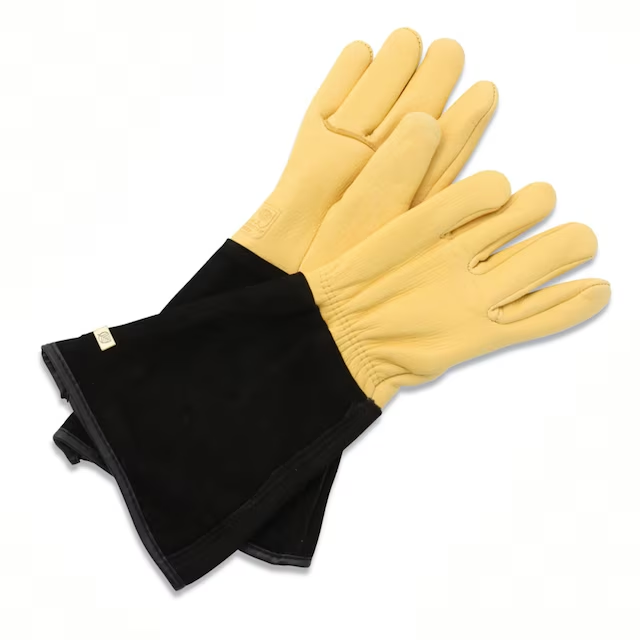
Best gauntlet glove: Gold Leaf Tough Touch
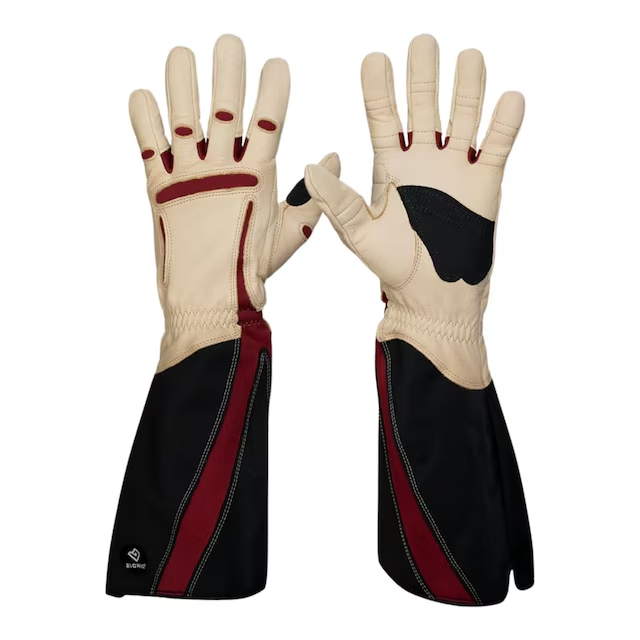
These gauntlet-style gloves have a very long sleeve that comes up to just below my elbow, ensuring forearms are protected from thorns, etc. They are made from goatskin leather, have added padding on the palm and the gauntlet, palm and thumb cover are made of composite Tough-Ex material. They are soft and supple and performed well in all four tests.
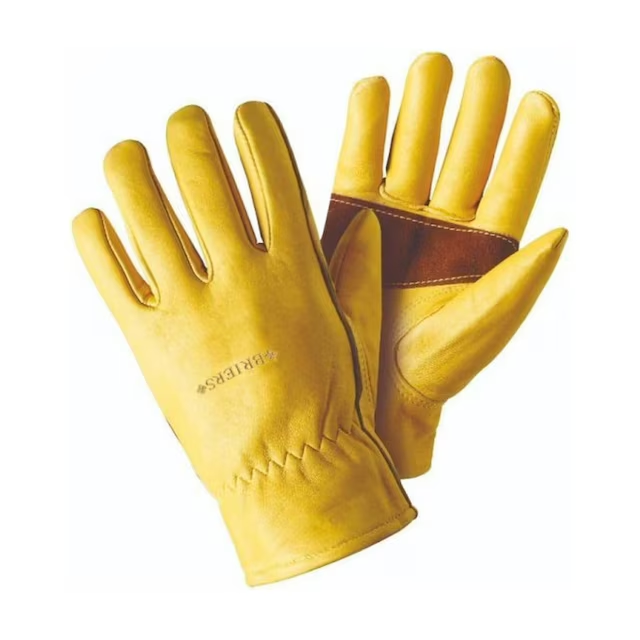
These all-leather gloves are very soft and flexible, with a reinforced protective strip along the top of the palm that makes them very comfortable when digging. The 100% cotton lining improved comfort further and helped keep my hands warm. The open cuff isn’t overly wide, so it can be tucked inside a sleeve if necessary. Performed well and were especially thornproof.
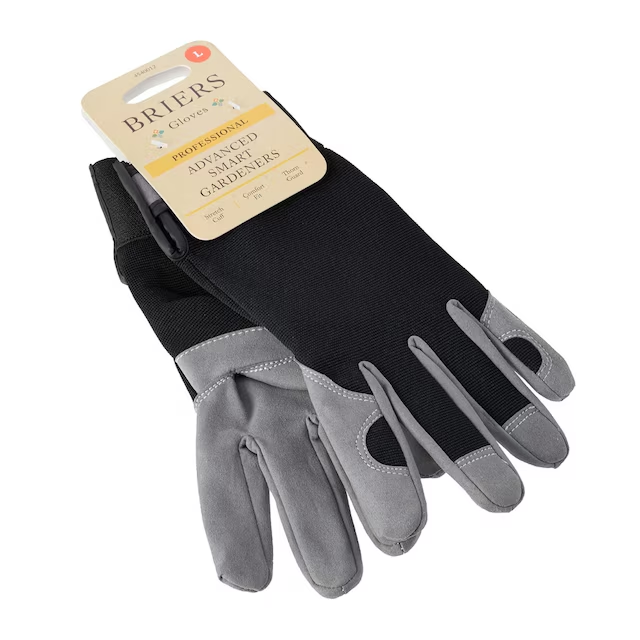
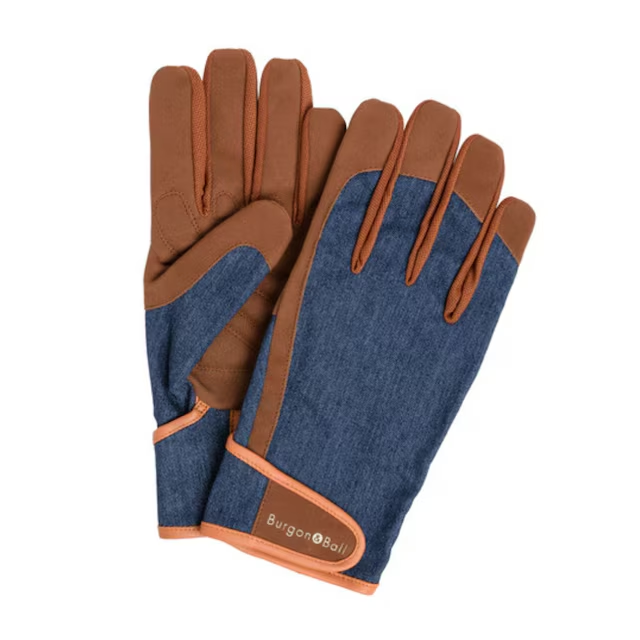
These comfort-fit gloves were very comfortable and matched the size of my hand and fingers brilliantly, providing great dexterity. They’re made from a mix of materials – a microfibre front and polyester and elastane back – with protection for the back of fingertips. The adjustable Velcro wrist strap closure gives a comfortable, secure fit. They performed well in the tests, although not completely thornproof.
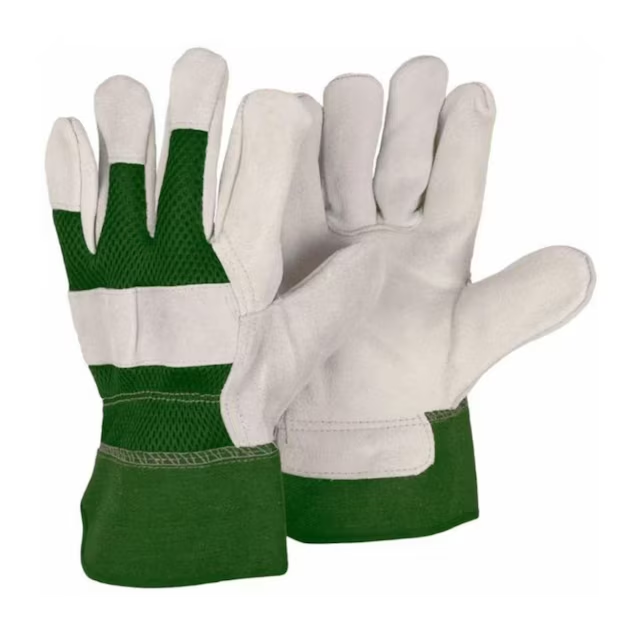
A typical rigger glove with a traditional cotton back and cuff and leather front, fingertips, knuckles, and wrist protection. These gloves performed well when digging, but as you’d expect from riggers, they’re not particularly dexterous, but they were fairly thornproof.
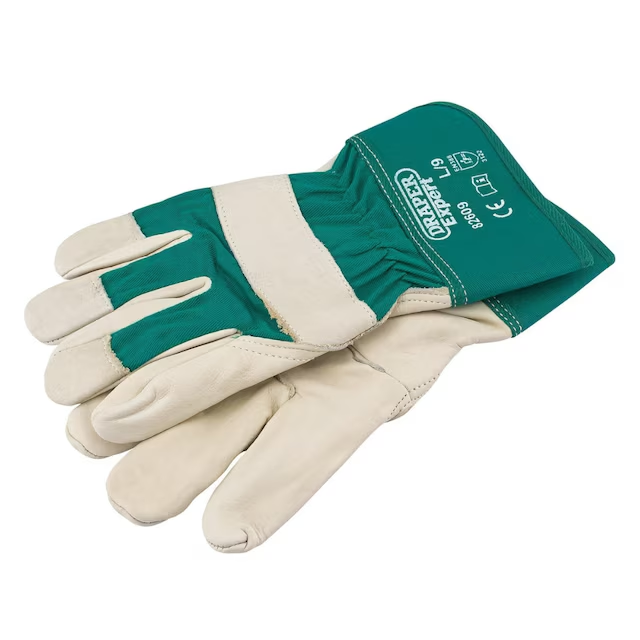
This is a typical rigger glove with a traditional cotton back and cuff, leather front, fingertips, knuckles, and wrist protection plus a protective cuff. They performed well in all the tests, and unlike some riggers, were unusually dexterous. The fleece inner lining made them comfortable and kept my hands very warm.
These all-leather gloves feature a cotton inner and plastic-lined, fleecy mid-arm length gauntlet. Although having a soft feel, they provide a high level of protection and good dexterity. The leather is treated to give it resistance to water. They were extremely comfortable and warm to wear and use.
With six sizes available, these are close-fitting gloves, featuring an all-leather front and stretchy polyester back and cuff. They are further reinforced with extra leather on the palm, fingertips, and knuckles. They performed well in all the tests, and the reinforcements made them extremely good when digging and picking up thorns. The adjustable Velcro wrist strap closure gives a comfortable, secure fit.
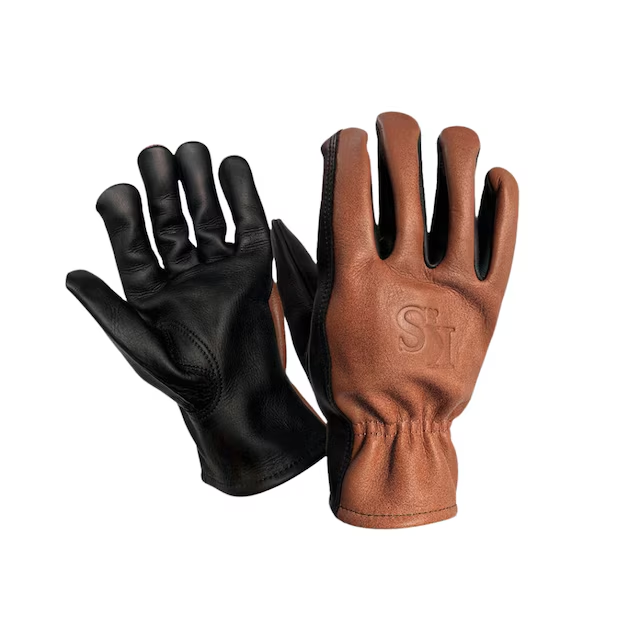
These are all-leather gloves. They feature a keystone thumb; sewn in as a separate piece, it has reinforced extra stitching and provides comfort and improved dexterity. The elasticated wrist helps produce a good fit, and the cuff is fairly close-fitting. They performed well in all the tests and conform to EN388:2016, meaning they protect against intermediate mechanical risk.
If you’re pruning roses, heavy-duty gardening gloves are a must. Explore our comprehensive pruning guide to roses, where world authority on roses, Michael Marriott, shares some simple rose pruning advice drawing on over 30 years of rose-growing experience. A decent pair of secateurs is a must; we can highly recommend the Niwaki Mainichi Secateurs.
Comments are closed.