
That means it’s time to rethink the prototypical yard-with-lawn — or “ya-awn,” given the reaction it gets from wildlife. Kept on life support with water and weedkiller through the hot New England summer, a green carpet of turf grass looks as perfect as a postcard. Unfortunately, it’s about as useful as one, too, from an ecological standpoint.
Most popular turf grasses aren’t native to our area, and offer precious little to chickadees, butterflies, and other home-grown wildlife who feed and breed almost exclusively on native plants. The same can be said for ornamental English yew bushes and boxwoods — not to mention the dozens of invasive plants, such as burning bush and Japanese barberry, that are now illegal to buy or sell in Massachusetts.
Our insects and birds evolved alongside the plants and trees native to our region. As a survival strategy, many of them learned to specialize in just one or two host plants, Doug Tallamy, a University of Delaware entomologist, explains in his best-selling book, Nature’s Best Hope: A New Approach to Conservation That Starts in Your Yard.
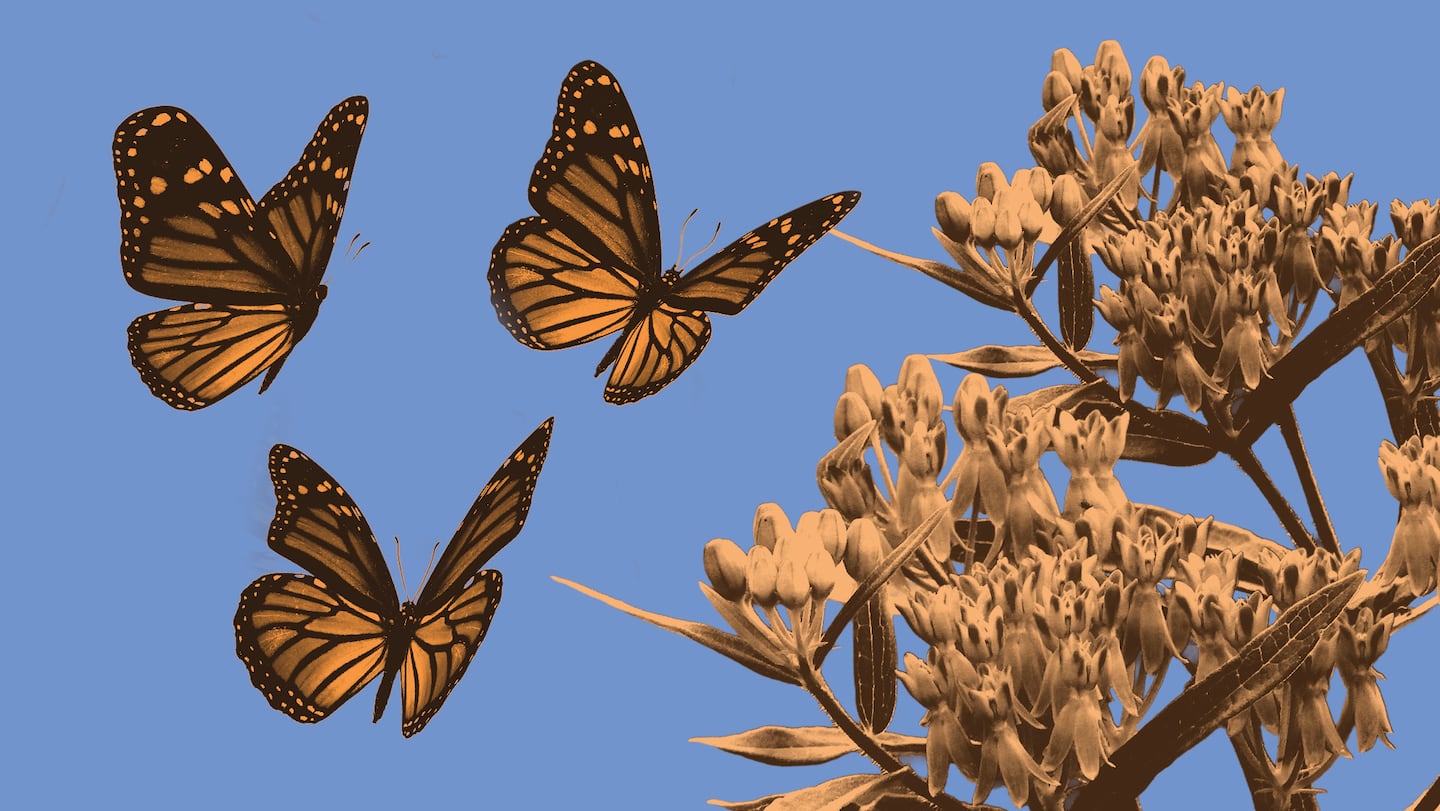
The monarch butterfly offers an example: Over millennia, its caterpillars evolved to tolerate the toxic chemical in milkweed leaves, which other insects avoid. The caterpillar thus faces less competition for its main food source — but to reproduce, the monarch is entirely dependent on this single plant species. In fact, the loss of milkweed on modern farms is believed to have contributed to the steep decline in the butterfly’s populations.
Many of the “weeds” we try to eradicate in pursuit of the perfect lawn are the same plants our embattled insects need to live. And while a few airborne attackers such as hornets and mosquitoes give the rest a bad rap, insects are the very foundation of our natural ecosystem. Many of our crops depend on insects, but it’s not just our food at stake when pollinators vanish: chickadees, for example, rely almost exclusively on the soft protein of caterpillars to feed their young, Tallamy said in a presentation to NH Audubon. Without a nearby caterpillar buffet, chickadees and other birds struggle to raise new generations.
Profit motives also shape our yards for the worse: While native plants grow wild, for free, a way to make money in horticulture is typically to patent a “cultivar” (or cultivated variety), says Kristen Nicholson, co-owner of Blue Stem Natives nursery in Norwell. But beneficial insects don’t always recognize the unfamiliar blooms or foliage of cultivars as friendly native plants.
Even plant names play a role. “A lot of [native plants] have common names that have ‘weed’ in them, and we’re kind of conditioned to think of that as bad,” Nicholson says. Yet milkweed, for example, is quite beautiful — including in winter, with its seed pods split open — and comes in a few native varieties, including the brilliantly orange butterfly milkweed (Asclepias tuberosa).
Just don’t confuse it with butterfly bush, a shrub native to Asia that attracts pollinators but whose nectar is like junk food for migrating insects. Katie Banks Hone, who runs a native plant nursery in Topsfield, dubs it “yard Skittles;” she suggests native meadowsweet (Spiraea alba) as an alternative. “It gets about the same height, has a stunning, similar shaped flower — it’s gorgeous,” she says.
Even a pot of aster on a balcony helps, but for those with more space, converting some lawn into native habitat is a rewarding, impactful hobby — it just takes patience or money (or both).
For example, the best natural bird feeders are oak trees, Tallamy says — born from a forgotten acorn, an oak will support hundreds of native caterpillar species — but they take many years to mature. Planting seeds is similarly cheap and simple, but many native flowers don’t bloom in their first year; nursery-grown plants can give you a headstart, for a price. And it’s frustratingly difficult to find native plants or seeds at big-box garden centers, so you’ll want to seek out native nurseries, such as Garden In the Woods in Framingham.
I’m prone to going overboard, though. Last spring, I pulled up a patch of tenacious, invasive English Ivy in our backyard, and dug up a portion of our front lawn — driven by dread as our nation careened toward, well, this — my back screaming in protest. It was all worth it, I promise. Watching baby shoots bloom into colorful blossoms, then seeing butterflies and bees gracefully pollen-surfing between them on a July morning is the kind of visceral, tangible fulfillment we all crave.
“There’s so much that feels very out of our control, and the simple act of gardening gives us that control back — even if it’s a small container garden on a patio where you can see butterflies come and rest on the petals,” Nicholson says. “Once you start actively managing your space, no matter what size it is, and you see the life that it brings, it’s really quite life-changing.”
It sure beats watching grass grow.
Jon Gorey is a frequent contributor to the Globe Magazine. Send comments to magazine@globe.com.
Comments are closed.