
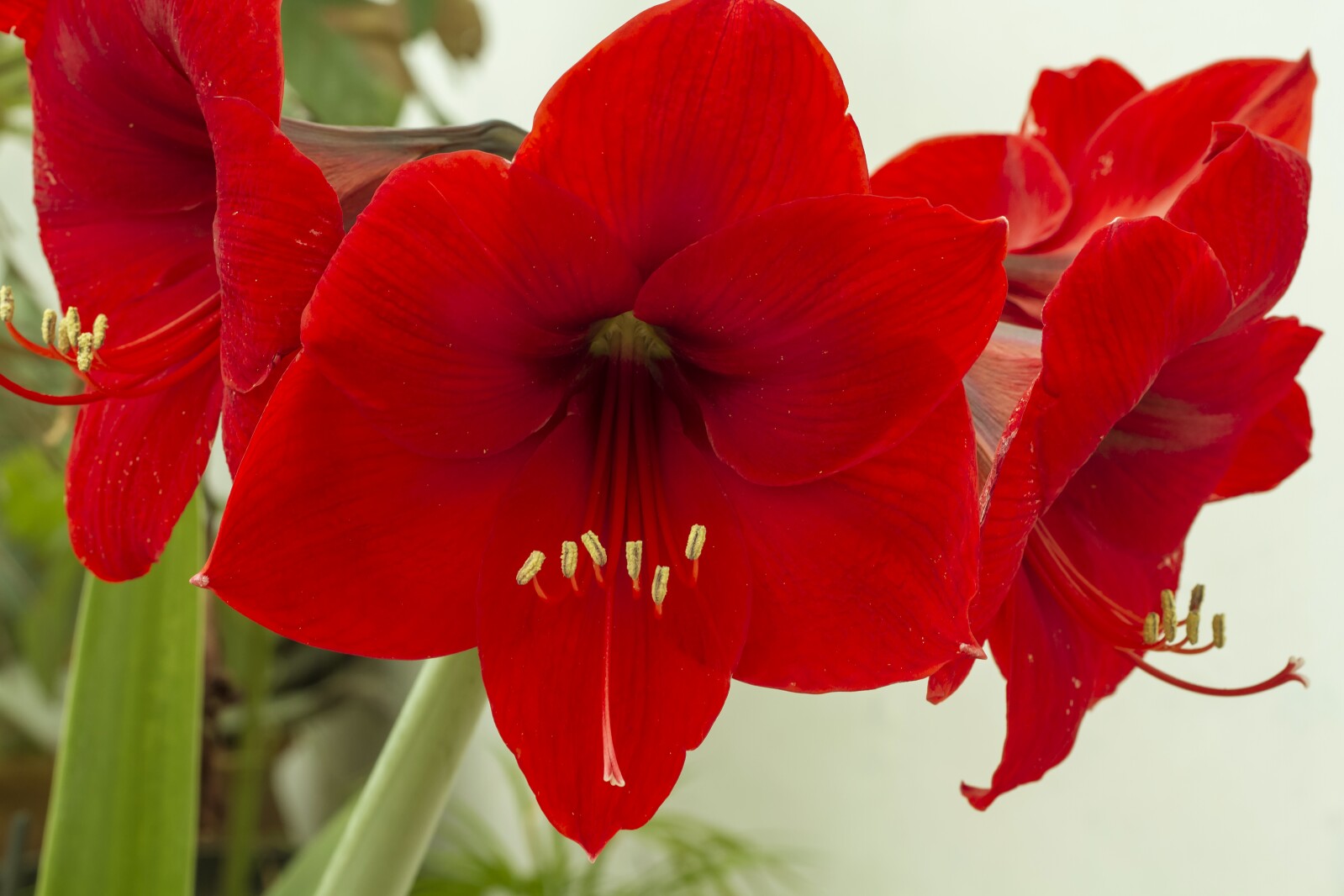
Q: Some of the amaryllis I have been keeping on a sunny basement window sill have taken it into their heads to send up flower stems now. I moved them upstairs, and one has a stem that is 40 inches long! Why would an amaryllis do this?

A: Congratulations — you have earned some serious bragging rights! And kudos for keeping those beautiful bulbs for years of continuous blooming enjoyment.
Your bulbs are thriving and doing well because you have provided, whether intentional or by chance, the perfect conditions for them to bloom again another season.
In their natural environment, amaryllis reach mature heights of 18 to 36 inches. They grow well in zones 8 to 10 and will not survive in temperatures below 100 degrees Fahrenheit. They are spring-blooming and will produce a new flower from each bulb. Mature bulbs will multiply in similar fashion to tulips and crocus, with each new division producing its own flower stem. Depending upon the species, amaryllis grow well in full sun to part shade (six or more hours of sun per day), and like moist but well-drained soils.
The height of your plant in question may be attributed to its variety. There are several hybrid species of amaryllis (“exhibition bulbs”) that are cultivated specifically for the holiday gift-giving season. If you have by chance retained the original packaging, look for the names Giant Amadeus, Red Lion, or Royal Velvet. These are varieties are known to reach heights up to four feet.
To ensure the health of the bulb and blooms next year, gradually introduce your plants to a sunny location outdoors when nighttime temperatures are consistently 50 degrees or warmer. When they are done blooming, cut the flower stem to 1 inch above the top of the bulb, but do not remove the leaves, as they are essential for providing bulbs with the nutrients needed for overwintering and producing another round of flowers next spring.
Amaryllis enjoy potash fertilizers, typically used for tomatoes, throughout the summer. Discontinue fertilizers in September and bring the bulbs indoors after the first frost. Bulbs may be left in their pots, but be sure to remove the dead leaves before returning them to their basement window location. Once they have returned to their dormant phase, water infrequently — about once every 4 to 6 weeks until they begin showing new growth early next spring.
Amaryllis do not like to have their roots disturbed, so repotting can inhibit flowering the next season. If this occurs, treat the bulbs as you would if they were flowering and wait for the next growing season to enjoy another round of blooms. Ideally, one would not repot their amaryllis until four to five years after its original bloom.
Comments are closed.