
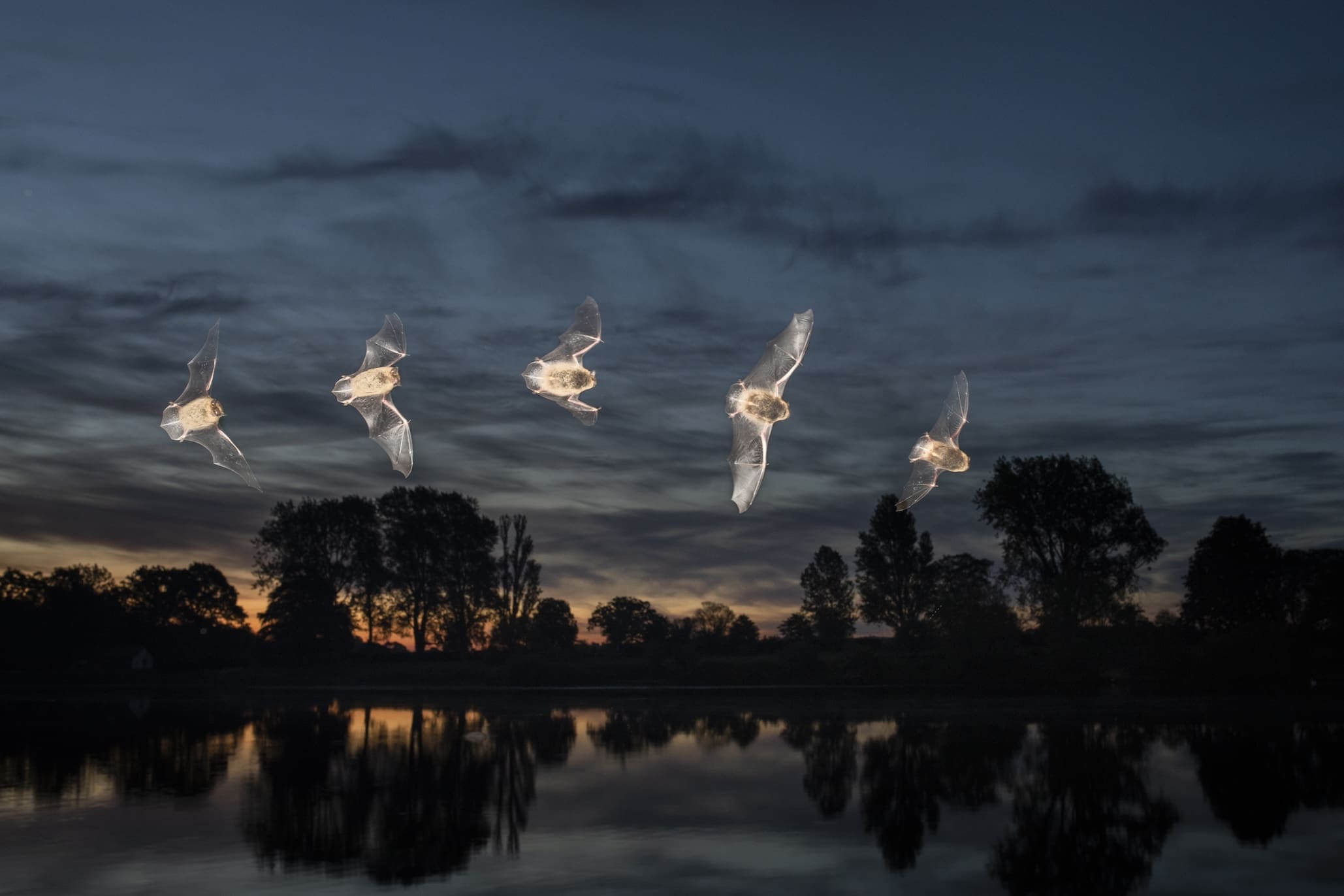
At the 2026 RHS Chelsea Flower Show, a new show garden will turn attention to one of Britain’s most overlooked yet ecologically vital night-time systems: bats, and the habitats that quietly sustain them.
Designed by garden designer Melanie Hick, built by Phil Sutton Landscapes, and funded through Project Giving Back, the Bat Conservation Nocturnal Garden aims to act as a working demonstration of how domestic green spaces influence nocturnal biodiversity.
Hick, who trained in horticulture at Capel Manor College, frames bats not as peripheral wildlife but as ecological barometers. “Bats are an indicator species,” she said. “If they’re present, it usually means the wider ecosystem is functioning.”
Biologically, bats are an outlier in the mammal world. They are the only true flying mammals and among the most diverse groups globally, with more than 1,500 species described and new ones still being identified. They account for roughly 20% of all mammal species worldwide and more than a quarter of native mammals in the UK. Far from being blind, they can see, but rely primarily on echolocation, emitting sound waves and reading the returning echoes to build a sonic map of their surroundings. Some species also produce complex vocalisations, including mating “songs”. Bats reproduce slowly, typically producing a single pup per year, and can live for up to 40 years.
The Bat Conservation Trust (BCT) points to a combination of pressures driving long-term declines in UK bat populations, including habitat loss from hedgerow removal and development that fragments commuting routes, rising light pollution that disrupts feeding and roosting behaviour, and steep declines in insect populations linked to pesticide use and land management practices. Additional pressures include domestic predation from cats and mortality risks from infrastructure such as poorly sited wind turbines.
A garden that thinks bat
A spokesperson for the BCT said that the Nocturnal garden is intended to challenge assumptions about what domestic landscapes can do after dark. “This garden is about thinking with bats,” they said, “recognising that the choices we make in our own gardens, from planting to lighting, shape the world after dark. When we design spaces that support insects, embrace natural planting and respect dark skies, we create places where bats and people can
thrive together. Chelsea gives us a powerful platform to show that supporting bats isn’t complicated or exclusive, it’s something anyone can do, and it brings beauty, biodiversity and connection back into our lives.”
The garden itself is structured around the ecological requirements of Britain’s 18 bat species, with a design strategy that prioritises insect abundance, dark corridors and continuous seasonal flowering from spring through autumn. Its geometry references the sweep of a bat’s wing, while a central dark water feature is intended to support insect life cycles and provide drinking access for bats in flight.
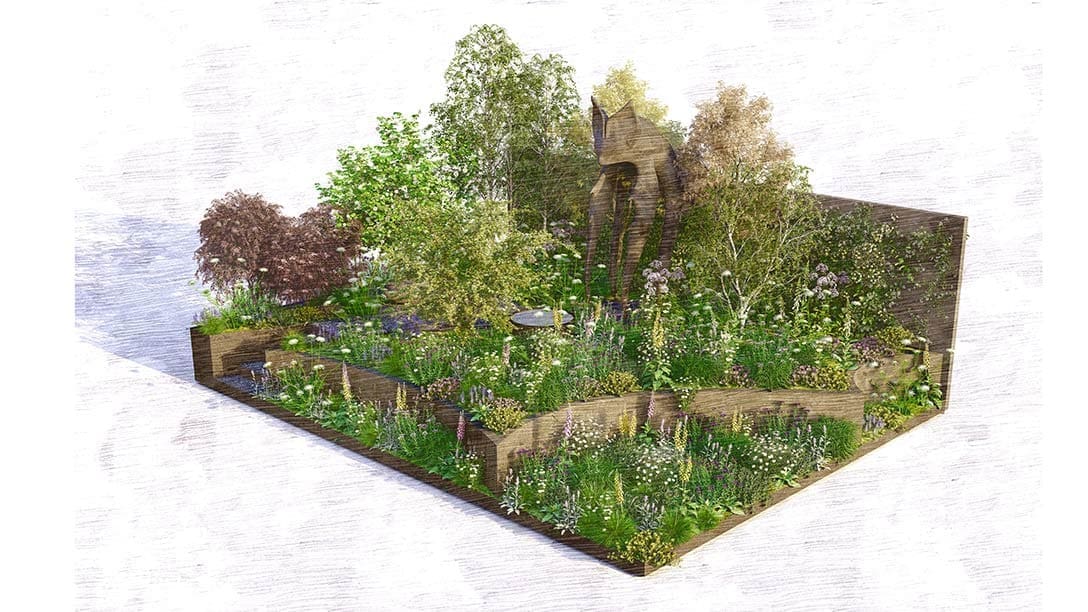
Planting is designed around maximising insect productivity. Native hedgerow species such as hawthorn and elder sit alongside long-flowering perennials and night-scented plants that support moths and other nocturnal insects. The scheme is layered from ground cover to canopy, increasing structural complexity and extending food and habitat availability across multiple ecological niches.
The palette is dark and atmospheric, broken by lighter blooms and a mix of native species, once dismissed as weeds alongside familiar British perennials. At the front sits Tacca chantrieri, the bat flower, typically grown as a houseplant in the UK and used here as a visual cue linking planting to bats. Structural anchors include Acer platanoides ‘Princeton Gold’, Crataegus monogyna and Sambucus nigra, all managed in form to sustain the insect populations bats depend on.
Colour and scent are tuned for low light, with pale, reflective flowers and strongly fragrant evening species such as evening primrose and Matthiola longipetala, chosen to attract night-flying insects rather than human attention. Planting is supplied by Deepdale Trees, Barcham Trees, Kelways Plants and Beth Chatto Nurseries.
A central feature of the Bat Conservation Trust’s Nocturnal Garden at the 2026 RHS Chelsea Flower Show is Black Amber, a large-scale bat sculpture by UK artist Tach Pollard. Carved from reclaimed fallen British cedar, the outdoor piece stands approximately 10 feet high and is designed with over 6 feet of clearance beneath its body. Representing a maternal bat, the sculpture is intended as a symbol of biodiversity and care within the garden.
For the BCT, the Chelsea garden sits between exhibition and warning. While bat populations remain under pressure, conservationists argue the most immediate gains lie not in large-scale intervention but in everyday changes to how gardens and green spaces are designed and managed.
The Trust adds that bat-friendly design is ultimately a proxy for wider ecological health. “A bat garden is a happy garden,” the organisation said. “When bats are thriving, it means your garden is rich in insects, full of life and working with nature. Designing with bats in mind encourages natural planting, darker skies and healthier ecosystems and that doesn’t just benefit wildlife – it improves our own wellbeing too. A thriving green space reduces stress, connects us to the seasons and brings a sense of calm and joy. Through our Chelsea garden, we want to show that thinking with bats helps create places where both wildlife and people can flourish side by side.”
After the show, the garden will be relocated to Clydach Community Gardens in Swansea, where it will be maintained as a public ecological space. The site is a community-managed green space, supported by local volunteers and linked to wider conservation work in the region, including projects under the Welsh green recovery initiative Natur am Byth.
Comments are closed.