
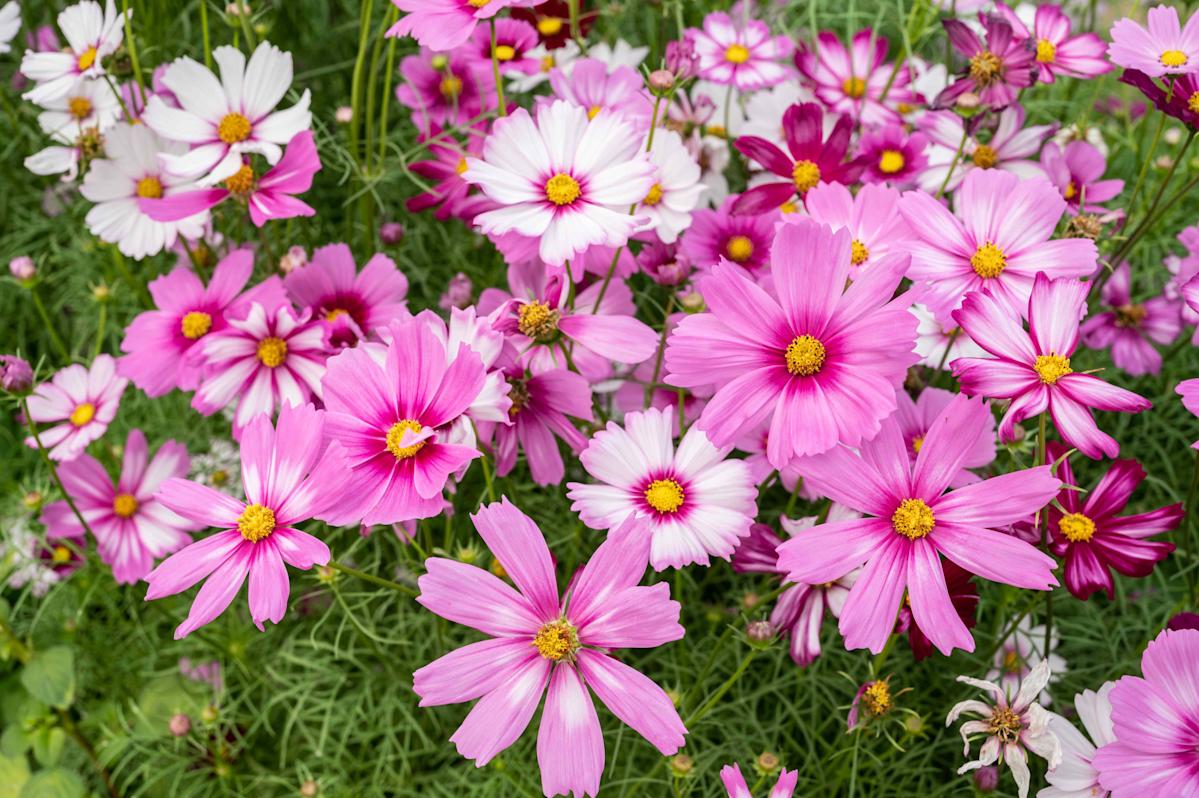
Annuals have a short life span, so there’s no time to lose if you want to make the most of sun-loving blooms this season. Whether you opt for a monochromatic color scheme or you prefer a flower garden with a rainbow of colors, fast-growing annuals will help it fill in quickly. Sunny days, consistent watering, and regular deadheading will keep your flower beds in bloom from spring through fall. Fill your garden with these fast-growing annuals that thrive in the sun.
01 of 08
Larkspur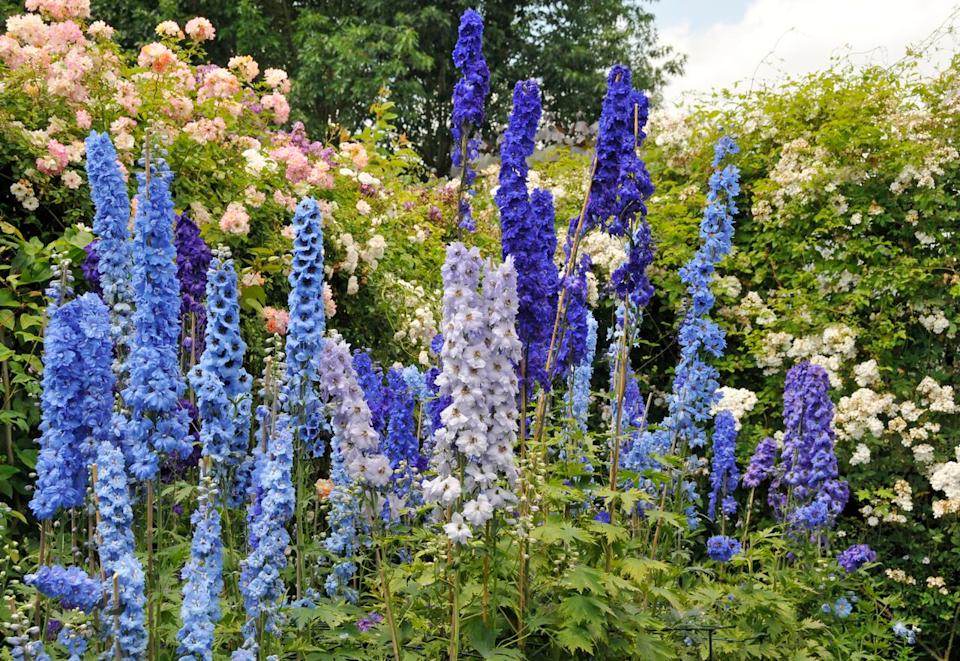
Credit: Getty Images
Botanical Name: Consolida ajacis
Soil Type: Moist, well-draining
Soil pH: Slightly acidic to slightly alkaline (6.0-7.5)
Larkspur can mature at 1 to 4 feet tall, so plant it behind mounding plants to add layers to your flower beds. Because of their height, you’ll want to protect them from wind. Make sure they get a full day of sun and well-draining soil for optimal blooms. Upright spikes in pink, purple, red, blue, and white add color to cottage gardens and attract butterflies and hummingbirds.
Advertisement
Advertisement
02 of 08
Cosmos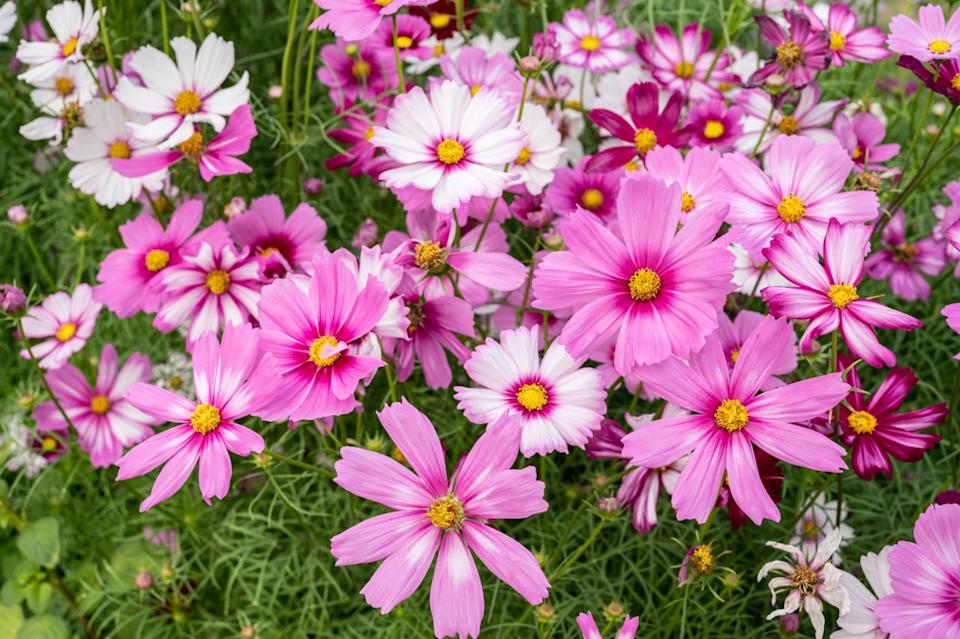
Credit: Getty Images
Botanical Name: Cosmos bipinnatus
Soil Type: Well-drained, sandy, loamy
Soil pH: Alkaline to neutral (6.0-8.0)
Cosmos grow very quickly, often reaching 3 to 6 feet and requiring staking. Dwarf varieties like ‘Ladybird Dwarf’ grow to a more manageable 12 to 24 inches. While cosmos are annuals, they self-seed so more cosmos may pop up next year. Established cosmos plants don’t like too much water or fertilizer, and deadheading will keep the pink, daisy-like blooms coming until the first frost. Space them 12 to 18 inches apart.
03 of 08
Summer Snapdragon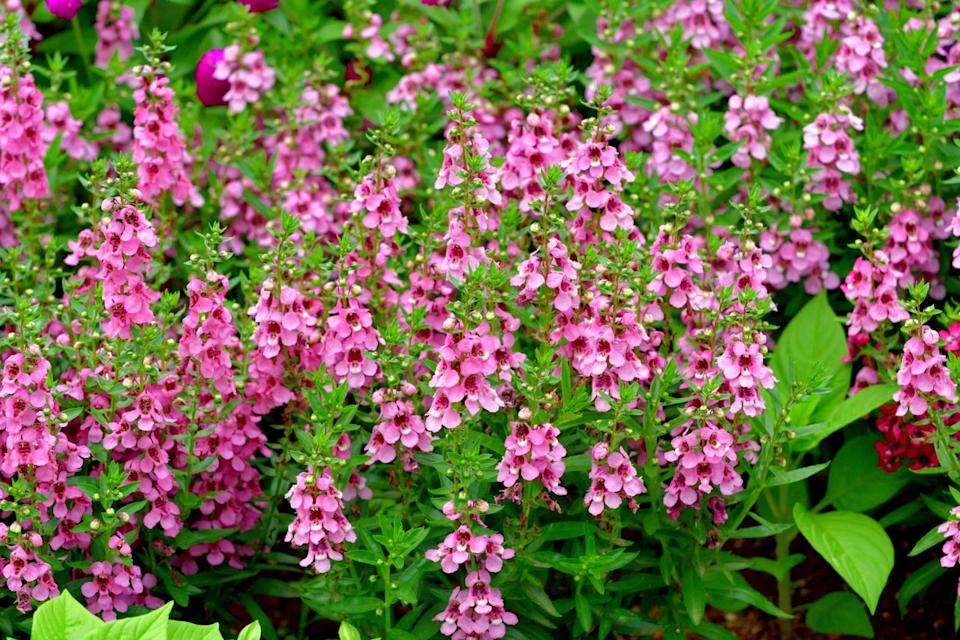
Credit: Getty Images
Botanical Name: Angelonia angustifolia
Sun Exposure: Full, partial
Soil Type: Moist, well-drained
While summer snapdragons can tolerate some shade, you’ll get better blooms if you plant them in full sun. Tall spikes add some height to the garden, and blooms come in a range of colors, from bold and bright blue and purple to soft pink, white, and rose. Traditional snapdragon plants may stop blooming in the summer, but flowers will return in the fall before dying off in early winter. Summer snapdragons love the sun and heat, and can tolerate droughts. They’ll attract bumblebees and hummingbirds when in bloom, and they’re deer resistant.
Advertisement
Advertisement
04 of 08
Zinnia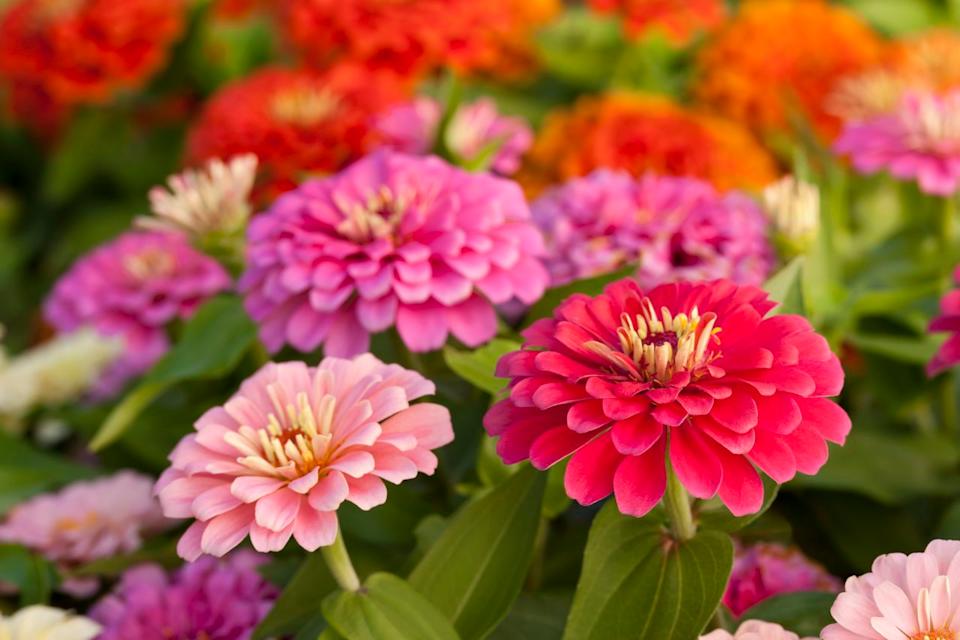
Credit: glennimage/Getty Images
Advertisement
Advertisement
Botanical Name: Zinnia elegans
Soil pH: Acidic to alkaline (5.5-7.5)
Zinnias bloom about six to eight weeks after seeds are sown, and they will continue to bloom from summer until the first hard frost. Full sun and warm temperatures will speed up their growth, so don’t plant them until after the threat of frost has passed. Plant them next to companion plants like low-growing vincas, bright salvia, or near fading snapdragons to keep the color going from season to season.
05 of 08
Pentas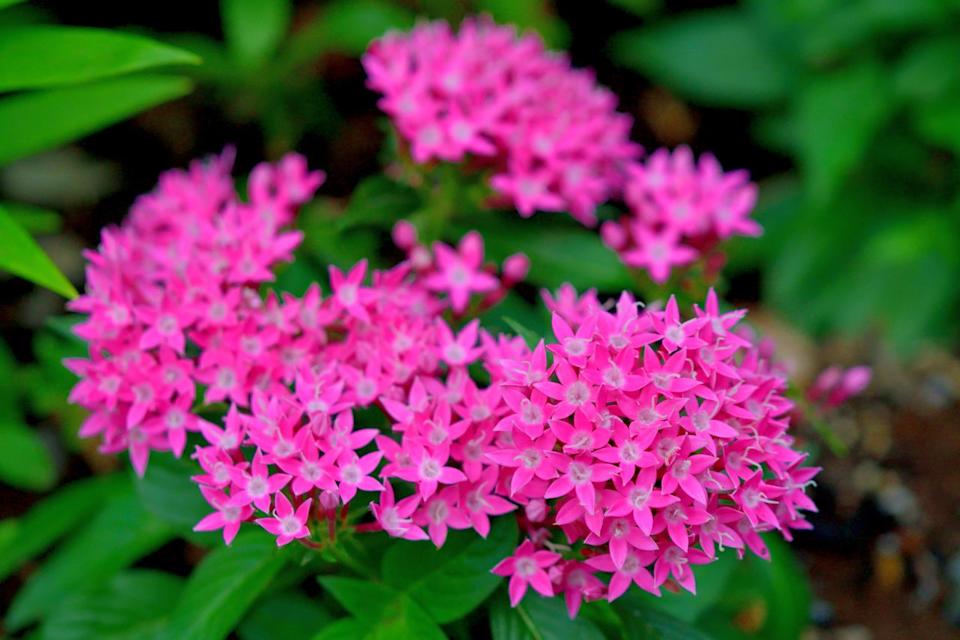
Credit: Getty Images
Botanical Name: Pentas lanceolata
Sun Exposure: Full, partial
Soil Type: Moist, well-drained
Soil pH: Slightly acidic to neutral (6.0-7.0)
These fast-growing, heat-loving plants give the garden continuous color from summer through fall. Clusters of small, star-shaped flowers in shades of pink, red, purple, lavender, and white can hold up to heat, drought, and humidity, and they attract pollinators to the yard. Pentas is a perennial in USDA Planting Zones 10-11 and is grown as an annual in zone 9 and cooler. They don’t survive freezing temperatures. While pentas plants grow best in full sun, they can handle some shade, though growth may be leggy.
06 of 08
Marigold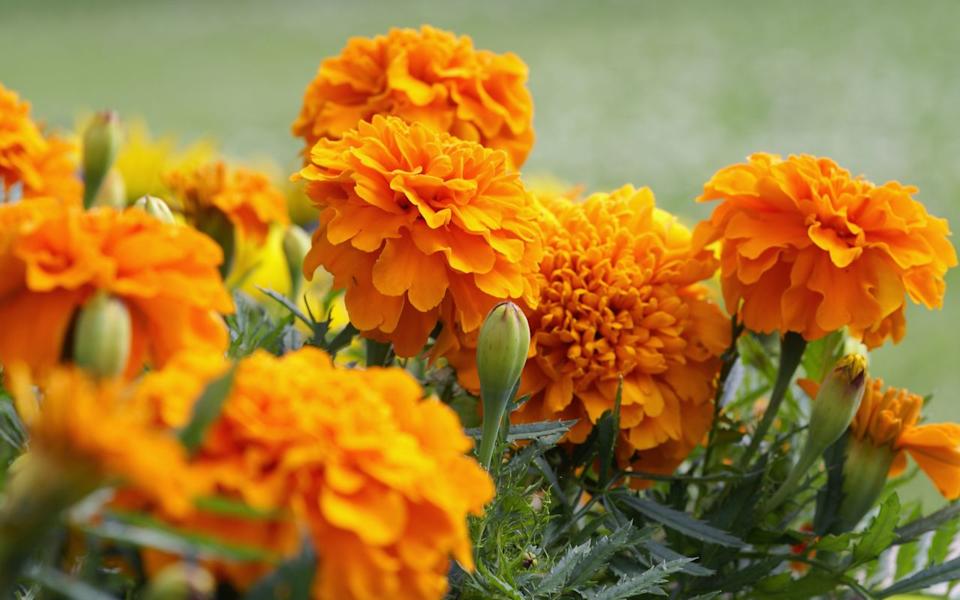
Credit: schnuddel/Getty Images
Botanical Name: Tagetes spp.
Soil pH: Acidic to neutral (6.0-7.0)
Advertisement
Advertisement
Marigold seeds germinate within a week and can bloom in as little as eight weeks. Get a jump on the season by starting seeds indoors four to six weeks before the last frost of the season. The golden blooms will brighten any garden space and marigolds are a popular choice for naturally repelling aphids and whiteflies. Let the soil dry out between weekly waterings, and deadhead spent blooms to encourage fuller growth.
07 of 08
Petunia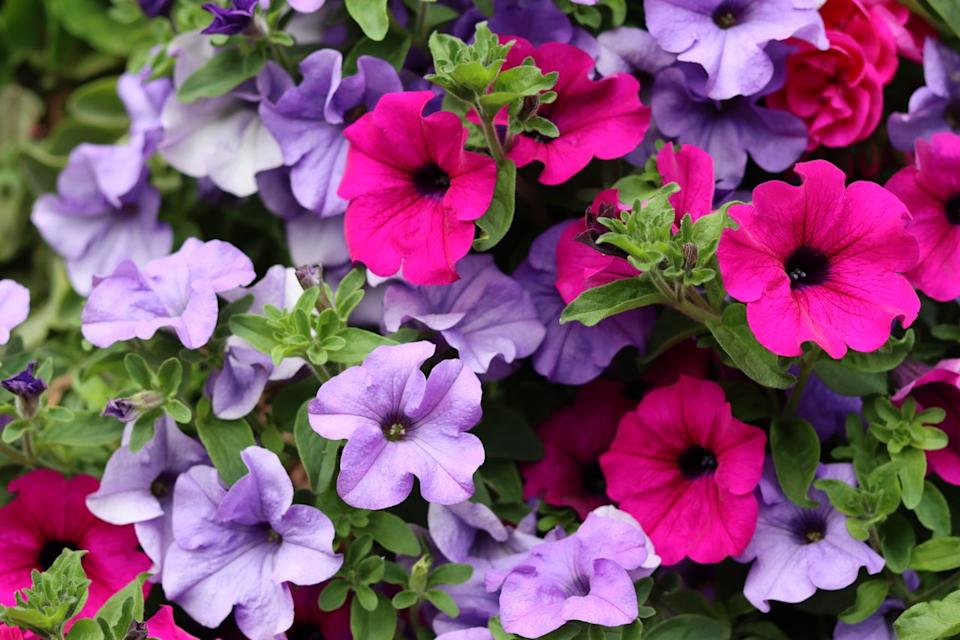
Credit: Getty Images
Botanical Name: Petunia x hybrida
Soil Type: Moist, well-drained
Soil pH: Slightly acidic to neutral (5.507.0)
Give petunias full sun, and you’ll have a full flower bed in no time. Petunias mature in six weeks, spreading 3 to 4 feet with trumpet-shaped flowers. Expect blooms until the first frost, unless you live in zones 10-11 where petunias can be grown as perennials year-round. Regularly deadhead spent blooms for flowers all summer long.
08 of 08
Million Bells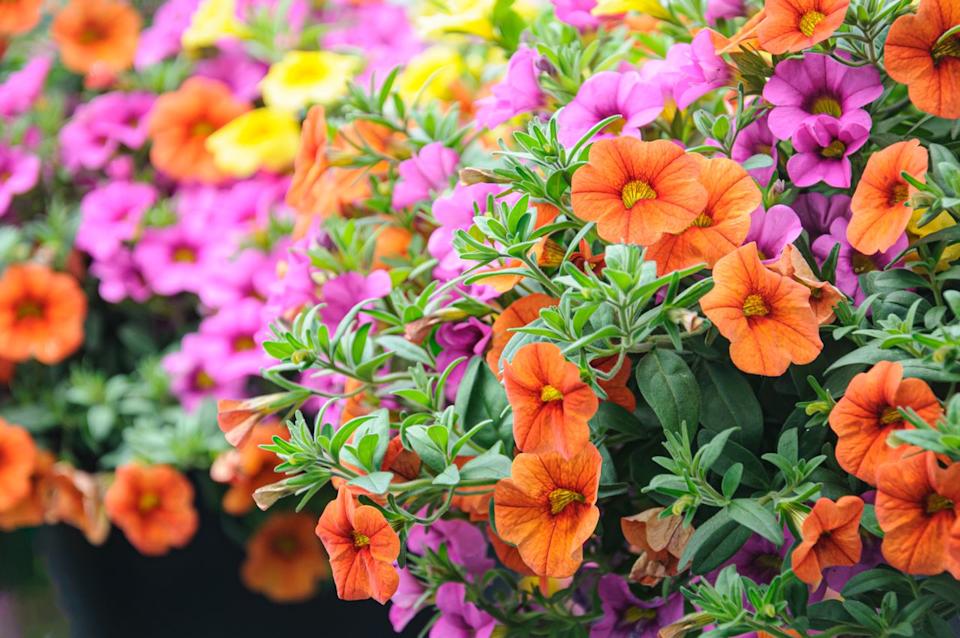
Credit: Getty Images
Advertisement
Advertisement
Botanical Name: Calibrachoa x hybrida
Sun Exposure: Full, partial
Soil Type: Moist, well-drained, loam
Soil pH: Acidic (5.0-6.5)
Million bells are tender perennials that are often grown as annuals. Plant them as borders or in your flower beds for continuous blooms from summer until the first frost. Since this plant grows quickly, you can also grow it as a ground cover to fill in sparse areas, in hanging baskets, or in containers. Hummingbirds, bees, and butterflies visit the small funnel-shaped flowers in shades of blue, purple, burgundy, orange, pink, yellow, white.
Read the original article on Southern Living
Comments are closed.