
 4 min read
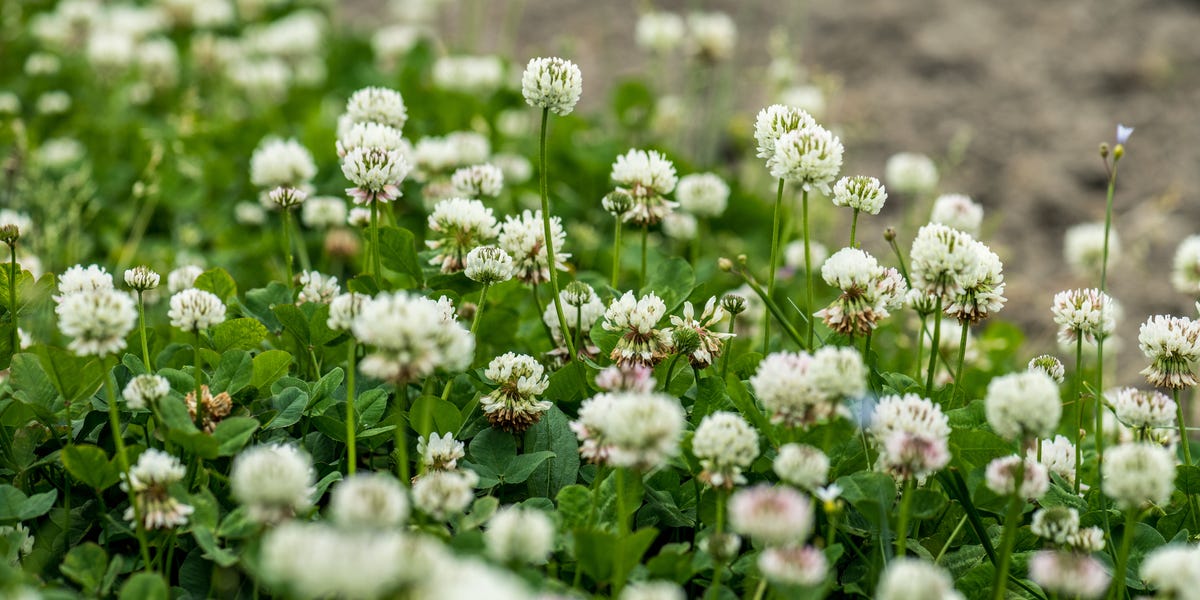
Are tiny white buds blemishing your lawn? While non-threatening, seeing a large patch of white clover on your lawn can be somewhat unsightly. The round flowers typically bloom from May through October, covering lawns through the late spring to the early fall. Most folks ignore them altogether, but for the lawn perfectionist, beating these blooms can be quite the feat.
White clover (Trifolium repens) is a low-growing plant with creeping stems, which allow the plant to conquer grass paths and flower beds quickly. Sometimes tinged pink, the plant is also characterized by three-leaflets bearing white V-markings that form a triangle when viewed from above. Getting rid of clover is not a matter of lawn safety, but rather a question of aesthetics.
“It’s mainly about tolerance. Can you stand it?” says Clint Waltz, Ph.D., turfgrass specialist with the University of Georgia. “Like dandelions, clover can take over a lawn quickly if left unchecked. Homeowners often get annoyed by the patchy appearance clover gives a lawn because it has a different texture, color, and growth rate from turfgrasses.”
Some have embraced the white clover as a sustainable lawn filler, but many still classify it as a weed, and like all weeds, don’t want it anywhere near their lawns. In fact, clover lawns have their own set of pros and cons. “If you get weeds in a clover lawn, there’s no selective product you can use that won’t kill the clover, too,” Waltz points out.
Clover also has a hard time withstanding foot traffic, so if you have kids or pets, it’s unlikely that the buds will flourish in your lawn. On the plus side, it’s drought-tolerant and attracts pollinators, such as honeybees, butterflies, and beetles. Which is good—but maybe not so great if you like to walk barefoot.
Here’s everything you need to know about how to get rid of white clover from your lawn.
How Do I Get Rid of Clover?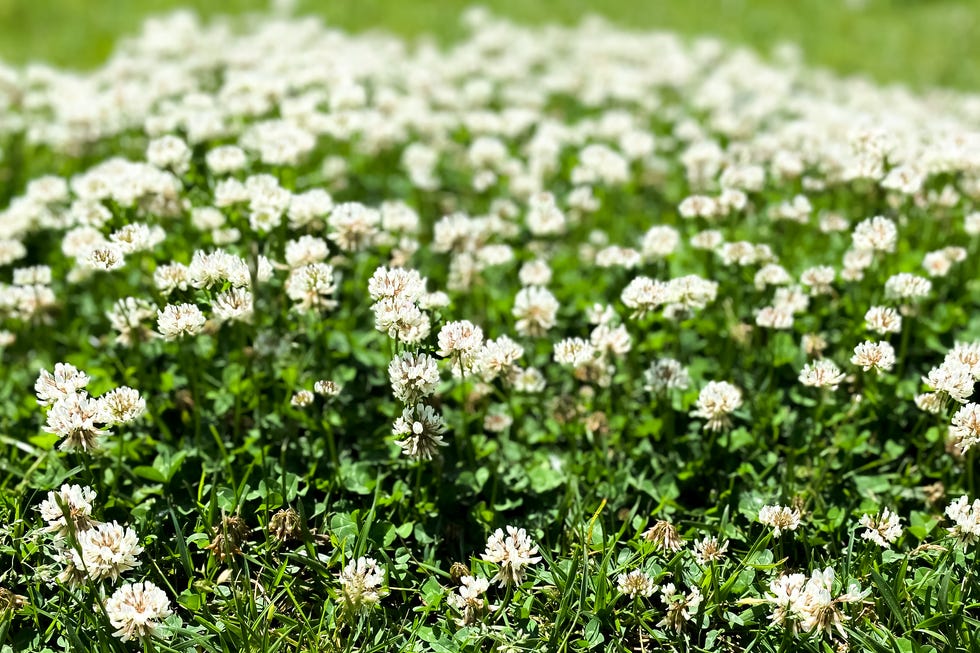
Catherine McQueen//Getty Images
Clover is a tough plant that actually used to be part of lawn seed mixes. It’s also a legume, so it’s a “nitrogen-fixer,” meaning it can convert oxygen in the air into a form the plant can use as fertilizer, says Waltz. This superpower allows it to grow well even in poor or unfertilized soils.
That’s a problem if tenacious clover isn’t what you want on your lawn. The usual pre-emergent products, which you apply in spring to prevent germination of other weeds, such as crabgrass, aren’t useful on clover. You can dig up small clover plants by hand, but if it’s already taken off, you’ll need to treat it with an herbicide, says Waltz.
To get rid of clover, treat it with a three-way product that contains 2-4, D, dicamba, and MCPP. Some products also have additional active ingredients, such as triclopyr. Read the label to ensure the product is safe for your grass type, because not all products are safe to use on all kinds of grass. If you don’t know what type of grass you have, your local university co-op extension service (find yours here) can help you ID it so you don’t use the wrong product and damage your lawn.
Once you’ve picked the right product, follow the label instructions on the package. And stay vigilant; you’ll probably need to make repeat applications and treat for clover every year to keep it in check.
Related StoryCan I Prevent Clover from Taking Over My Lawn?
Making sure your lawn is thick and healthy is the best way to prevent any weeds from growing rampantly. That means fertilizing so that grass gets what it requires; a lawn needs at least 16 nutrients for normal growth.
Before fertilizing, do a soil test every few years so you know exactly what your lawn needs (or doesn’t), says Waltz. Otherwise, you’re just wasting money and product. Your local co-op extension service can perform soil tests for a small fee (often about $20).
Finally, mow at the correct height for the species of grass you have. Otherwise, repeated scalping causes grass to become sparse, leaving room for weeds to take over. A higher mowing height also allows roots to grow deeper, which helps grass better handle environmental stresses such as heat and cold, Waltz points out.
What to Use to Kill Clover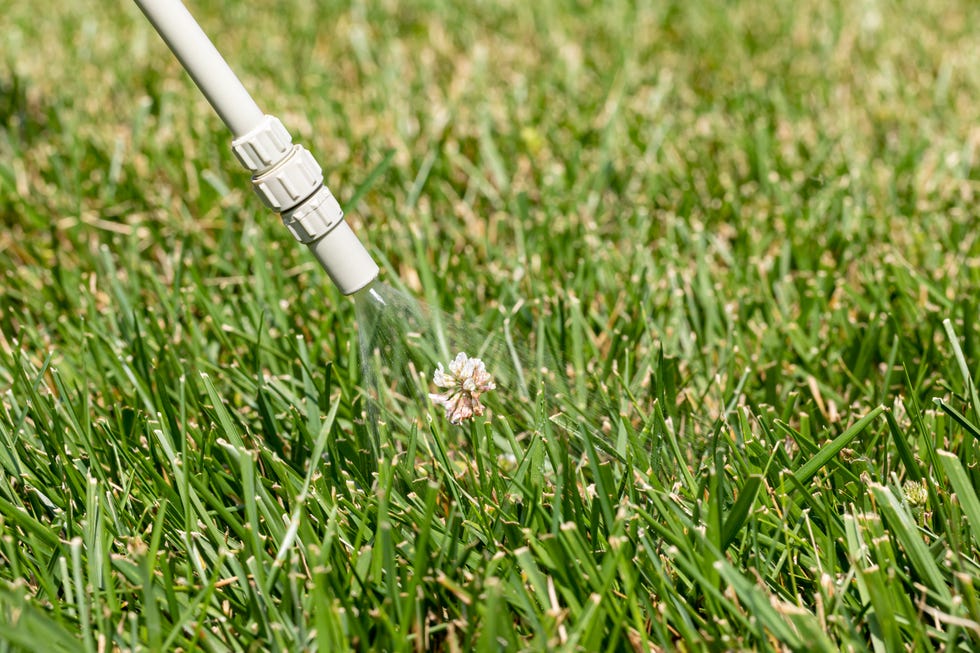
JJ Gouin//Getty Images
When you’re building your herbicide arsenal, there are a few ingredients you should keep an eye out for if clover is on your hit list. According to Penn State, dicamba, clopyralid, fluroxypyr, and quinclorac are top-notch weed killers, primed to tackle their stubborn roots, but this isn’t a one-spray solution. Truly ridding your lawn (and life) of white clover will require some prep work. For the best results, you should take the initiative to treat your lawn in the fall, before the weeds have the opportunity to plan their next bloom.
Follow House Beautiful on Instagram and TikTok.
Comments are closed.