
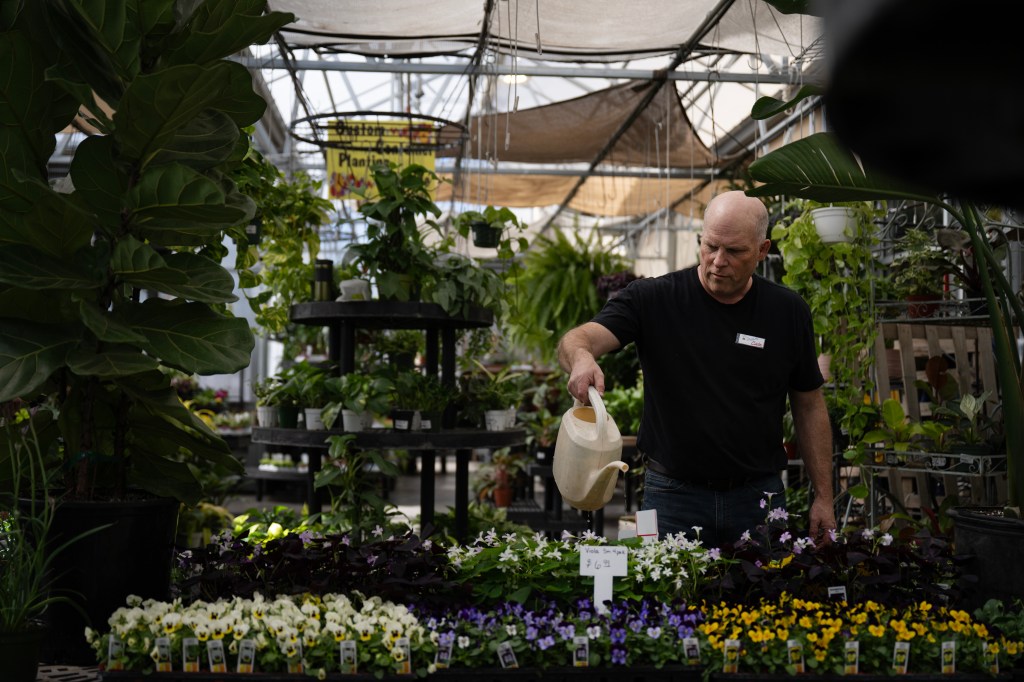
Independent garden centers are adjusting to slower growth after the pandemic plant boom, facing a reality of rising costs, real estate pressures, labor shortages and economic uncertainties.
More than five years after the 2020 shutdowns, garden centers and nurseries are navigating what the 2025-2026 State of the Industry Report from Garden Center magazine calls a “post-COVID hangover.”
Released in January, the data from the annual survey of owners, operators and managers found that Spring 2025 saw the second-smallest reported growth in spring sales over the past decade. For the first time, more independent garden centers reported no increase in working capital than those that did.
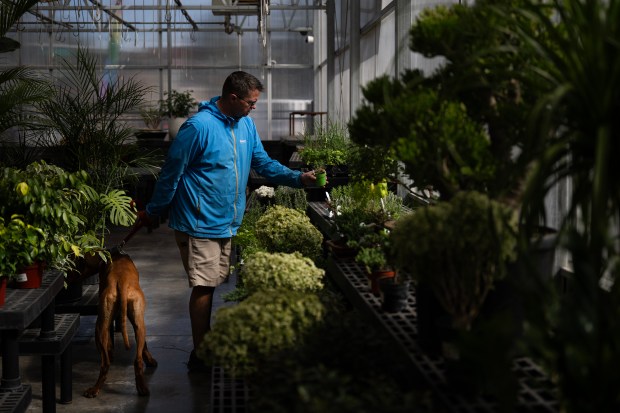 Brett Rutz looks for plants with his ten-month-old Rhodesian Ridgeback, Franky, at Country Fair Garden Center on Thursday, March 5, 2026, in Denver. (Photo by Timothy Hurst/The Denver Post)
Although most responding independent garden centers remain profitable, their profitability rate still falls just below the average for the past 10 years.
“It all points to an industry in need of some solid motivation,” wrote Patrick Alan Coleman, editor of Garden Center, Greenhouse Management and Produce Grower magazines, in the report.
Coleman said it’s not the time to panic, but rather an opportunity for the industry to reassess operations and make improvements in marketing, staffing, inventory management and infrastructure.
Independent garden centers have also faced growing competition from big-box retailers like Home Depot and Lowe’s, which have expanded their garden offerings.
In 2025, Home Depot was the top retailer for gardening supplies and plants, according to a 2026 Axiom Gardening Outlook Study, although its numbers dropped significantly from 2024.
Still, 30.3% of respondents said independent garden centers offer the highest quality plants, followed by Home Depot at 24.7%, Lowe’s at 12.8% and Walmart at 11.5%
Denver garden centers are adapting to those pressures while trying to preserve the personalized experience that sets them apart from national chains.
City Floral Garden Center is one example.
Serving the community since 1911, and one of the city’s oldest greenhouses, the center launched an online ordering platform last year through Shopify called Greenhouse.shop.
“We are trying to stay relevant in this convenience-driven society,” said Candace Wickstrom, who, alongside her husband Matthew, has owned City Floral Garden Center since 2007.
“A large part of our customers just love the experience of coming in and picking out their own plants, but younger consumers today, it’s more of a mix. Some people may want a better assortment than they can get at Home Depot, but maybe they don’t want to take an hour to come pick out their own plants. So, we are continuing to develop the offerings on that online platform.”
The pandemic plant boom
Wickstrom said the pandemic brought a surge in gardening as people spent more time at home during city-mandated lockdowns. Houseplants and rare plants saw a spike in popularity, generating billions of dollars in the United States, particularly due to social media trends and fueled by Gen Z and millennials.
Over time, she said, some interest has fallen off as people travel and return to other hobbies, though many of the new customers have stayed. She said consumers have increasingly leaned toward water-smart gardening and growing vegetables at home.
“The idea of producing your own ‘farmers market’ in your backyard really caught on during the pandemic and remains popular,” Wickstrom said.
“That’s an interesting topic for City Floral, because we’ve been growing our own vegetables for, you know, more than 30 years in our own facility.”
As a grower-retailer, City Floral produces much of its own inventory, including growing over 60 varieties of tomatoes and 70 varieties of peppers, Wickstrom said.
Data from Garden Center’s report found that 71% of respondents in their 2025 survey grow some of their own plant material, just below the all-time high of 72% in 2021.
Among respondents that grow more than half of their plants, 33% reported increasing volume, diversity, or both over the past two years. Customer demand is the main driver, followed by economic pressures, quality control and shipping costs.
In addition, annuals are the most commonly grown plants at independent garden centers at 62%. Perennials follow at 59%, while vegetables and herbs are grown by 53% of respondents, according to the Garden Center report.
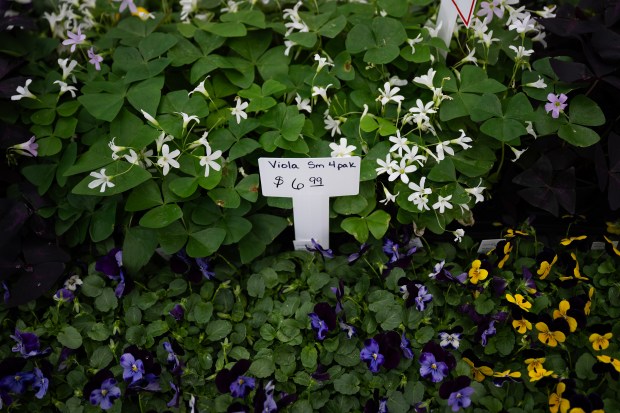 Trays of flowers, including these shamrock plants and violas, are displayed after being received earlier in the day at Country Fair Garden Center on Thursday, March 5, 2026, in Denver. (Photo by Timothy Hurst/The Denver Post)
Vegetables and herbs grew 6% from 2024 to 2025, and has seen a substantial increase in recent years as a result of rising grocery prices, driving customers to grow their own produce, Coleman wrote.
Indoors, foliage plants are grown by a quarter of centers, while 12% of respondents nurture flowering houseplants in their greenhouses.
Wickstrom said many consumers remain highly price‑driven, with some customers splitting their spending between box stores and locally owned retailers.
Wickstrom said the price gap between big-box stores and independent retailers has narrowed in recent years as labor, transportation, economic uncertainty and production costs have emerged across the industry.
“Bulb prices went up probably 15% this year with tariffs,” she said.
“Unfortunately, those costs do have to be passed on to the consumer. We do not, as an industry, make enough money that we can absorb those costs entirely.”
Seventy-five percent of garden centers who took the survey raised plant prices between 1% and 10% in 2025, roughly the same as the previous year, the report found. However, more respondents than previous years said they do not plan to raise prices in 2026, citing ongoing customer affordability concerns.
Real estate pressure is also reshaping Denver’s nursery industry. Wickstrom said that many long‑standing farm families have sold their land, reducing the number of local growers and tightening the plant supply chain.
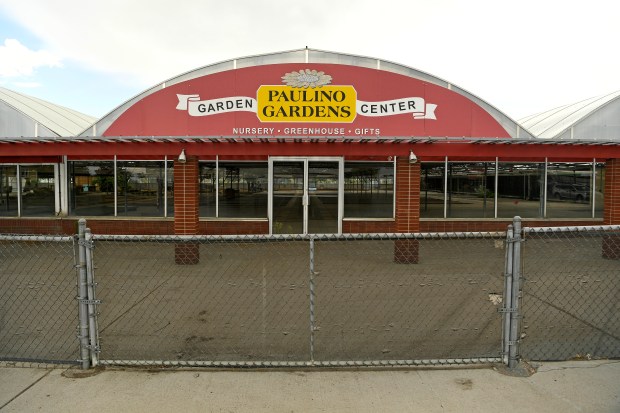 DENVER, CO – SEPTEMBER 4: Chain link fences keep people out of the now closed Paulino Gardens Nursery and Garden Center at 6300 North Broadway on September 4, 2019 in Denver, Colorado. Local gardening store Paulino’s and other nurseries in town have either closed or been forced to move because of the increase in property values. Instead of the normal condos or apartments, developers are using the land for industrial uses. (Photo by Helen H. Richardson/The Denver Post)
Paulino Gardens, which operated just north of Denver in Adams County for over 60 years, closed in 2019. That closure was followed by Groundcovers Greenhouse & Garden Center at 4301 E. Iliff Ave.
The city of Denver has since purchased the vacant land for $5.1 million, with plans to develop it into a park slated for completion in spring 2027.
Similarly, Welby Gardens, a Colorado-based growing operation founded in 1948, closed last year before the property was later purchased by Arvada-based Blooma Farms for $4.5 million.
Local and unique experiences
City Floral, at 1440 Kearney St., is the last sizable independent garden center in Denver proper that employs about 50 people year-round, Wickstrom said.
During peak season that number grows to roughly 110 employees, split among its Denver retail garden center, its landscaping division and a three‑acre growing facility in Golden.
As local centers close or relocate farther from the city, Wickstrom said she worries it will become difficult for residents to garden at all.
“Very few people are going to be willing to get in a car and drive 30 minutes plus to get to a garden center,” she said.
At the same time, some new owners are stepping into the industry.
Cade Scholl, alongside his wife Kara, became owners of Country Fair Garden Center in February 2025.
Scholl said they were inspired to buy the business at 7150 Leetsdale Dr. because they had always wanted to own their own company and were drawn to the welcoming nature of the gardening industry.
“For the most part, it is difficult for the small retailers like myself to match exactly what some of those big nationwide stores can do. There’s a few things that that we can match them on, but it’s difficult,” he said.
“What we provide, though, is a unique experience.”
Scholl said gardening can feel intimidating for beginners who may not know which plants work best for certain light conditions, soil types or watering schedules. But at independent retailers such as Country Fair, he said, customers can rely on experienced staff.
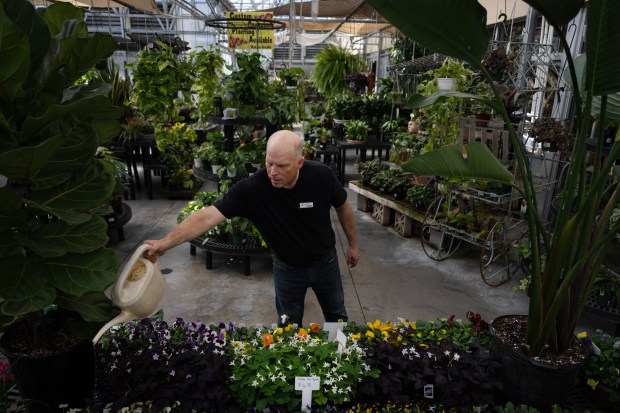 Country Fair Garden Center owner Cade Scholl, who owns the business with his wife Kara Scholl, waters trays of flowers that they received earlier in the morning on Thursday, March 5, 2026, in Denver. (Photo by Timothy Hurst/The Denver Post)
“If you come in, you’re going to see one of three or four people that is always in the store, and they’re going to be willing to help, and a lot of times they’ll even know your name,” he said.
“We even get times where people will come in and they will have bought a plant at one of those big box stores and they ask us for advice. We can usually get that plant back on track and nurse it back to health.”
Interest in growing food at home remains strong, Scholl said.
“This time of year, we’ve sold a lot of seeds, and I expect it will continue to sell seeds throughout the spring,” Scholl said.
Scholl said Country Fair works with small and local vendors to offer plants and products that customers might not find in big-box stores.
He also plans to rebuild classes and workshops at the garden center, which had faded under the previous owner, to strengthen the local gardening community through education.
Get more business news by signing up for our Economy Now newsletter.
Comments are closed.