
Breadcrumb Trail Links
OpinionColumn
The start of a garden could be predicted by the calendar. Today? It’s best to rely on soil temperatures.
Published May 04, 2026 • 3 minute read
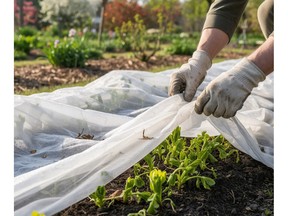 Photo by Anastasia /stock.adobe.comArticle content
A friend received two small sunflower seeds growing in coffee cups from her grandsons about a week ago and was thrilled.
Advertisement 2
This advertisement has not loaded yet, but your article continues below.
Article content
She is an avid gardener and has been chomping at the bit to start planting her garden for weeks now.
Article content
Recommended Videos
Article content
The day she received them, it went down to -3 C that night, so she placed them under her deck, thinking they would be protected from the cold. The next morning, she found them all droopy, so brought them in the house despite her husband’s allergies and gave them warm water, hoping to revive them.
Despite her efforts, both died. It is just too early. She has learned the hard way this year.
When planting seeds or seedlings outside, one can’t go by the date on the calendar anymore. Whereas the Victoria Day long weekend used to be the date for planting one’s garden, that has not been the case for many years. You might get away with some of the harder seeds surviving, such as peas, spinach, lettuce, etc., but that is about it for now.
The fact it is warm in the afternoon, and your fingers get itching to be in the dirt does not negate the fact the temperature drops to barely above freezing at night — and sometimes still below freezing.
Advertisement 3
This advertisement has not loaded yet, but your article continues below.
Article content
Over 35 years ago, on June 3 (I remember it well), a frost that night destroyed our complete garden. Nothing survived, everything collapsed into greyish green lumps. After the kids had left for school, I jumped in the car and headed to local nurseries to buy replacements before others started doing the same.
We were able to replace most of it, but not in the same quantities. Needless to say, we waited another week to replant
Read More
Farmgate: Count me alongside those opposed to the Alto high-speed passenger rail project

Farmgate: Having a line of communication is essential for rural residents
With our changing climate, one must plant by soil temperature. Early in the day, at about 8 or 9 a.m., put a thermometer into the ground at least two inches and read it. It is best to do this for at least three days in a row to account for weather fluctuations and cold rains.
If the temperature is consistently between 4 C (40 F) and 10 C (50 F), hardy seeds such as peas, lettuce, radish, onions, spinach, and kale can be sowed.
Advertisement 4
This advertisement has not loaded yet, but your article continues below.
Article content
Between 10 C (50 F) and 15 C (60 F), it is time for carrots, beets, turnip, chard, and more lettuce.
Finally come the tomatoes, peppers, melons and cucumbers at 15 C (60 F) to 21 C (70 F). It can be late in June at times to get it all in but with the soil at the right temperature, the plants take off and catch up quickly to struggling ones planted too early.
If you buy seedlings that have been growing in a greenhouse, remember to harden them off over a week or so, allowing them to acclimatize to outside weather and winds. We keep wood shingles for ours, particularly the cabbage and cauliflowers, placing them in the soil on the south or southwest side of the small plants. This provides them with shade from the hot son as well as from any cold winds.
Another thing I have seen done is clear garbage bags placed over the cages around tomatoes and peppers, held down with clothes pegs or bulldog paper clips. A word of warning, it can get really hot inside these mini greenhouses so check often and clip them up if necessary.
Happy gardening!
Article content
Share this article in your social network
Comments are closed.