
 2 min read
Moss has a way of quietly taking over patios and pathways, softening hard surfaces while creating a slippery, stubborn problem. The good news? Removing it doesn’t require harsh chemicals or complicated tools—just a focused approach that tackles both the moss itself and the conditions helping it thrive.
Below, experts share a simple, three-step method to clear moss in an eco-friendly and effective way, along with practical tips to help stop it from coming back.
Kill and Loosen the Moss
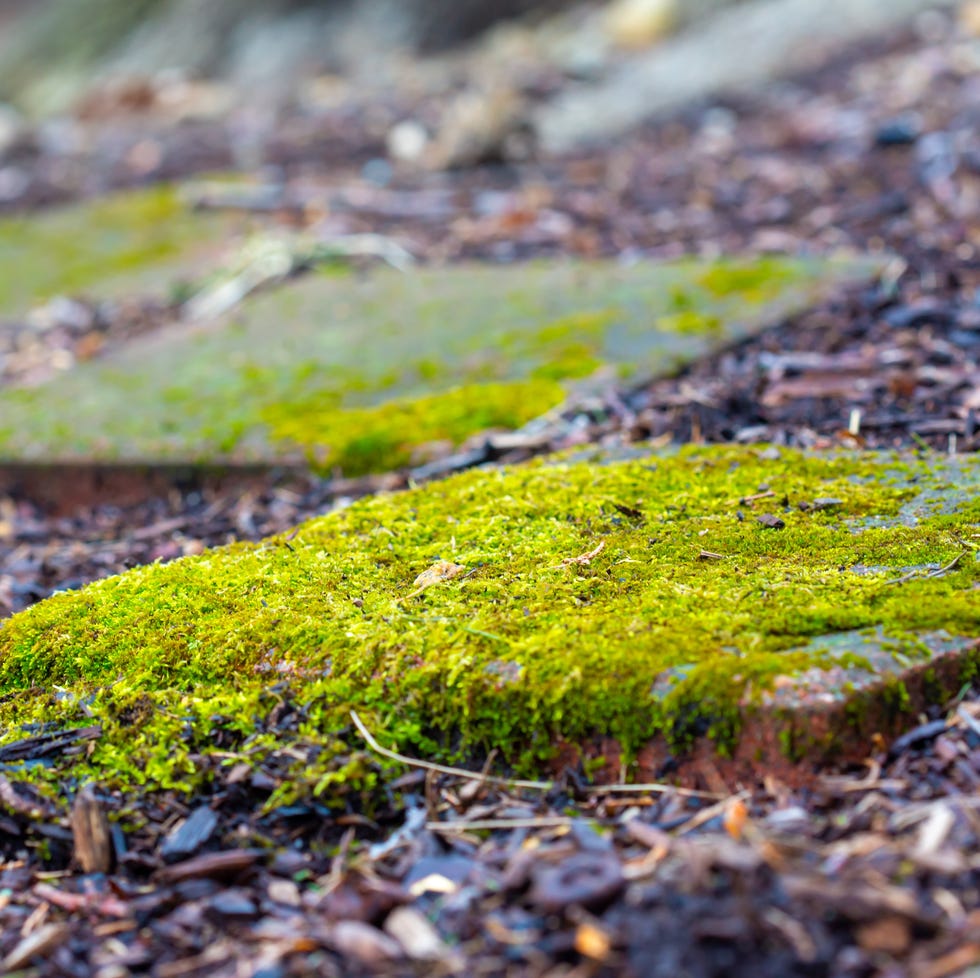
Before you can properly remove moss, you need to weaken it. There are two low-impact methods that work well for small to medium patches—and you likely already have them in your kitchen cupboards.
“Mix equal parts white vinegar and boiling water, then spray onto moss and leave for 15–30 minutes before scrubbing,” says Jon Saeed, garden enthusiast and cofounder of Lighting Legends. “Sprinkling baking soda directly onto the moss is also a great natural solution, as its alkaline properties help dry out and kill moss.”
If you do opt for vinegar, be sure to avoid greenery, as vinegar can damage leaves and doesn’t distinguish between weeds and desirable plants.
Both vinegar and baking soda will help break down moss without introducing harsh chemicals into your garden. Once the moss starts to brown and lift, it’s ready for the next step.

KatKami//Getty Images
Scrub and Clear the Surface
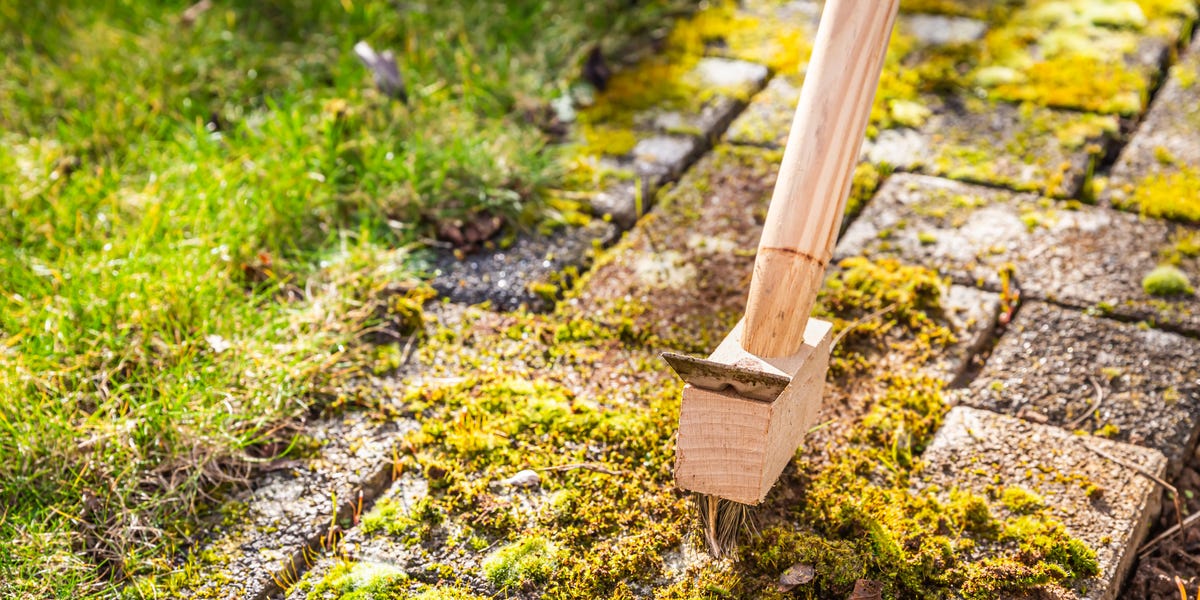
With the moss worn out, physical removal is the next step. So, be sure to use an outdoor brush or scraper from your shed.
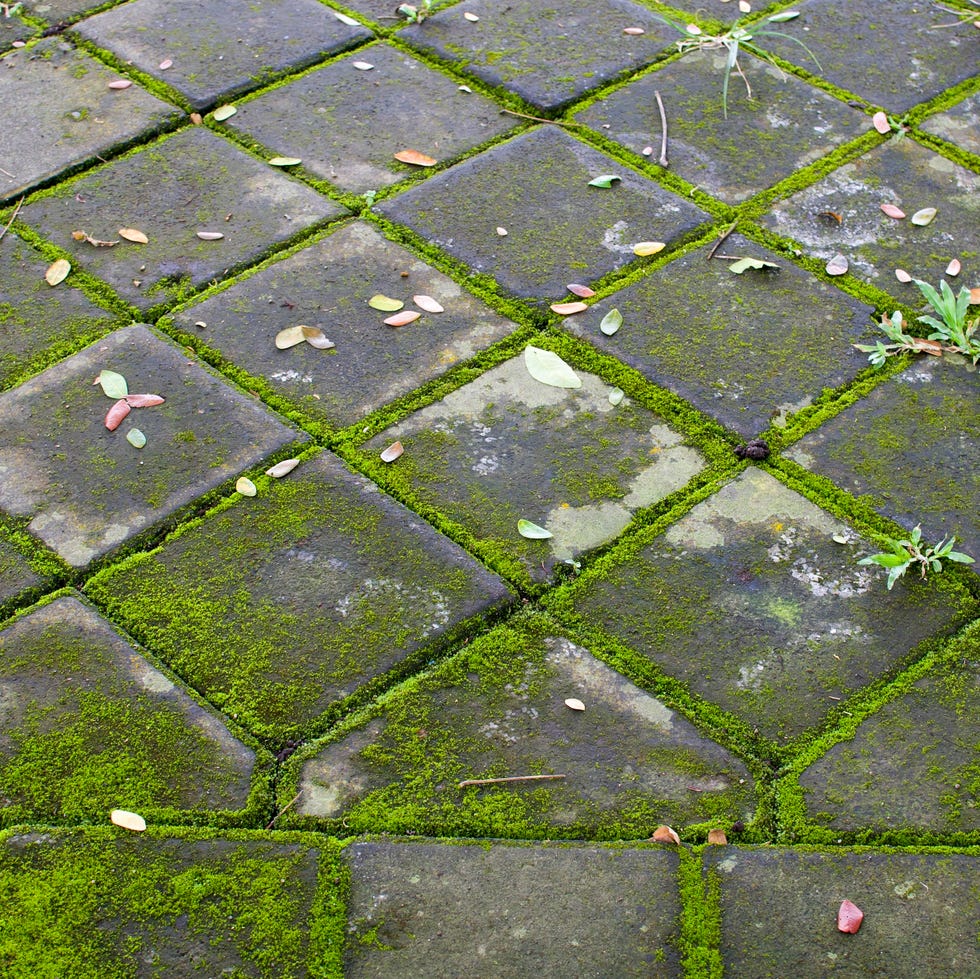
“Use these to lift moss from textured paving, focusing on joints and crevices where moss tends to cling most stubbornly,” says Matthew Wilson, professional gardener and CEO of Handy Gardeners.
If you have moss in garden beds, using hand removal alone can be better than using products, natural or not, as you won’t risk damaging your other plants. If this isn’t enough, combining this with a pressure washer will make removing the moss even easier.
Yani Hidayat//Getty Images
Prevent It From Returning
Clearing moss is only half the job—keeping it away means tackling the conditions that allowed it to grow in the first place.
“If moss returns repeatedly, it is a result of inadequate drainage, low air circulation, and a poor growing environment, not a result of inadequate moss treatments,” says Wilson.
To keep your patio looking fresh for longer, combine regular maintenance with a few smart improvements. Saeed explains, “Sweep regularly to remove spores and improve drainage and trim overhanging plants and trees to reduce shade and moisture build-up.”
It’s also important to re-sand paving joints to dry the area out. “Pair this with an eco-friendly, breathable patio sealant to help reduce moisture retention and make future cleaning easier,” Saeed suggests.
Moss isn’t just a surface nuisance—it’s often a sign your garden is holding onto excess moisture and lacking proper airflow. Clearing it away, alongside a few simple improvements, won’t just make your paving safer underfoot; it will also help create a space that feels fresher, brighter, and far more inviting to spend time in.
Follow House Beautiful on Instagram and TikTok.
Comments are closed.