

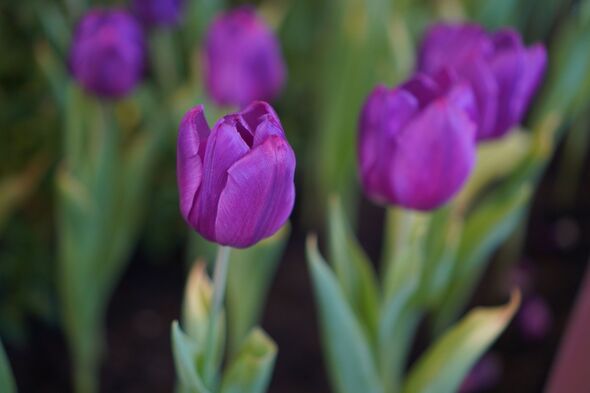
Tulips can add a splash of colour to your garden in spring (stock photo) (Image: Getty)
Tulips can add a splash of colour to your garden throughout spring, but there’s one thing you should avoid doing with them in May, or risk ruining your display completely. If you grew tulips in your garden this spring, then, as we enter May, you might notic them beginning to droop and the flowers are starting to die.
Tulips flower from mid to late spring, so they’ll stop flowering for the year around now. Once tulips stop flowering, they should begin the process of dying back and retreating into their bulb. However, as they are perennial plants, they should come back again next year if you leave them to their own devices.
READ MORE: Stop making mistake with seedlings – it can hinder growth in May
READ MORE: Not boiling water or weed killer – common kitchen item destroys weeds in minutes
But according to one professional gardener, that is actually the worst thing you could do. Emma Jo Real-Davies, an Royal Horticultural Society gardener, said she has been growing tulips in her garden for years, and if there’s one thing she never does with her flowers, it’s leave them alone.
The gardener said that, while tulips should grow back the following year, she has never had success with this, and has found that her plants either don’t come back, or they’re “weak” when they do. In a TikTok video, she shared: “Your tulips won’t come back next year. It’s brutal, but it’s true.
“Tulips are perennial, and although they might come back next year, they’ll probably be weak and pathetic. They put so much energy into flowering in their first year that they use it all up, so you can leave them in their pots, but they’ll probably look [droopy and lifeless].”
Instead of leaving them to their own devices in May, Emma said that gardeners should dig up their tulips once they’ve stopped flowering and chuck them in the compost heap. If you want to grow more tulips next year, it’s best just to simply buy new bulbs and start the process again, instead of hoping your old ones come back.
Commenters on the video were divided on the issue. Some agreed with Emma’s advice and said they’d had miserable luck with tulips themselves, while many others argued they’d been growing tulips from the same bulbs for as many as 37 years.
One person said: “I’m all for this! I want to reuse most of my pots, so I can’t be bothered waiting for them to wilt away. Get ’em out and get rid and there’s more of an excuse to buy more.”
Another added: “Mine came back but without flowers.” But someone else disagreed, arguing: “Absolute rubbish. We have had the same bulbs flowering for over 37 years!”
Tips for growing tulips
1. Choose the right tulips
Not all tulips are the same. Different varieties will require different growing conditions, such as soil and sunlight, and you may even find that some species flower earlier or later than others.
Darwin Hybrid tulips: Tall, classic “big” tulips that cope well outdoors and often come back for a few years.Triumph tulips: Sturdy stems, good in borders and containers, wide colour range.Species tulips: Smaller, earlier, and often the best for naturalising (coming back and multiplying).Parrot/Fringed/Double tulips: Dramatic, but can be heavier-headed and more likely to flop in wind and rain.
2. Plant at the right time
In the UK, tulip bulbs are best planted in autumn, ideally from October to November. This gives the bulbs time to settle into the soil and grow before spring. Don’t plant your tulips too early, as this can increase the risk of fungal problems and rot.
3. Treat your tulips right
Most types of tulip need full sun, which is defined as a minimum of six hours a day, and free-draining soil that isn’t too damp. Overwatering is a common reason bulbs rot, so keep these tips in mind when it comes to watering:
In the ground: You rarely need to water in autumn/winter.In pots: Water after planting to settle compost, then only water when the top few centimetres dry out.
4. Make a plan for next year
Once the flowers fade, you should snip off the flower head so that the plant doesn’t waste energy making seeds. Leave the foliage alone until it dies back naturally, which usually takes around six weeks.
This will improve your flowers’ chances of coming back next year, but many gardeners still treat modern tulips as “plant and replace” flowers, as their performance can dip after the first year. This may be a particular problem if you have heavy or wet soil, so make sure you decide whether you’re going to attempt to re-grow your tulips or dig them up once flowering has finished.
Comments are closed.