
As wildfire season in Canada grow’s more intense, experts are warning that traditional landscaping choices could put homes at unnecessary risk.
As wildfire seasons grow longer and more intense across Canada, experts say homeowners can reduce risk by rethinking how they design and maintain their yards.
FireSmart gardening, a science-based approach used nationwide, focuses on reducing flammable materials around homes to limit ignition during a wildfire.
“The simplest way to think about a FireSmart garden is that it focuses on reducing highly flammable plants and materials within 10 metres of the home,” said Magda Zachara, FireSmart Canada’s program manager.
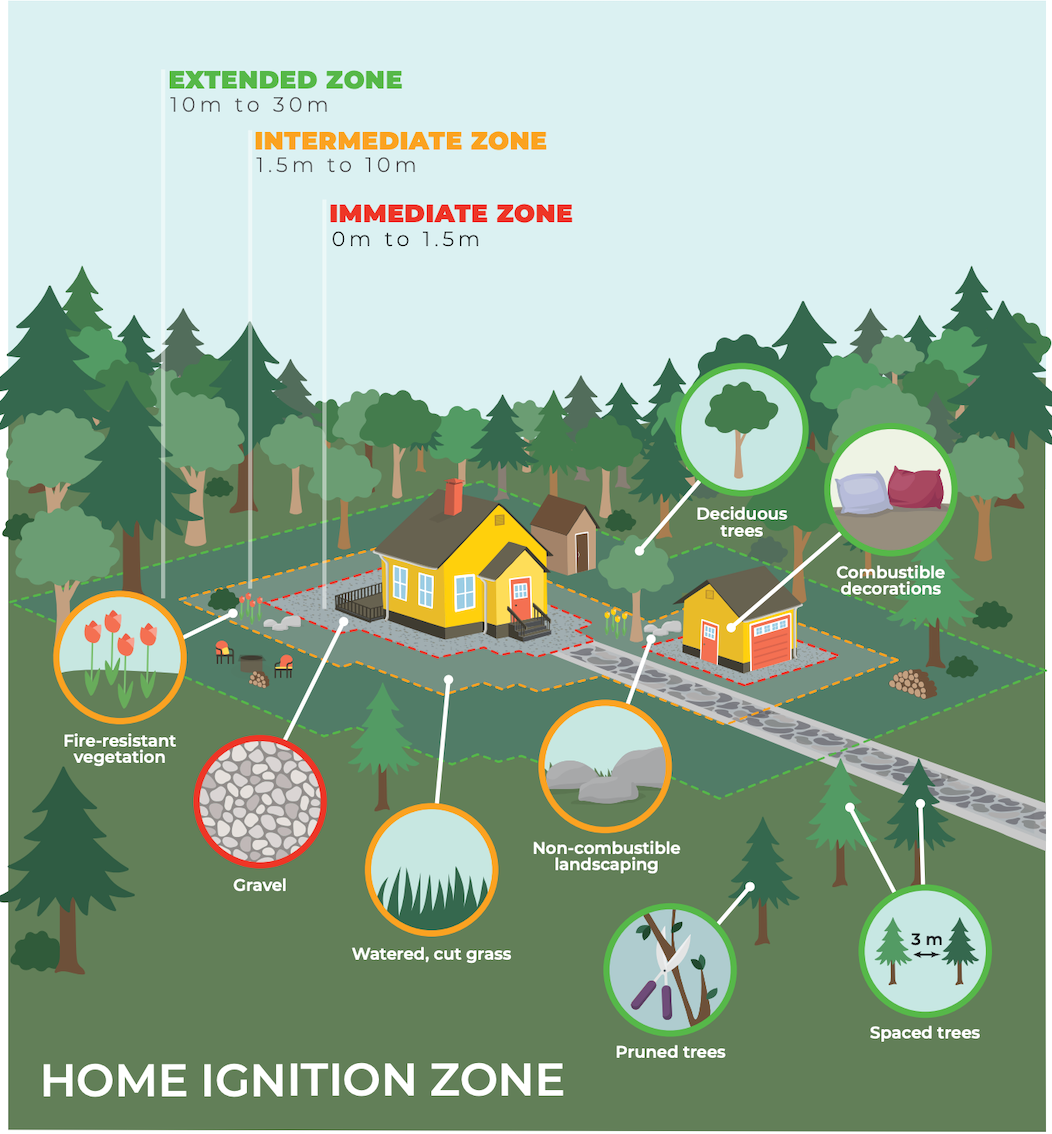
At the core of the approach is the “home ignition zone,” which extends outward in three layers. The most critical is the first 1.5 metres, where nearly all combustible materials should be removed, including items attached to the home.
“In that immediate zone, you really want to avoid anything that can burn,” Zachara said. “That includes bark mulch, cedar shrubs, firewood piles or patio furniture stored right against the house.”
Wind-driven embers are responsible for most homes lost in wildfires. They can travel kilometres ahead of a fire front and ignite dry materials long before flames arrive.
That makes common landscaping choices a risk.
“People like bark mulch because it looks nice, but it’s highly flammable,” she said, noting gravel, stone or concrete are safer alternatives.
Beyond the immediate zone, homeowners can still maintain attractive yards, but plant choice matters. Fire-resistant plants have higher moisture and lower resin content.
“There’s a significant difference between deciduous and coniferous trees,” Zachara said. “Choosing a maple or poplar instead of a pine or cedar near your home can make a real difference.”
Some ornamental plants are especially risky.
“Juniper is one of the most flammable shrubs you can plant, it’s often compared to a gas can in your yard,” she said.
FireSmart landscaping does not mean removing all greenery.
“One of the biggest misconceptions is that you can’t have trees or plants,” the FireSmart Canada’s program manager explained. “It’s about choosing and placing them properly.”
Maintenance is also key. Trees should be pruned so branches are at least two metres off the ground, while grass should be kept short to reduce fuel. Clearing debris further lowers risk.
Watering helps reduce flammability, but drought and restrictions may limit irrigation. In those cases, xeriscaping can help balance water conservation with fire safety.
For homeowners unsure where to start, the advice is simple.
“Focus on the first 1.5 metres,” Zachara said. “That’s where the biggest risks are and where small changes matter most.”
As more Canadians live in the wildland-urban interface, experts say proactive steps are increasingly important.
“It’s not about stripping your yard bare,” she said. “It’s about being intentional with what you plant and where you place it.”
Comments are closed.