
Credit: Stephen Orr
Key Takeaways
The Gardener’s Mindset shares Orr’s personal garden stories and visuals, offering an inside look at how small, thoughtful choices lead to healthier, more resilient gardens.
Early staking prevents flopping and stem breakage; waiting too long can damage roots and weaken the plant’s structure.
Match your support to the plant: Use single stakes for tall, upright stems and rings or natural branch supports for multi-stem perennials.
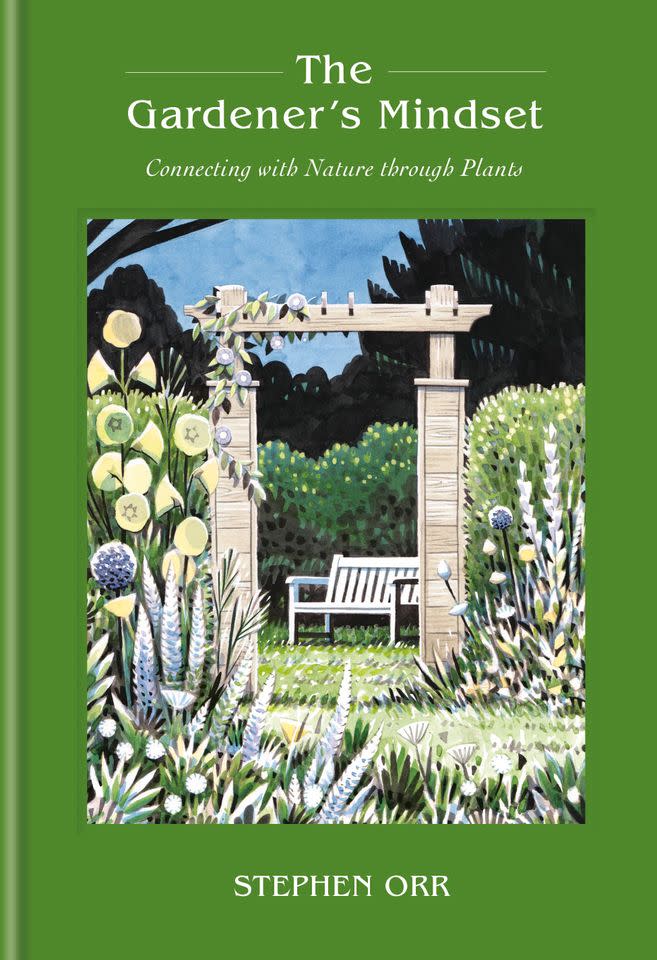
No matter your level of gardening experience, there are times we all need clear guidance or encouragement when something doesn’t work out, paired with a glimpse of results that remind us of what’s possible. In his latest book, The Gardener’s Mindset (out May 5), former Better Homes & Gardens editor-in-chief Stephen Orr admits that even the most experienced gardeners skip habits they know they shouldn’t. But it’s all part of the process. As the inside cover reads: “The road to great gardening is littered with dead plants.”
Staking taller perennials is one of those tedious tasks that, at times, can look more obtrusive than helpful. But in the book, Orr explains that giving certain plants a little extra support early on can help them grow stronger and look better. We spoke with Orr about why staking matters and how to do it in a way that seems almost invisible. (And if you want to see how Orr’s gardens have evolved over the years, the book is worth picking up for the photos alone!)
Credit: Stephen Orr
Related: Garden Experts Agree This Is the Easiest Perennial to Grow—Even for Beginners
Why You Need to Stake Tall Perennials
Orr is a self-proclaimed “lazy staker,” but he knows how important the step is for taller perennials. “You need to stake or support taller perennials, so they remain upright and don’t flop over, or worse, snap stems during stormy weather,” says Orr. “For best results, add supports early, so the plant grows up through the supports.” This step is especially important if your garden is positioned near prevailing winds, which will knock over even the most sturdy-looking plants.
Early staking generally means putting in supports before the plant gets too tall, when new growth is still flexible enough to be guided through your framework. Orr notes in the book that if you put your stakes in too late, you risk stabbing the root ball of your plants. When placing metal supports on already-grown, flopping plants, you could snap stems, crush leaves, and knock off flowers while trying to force them into place.
The goal for Orr is to make the supports disappear over time, with stems weaving naturally through poles or cages as they grow. In most cases, that means staking in spring right as growth begins, but timing can vary depending on the plant’s mature height and how quickly it grows.
Foxtail lilies
Credit: Stephen Orr
Staking Tips for Better Results
Staking may not be the most exciting part of gardening, which could be why Orr doesn’t always stay on top of it. The biggest takeaway, he says, is to think ahead and choose supports that work with the plant’s natural growth habit, not against it.
When staking, you can either support individual stems or corral the entire plant. Some taller single-stem perennials, like hollyhocks and dahlias, only require single-pole stakes with twine attached. This setup tends to blend in, and the twine is soft enough that it won’t cut the stems. Orr suggests attaching twine or another soft material to the pole, then using a figure-eight pattern to connect the stem to the stake.
Bulkier perennials, like peonies and asters, do better with ring, grid, or hoop loops. While they are made of metal, they do come in green or black, with the former more likely to blend into the landscape. Even though the cages look unsightly before the plants grow in, Orr says they need to be placed early so the plant grows through them. That said, the master gardener admits that they’re not his preferred option when a more natural approach will do.
To avoid metal altogether, Orr will resort to items found in his garden, using brush and other sticks to help prop up multi-stem perennials. “I like to use natural materials as much as possible, like bamboo stakes or supports made of smaller branches or twigs,” he says. “Once the plants fully grow, you usually won’t see them.”
Branches angled intentionally can provide subtle yet sufficient support that merges with the plant’s natural shape. But you’ll need to get creative with placement and anchoring to keep everything secure. This resourceful method tends to work best with multi-stem perennials (peonies, asters, etc.) that branch out, rather than single, top-heavy spikes like delphiniums or foxgloves.
Orr’s Favorite Tall Perennials
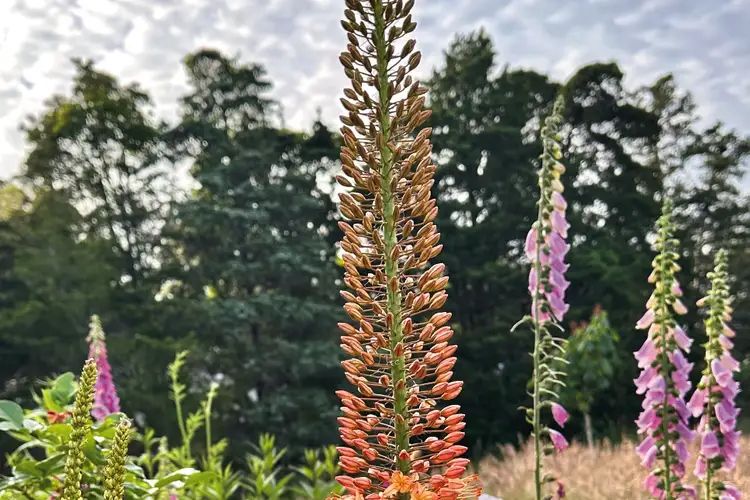
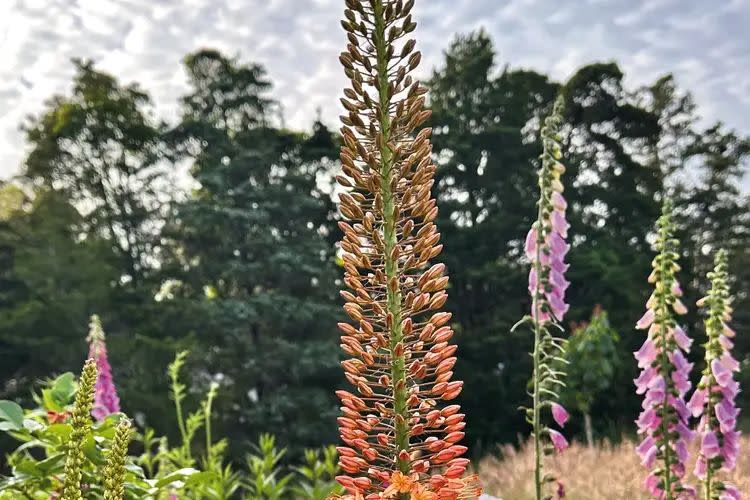
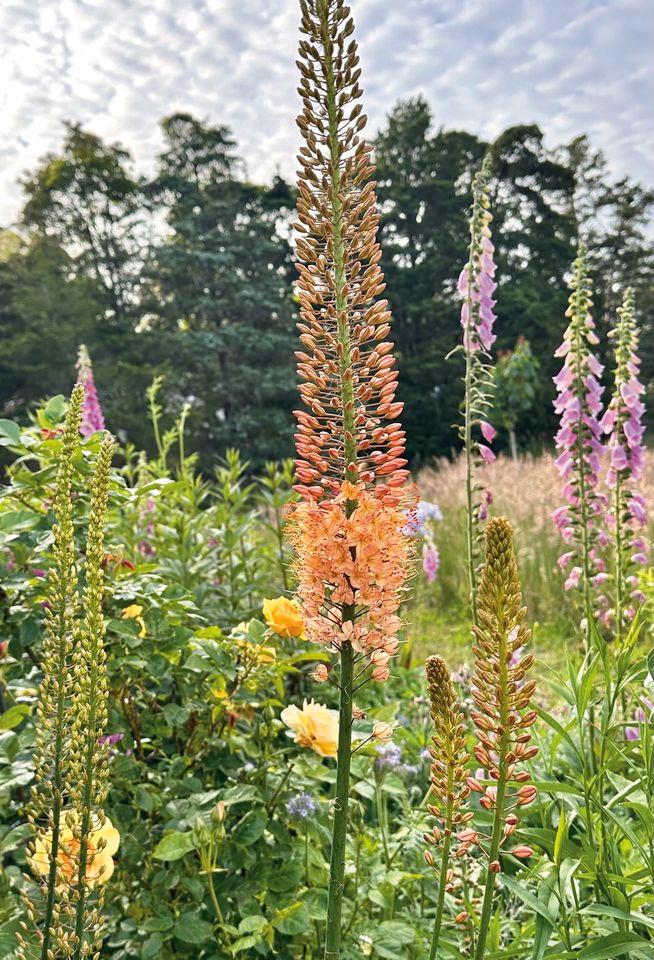
There are so many tall plants that have graced Orr’s gardens over the years, from white alliums with what he calls an “erratic rhythm” to dark plum fritillarias, which bloom in the spring and help fill in gaps. This year, though, he tells us he’s focusing on a mix of tall, statement-making blooms. “I like many tall, spire-forming plants, but in my garden right now, I have a lot of foxgloves, hollyhocks, and foxtail lilies,” Orr says.
Stephen Orr’s Tall Perennials
No matter the season, Orr’s garden often fills in with tall, fast-growing plants that do best with a little support. In the book, he recalls his tithonia reaching six or seven feet tall. Later in the summer, he loves his shrubby Mexican salvias that reach up to five feet tall. When you’re able to position and care for these perennials well enough to achieve vigorous growth, early staking helps keep them from sprawling or collapsing as the plants fill out.
For a closer look at how Orr experiments with plants and adapts his garden over time, pick up The Gardener’s Mindset.
Read the original article on Real Simple
Comments are closed.