
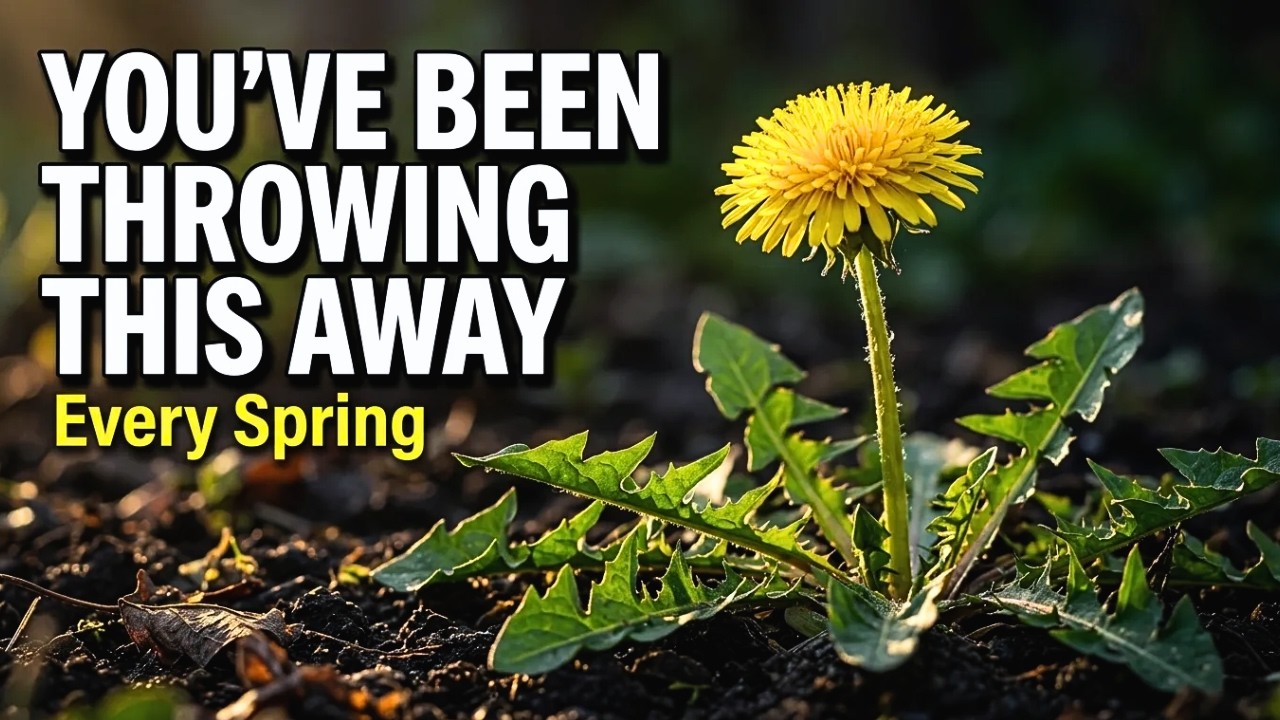
The “Weed” You Keep Pulling Up Beats Spinach, Kale, and Lettuce on Every Single Nutrient
Every spring, gardeners pull up one of the most nutritious plants on earth and throw it on the compost heap. This video changes that.
The dandelion growing in your garden right now beats spinach on iron, beats kale on vitamin A, and outperforms most supermarket lettuce on vitamin C — gram for gram. And it grows back every year without you spending a single penny.
In this video you will learn:
✅ Why dandelion is more nutritious than most commercially grown vegetables
✅ How to identify dandelion correctly before you eat it
✅ How to grow it deliberately as a food crop — soil, sun, watering, spacing
✅ How to use every part of the plant: leaves, flowers, and roots
✅ The one safety rule you must never break when harvesting
🌱 WHY DANDELION BELONGS IN YOUR FOOD GARDEN
Most people treat dandelion as a weed problem to solve. The reality is that dandelion is a free, self-seeding, highly nutritious food crop that improves your soil, supports pollinators, and produces edible leaves, flowers, and roots across multiple seasons.
Commercial vegetables are bred for shelf life and appearance — not nutritional density. Dandelion has never been bred for anything. It has evolved to survive, which means it has developed concentrated levels of vitamins and minerals that many cultivated crops simply cannot match.
Dandelion leaves are rich in Vitamin A, Vitamin C, Vitamin K, iron, calcium, and antioxidant compounds. The flowers can be made into tea, fritters, or wine. The roots, roasted and ground, make one of the best caffeine-free coffee substitutes available.
The whole plant is food. Nothing is wasted.
🔍 WHAT THIS VIDEO COVERS IN DETAIL
— Dandelion nutrition facts compared to spinach, kale, and lettuce
— Dandelion identification: hollow stem, milky sap, rosette leaves, deep taproot
— Dandelion leaves in salads and cooked dishes
— Dandelion flower tea recipe and how to make dandelion fritters
— Dandelion root coffee substitute — roasting and brewing guide
— How to grow dandelion from seed in a dedicated garden patch
— Soil requirements, sun exposure, and watering for best leaf quality
— Cut-and-come-again harvesting technique for continuous supply
— Climate guide — temperate and tropical growing windows
— Why you must avoid dandelions treated with herbicide or pesticide
— Safe foraging distance from roadsides
📌 RELATED TOPICS YOU MIGHT ALSO SEARCH
Edible weeds in the vegetable garden | Wild food gardening for beginners | Most nutritious leafy greens | Dandelion health benefits | How to eat dandelion leaves | Dandelion tea how to make | Dandelion root coffee | Free food from your garden | Grow your own superfoods | Foraging in the garden | Companion planting dandelion | Spring garden edible plants | Weed or food | Nutrient dense vegetables | Natural food garden
🌍 THIS CHANNEL
Garden IQ covers vegetable and food gardening for growers at every level — beginner to intermediate — across tropical, warm, and temperate climates. Every video focuses on practical, specific, actionable growing knowledge with zero filler.
Subscribe for weekly videos on food crops, growing techniques, and the plants most gardening channels overlook.
👍 If this video helped you — like it. It helps more growers find it.
💬 Drop a comment: have you ever eaten dandelion from your garden? First time considering it? Tell me where you are starting from.
🔔 Subscribe so you don’t miss what’s coming next.
⚠️ DISCLAIMER
The information in this video is provided for general educational and informational purposes only. It is not intended as medical, nutritional, or health advice. Always consult a qualified healthcare professional before making significant changes to your diet, particularly if you have existing health conditions, are pregnant, breastfeeding, or are taking medication.
Plant identification is the sole responsibility of the viewer. Never consume any wild or garden plant unless you are completely certain of its identification. Some plants closely resemble edible species and can be harmful if consumed. When in doubt, do not eat it.
Always ensure that any plant you intend to eat has not been treated with herbicides, pesticides, or other chemical treatments. Avoid harvesting plants from roadsides, public spaces, or any land where chemical use cannot be confirmed.
Garden IQ accepts no responsibility for any adverse effects resulting from the use of information presented in this video. Foraging and wild food consumption carry inherent risks that are the responsibility of the individual.
#Dandelion #EdibleWeeds #FoodGardening #GardenIQ #VegetableGarden #WildFood #DandelionRecipes #NutritiousPlants #GrowYourOwnFood #OrganicGardening #DandelionTea #EdibleGarden #GardenTips #BackyardGarden #FoodForest #HealthyGarden #DandelionBenefits #SuperfoodPlants #GardenHarvest #SpringGardening
Comments are closed.