
 3 min read
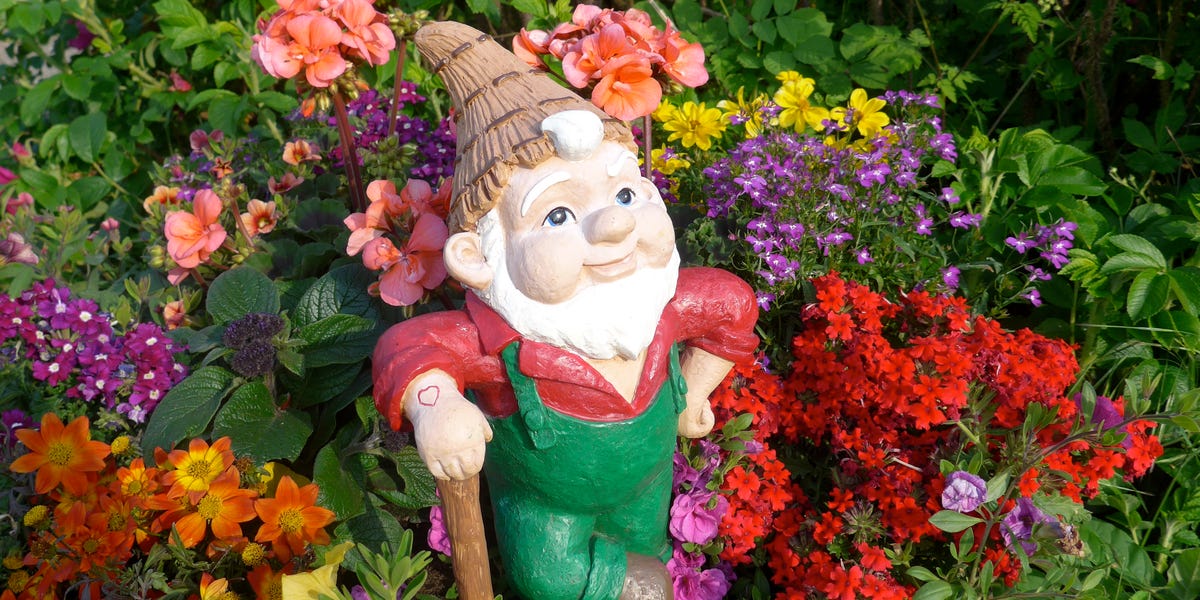
If you’re not deep in the weeds of gardening gossip (pun fully intended), let me fill you in: The RHS Chelsea Flower Show is a big deal. It’s the world’s most famous gardening event and, each May, everyone from the royal family to Sir David Beckham can be spotted roaming the London-based garden exhibitions. And this year, the show has officially lifted their years-long ban on garden gnomes.
Yes, you read that correctly. There was a ban on garden gnomes for 113 years (!!!)—and it was only lifted one other time, in 2013, to raise money for charity. Now, 13 years later, celebrities such as Cate Blanchett, Dame Mary Berry, Sir Brian May, and Baroness Floella Benjamin will paint gnomes to benefit the RHS Campaign for School Gardening. The initiative will be celebrated in The RHS and The King’s Foundation Curious Garden.
Clare Matterson, RHS director general, said in a media release, “We want people to be playful with their gardening, which is why we’re lifting the gnome ban for these celebrity gnomes, who will then, by being auctioned off, help us do even more to awaken a curiosity in gardening in school children and support our national Campaign for School Gardening.” She added, “Gardening in schools increases resilience, builds confidence, encourages curiosity and gives access to nature—it’s a vital resource that every school should have access to.”
While it’s an incredible cause and we’re thrilled at the idea of giving more children access to gardens, it begs the question: Why are gnomes so polarizing? To make the case even muddier, the Chelsea Flower Show gnome tradition pays homage to King Charles’s Highgrove Garden stumpery, where he keeps his own gnome. If these little statues are good enough for King Charles’s garden, shouldn’t they be good enough for ours? To explore this, we took a look at the history of garden gnomes and how they turned from a once-treasured craft into something many consider “tacky.”
The History of Garden Gnomes
According to European antiques dealer Authentic Provence, small gnomes popped up throughout Europe during the 1600s as a sign of good luck, and stem from folkloric “earth dwellers” (from the Latin word gnomus) who lived underground and protected the land. There’s also belief that garden gnomes were borrowed from ancient Greek mythology, since small stone statues of fertility deity Priapus were often kept outside the home to protect farms and gardens (we’ll ignore the fact that statues of Priapus always have a giant permanent erection and move back to the more innocent garden gnomes we know today).
In the 19th century, garden gnomes started being mass-produced in Germany, with the earliest and most notable manufacturers being Philipp Griebel and August Heissner. The World Wars eventually wiped out most of the garden gnome production in Germany, making these antique finds quite rare today.
According to Atlas Obscura, In the mid-1840s, British gardener and owner of Lamport Hall Sir Charles Isham came back from Germany with a set of 21 terra-cotta gnomes. These tiny decorations sent waves through the United Kingdom—both positive and negative (even then these little guys were polarizing!). Many welcomed the idea of the statues with loving arms, but Isham’s daughters reportedly hated the gnomes and removed all but one from the property. The one that survived, lovingly named “Lampy” after Lamport Hall, is now considered the oldest garden gnome in the world at 150 years old and is reportedly insured for £1 million and is estimated to be worth £2 million (FYI- you can still visit him at Lamport Hall).
While we recognize these antique works of craftsmanship worth millions are certainly a far cry from the mass-produced ones found in garden centers and souvenir shops today, we think gnomes have earned a bad rap unfairly—and there’s a chic middle ground that doesn’t include cheap novelty ones wearing NFL jerseys or chugging beer. We’re big believers that your outdoor space should bring you joy. And if you, like King Charles, want to enjoy a cheery little gnome next to your pollinator garden or stumpery, we say rock on. After all, if folklore is to be believed, they could protect your green space.

Jaime Milan (she/her) is the deputy digital editor for VERANDA, where she manages the brand’s cross-platform digital strategy. She also writes and edits dozens of stories each month about design, architecture, gardening, jewelry, travel, entertaining, shopping, news, and trends. Prior to joining VERANDA, Jaime was a digital editor for over 10 years at national news and lifestyle brands and has written everything from in-depth packages and celebrity news to features and holiday gift guides. In her spare time, she can be found shopping at the antique store, cooking, gardening, or teaching her mini Australian Shepherd, Gumbo, new tricks. Follow her on Instagram at @jaimemmilan.
Comments are closed.