
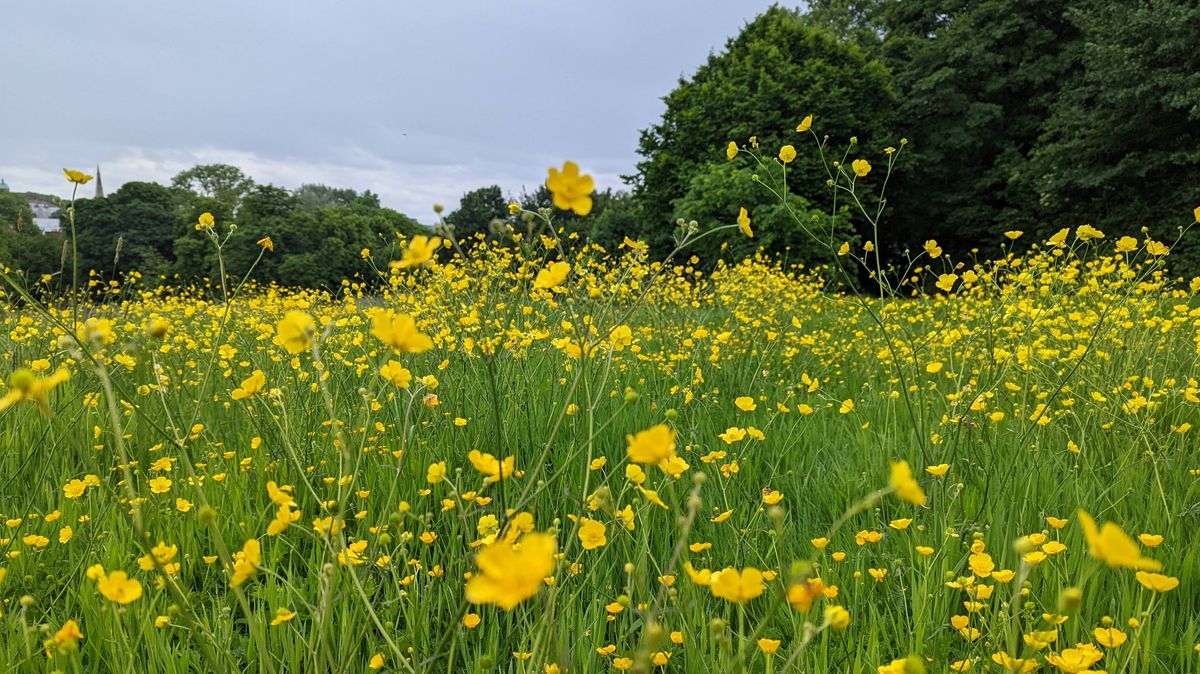
UK gardeners to put away their lawn mowers this May to support bees, butterflies and other wildlife
Gardeners are joining a movement to let their lawns grow in May, a poll has found, as an annual campaign to boost nature in gardens kicks off
Gardeners are embracing a campaign to leave their lawns uncut during May, a survey has revealed, as an annual initiative to enhance nature in gardens gets underway.
The “No Mow May” campaign, spearheaded by wildlife charity Plantlife, encourages people to keep their mowers stored away throughout May to let grasses and wildflowers thrive.
More natural lawns during warmer months can provide vital support for bees, pollinators, butterflies, small mammals and other wildlife.
Plantlife reported the movement is expanding, with analysis of participants who registered for last year’s campaign showing that a third (32%) were taking part for the first time.
The survey of 2,001 adults, conducted by Opinion Matters in March, revealed that two-thirds (66%) believe their garden can genuinely make a difference for nature.
The research also indicates letting lawns flourish can be a social decision, with six in ten people aged between 25 and 34 stating they would be more inclined to join the movement if their neighbours participate.
Nicola Hutchinson, chief executive at Plantlife, said: “Your garden is one of the easiest ways to help nature, providing a lifeline for wildlife – yet social pressure keeps lawns short.
“No Mow May is the moment to act: to come together as communities, let grass and wildflowers grow, and turn that belief into real change.”
Last year, Tunbridge Wells – properties with a TN postcode – led the rankings for the highest number of people who allowed their lawns to grow in May, based on its registration figures.
This was followed by the Brighton area (BN postcodes). Approximately 97% of wildflower meadows have vanished in under a century, with previously common plants such as ragged Robin and field scabious now listed as near threatened in England, the conservation body has earlier cautioned.
Following No Mow May, Plantlife advises reduced mowing frequency throughout summer.
The Royal Horticultural Society (RHS) states there are over 25 million gardens across the UK, meaning they represent a substantial portion of land.
When handled correctly, even the tiniest grassy areas can help deliver advantages for wildlife, communities and the climate, Plantlife stated.
The organisation said simply leaving several unmown sections in gardens can also help increase lawn biodiversity.
Gardeners can trim certain patches for pathways or leisure while allowing grass to grow taller in other areas so that floral diversity and nectar production flourish and numerous microhabitats are established for various species to inhabit, it explained.
For those lacking gardens, Plantlife noted a balcony, patio or yard can be transformed into a modest sanctuary for plants and pollinators.
Meanwhile, local authorities and communities can maintain green spaces in churches, schools, parks and along roadsides to promote wildflower growth, the charity stated. It also urges gardeners to steer clear of herbicides, fertilisers and moss killer as all can prove harmful to wild plants in the lawn. They are also encouraged to give plants sufficient time to set seed before mowing, and clear away grass cuttings after mowing to prevent nutrient accumulation on the grass.
Comments are closed.