
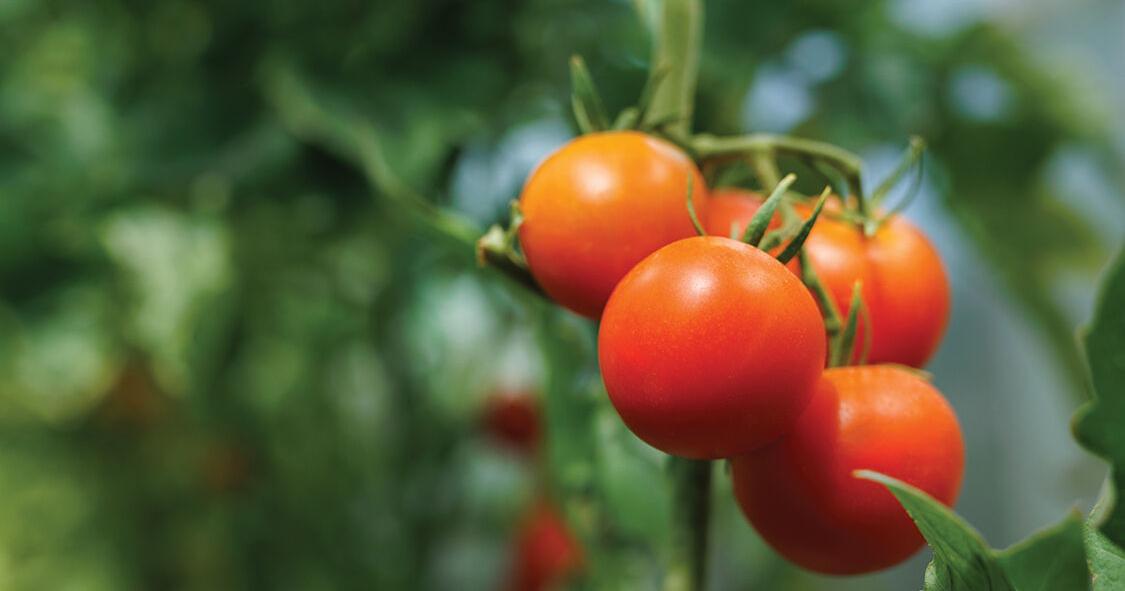
In April’s TulsaPeople Magazine, we discussed the basics of growing tomatoes. Now it’s time to explore some common tomato diseases and proven maintenance practices that can help to avoid them.
Tomato diseases come in various categories. Some of the more common ones that we encounter in our area include:
Viral: Tomato Spotted Wilt Virus, Tobacco Mosaic Virus
Fungal: Fusarium Wilt, Verticillium Wilt, blight
Physiological: Blossom end rot, cracking, sunscald, catfacing
Here are some fairly simple, proven methods to minimize these problems:
Start with good soil. This cannot be over stressed, as it will make all the difference later. Use a nutrient-rich, well-draining soil. If you are unsure of your soil nutrient level, have a soil test performed to determine the soil’s pH and current level of nutrients. (You can find soil test instructions at tulsamastergardeners.org.)
Buy disease-resistant plants. There are many new varieties on the market these days, and most of Tulsa’s local nurseries will have a selection from which to choose. You can either ask staff for help finding the right plant for your garden, or read about these details on the plant tag.
Timing is key. Plant as soon as the risk of frost has passed, and the soil temperature reaches 60 degrees. Check mesonet.org for real-time soil temperature.
Fertilize slowly and evenly. Feeding your plants a little each month is better than all at once. Be sure to use a fertilizer that is higher in phosphorus (for strong blooming) and potassium (for strong root development), and lower in nitrogen.
Water evenly and consistently. Many of the physiological problems, including blossom end rot and cracking, are generally due to poor water management. Keep the root systems evenly moist and well drained, not wet or dried out. A drip system is highly recommended for vegetable plants.
Mulch early and often. Use a finely shredded wood mulch and maintain a 2-4-inch layer. Mulching minimizes weed competition, retains moisture, moderates soil temperature and decomposes to add organic matter into the ground (plus, it just looks nice!).
If you can keep your tomato plants alive through the summer heat, you may get another harvest in the fall before it starts to freeze again. Enjoy!
Thank you to Tulsa County Master Gardeners for their expertise in this subject matter. Allen Robinson has been a Master Gardener since 2010.
Comments are closed.