
Wherever I travel, we try to visit as many gardens as possible. I’m always looking for ideas that I can swipe for my own garden back home. The tradition of gardening in the British Isles makes England a constant source of inspiration.
Last week, I wrote about the dry gardens we saw on our trip there last year. The stark Kent coast where filmmaker Derek Jarman gardened and the new Delos garden at Sissinghurst is still providing ideas for my Truro gravel garden. Here, I take a look at two more English gardens whose forward-looking concepts will resonate with gardeners on the Cape.
Gardening for Wildlife
If you are a fan of the BBC show Gardener’s World like I am, you will know that the Brits are cuckoo for wildlife. Almost every episode mentions some method for enticing pollinators, amphibians, and reptiles to the back yard as part of the general health of the ecosystem. The reason is that they have very little, if any, wild land left, so helping to provide a natural balance is of prime importance.
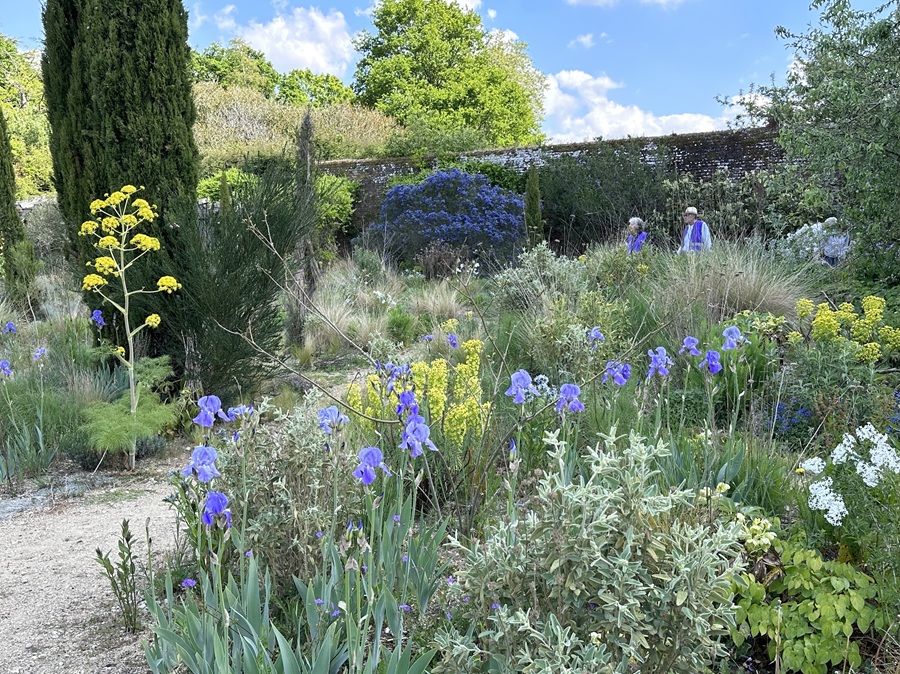 Inside the walled garden at Knepp, naturalistic plantings replaced a croquet lawn and surround the swimming pool of an old estate.
One of the most intensively experimental gardens that we’ve visited is the walled garden at Knepp Castle. It formerly contained a croquet lawn and pool. Designer Tom Stuart-Smith and head gardener Charlie Harpur used sand and construction debris to create a nature-first garden delineated by pathways that traverse mini-hills and dales filled with plants that like it dry.
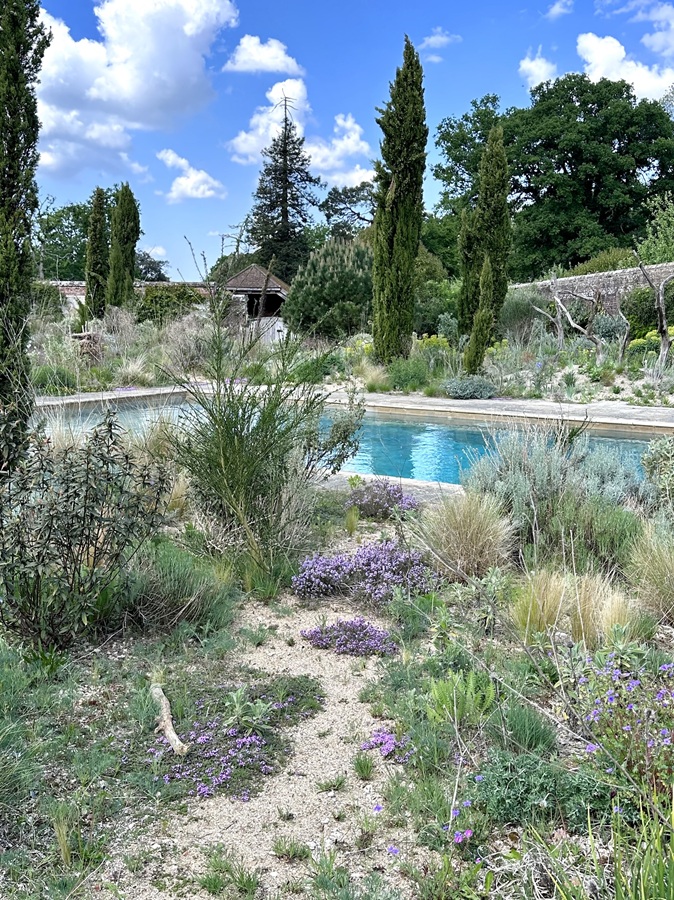 Crushed rubble forms the base for dry climate varieties next to the swimming pool at Knepp. Weeds are valued as volunteer plants in a move that embraces natural systems instead of trying to control them.
The gardeners here take a hands-off approach that is fully organic, of course, but it goes a step further by letting nature take its course with minimal human intervention. Wildlife is invited to be part of the scene amid stands of garden clippings in sculptural forms. Weeds are not only tolerated, they are welcomed. Nothing is carted away; trimmings and branches are used to create habitats or shelters for the critters.
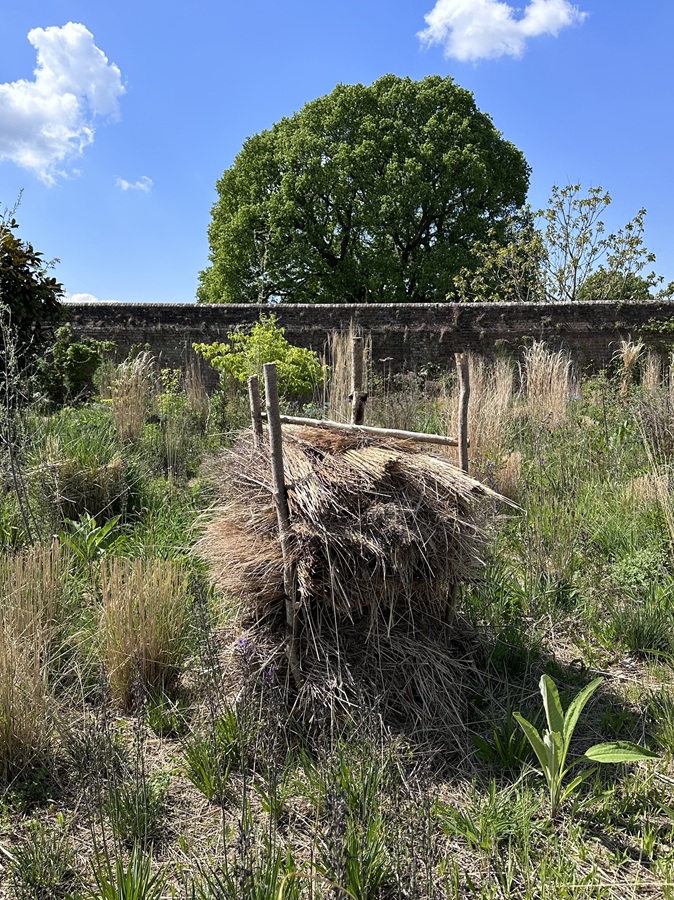 Wildlife-supporting features, such as this habitat tower made of salvaged branches and grass clippings, are at the heart of Knepp’s ethos.
In our garden, Chad and I try not to send anything offsite, so this garden gave us a lot of fresh ideas. We have piles of branches from the recent storms waiting to be used as fencing, posts, or firewood; other piles of cleared brush create housing for what we hope is an apartment building full of creatures.
Looseness and Structure
When people describe a planting as looking like an English garden, they’re usually thinking of a style that is loosely romantic. This is my favorite type of garden. I love things a bit messy, blowsy, unbuttoned, and askew. American gardens tend to be more uptight. Think of the suburban style of gardening some of us grew up with, where blobs of evergreens create foundation plantings around the house, next to a weedless green lawn with a crisp edge and flowerbeds filled with tidy dwarf annuals.
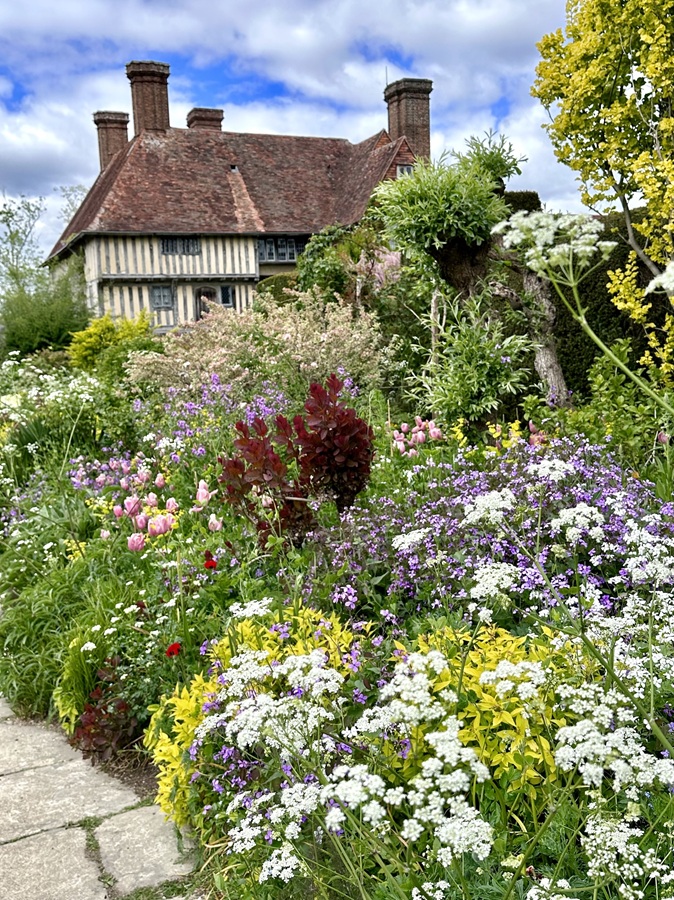 The Long Border at Great Dixter, a tumble of perennials, annuals, bulbs, and shrubs, exemplifies the loose planting style for which English gardens are famous. (Photos by Stephen Orr)
I prefer a bit more whimsy. Many of the gardens we visited, such as Great Dixter and Sissinghurst, employ an unconfined English style. We enjoyed the same romanticism at Charleston Farmhouse, the home of the free-loving Bloomsbury circle’s Vanessa Bell and Duncan Grant, as well as East Lambrook Manor, the home of the original arbiter of cottage garden style, Margery Fish.
What makes the style so successful for me is not just a general celebration of messiness — which works well for my lazy side — but its use of structural, geometric elements like hedges. This frame of order allows for a much looser approach within.
I like to pack my plants in, and like Mrs. Fish, who modeled her garden on the small, simple ones found around village cottages, I don’t plant much of one thing. I tend to plant many different things. Why? because I love plants and want to experience growing as many as I can.
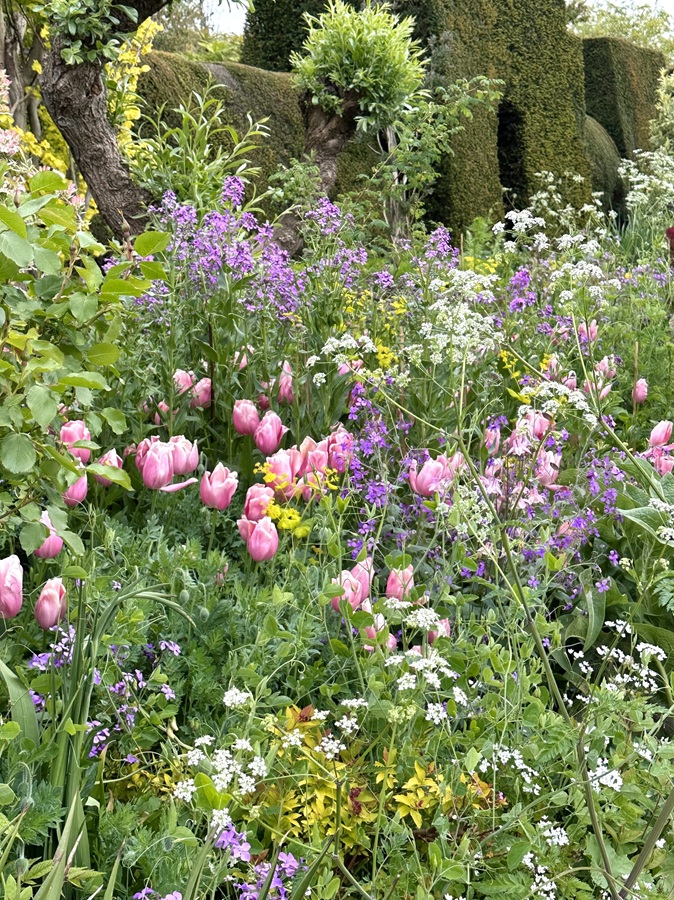 Great Dixter’s freewheeling flower beds may tip over into wildness, but only in the best possible way.
The danger here is that without some degree of discipline my garden can look like the dog’s breakfast, to borrow a British phrase.
But I’ve found that if you keep the hedges trimmed, the pathways swept, and the lawn mowed (no matter how rough and weedy), you can let the plants flop to their hearts content. And that’s something that I, and all the critters I’m trying to please, find very appealing.
Comments are closed.