
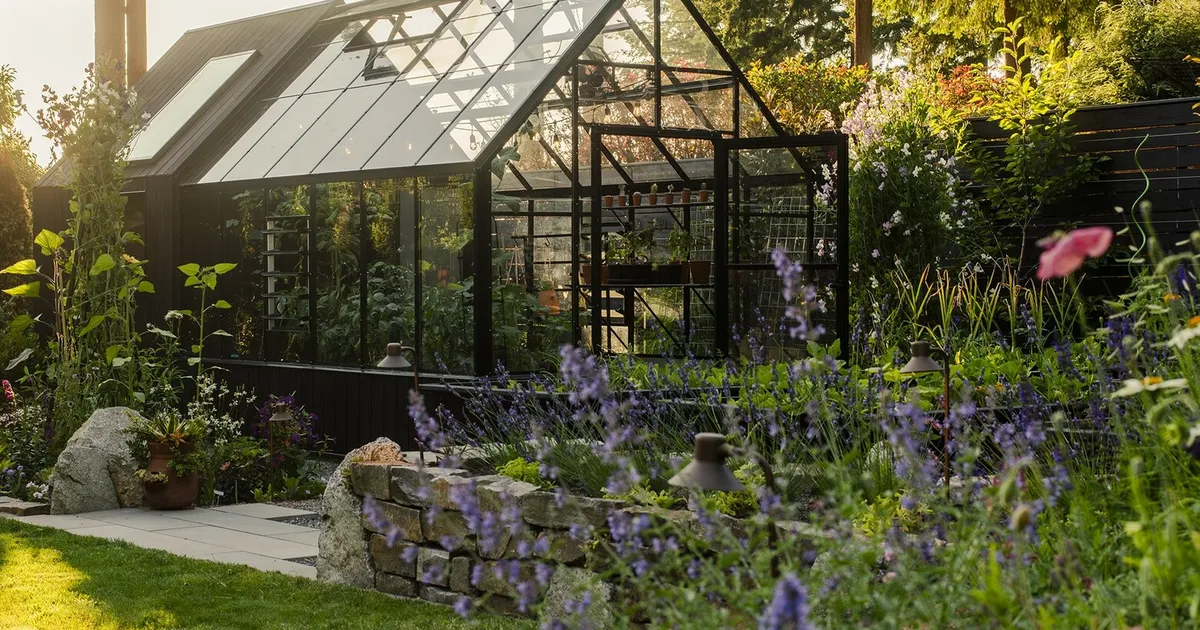
FOR BARRETT DICKEY, his wife, Karly, and their young son, Theo, cultivating a good life looks like a garden filled with flowers and flavors that engages the family in every season.
As the owner of Lake Forest Landscape Company, Barrett spends his days designing and creating outdoor living spaces that draw people into the outdoors and invite them to linger — a charismatic concept now beautifully realized in his own family’s dynamic and productive landscape.
The project took root during the pandemic when the couple spent numerous hours lost in online garden content. Their imaginations sparked, they began dreaming about how they might create an outdoor sanctuary and a working garden where their family could gather to plant, harvest and immerse themselves in nature.
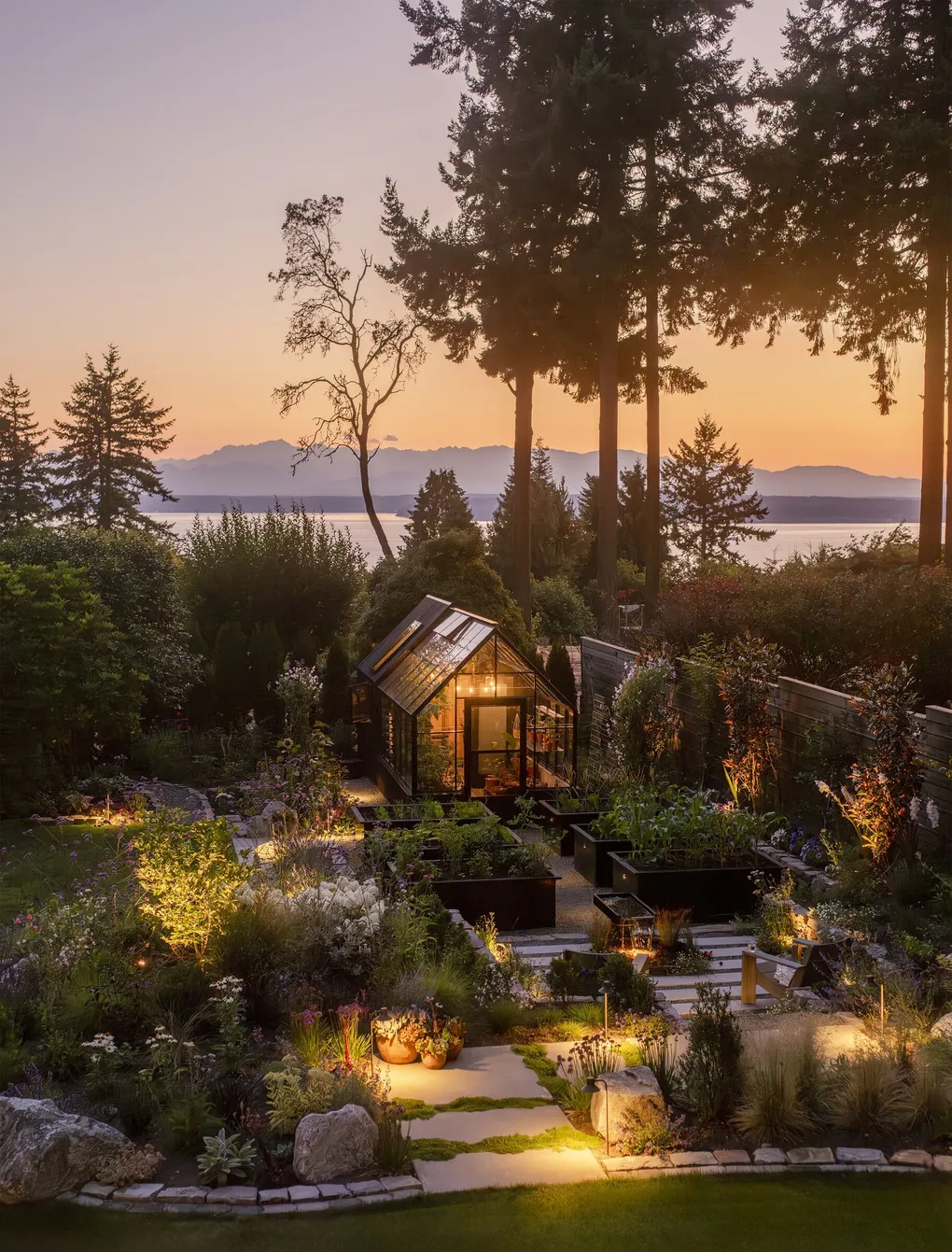
The ordered geometry of a traditional European “potager,” a French term for a decorative kitchen garden (the literal translation is “soup garden”), appealed to the Dickeys’ design sense, and the couple knew formal symmetry would lend structure to rising and falling harvesting cycles in vegetable beds. They decided a greenhouse would be nice, too.
“We had a vision of a dedicated place where we could practice horticulture together year-round,” says Barrett.
The opportunity to start planning and planting their dreams arrived in 2023 when the couple moved into a new home in the Elford Park neighborhood in north Broadview. But they were going to need help with turning their ideas into a built reality.
Barrett first met architect Aaron Trampush when the two were independently hired to work alongside each other on a residential renovation; Barrett was impressed by Trampush’s ability to combine creative vision with technical precision. The Dickeys hired Trampush, a principle at Analog Architecture and Design, to refine the design for an efficient multipurpose workspace that would also anchor the landscape aesthetically.
The 74-square-foot potting shed is sophisticated and connects seamlessly to an elegant 114-square-foot greenhouse, proving that function needn’t come at the expense of beauty, proportion and craft. The shed’s clean lines and contemporary materials echo those of the couple’s midcentury modern home, carrying the design sensibility of the built environment into the yard. Barrett calls the finished structure the “engine room” of the entire landscape.
With a sharp silhouette, the finished potting shed looks like a playing piece from a chic Monopoly game. Shou sugi ban, a traditional Japanese technique for preserving exterior cladding by deliberately charring a softwood surface, produces a striking and durable black finish that serves as a quiet backdrop to seasonal color shifts in the landscape.
Framed with enameled aluminum, the fine lines of the transparent greenhouse, fabricated by BC Greenhouse, counter the visual mass of the potting shed. By day it’s a practical and efficient workspace, and after dark the glass house glows like a lantern lit from within.
It was important to the Dickeys that their garden strike a balance between work and leisure. As such, the potager is laid out with six symmetrically placed beds conveniently raised to a height that makes tending easy. A gravel pathway connects the potager to an intimate seating area designed for relaxing and passing time among the exuberant plantings.
Linear pavers set into the gravel define the gathering space, and a couple of chunky chairs with broad arms perfect for resting a beverage encourage frequent breaks from garden chores. A custom steel water fountain, a focal point of the small terrace, provides a pleasing soundtrack.
Surrounding the potager and seating area, stacked stone walls with integrated boulders contain ornamental, pollinator-friendly plantings. Yarrow (Achillea millefolium), coneflower (Echinacea purpurea) and catmint (Nepeta) planted among culinary herbs and fragrant lavender help boost pollination and yield cut flowers and herbs for harvesting.
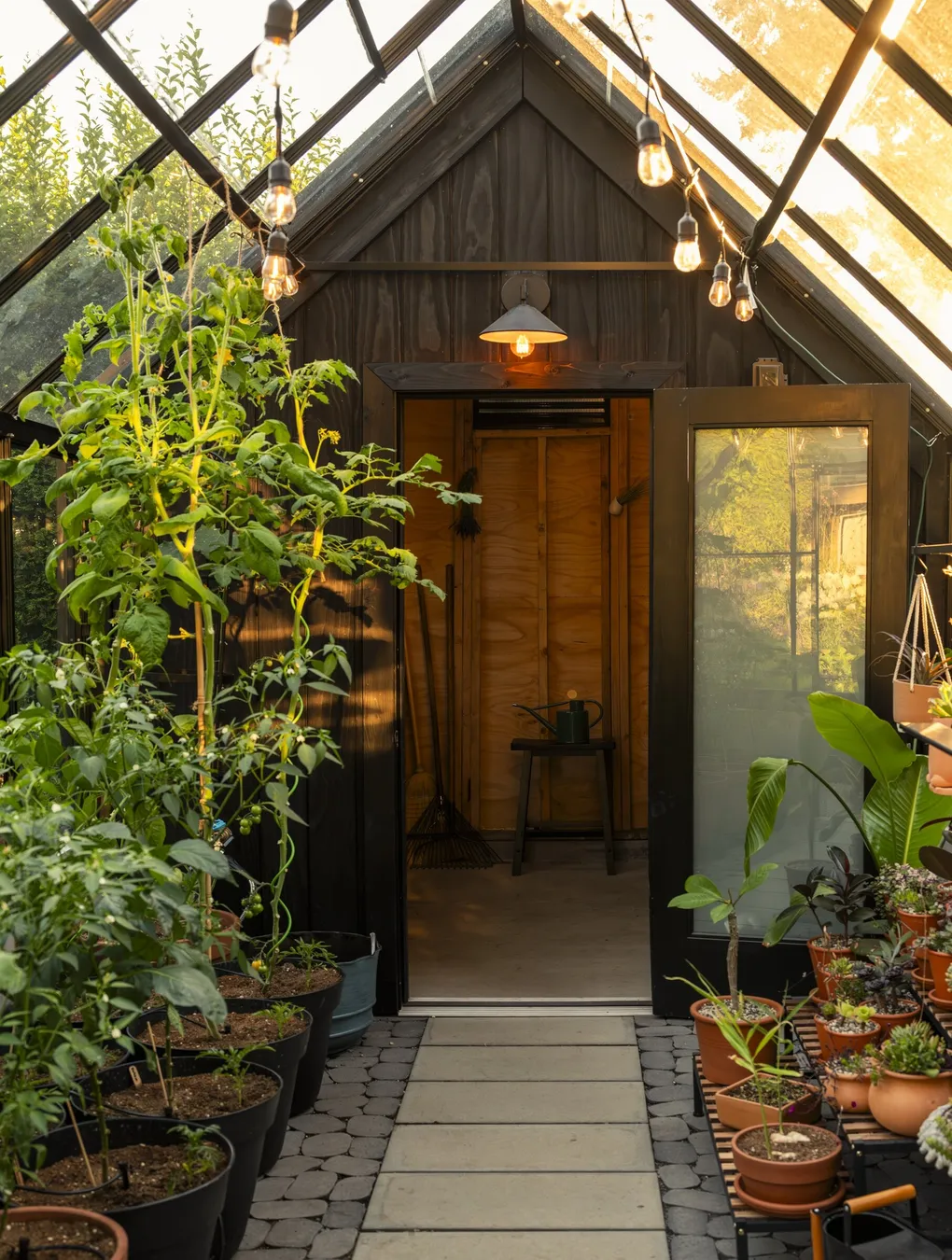
On a warm summer day, Karly often putters in the potting shed with the window open. Beneath a generous skylight, a countertop and sink accommodate seed sowing and tending. Later in the season, the work surface becomes a handy station for washing freshly harvested vegetables and arranging seasonal cut flowers. Theo is learning how to gently water the plants.
Meanwhile, Barrett tends to the borders and rearranges plants, mindful rhythms that he says turn ordinary gardening tasks into a familiar and pleasing “ritual.”
In its first year, the new garden has already yielded success. A crop of loofahs (Luffa aegyptiaca) was an unexpectedly delightful harvest, thanks to the greenhouse. “I’d always known those wiry sponges in the shower came from a plant, but I thought that we were too far north to grow them,” Barrett says. “In our first year, we harvested several large gourds, which we now use in the bathroom and kitchen, a small but satisfying reminder of what the space makes possible.” (When mature gourds are picked, peeled and cleaned, the fruit’s fibrous interior can become a durable scrubbing sponge.)
True gardeners never stop tending. During the slower months of the year, the heated greenhouse becomes a cozy retreat, a place where Karly and Barrett can escape the winter, spend time in the company of plants and keep their hands in warm soil.
Most days, the potager draws the family into the landscape. Whether it’s tending plants or finding time to pause for a few moments, Barrett says engaging with the garden “has shifted how we spend our time outdoors, making it feel more intentional and grounded.”
Barrett and Karly say that Theo, at 2 ½ years old, is developing a sense of independence in the garden and stays busy digging in the dirt and exploring on his own. He loves floating boats in the fountain, picking lettuce for the resident chickens and sneaking treats from the berry beds.
“From an early age, he’s been able to engage with nature by watching things grow, getting his hands in the soil, and experience the rhythms of the seasons firsthand,” Barrett observes.
The Dickeys recognize that their family’s landscape will continue to evolve. “At the same time, it will remain a constant place for us to connect with each other and stay rooted in the simple, rewarding act of growing something together.”
Lorene Edwards Forkner is the author of the newly published “Grow Great Vegetables Washington.” Find her at ahandmadegarden.com and at Cultivating Color on Substack.
Comments are closed.