
Key Takeaways
Blueberries thrive with companions that share their need for acidic soil and full sun; such companions can improve pollination, manage weeds, and enhance garden beauty.
Avoid plants with differing soil pH needs, like nightshades and brassicas, and beware of juglone-producing walnut trees which are toxic to blueberries.
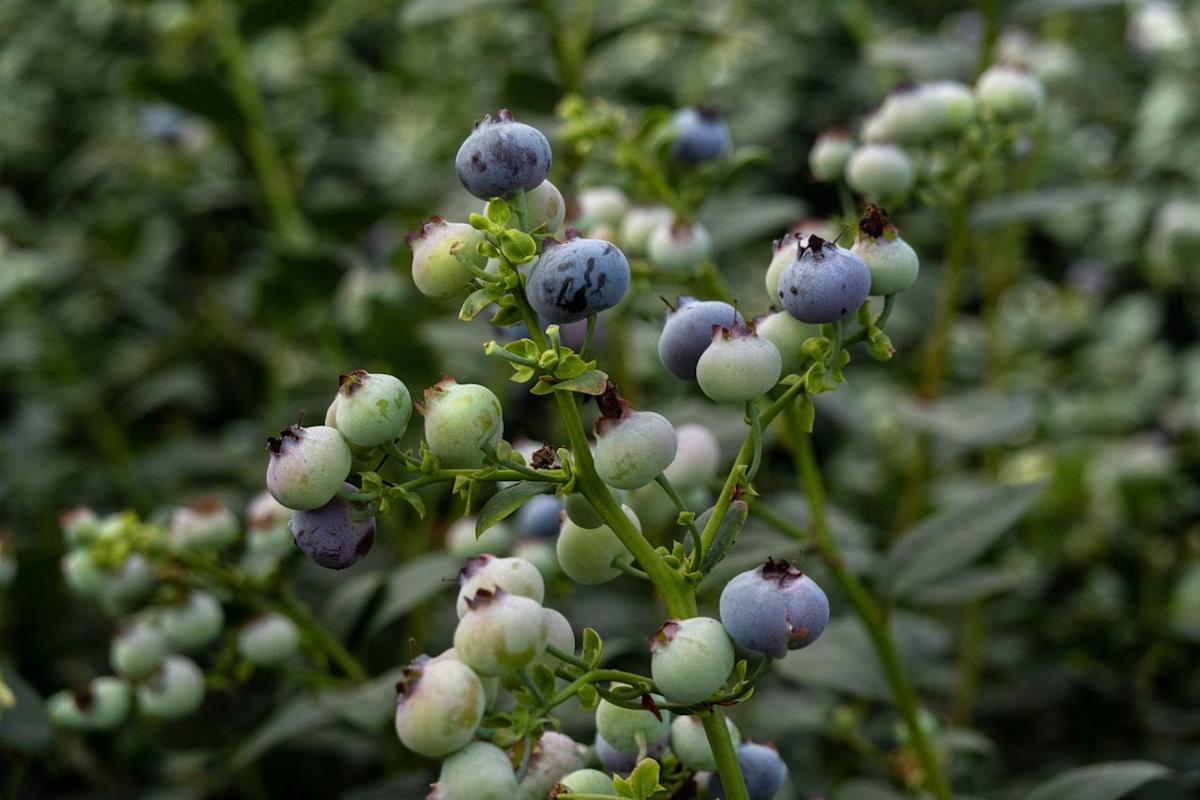
Blueberries are gorgeous plants. With fragrant spring blooms, stunning fall color, and vibrant summer berries, they are as deserving of space in the ornamental garden as they are among row crops. No matter where you plant them, these blueberry companion plants will help you get the most from your plantings—whether your goals are boosting fruit production or creating a beautiful edible landscape. Planting companion plants is a great way to attract pollinators, manage weeds, and conserve soil moisture.
Here is a round-up of the best companion plants for blueberries that will boost the beauty and bounty of your garden, as well as what you should not plant with blueberries.
Types Of Blueberries
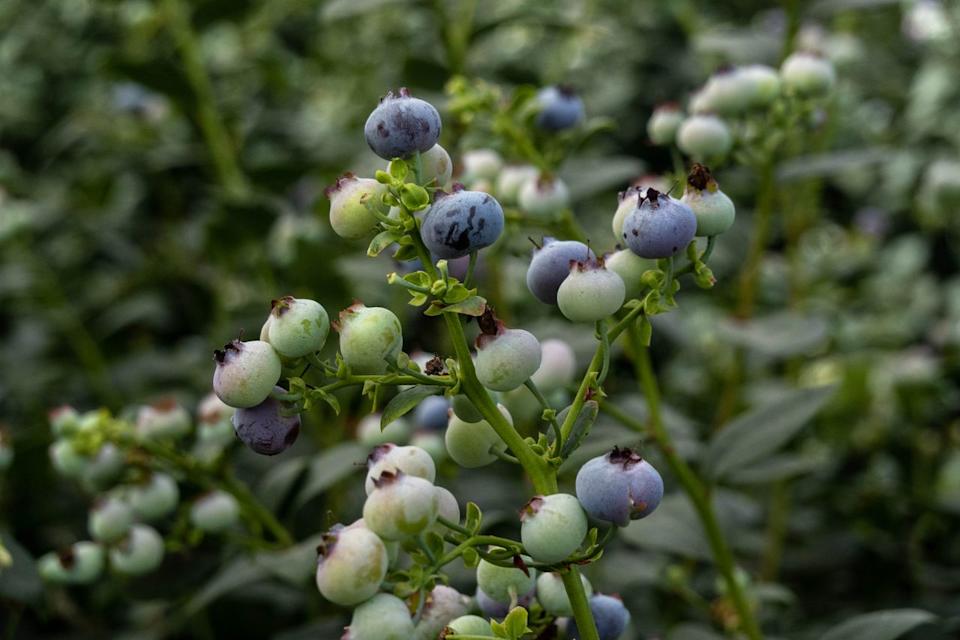
Three different types of blueberry plants can be grown in the South. Rabbiteye blueberries (Vaccinium virgatum) are native to the southeast and are quite heat tolerant. They perform well through the middle, lower, and coastal South, as do southern highbush blueberries. Southern highbush blueberries (V. x corymbosum) are a hybrid developed at the University of Florida to produce plants with high fruit quality and productivity, along with the low chilling requirement necessary to produce berries in the Deep South. The third type of plant is northern highbush blueberries (V. corymbosum), which works well in the upper and middle South.
Credit: Cesar Rodriguez/Bloomberg/Getty Images
Growing Conditions For Blueberry Plants
Blueberries require full sun and acidic soil, ideally with pH between 4.0 to 5.5, so blueberry companion plants must also thrive under these conditions. Blueberry plants also have a shallow root system that can be disturbed by planting annuals and is subject to competition from surrounding plants for water and nutrients. Provide plenty of space between blueberry plants and their companions to limit competition.
Learn More
Companion Plants To Boost Pollination
Although many blueberry cultivars are considered self-pollinating, all blueberries will produce larger yields and higher quality fruit with cross pollination between two or more blueberry plants. This requires the work of bees—both native species and the domestic honeybee. Planting companions that bloom around the same time and are known to attract blueberry pollinators is a great way to boost berry production. Here are a few great options.
Crimson Clover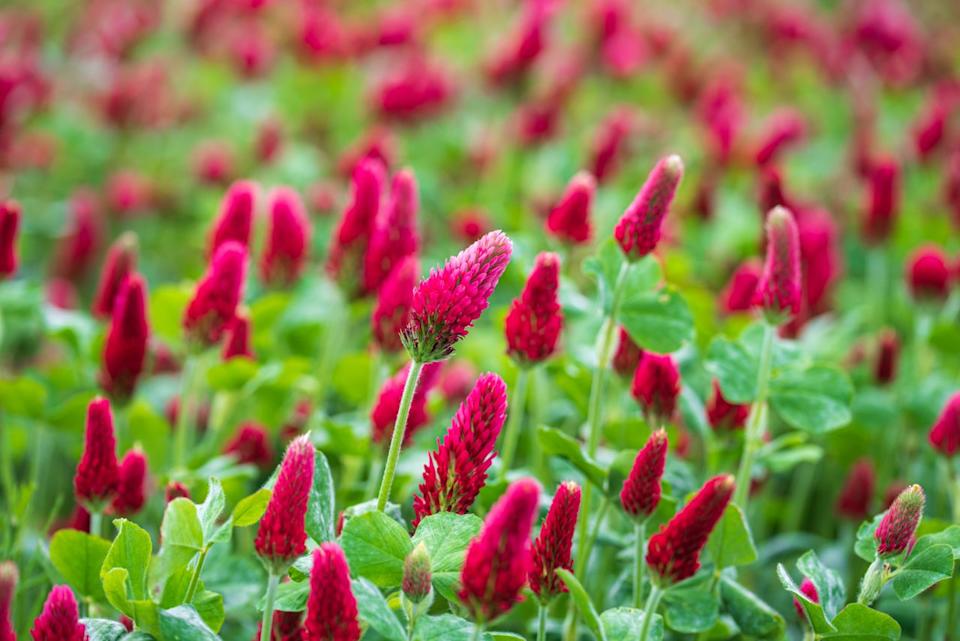
Credit: Ordasi Tatyjana/Getty Images
Botanical Name: Trifolium repens
Soil Type: Well-draining, rich
Soil pH: Acidic to neutral (5.5–7.0)
Crimson clover is a cool-season annual that blooms in early spring, providing a rich source of pollen and nectar to native bees which helps attract these pollinators to blueberry plants. As a legume, crimson clover also fixes nitrogen in the soil, so this companion plant works double duty. The flowers are quite lovely and harbor minute pirate bugs (Orius spp.), an insect that feeds on plant pests including thrips, spider mites, and aphids. Crimson clover is best suited to production gardens, as it can become weedy in landscape beds.
Virginia Bluebells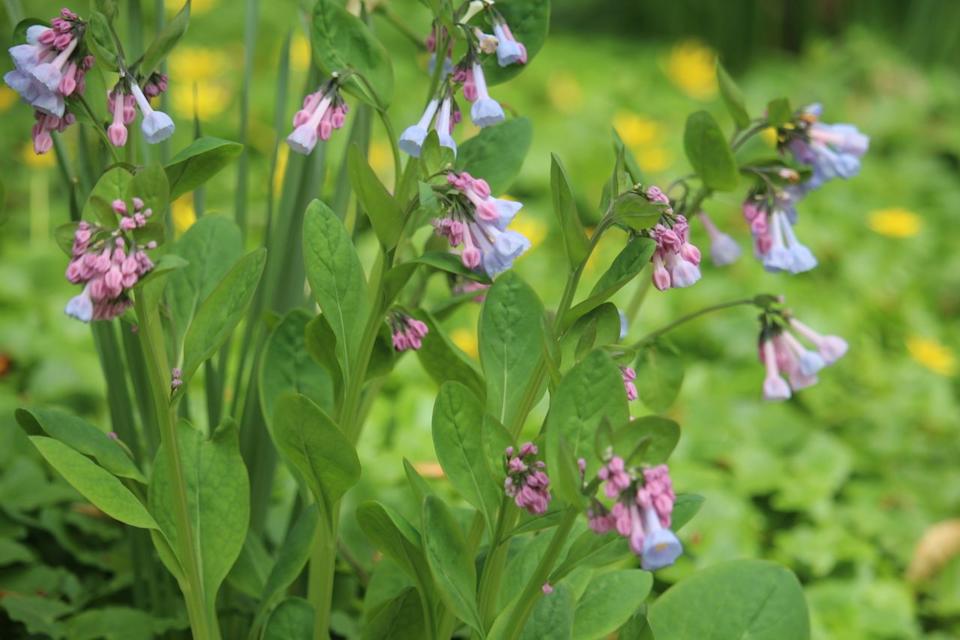
Credit: Cyndi Monaghan/Getty Images
Botanical Name: Mertensia pulmonarioides
Sun Exposure: Part sun to shade
Soil Type: Medium, well-draining, average fertility
Soil pH: Acidic to alkaline (5.5-8.5)
Although this lovely native wildflower is more of a woodland species, it can be planted near blueberries in ornamental plantings or along the edges of fruit plantings to attract pollinators. It is a preferred foraging plant for bumblebees, which are important blueberry pollinators, and blooms around the same time as blueberries. Plant in masses for a beautiful display of the tubular blue to pink blossoms.
Learn More
Redbud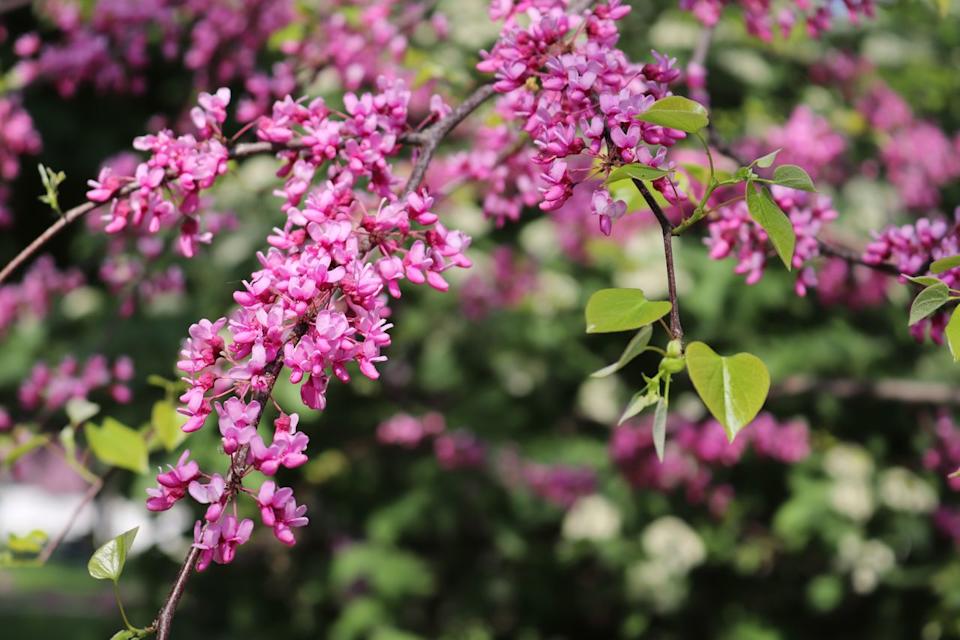
Credit: Katrin Ray Shumakov/Getty Images
Botanical Name: Cercis canadensis
Sun Exposure: Full sun to part shade
Soil Type: Medium, well-draining, average fertility
Soil pH: Acidic to alkaline (5.0-8.0)
Redbuds are a common forage plant for bumblebees and the Southeastern blueberry bee. As its name suggests, the southeastern blueberry bee is our most efficient pollinator of blueberry plants, on which it specializes. Attracting this pollinator, as well as honeybees and bumblebees, to the landscape in early spring will increase pollination and yields. With masses of early to mid-spring blooms, redbud trees are hard to miss and will surely draw pollinators to the landscape.
Learn More
Sage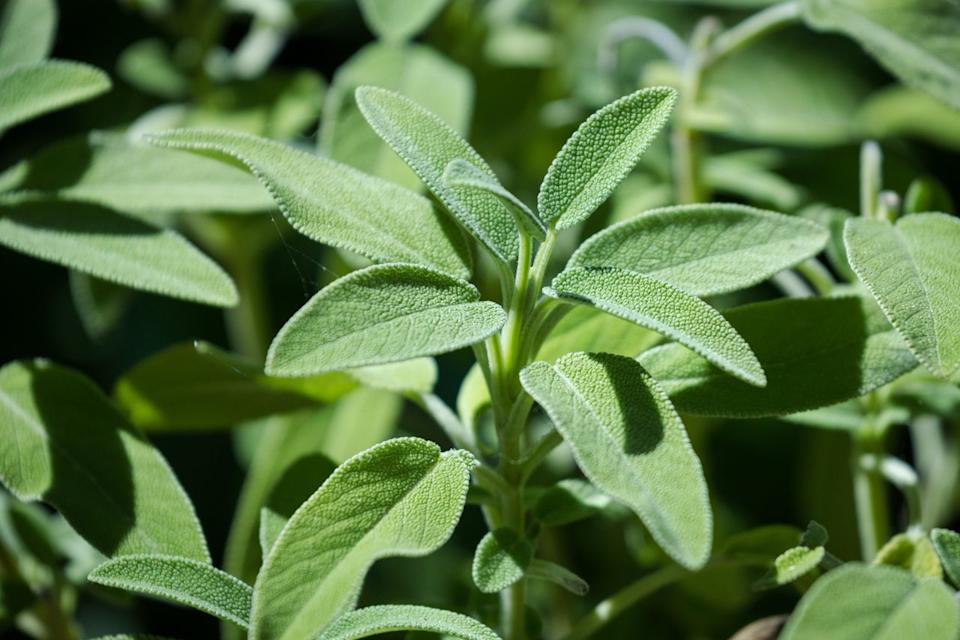
Credit: RayTango/Getty Images
Botanical Name: Salvia officinalis
Sun Exposure: Full sun to partial shade
Soil Type: Well-draining, sandy, loamy
Soil pH: Slightly alkaline 6.0-7.0
Both sage and blueberry plants thrive in similar growing conditions, preferring well-drained, slightly alkaline soil and full sun. Sage’s purple flowers attract beneficial pollinators to the garden, while its strong scent deters pests like rabbits, moths, flies, and beetles. Sage is a good companion plant for culinary plantings of blueberry plants.
Learn More
Marigolds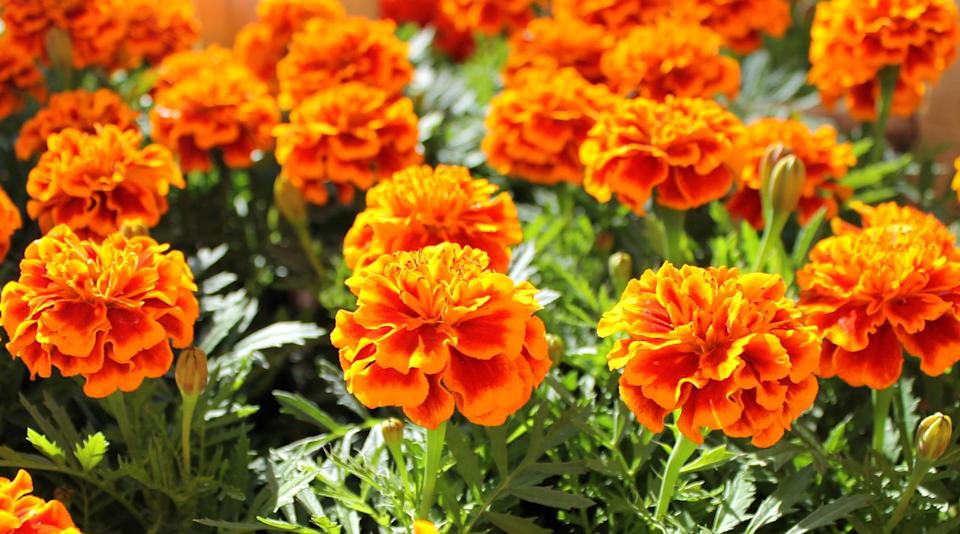
Credit: Shef-time/Getty Images
Soil Type: Well-drained, rich, clay, loamy, sandy
Soil pH: Slightly acidic to neutral 6.0-7.0
Marigold attracts bees and butterflies as well as offers natural pest control when planted with blueberries. The herbaceous plants like full sun, consistent moisture, and well-drained soil, and they aren’t too picky about the type of soil. Some varieties of marigolds can cause skin irritation, so wear gardening gloves as a precaution.
Chives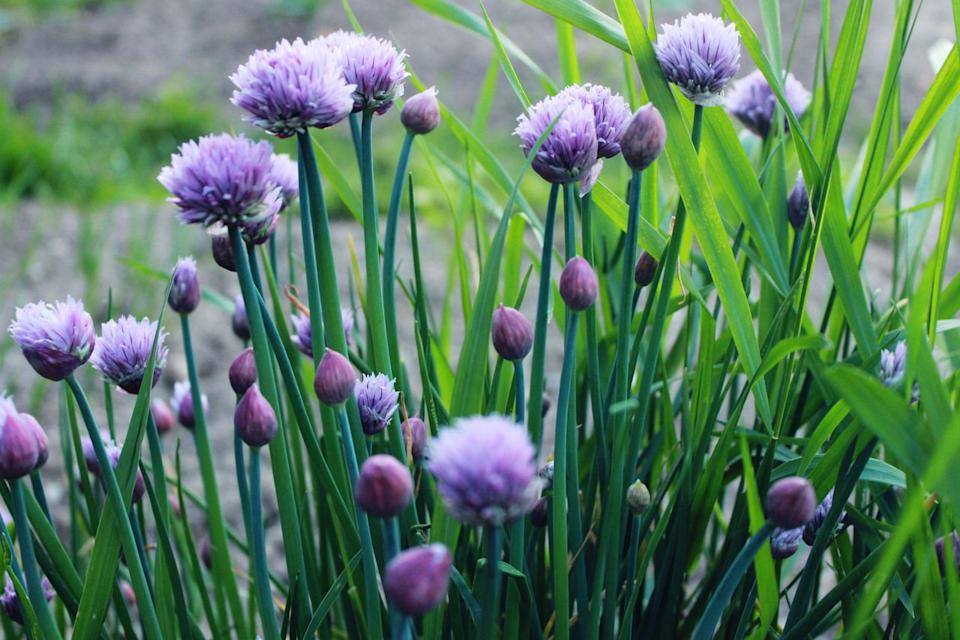
Credit: Getty Images/Jasenka Arbanas
Botanical Name: Allium schoenoprasum
Soil Type: Well-drained, sandy, loamy
Soil pH: Slightly acidic (6.0-7.0)
Chives are another companion plant for blueberries that do double duty in the garden. The perennial herb attracts helpful insects and pollinators to its purple blooms, boosting pollination. The strong scent also deters pests like rabbits, aphids, and Japanese beetles. Chives make a great addition to an edible garden, thriving in full sun and slightly acidic, well-drained soil.
Ground Covers As Blueberry Companion Plants
While ground covers and living mulches are a good way to support deep-rooted crops like fruit trees, they can be problematic around blueberries. The shallow root system of blueberry plants can be restricted by competition from aggressive ground covers, particularly when they are planted too close together. On the other hand, in traditional row planting systems, there is a lot of open space between blueberry bushes that leaves room for weed growth. Using ground covers to manage weeds in these systems can be highly beneficial. In ornamental plantings, ground covers are desirable from an aesthetic point of view and can be used with care. Wait until blueberry bushes are well-established before planting ground covers or living mulches nearby, and provide ample irrigation for both plants. Mulch young plants with pine straw, bark, or other non-living organic mulch until established. Around older plants, you can try the following ground covers.
White Clover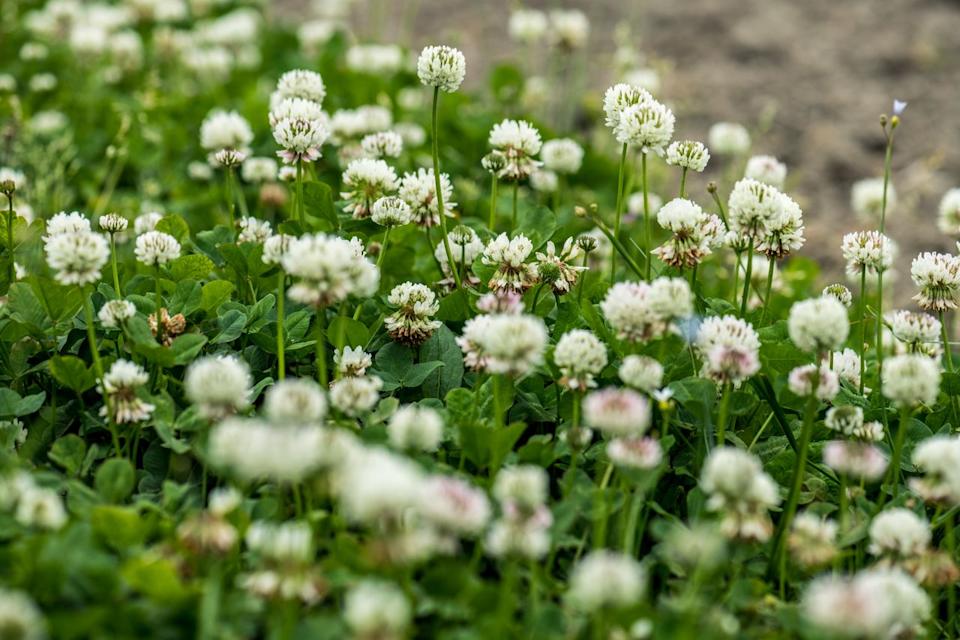
Credit: LITTLE DINOSAUR/Getty Images
Botanical Name: Trifolium repens
Sun Exposure: Full sun to part shade
Soil Type: Medium, well-draining, average fertility
Soil pH: Acidic to neutral (5.1–7.3)
White clover is the living mulch of choice for irrigated vegetable crops, orchards, and among fruit bushes. White clover is a legume that fixes nitrogen in the soil, making it available to nearby plants. When growing blueberries in rows, use white clover in the space between rows to protect soils against erosion, fix nitrogen, attract pollinators, and suppress weeds.
Strawberries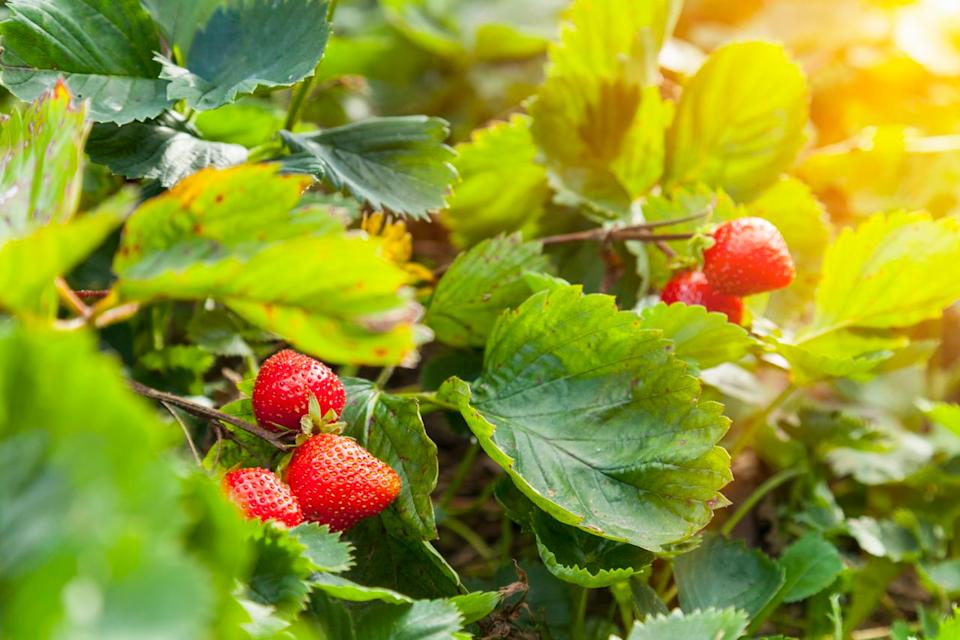
Credit: Henglein and Steets/Getty Images
Botanical Name: Fragaria x ananassa
Soil Type: Moist, well-draining, rich
Soil pH: Slightly acidic (5.5-6.8)
Strawberries are commonly planted beneath established blueberry bushes in permaculture plantings. This pairing translates well to both ornamental and edible gardens. From an ornamental perspective, strawberries produce a beautiful ground cover of deeply lobed foliage and white flowers, along with a crop of sweet fruit. This pairing is a great way to boost fruit production in a small space.
Learn More
Creeping Thyme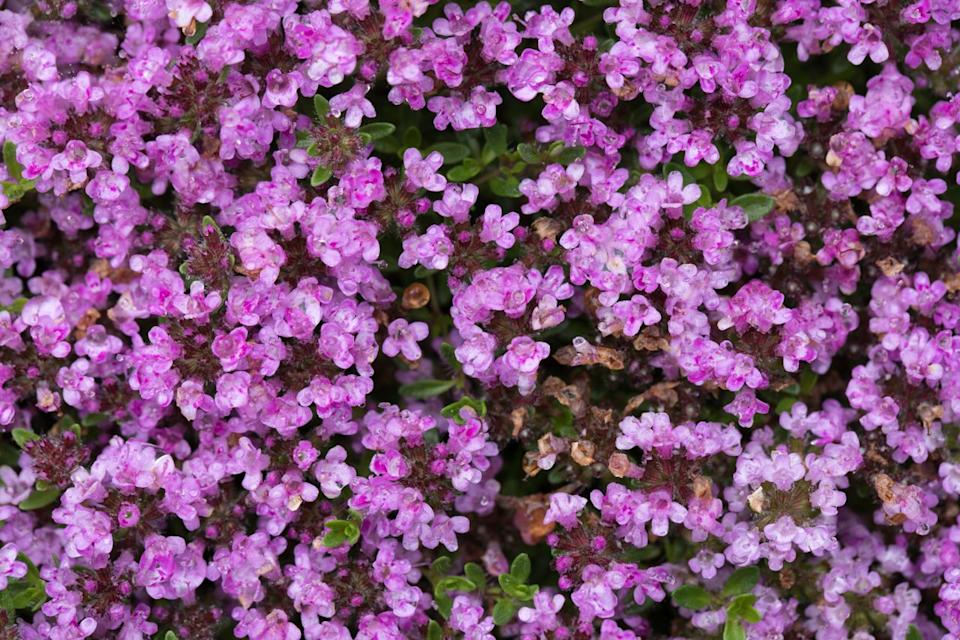
Credit: Laszlo Podor/Getty Images
Botanical Name: Thymus serpyllum
Soil Type: Well-draining, average
Soil pH: Slightly acidic to slightly alkaline (6.0-7.5)
Creeping thyme is a favorite ground cover for its edible foliage and colorful blooms. Although thyme performs best in more neutral to alkaline soils, it tolerates a wide range of soil pH, including acidic conditions. This sprawling ground cover is great at controlling weeds. In hot climates, a layer of thyme helps keep soils cool and conserve soil moisture by reducing evaporation.
Ornamental Blueberry Companions
Blueberries are beautiful bushes, producing white, bell-shaped flowers in spring and turning vibrant shades of red and orange in autumn. They make a wonderful addition to ornamental planting beds and can be grown as an edible hedge. Plant them in masses in your pollinator or rain gardens, but be sure to limit competition from neighboring plants by providing plenty of space for root development. Blueberries perform best alongside plants that have similar soil requirements, namely acidic conditions.
Rhododendron And Azaleas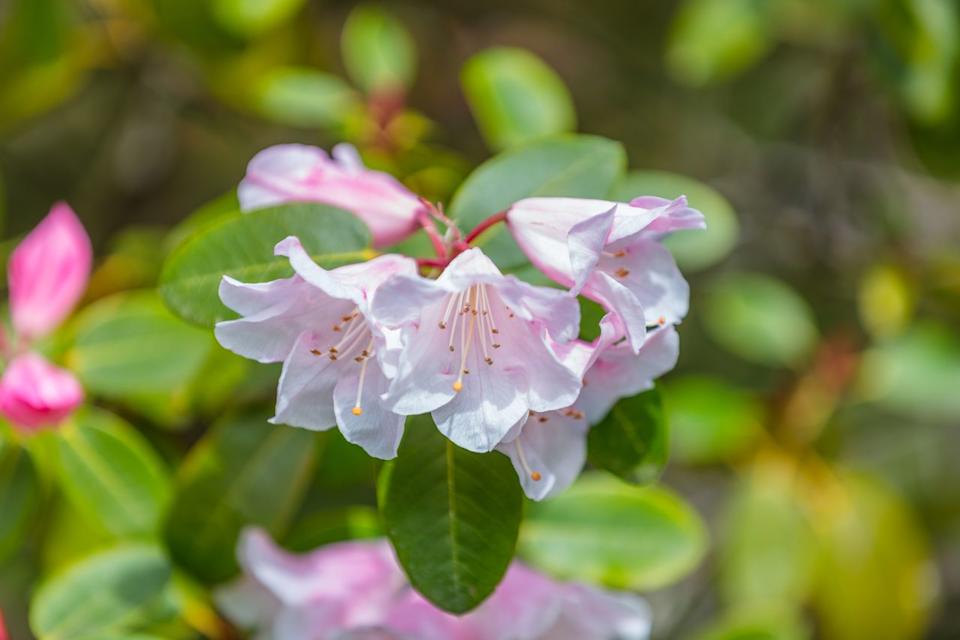
Credit: RomanKhomlyak/Getty Images
Botanical Name: Rhododendron species
Sun Exposure: Sun to part shade
Soil Type: Moist, well-draining, rich
Soil pH: Acidic (4.5–6.0)
Rhododendrons and azaleas are beloved landscape plants for Southern gardens. They thrive in acidic soils and produce gorgeous spring blooms. They flower around the same time as blueberries and are a preferred forage plant of southeastern blueberry bees, helping attract this important pollinator to the garden. Rhododendrons thrive with morning sun and afternoon shade, while some newer azalea cultivars tolerate full sun.
Learn More
Flowering Dogwood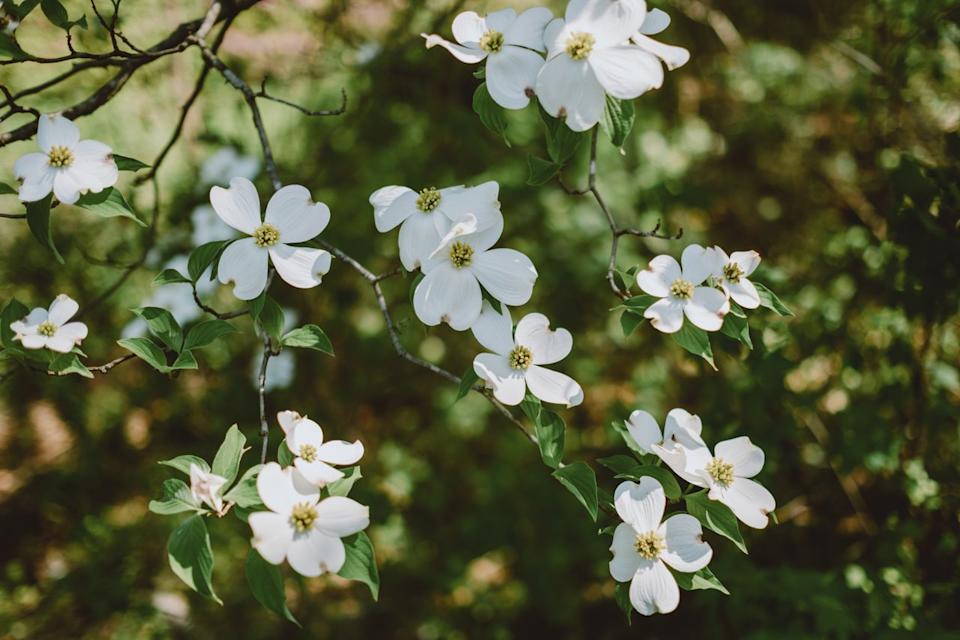
Credit: Grace Cary/Getty Images
Botanical Name: Cornus florida
Sun Exposure: Full sun to part shade
Soil Type: Medium, well-draining, average fertility
Soil pH: Acidic to neutral (5.0–7.0)
Another staple of the Southern landscape, flowering dogwood makes a great companion to blueberries. It thrives under the same soil conditions and its stunning white blooms attract bumblebees to the garden. It blooms toward the tail end of redbud flowering period, extending the window of flowering activity in the landscape. The bright red fruits are a favorite of songbirds.
Hollies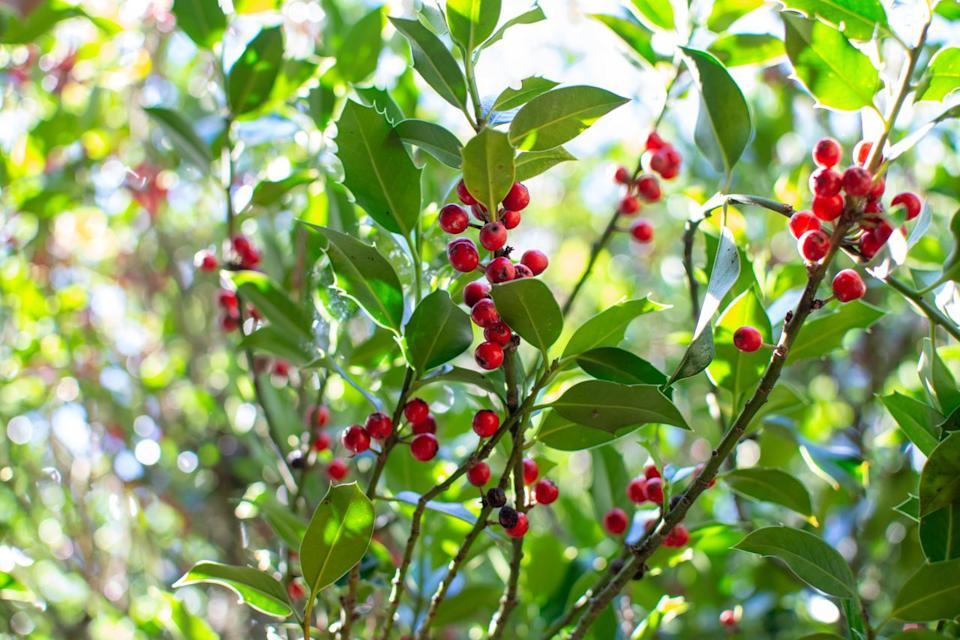
Credit: Crispin la valiente/Getty Images
Botanical Name: Ilex species and cultivars
Sun Exposure: Full sun to part shade
Soil Type: Medium, well-draining, average fertility
Soil pH: Acidic to neutral (4.5-7.0)
A great many holly species thrive in the South under the same growing conditions as blueberries. These trees and shrubs range in size from compact mounds to pyramidal trees, offering endless design opportunities. Most are broadleaf evergreens, though a few deciduous species also grace Southern gardens. The most desirable feature among hollies is their bright berries, which ripen in autumn and tend to linger throughout winter.
What Not To Plant With Blueberries
In edible gardens and ornamental plantings alike, there are certain plants that are best kept away from blueberries.
Grasses
Because blueberries have shallow root systems, it is best to use only perennial or seed-sown annuals as ground covers and living mulches. This will prevent root disturbance during planting. Ornamental grasses used as ground covers compete with moisture and nutrients. To remove grasses and annual ground covers, simply cut the above ground portion for the roots, rather than pulling out plants.
Nightshades And Brassicas
It is also helpful to avoid plants with conflicting soil needs. Blueberries are acid loving, while nightshade crops like tomatoes, potatoes, and eggplant require more neutral soils. These crops are also heavy feeders, as are brassicas like cabbage, kale, and broccoli. Avoid planting them near blueberries as they will compete for nutrients. Asparagus is also a heavy-feeder, and it prefers more alkaline soil conditions.
Walnut Trees
Finally, do not plant blueberries near walnut trees. Walnuts produce a chemical in their roots called juglone that many plants, including blueberries, are sensitive to. Juglone is meant to kill the competition, making way for the walnut tree’s root system. Because they have a very extensive root system, you will want to locate blueberries far away from these trees.
Read the original article on Southern Living
Comments are closed.