
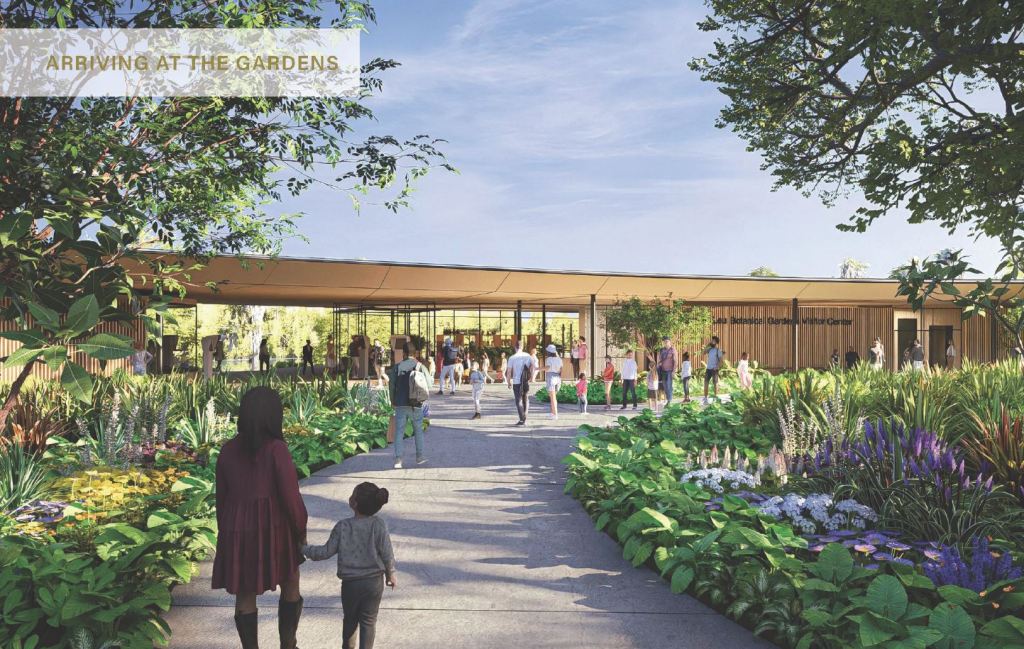
A plan to modernize Orlando’s famed Leu Gardens met a tough reception Monday evening, even as its executive director said some of the more controversial features had been scaled back.
More than 200 people gathered at the gardens to hear the latest update on the conceptual plan, which has been met with skepticism and opposition from neighbors and businesses after previous meetings.
One of the biggest concerns, voiced by City Commissioner Roger Chapin and nearby restaurant owners, was that a city-subsidized full-service eatery at the gardens would increase traffic problems and have an unfair competitive advantage over other area establishments.
But executive director Jennifer D’hollander told the crowd that the planned “lakefront restaurant’ concept would actually be a café, which would operate only during the gardens’ regular business hours.
In addition, she said, an amphitheater proposed in initial drawings was no longer being pursued.
“That was what tonight was about: we hear you, we know you have concerns, and we’re going to try to answer all of them,” she said. “We don’t know all the specifics yet.”
Volunteers collected written questions from the audience, who peppered D’hollander with concerns about everything from the price tag – roughly $100 million across three phases of renovations, including $45 million for the initial phase – to noise and increased traffic, as well as how the plan would be beneficial to the 50-acre botanical garden on the shores of Lake Rowena.
Leaders of the gardens have been undergoing a master planning effort for more than a year in an effort to accommodate visitation of the botanical garden doubling to more than 300,000 people annually over the past decade.
The first phase of the conceptual plan includes an expanded parking lot, welcome center building, children’s garden and a boardwalk over the lake.
Some commenters cheered the new designs and were excited about a café as a needed amenity for visitors.
But many questions went unanswered, frustrating many murmuring and grumbling attendees. D’hollander said she and her staff intended to answer them on the gardens’ website as the plan develops.
Chapin said he was happy to have a definitive answer to his concerns about a restaurant which he feared would over-commercialize the gardens, but said he left the meeting with doubts about the overall vision.
“I think there are as many, if not more, questions after tonight than there were three months ago,” he said, adding that the flow of the meeting did not instill confidence.”
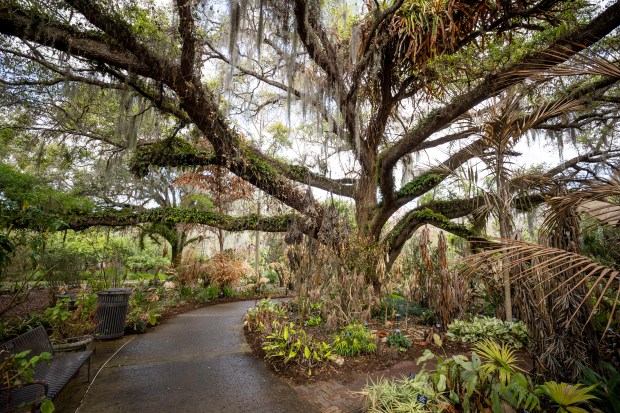 The Idea Garden could be the future site of a children’s garden at Leu Gardens on March 5, 2026. The City of Orlando and Leu Gardens leadership are considering a new master plan that could include a new visitor center, garden upgrades , garden upgrades and parking. (Patrick Connolly/Orlando Sentinel)
Ahead of the meeting, a flyer had been circulated among neighbors warning that “attendance will greatly increase, and programming will expand. Without firm protections in place, that growth will come at our expense.”
“Leu Gardens has long been a valued part of our community because it has operated in balance with the neighborhood,” the letter states. “This proposal risks breaking that balance — turning a peaceful botanical garden into a high-traffic destination venue, with inadequate consideration for residents who live alongside it every day.”
During major events like the annual plant sale, Dazzling Nights and free admission days, cars already pour out onto already congested Corrine Drive, with visitors fanning out into neighborhoods seeking places to park.
A parking study determined that Leu Gardens needs 500 parking spaces to accommodate peak crowds, and the latest plan calls for a larger surface parking lot to do so. Its current lots hold 218 vehicles.
To create the larger parking lot, it would encroach on the current visitor’s center, which would be demolished to make way for a more modern facility with a plant shop, café, offices and event spaces. It would be built closer to scenic Lake Rowena, with a boardwalk allowing visitors closer access to the waters.
D’hollander said she was going to also pursue a sound study to determine how to best contain music and amplified sound within the property during events.
“We know you’re going to hear it, but we want to be as respectful as we can for what you’re going to hear,” D’hollander said.
Ray Scott, an architect who lives on the lake, said his primary concern was the previously planned amphitheater. While his wife is still among those opposed to the plan, Scott now said he doesn’t mind it.
“It’s basically a park within the city and we want it to be preserved as a green space,” he said. “I think it’s progress.”
Comments are closed.